Too many people with diabetes miss retinal screening. Proud of our team’s work to make it easier, from simplified image capture to AI interpretation. Our white paper evaluates our investigational DR algorithm on real-world images: https://t.co/OVDcyJBmjX
Not FDA-cleared or for sale in the US.
Getting around NYC during #UNGA took patience, but the conversations were worth it. At a @WomenInGenAI discussion hosted by @Microsoft, we talked about what happens when AI moves into real-world use: who’s accountable, what needs oversight, and how we earn trust - especially in healthcare.
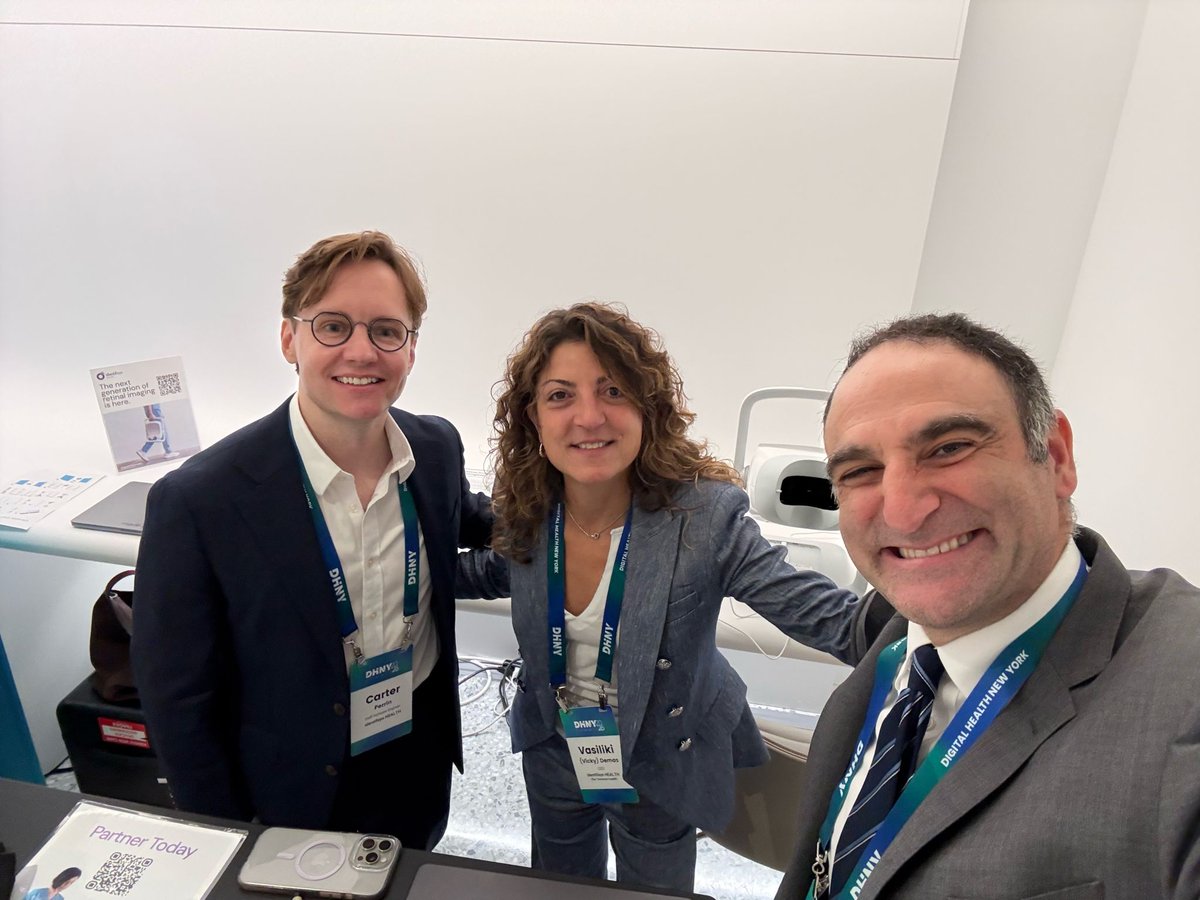
A fun day at #DHNY last week - catching up with old friends, meeting new people, showing off what we’re building at @identifeyehealth, and getting to hear from Mark Cuban. Lots of good conversations about AI in healthcare and where it can actually make a difference.
Heart health data already collected in primary care can help predict future eye disease risk, according to a new study from @UCLAHealth
Earlier insight like this helps identify high-risk patients, creating real opportunities for prevention.
Read more here: https://t.co/dC3DITDADt
The most interesting thing about AI in ophthalmology isn’t speed or automation.
It’s the ability to recognize patterns clinicians can’t see, enabling earlier detection, more personalized treatment, and care that evolves with each patient.
That’s where the real impact is.
🔗 @OphthTimes: https://t.co/wwkW8kGXNK
Health systems are cautiously optimistic about 2026—and increasingly pragmatic about AI.
The 2026 Global Health Care Outlook from Deloitte Center for Health Solutions shows momentum shifting from pilots to ROI, real workflows, and care model impact. Execution is the opportunity.
#AIinHealthcare #DigitalHealth #HealthcareLeadership
The eyes can show more than vision problems; they may also reflect biological aging.
New research links retinal blood vessel structure to cardiovascular risk and longevity, reinforcing the role of retinal imaging in preventive care.
Learn more: @ScienceDaily: https://t.co/0AFTuClLsA
New data from 3.7M patients shows social deprivation raises the risk of diabetic retinopathy by 44%, even with regular care.
Improving patient outcomes only happens when we account for the realities of life like time pressure, financial strain, and chronic stress.
🔗 @medicaldialogs: https://t.co/HVgu8ZSmbO
A new study found that diabetic retinopathy is linked to a higher risk of dementia, with the strongest effect in adults under 65.
Prevention starts with seeing the earliest signs.
Via @NaturePortfolio: https://t.co/kMJbMdyLjC
The connection between the retina and systemic health is well established.
Latest data: vascular complexity in the retina correlates with cardiovascular risk and aging markers in >74,000 people.
A retinal image can reveal far more than meets the eye.
More from @PreventionMag: https://t.co/mblhjkfD2F
@PwC’s new Healthcare Consumer Insights Survey shows what people want from care:
👁️ 71% of Millennials + Gen X are using/interested in AI-assisted diagnosis
📍 68% encounter barriers accessing care
🔍 54% say early detection will shape the future of health
📖 https://t.co/0hmOf3bOOf
Doctors are helping shape the future of AI
As @modrnhealthcr reports, physicians are partnering with AI developers to test and refine clinical models, ensuring they reflect real-world practice.
More: https://t.co/hRDnb5J9nF
AI-powered prevention is showing real results.
A @HopkinsMedicine and @JohnsHopkinsSPH study found that an AI diabetes program achieved CDC risk-reduction goals on par with human-led ones, all while improving engagement.
Proof that accessibility and outcomes can go hand in hand.
🔗 https://t.co/TfO5lzmFcB
This #DiabetesAwarenessMonth, I’m reflecting on a preventable crisis that we’re working to tackle at @IdentifeyeHLTH: diabetic retinopathy.
A leading cause of blindness in working-age adults, it often goes undetected because too many patients lack access to regular eye exams.
With AI and advanced imaging, we can detect disease earlier and make preventive care accessible to everyone.
Diabetic retinopathy blinds millions, but it’s preventable with early screening.
AI can help detect it sooner, especially for patients who don't see an eye doctor regularly.
That’s how we protect + prevent avoidable blindness.
🔗 More via @Yale Medicine: https://t.co/vWFIKFghZd
@Forbes predicts 2026 will be a turning point for AI in healthcare, from AI agents managing care to diagnostics getting smarter + more accurate.
AI’s greatest potential in healthcare is in enhancing early intervention + personalized care.
Via @BernardMarr: https://t.co/Zy7BMxSnn7
Diabetic retinopathy blinds millions, but early screening can prevent 95% of cases.
@sciam’s story of Sterling Glass, a man who lost his sight after a delayed diagnosis, shows why access to preventive eye care is so critical.
AI can help close that gap.
🔗 https://t.co/1sdTEOG4DZ
Healthcare’s AI transformation is accelerating fast:
- Adoption up 7x YoY
- $1.4B in AI spend, 75% from providers
- Health systems lead at 27% adoption, outpacing every other sector.
Per @MenloVentures, the winners are tools that enhance clinicians.
https://t.co/QPwJbgowMR
Proud to share that @identifeyeHLTH has assembled a world-class advisory panel bringing together leaders from @MayoClinic, @MountSinaiNYC, @harvardmed, @GrailBio + more to help guide our next phase of growth in AI-enabled preventive care.
Read more: https://t.co/LUQSOUfRSq
Healthtech funding is rebounding, $7.9B raised in 1H 2025 per @WSJ Pro.
The difference this time: AI tools have proven their ROI by giving providers time back with patients, streamlining workflows and making more advanced diagnostics accessible to more people.
https://t.co/zescdaDSfT