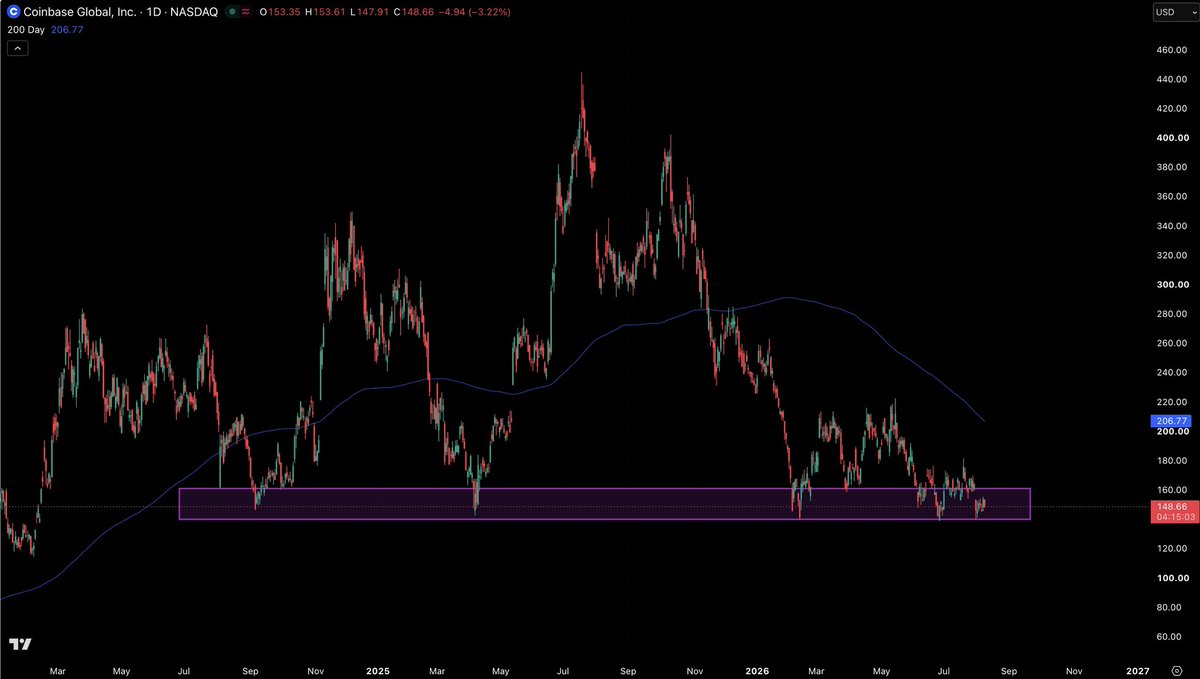
Nearly 40 years ago, Stan Weinstein developed one of technical analysis' most enduring frameworks:
Stage Analysis.
We built his strategy directly in TrendSpider, so you can spot Stage 2 breakouts or Stage 4 breakdowns automatically & within seconds.
🧠 https://t.co/TlaqqWAFwo
CANCELLED NETFLIX. CANCELLED AMAZON PRIME.
CANCELLED HULU. No more $19.99 each month.
ChatGPT transformed my laptop into a free streaming center. Here are 7 prompts to create this system:
CASH SECURED PUTS ARE THE MOST UNDERRATED INCOME STRATEGY IN THE MARKET!!!
This is the one that pays you to wait for a price you already wanted.
Save this and study it.
Let's start with what it actually is.
You sell someone the right to force you to buy 100 shares at a set price, before a set date. For agreeing to that, they pay you a premium upfront. That money is yours immediately.
"Cash secured" means the money to buy those shares is already set aside.
Now the numbers, because this is where it clicks.
Stock trading at $100. You sell the $95 put, 35 days out, collect $2.00 per share.
➡️ Cash set aside: $9,500
➡️ Premium collected: $200, today
Only two things can happen.
1️⃣ Stock stays above $95
Option expires worthless. You keep the $200 and your cash is free again. That's 2.11% in 35 days.
2️⃣ Stock drops below $95
You buy 100 shares at $95. But you were paid $200, so your real cost basis is $93.
The stock was at $100 when you opened it. You just bought it 7% cheaper than the price you were already willing to pay.
One outcome pays you to wait. The other gets you the stock at a discount.
So why is the income so consistent?
Options lose value as they approach expiry. That decay is called theta and it accelerates hard in the final 30 days.
Buy an option and it works against you every day. Sell one and it works for you.
You're not predicting direction. You're getting paid for time passing.
Where does the money come from?
Premium is priced off implied volatility. More expected movement, more premium.
Which means you get paid most when everyone is scared. Selling puts into a panic pays multiples of what the same strike pays in a calm market.
Low volatility pays almost nothing. Don't force it.
Now the part most people skip.
Your upside is capped and your downside is not.
Stock rips to $150? You made $200.
Stock drops to $50? You own it at $93 and you're down $4,300.
Read that twice.
Selling puts DOES NOT reduce your risk. You carry nearly the same downside as owning the stock and trade away all the upside for a fixed payment.
You're converting uncertain upside into certain income.
Which leads to the only rule that matters.
Never sell a put on a company you don't want to own at that strike.
If you wouldn't happily buy it at $95, don't sell the $95 put, no matter how good the premium looks.
Assignment isn't the strategy failing. Assignment is the strategy working.
So how do you pick the strike?
Delta roughly approximates the chance the option finishes in the money.
➡️ 15 to 20 delta: conservative, less premium, rarely assigned
➡️ 30 delta: the common middle ground
➡️ 40+ delta: aggressive, big premium, expect the shares
Pick the strike where you actually want to own the business. Then check what delta that happens to be.
On timing, 30 to 45 days is where most people land. Weeklies pay less per unit of risk and eat your attention.
Two warnings. Earnings inflate premium because real risk is coming. And American options can be assigned early, usually deep in the money or around a dividend.
Here's the mistake that actually hurts people.
Correlation.
Five puts across five stocks, market drops 12%, and you don't get assigned on one. You get assigned on all five, same day, worst possible day.
Every position needs its cash simultaneously. People size each trade individually and forget they all trigger together.
Size the whole book, not the single trade.
Then there's the wheel. Sell a put, get assigned, sell a covered call above your cost basis, get called away, start again. Income at every stage.
Final thought: this will never beat a stock that doubles and it isn't supposed to.
It pays you while you wait for prices you already wanted, on companies you already did the work on.
We run a lot of these inside The Assembly and members post their CSP wins nonstop. If you have idle cash sitting there doing nothing, that's where I'd start.
Join from my bio before we close access again.
$NKE
This is what a 700% opportunity looks like before everyone wants it.
Monthly RSI just hit an all-time low of 24.
The last time $NKE came anywhere close to these conditions?
1984... 42 years ago.
And that's the part most investors never understand:
The stocks that can change your financial future rarely look attractive when the opportunity is greatest.
Everyone wants to buy after the story becomes obvious. I want to buy before the market believes in the story again.
You build wealth by recognizing opportunity while everyone else still sees risk.
THIS IS INSANE.
Japan has reportedly spent around $160 billion this year trying to stop the yen from falling.
- $73 billion in April and May, a record monthly total at the time.
- $53 billion last Thursday, likely the largest single day in its history.
- $34 billion last Friday.
Every time, the yen strengthens for a few days and then goes right back.
Japan cannot fix this by spending reserves. It can only fix it by raising rates agressively.
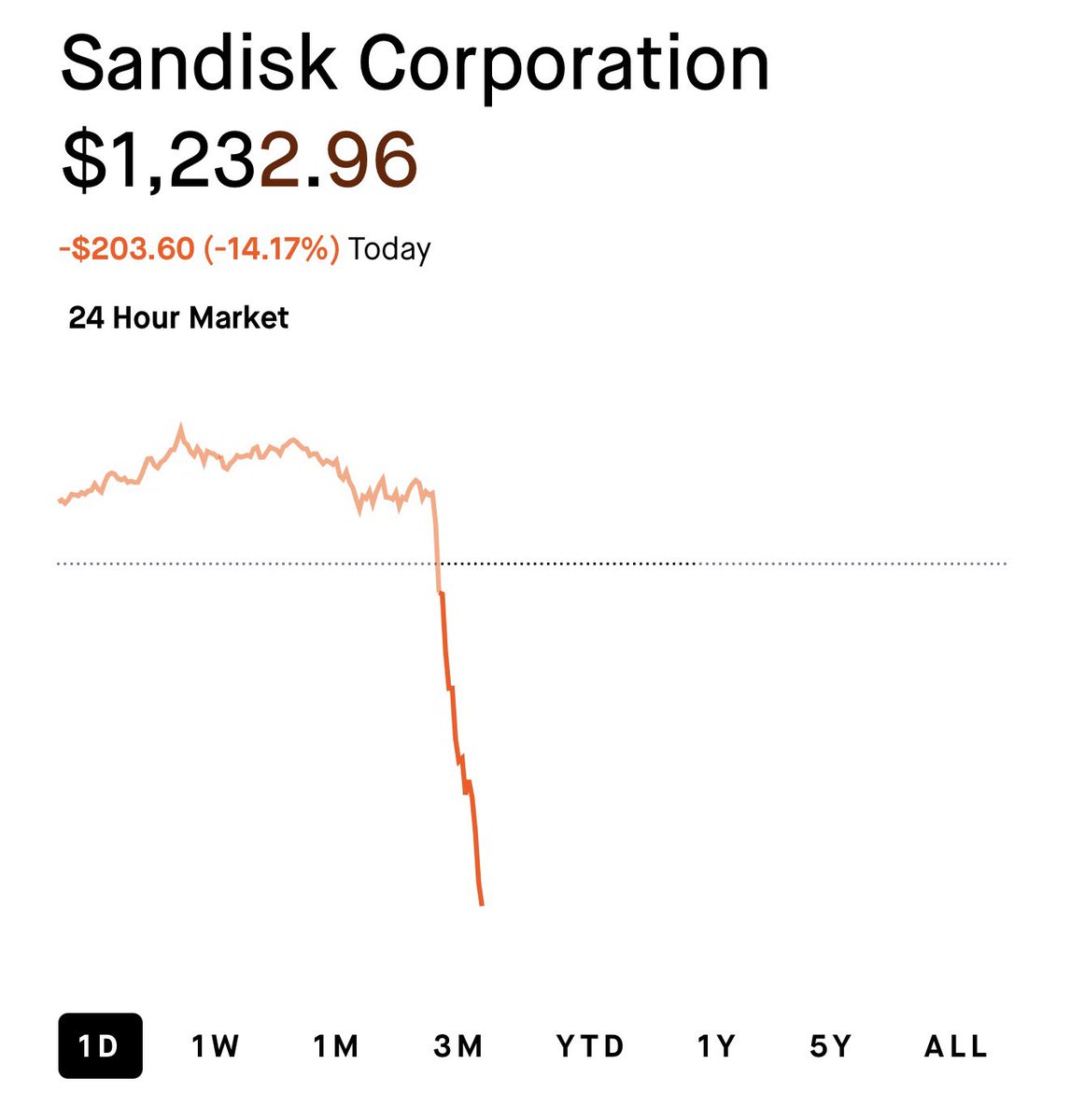
🚨 US MEMORY STOCKS ARE CRASHING
$1 Trillion has been wiped out from US stocks in the last 3 hours, and 50% of that came from just 6 memory stocks.
US memory stocks are crashing on news that China has begun producing its own DUV chipmaking machines.
Investors worry China can now build more chip factories on its own, adding supply and pushing memory chip prices down, exactly the prices that have been driving these stocks higher all year.
- Nvidia: -4.37%, $300B wiped out
- SK Hynix: -9.48%, $95B wiped out
- Micron: -4.69%, $82B wiped out
- SanDisk: -10.42%, $26B wiped out
- Western Digital: -5.93%, $21B wiped out
- Seagate: -5.59%, $17B wiped out
In total, $541 billion has been wiped out from just these 6 memory stocks.
The Queen is back 👑
Nancy Pelosi just disclosed two new trades:
$INTC calls — up to $5,000,000
$UBER calls — up to $1,000,000
Both with a $50 strike price, expiring March 2027.
She's been quiet since January, but not anymore.
Over $620 BILLION was added to Japanese and South Korean markets today following Micron's strong forecast, which triggered a rally in AI and Tech stocks.
Japan's Nikkei surged +4.61%, adding ¥65.9 trillion ($400 billion) in market value.
Japanese memory chip maker Kioxia jumped +13.19% after announcing plans for a U.S. ADR listing in 2027 and a stock split.
South Korea's Kospi surged +5.42%, adding ₩330.6 trillion ($223 billion) in market value.
Semiconductor giant SK Hynix jumped +12.9% after unveiling plans to raise about $29.4 billion through a U.S. ADR listing and following Micron's strong earnings report.
MICRON $MU JUST TOLD INVESTORS THE MEMORY SHORTAGE HAS NO CLEAR END IN SIGHT
In prepared remarks on the call, management said AI demand is now hitting every segment.
Then came the line that matters most:
Micron expects tight supply to persist beyond calendar 2027, and says it has no line of sight on when supply catches up with demand.
Customers are already locking it in. Under strategic agreements signed so far, Micron projects $22B in cash deposits and related financial commitments.
The spending to meet it:
- FY2026 capex: around $27B
- Fiscal Q4 capex: around $10B
- FY2027 quarterly capex: above Q4 levels
- FY2027 operating expenses: up around $1B
On capital return: Micron intends to increase it, and over time expects to return 100% of excess cash to shareholders.
One caveat: any impact from trade or geopolitical developments is not included in the guidance.