The real risk is stacking them.
When people experience too much financial pain at once, they don’t behave like themselves. They become anxious, impatient, reactive, and short-term focused. Not because they lack discipline, but because pain changes how people think and act.
Listening to @morganhousel latest podcast he spoke of his unfortunate “back pain” and I had this thought
The Outdoor Boys once said: “I don’t mind being cold. I don’t mind being hungry. I don’t mind sleeping on the ground. But I will only do one of those things at a time.
New goals don't deliver new results. New lifestyles do. And a lifestyle is a process, not an outcome. For this reason, all of your energy should go into building better habits, not chasing better results.
Your best performances will come when you are working in a way that is a full expression of you. The work becomes a natural display of your personality. This is when you not only get better results, but also love the activity — because in doing the craft, you feel alive.
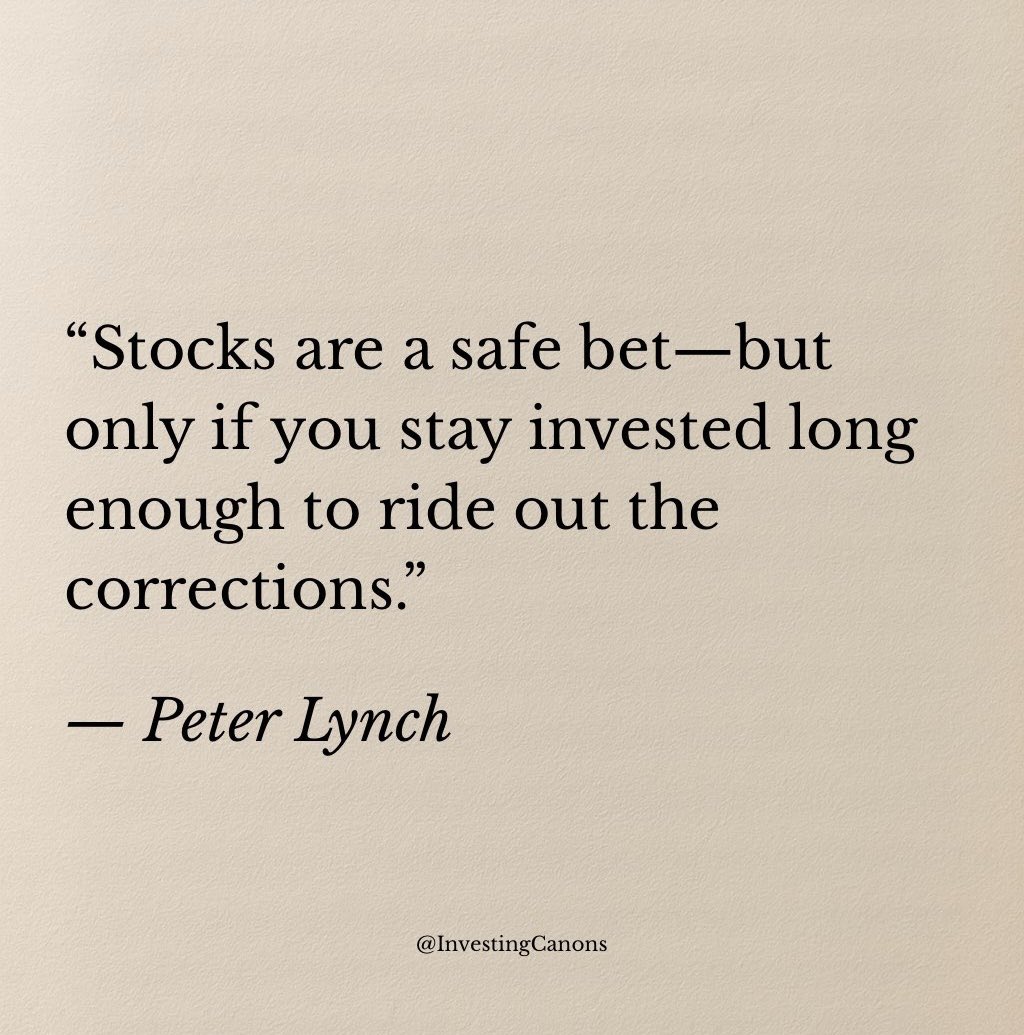
"Try more to profit from always remembering the obvious than from grasping the esoteric. It is remarkable how much long-term advantage people like us have gotten by trying to be consistently not stupid, instead of trying to be very intelligent."
— Charlie Munger
Habits that have a high rate of return in life:
- sleeping 8+ hours each day
- lifting weights 3x week
- going for a walk each day
- saving at least 10 percent of your income
- reading every day
- drinking more water and less of everything else
- leaving your phone in another room while you work
“Study successful investors, and you'll notice a common denominator: they are masters of psychology. They can't control the market, but they have complete control over the gray matter between their ears.”
— Morgan Housel
"There are only two types of people: those who can't market time and those who don't know they can't."
— T. Smith
"Charlie and I never have an opinion about the market because it wouldn’t be any good—and it might interfere with the opinions we have that are good."
— W. Buffett
Many investors don’t realize that charitable deductions for appreciated assets like stocks are limited to 30% of your adjusted gross income (AGI) per year.
What happens if your donation exceeds that?
The excess can be carried forward for up to 5 years.