I have a pair of tickets to the #Flames/Leafs game to give away! Game time is at 8PM mountain time. To enter, retweet this tweet! I'll pick a winner at 6pm tonight!
Part 89 of trying to renovate my garden using a ChatGPT design 🤖
Got the rest of the white stones installed round the back and sides of the cabin, all filled in between the tiles and ready for gluing 💪 Feels good seeing it finally come together bit by bit 👊
I have 2 tickets to give away to Wednesday's #Flames game against the Blue Jackets, which happens to be Nazem Kadri's 1000th game! To enter, just retweet this tweet. I will draw a name around 3PM on Wednesday. Make sure you have a Ticketmaster account.
@FierySharky The oilers have a wide fanbase cuz of the generational talent of Heated McDriveway (just saw this nickname, hilarious) and and Leon. The Pens and Hawks also saw this kinda lift in the Crosby/ Malkin, and Toews/Kane eras. Bandwagon fans dont matter. Diehards live forever
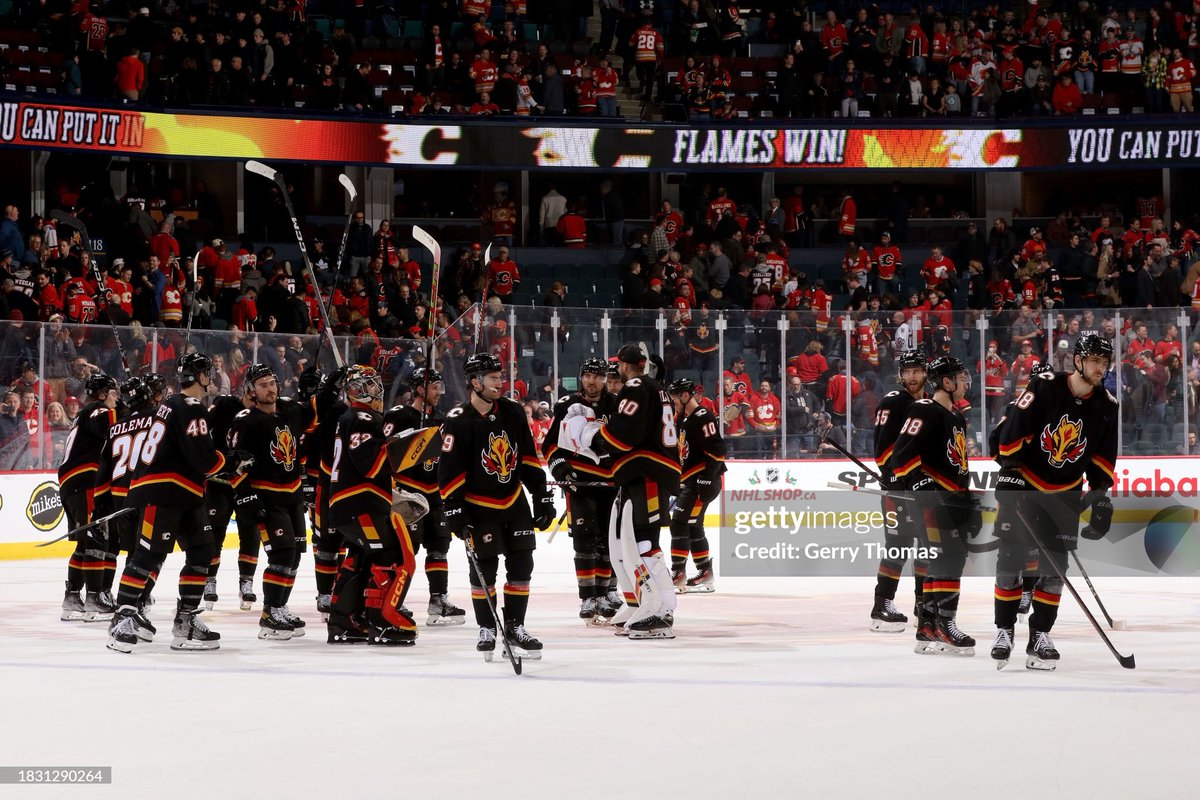
The Flames third period comebacks have been a charming story. Five wins when trailing after two periods leads the NHL and is three more than they had all last season. But it has also disguised a more troubling trend. No team has trailed more often going to the third than Calgary (19 times).
Not the 32nd place Sharks (16 times).
Not the 31st place Blackhawks (15 times).
Not the 30th place Ducks (18 times).
If NHL games were 40 minutes long, it would be the Flames in last place overall. Hello Macklin Celebrini!
So while all the late-game drama and the improbable rallies have written an inspiring story — and by no means am I here to diminish what they’ve achieved as it absolutely shows a team that refuses to quit, who battles to the buzzer, and those are all admirable qualities — but the sobering reality one can't lose sight of is those five third period comebacks have also been a byproduct of opportunity.
Using that same measuring stick, you know who sucks at third period comebacks? Vegas. Only once have the reigning Stanley Cup champions staged a third period comeback. Just one time!
But alas, only six times in 28 games have the Golden Knights found themselves needing to come back in the third period. Only the New York Islanders (5) have trailed after two periods less often.
So as much as I love that exhilarating feeling of finding my keys after I’ve lost them. I’d still prefer if I never misplaced them.
Third period comebacks is basically the team version of the cautionary tale that accompanies individual stats like blocked shots and body checks.
When are you getting in front of shots? When you don't have the puck.
When are you hitting opponents? When they've got the puck.
Not having the puck may produce league leaders in those two categories, but it’s not a path to success, nor is constantly trailing in hockey games.
You've heard the expression "cannot see the forest for the trees". The origin of it dates back nearly 500 years to a Renaissance proverb written by John Heywood in 1546, and it still very much applies today, specifically to the Find-a-way Flames 2.0, as Flames radio voice Derek Wills refers to them.
Calgary is 5-12-2 when trailing after two periods this season, which is a .316 point percentage. For context, the league average PT% this season is .190.
Over the previous 10 seasons, the Flames PT% when trailing after two periods was .197, or just slightly above the league average of .194.
If Calgary's results when trailing after two periods reflected the club's historic norm, or the NHL norm for that matter, the Flames would have five fewer points right now. If that had been the case, here's what the bottom of the NHL standings would like today:
29. Anaheim | 26 gm, 10-16-0, 20 pts
30. Calgary | 27 gm, 9-16-2, 20 pts
31. Chicago | 26 gm, 9-16-1, 19 pts
32. San Jose | 27 gm, 8-17-2, 18 pts
In other words, without this year's unprecedented third period heroics, Calgary would be knocking on the door of last place.
Enter another expression, "regression toward the mean", which basically means in statistical scenarios where a sample produces numbers that are extreme and well outside the historic norm, that over time, things will move back towards that historic norm.
So here at the one-third mark of the 2023-24 regular season, it’s on the Flames front office to not let a statistical anomaly trick them into thinking they are something they’re not.
For an organization in which many critical and potentially course-altering and franchise-defining decisions remain in the form of that well-documented long list of high-profile veterans on expiring contracts, don't let two months of third period magic trick you into going down the wrong path.
If you combine records, the Pacific Division boasts the best top-three teams of the league's four divisions. It’s become the group of death, and that excludes the Edmonton Oilers, who appear to have finally found their way and are the league’s hottest team.
A dose of intellectual honesty suggests that at best, Calgary is chasing fourth in the Pacific, although most likely fifth. Sure, that could still mean a wild card spot in the Western Conference. But there's also a real risk that the Flames end up standing ticketless on the steps, just outside the entrance to the NHL's post-season gala.
Calgary’s been a much-improved team the last six weeks. No argument there. They’ve done an admirable job of navigating what’s been a very difficult schedule of late. But they’re also doing it in ways that are unsustainable.
It’s an important reality check for general manager Craig Conroy to keep in mind as he inches closer to decision time with pending UFAs Elias Lindholm, Noah Hanifin, and Chris Tanev.
Everybody loves a feel-good movie, but it’s also important to recognize when it’s just a movie.