The infrastructure layer for generative Al is where Sunra starts.
That means an ecosystem of models of every kind, built with the teams behind them.
Happy to partner with @veedstudio . VEED's models are now available through Sunra, starting with Fabric 1.0.
Most AI builders try to generate the design and the code at the same time. Linen takes a different approach.
Built by an ex-Figma engineer who worked on core editor features and one of Figma’s first AI features, it separates visual exploration from implementation.
Instead of jumping straight into code, you use image models to explore different layouts, styles and visual directions. Once you find something you like, an LLM takes over and turns it into a working interface.
Designer → Image model.
Engineer → LLM.
I really like the idea of letting each model focus on what it does best. It makes the whole UI creation process feel much more intentional.
Big update - we're relaunching as https://t.co/sUe2Q87Ewl with a ton of new features.
Sections let you make longer scrolling pages, and you can also now just ask @heylinen to make a design for you (try it for free credits!)
Come design at the speed of thought:
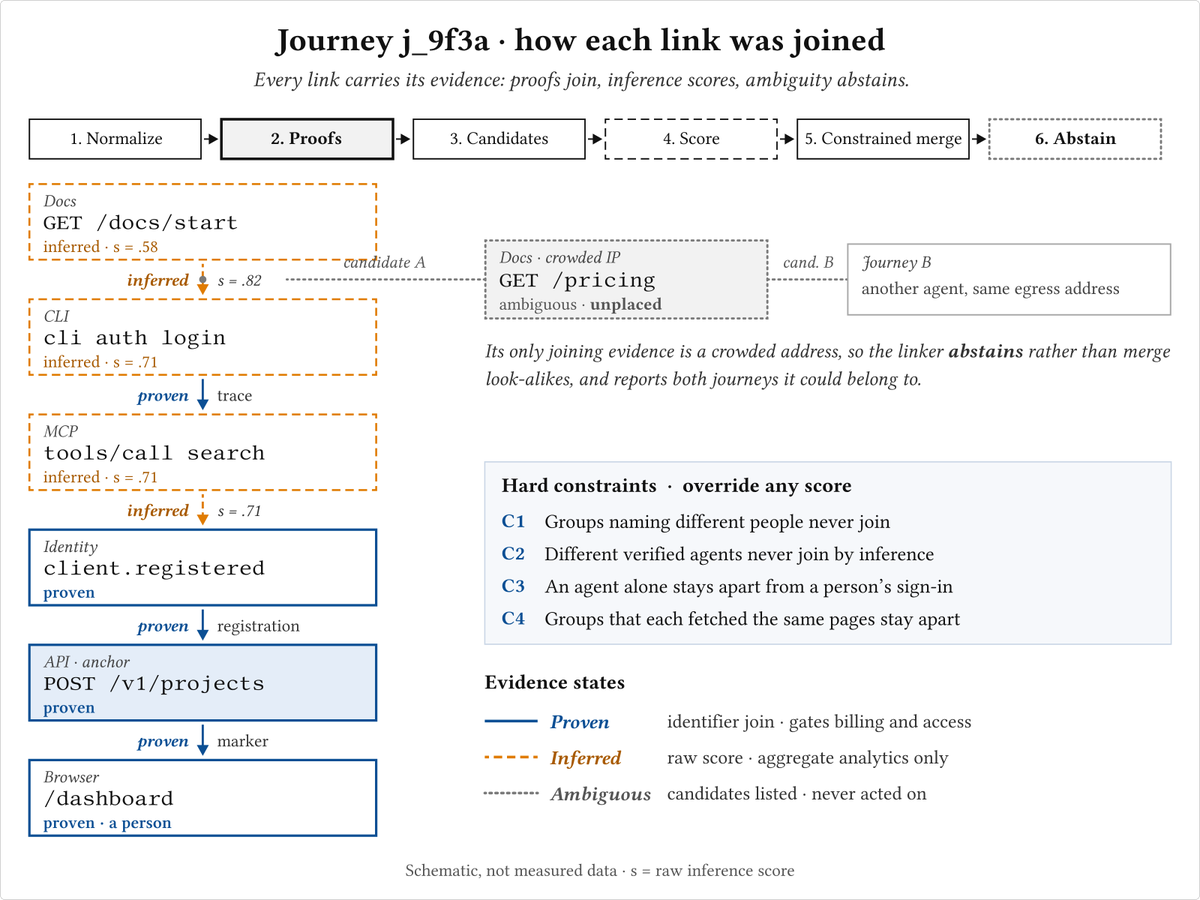
This thread made me realize how tricky agent tracking can become.
An agent can move between docs, APIs, MCP servers and browsers, yet each interaction may look like a different visitor.
I’ve seen how hard it can be to trace failures when agents handle multiple steps across different tools.
That’s why Agentrail caught my attention. I think this problem will only grow as AI agents evolve.
1/7 AI agents don’t browse your product in a straight line. They teleport.
Docs, CLI, API, MCP server, browser no shared ID, no session, no trail. Until now.
To your product, it looks like a handful of unrelated visitors.
Today we’re publishing Following the Agent, our paper on reconstructing multi-surface agent journeys and identifying what’s behind them.
Read the full paper here: https://t.co/gIsnFpSCfS