¿Por qué Alemania fracasó en su conquista de la URSS? Ni por Hitler, ni por el invierno, ni por la ayuda de EE.UU.
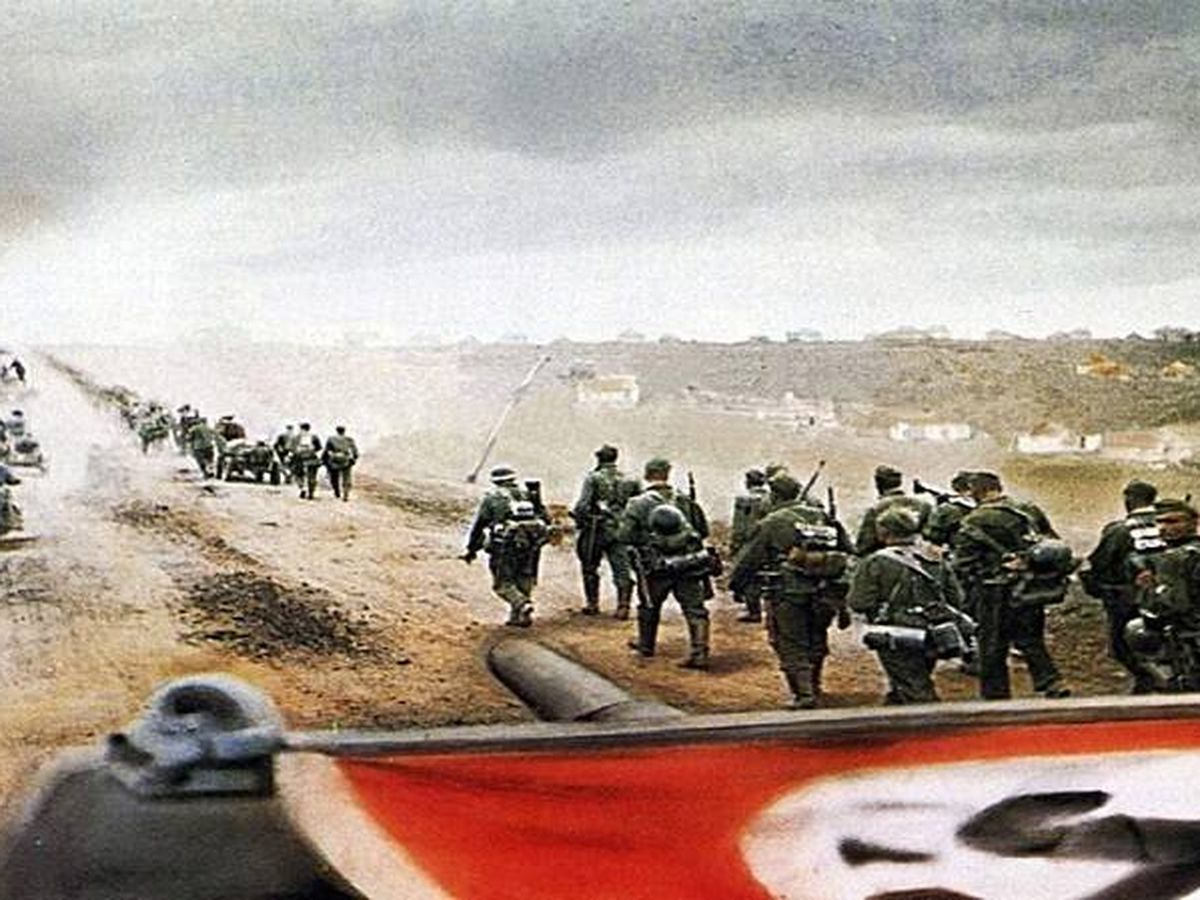
Barbarroja es uno de los episodios que más veces aparece mal contado en la divulgación histórica. Se tiende a reincidir en la idea de que el avance alemán hacia Moscú se detuvo por el invierno ruso, o por los errores de Hitler en agosto del 41 al derivar fuerzas hacia el sur, cuando en realidad la raíz del fracaso estaba en la industria alemana meses antes de que el primer Panzer cruzase la frontera. Cualquier oficial de logística del Heer en 1941 sabía que los ejércitos avanzan solo hasta donde llegan los suministros de combustible, la munición y las piezas de repuesto. El alto mando conocía la limitación en abril del 41, pero aun así decidió seguir adelante.
Adam Tooze, en The Wages of Destruction, fotografió aquella industria. La maquinaria bélica del Reich operaba al 70% de su capacidad teórica, con porcentajes inferiores en los medios mecanizados (dato para quien sostenga el retraso por los Balcanes). Para junio del 41 los Panzer III se habían duplicado hasta los 1.440 ejemplares, pero el mejor carro del Heer, el Panzer IV, apenas se había incrementado en un par de centenares desde la campaña de Francia. La producción de camiones rondaba el millar mensual repartido entre una miríada de modelos que complicaba la logística. Por si fuera poco, en febrero la Wehrmacht afrontaba una crisis de municiones que la situaba al 50% de sus necesidades doctrinarias.
Los planificadores conocían estas limitaciones pero confiaron en superarlas mediante la velocidad operativa. Como reconstruyó David Stahel en Operation Barbarossa, Halder y el OKH calcularon que el Ejército Rojo debía caer entre las semanas ocho y diez de campaña. La invasión comenzó el 22 de junio, lo que significaba que para el 3 de agosto los soviéticos debían haber sufrido daños intolerables y para la tercera semana de septiembre, siendo generosos, un Reichsprotektor debía despachar en el antiguo despacho de Stalin.
Sin embargo, a finales de agosto la bolsa de Smolensk seguía sin cerrarse del todo, la testarudez de Guderian en Yelnia costó unos 50.000 hombres, y el conjunto del frente había caído al 50% de los efectivos, un 35% descontando el déficit industrial inicial. A esto se añadió la ingrata sorpresa del T-34, que como recuerdan Glantz y House superaba en blindaje y movilidad a cualquier carro alemán disponible en junio del 41, lección que el Panzer III aprendió en Raseiniai y frente a los KV-1 de Katukov en Mtsensk. La derivación del Grupo de Ejércitos Centro hacia el sur, que Stahel ha desmontado en Kiev 1941, respondió a la aceptación de que la campaña iba a ser larga y a la necesidad de los recursos de Ucrania, no a ningún capricho de Hitler.
Queda por explicar por qué la industria del Reich, dueña del Ruhr y del aparato productivo francés y checo, era incapaz de sostener la operación que había proyectado. La administración nazi padecía una hipertrofia burocrática, con plenipotenciarios del Führer disputándose competencias y dejando a Walther Funk en posición casi decorativa, mientras las industrias de capital privado competían sin coordinación por los contratos de armamento y proliferaban prototipos en lugar de concentrar plataformas. Göring interfería en cualquier decisión industrial con su talento para arruinar expedientes, y, sobre todo, el régimen rehusó la economía de guerra total hasta 1942 por no erosionar la imagen del Führer.
Cuando los Panzer se detuvieron a la vista de Moscú en diciembre del 41, el veredicto de la industria llevaba ocho meses firmado en los inventarios de Krupp y Opel sin que se le hiciese mucho caso.
Bibliografía recomendada:
– Tooze, Adam: The Wages of Destruction, Penguin, Londres, 2006.
– Stahel, David: Operation Barbarossa and Germany's Defeat in the East, Cambridge UP, 2009.
– Glantz, David / House, Jonathan: When Titans Clashed, Kansas UP, Lawrence, 2015.
Kundadri Hill - One of Karnataka’s most magical sunrise spots - inaccessible during sunrise!
Kundadri is a scenic hilltop temple locations in the Western Ghats near Agumbe. At around 3,200 ft elevation, the hill is famous for its ancient Jain temple.
The hill is historically connected to the Jain monk Acharya Kundakunda, after whom “Kundadri” is believed to be named. The temple on top is a 17th-century Jain Basadi dedicated to Parshwanatha, the 23rd Tirthankara.
One of the most unique features of the summit is the presence of two small natural ponds beside the temple, which reflect the sky beautifully during sunrise and sunset and create a very cinematic look, especially in monsoon and winter.
You can drive almost to the top through narrow forest roads and then climb around 40–50 stone steps to reach the temple complex.
The gates leading to the hill remain closed until 9 AM, making Kundadri inaccessible for tourists hoping to witness the famous sunrise views. Even during peak summer, there was a beautiful cloud bed early in the morning, but since the gates were locked, I could only capture it using the drone and couldn’t visit the hilltop myself. Many vehicles arrived expecting sunrise access, only to turn back after seeing the locked gates.
Successes by age…
Age 4…not peeing in your pants
Age 12…having close friends
Age 16…having a drivers license
Age 18…having sex
Age 35…having money
Age 50…having money
Age 60…having sex
Age 70…having a drivers license
Age 75…having close friends
Age 80…not peeing in your pants
Visited my hometown Dharwad. Spent time with my ajji and made a short video. Do give it a watch. Does it take you down the memory lane too?
Also, credits to Siddharth Belmannu and team for such a beautiful melody!
Watching The Dinosaurs (2026) was so jarringly sad. Dinosaurs survived 165 million years on Earth, including 2 milion years of nonstop rain, only to be wiped out by a random asteroid. Meanwhile, modern humans have existed for only 300,000 years. Agriculture? 12,000. Civilization? 5,000. Industrial revolution? 250. Nuclear weapons and Al? Less than 100. In a tiny sliver of Earth's timeline we have already caused wars, mass extinction, and permanent damage to the planet. We are recklessly arrogant.
Astrophysicist Neil deGrasse Tyson explains, the faster you move through space, the slower you move through time. As you approach the speed of light, time stretches and slows down until it reaches the ultimate cosmic speed limit, where time completely stops.
This means that for a photon of light created at the Big Bang 13.8 billion years ago, the exact moment it was born is the exact same instant it strikes your eye; a mind-bending reality proving that for light, the entire history of the universe happens in a single, frozen moment.
In 1995, Martin Scorsese and Francis Ford Coppola helped restore and re-release I Am Cuba (1964).
Considered a masterpiece, this continuous shot shows why.
I found a 711 page PhD thesis on the archaeology of the Malnad region, covering the districts of Shivamogga, Chikkamagaluru and Hassan.
I used Claude to go through it and found some interesting details about the prehistoric sites across Malnad taluks.
Early humans began moving into the Malnad region as far back as the Palaeolithic period. They followed the rivers upstream, the Tunga, Bhadra, Hemavati and Kaveri. They moved into Malnad from the plains of Karnataka in the east and from the coastal region in the west through the Western Ghats passes.
This thesis by K.P. Poonacha, submitted in 1990 to Karnataka University Dharwad, covers 110 years of discoveries starting from R.B. Foote's first finds in 1881 to other fieldworks in the late 1980s.
The map shows the coordinates of prehistoric sites found in the Malnad region and the table has the details of each site.
#Archeology #Malnad #WesternGhats
In The Godfather Part II, a deleted scene shows two of Don Ciccio’s henchmen going to Vito’s mother after his older brother is killed, demanding that she hand the boy over. Years later, Vito returns to Sicily as a grown man and tracks down those same two henchmen in scenes that were also cut from the film, before finally confronting Don Ciccio himself.
These scenes were cut for pacing, but they’re worth watching because they show how ruthless and methodical Vito was as a young man in carrying out his revenge — a side of him we rarely see in the finished films.