Physician, Researcher, South Asian Health Advocate Author of upcoming books on the South Asian Health Crisis. Tweets are not medical advice. RT ≠ Endorsements
Recently interviewed @DesidocMD and produced this piece about the links between intergenerational trauma and our physical bodies. This topic is personal for me because my grandparents were refugees from India under British colonization:
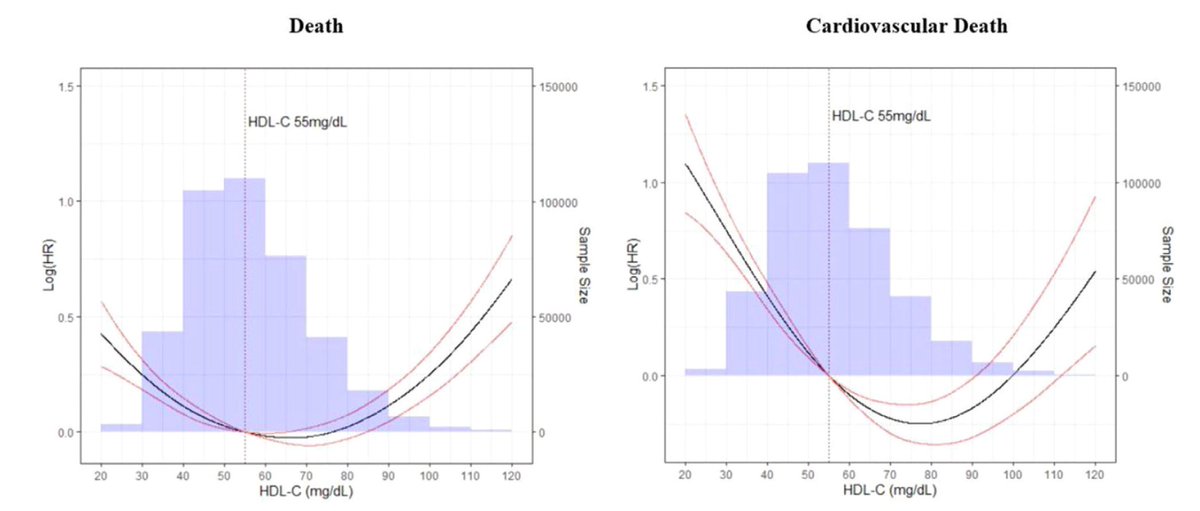
Careful what you wish for: ⬆️HDLc >80 mg/dL was associated with ⬆️risk of all-cause death & CV death after adjustment for age, gender, race, BMI, HTN, smoking, TG, LDL-C, CVA & MI history, diabetes, eGFR, & alcohol use (defined as ≥3 times/week) https://t.co/RDCZHYrlu9
This doctor says the physical effects of colonialism can still be felt on South Asians today.
Dr. Mubin Syed says doctors need to understand the needs of different ethnicities when giving treatment.
@CatHistori@shruti_advani@FaimaBakar Again it still does not address the issues with fat storage, which underlie the metabolic health issues. Additionally the Bengal famine was one of many famines. In fact, the most severe famines actually occurred from 1850-1920. https://t.co/Hzbje3SJ4I
@CatHistori@shruti_advani@FaimaBakar The evidence for famine induced epigenetic changes is growing strong. Studies that examine the Overkalix, Dutch Winter and early 20th century Chinese famine support trans-generational metabolic effects following famines. It is even seen in animal models. https://t.co/K4ujNJalYO
@CatHistori@shruti_advani@FaimaBakar I also forgot to mention the marked decrease in stature Pomeroy Et al. had cited in their previous paper in 2016. https://t.co/E3D4IbgyLN
@CatHistori@shruti_advani@FaimaBakar A starvation adaptation and a modern obesity crisis (e.g., relative over abundance of food and high consumption of ultra-processed, high sugar, high carbohydrate foods) could explain the heart health crisis in the South Asian community
@CatHistori@shruti_advani@FaimaBakar Yes but there is a generally higher predisposition for South Asians to develop insulin resistance. https://t.co/pzZtD3DPeT
@teragramytrehod @Sathnam .@FaimaBakar@Sathnam, its true that South Asians (& to lesser extent East Asians like me) have increased tendency for T2 diabetes given a similar BMI. Reason is not increased storage, but having a lower 'safe fat storage' capacity, compared to eg white folks or Polynesians 1/n
@RobKnell1 @Sathnam Exactly! Like what was observed in the Overkalix and Dutch Winter Hunger Famines, animal models have also been established showing a multigenerational effect of chronic undernutrition. https://t.co/UmT6uZGRzV
South Asians lived through 31 famines during the British Raj. Check out this fascinating piece on how this could be linked to life-limiting health inequalities generations down the line 📊
https://t.co/oN2hGVHtCT
@SPTKing That is very interesting to hear but I am not too familiar with the recommendations for Southeast Asians. You should keep in mind many of the modern/well-known clinical rec. are based on data obtained from Caucasian men. But researchers and physicians are trying to fix this!
Happy to share our manuscript on social deprivation and premature CV mortality in the US. Persistent disparities over the past 2 decades. paper led by superstar mentee Dr Graham Bevan @khurramn1 https://t.co/ttE63YtZNT
One to two servings, or 5.5 ounces, of protein daily is recommended for a heart healthy diet. New research shows that getting that protein from a variety of sources (grains, lean meat, poultry, fish, eggs and legumes) could prevent high blood pressure.
@CatHistori@shruti_advani@FaimaBakar Starvation adaptation can help explain the higher rates of CVD and diabetes in SAs. It seems the near 2 century history of under nutrition is commonly overlooked by many scientific circles. https://t.co/L8pXqK8SD0…
@CatHistori@shruti_advani@FaimaBakar Starvation adaptation can help explain the higher rates of CVD and diabetes in SAs. It seems the near 2 century history of under nutrition is commonly overlooked by many scientific circles. https://t.co/L8pXqK8SD0…
@CatHistori@shruti_advani@FaimaBakar However, a history of famines is certainly not the only factor contributing to the increased CVD in South Asians. But there is very strong evidence that exposure to even one famine results in metabolic adaptations that is multi-generational. https://t.co/eJ3b2jxvz0