Idle VMs, 15% CPU pods running as 4x large, prometheus metrics no one looks at.
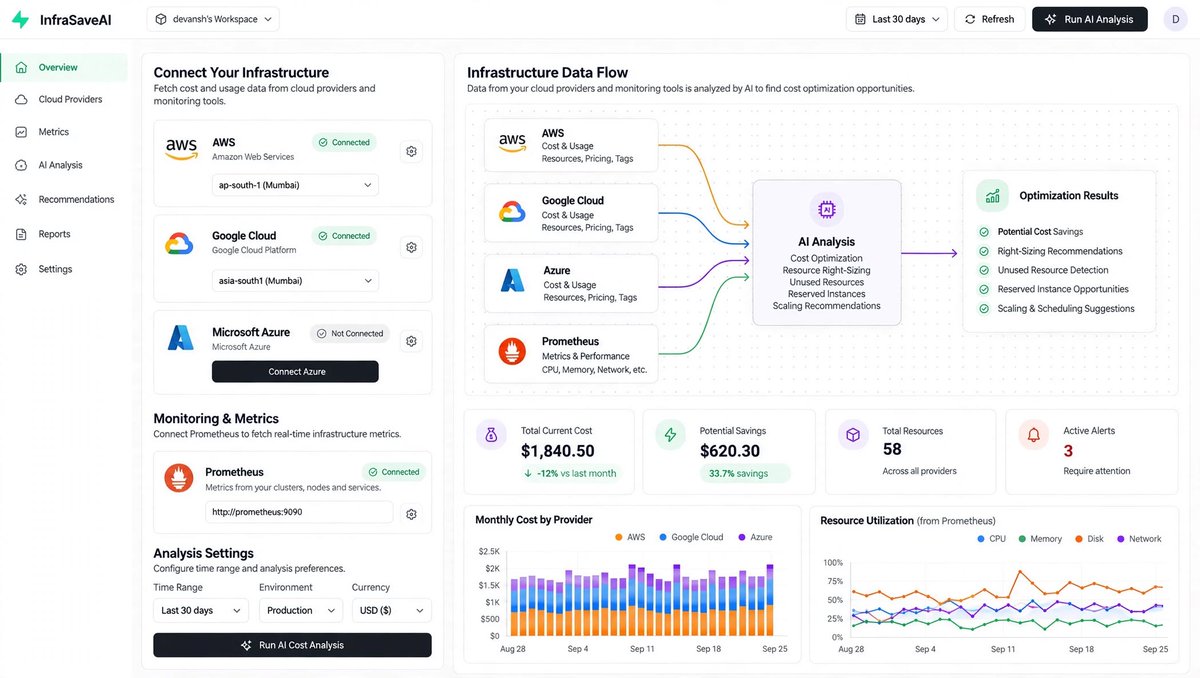
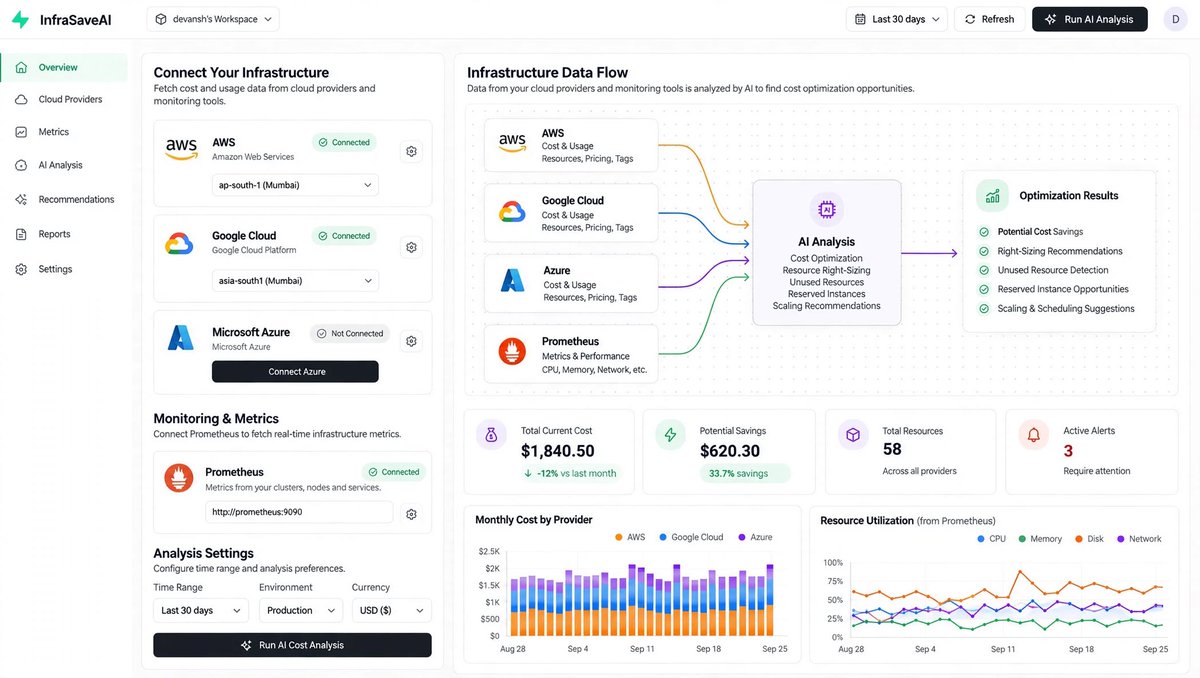
Started hacking on a little tool that connects to AWS/GCP + Prometheus and just points out the obvious stuff to kill/resize.
I wired up cost data (AWS/GCP/Azure) + utilization metrics and let AI correlate it.
e.g. "this instance is at 12% CPU for 30 days, downsize it" or "this volume hasn't been attached in 3 weeks"
Building it for myself first. Screenshot of current state:
AI agents get expensive from retries, not tokens.
Fix: route to smaller models, set execution budgets, track cost/success.
Full playbook: https://t.co/bRcAuG6bCR
#MLOps
Can 1 engineer run AI agents? For a narrow workflow, yes.
Key: MLOps + guardrails + human-in-the-loop for exceptions.
I broke down the setup + cost model here:
https://t.co/bRcAuG6bCR
#LLMOps#AgentOps#DevOps
You don't need 100 people to run AI agents. You need MLOps.
Lean teams cut costs 50% by:
→ Right-sizing models
→ Capping retries/tokens
→ Measuring cost per successful task
Guide: https://t.co/bRcAuG6bCR
#MLOps#AIAgents
There’s no universal winner.
Self-managed Kubernetes gives you control.
EKS gives you operational simplicity.
I broke down the trade-offs and when each approach makes sense 👇
AWS EKS vs Self-Managed Kubernetes
#DevOps#AWS#Kubernetes#EKS#CloudEngineering
It was:
Do we want to run Kubernetes, or run our application?
With self-managed Kubernetes, we get maximum control—but we also take responsibility for the control plane, upgrades, etcd, security, and high availability.
20, building DevOpsBy, trying to turn the skills I’ve been learning into something that actually makes money.
Just shipped an update to the website. More coming soon 👀
-devopsbyme