A partnership between international organizations and companies, created to facilitate the use of third-party data in research and international development.
Nearly 18% of public institutions in Jamaica lacked fixed broadband connectivity. With support from @Speedtest, a project by @the_IDB & @ITU provides insights to identify cost-effective solutions to improve internet access for schools across Jamaica. https://t.co/7EYTIUHq3O
This #WTISD, we highlight how data partnerships help close the digital divide. With @Speedtest’s support, teams from @WorldBankGroup and @the_IDB leveraged data to improve connectivity in low-income countries. https://t.co/MelJRNUF4L
Reliable internet access is essential for quality education. With @Speedtest’s support, @the_IDB and @ITU analyzed connectivity gaps in Jamaica and found 236 schools lacked fixed broadband access, while 4G/3G networks could help improve connectivity. https://t.co/7EYTIUHq3O
Should #poverty be measured using income or consumption data? What about household economies of scale?
By making methodological choices visible and comparable, our PIP Innovation Hub strengthens the evidence base for poverty analysis.
See how: https://t.co/15GcGrLXxb
Across Latin America, digital transformation is unfolding in different ways. Using @LinkedIn data, a World Bank study shows that some countries recorded stronger growth in digital skills while several others exhibited specific digital skills. https://t.co/S2XXLwr5UF
Digital transformation is reshaping Latin America. Using @LinkedIn data, a World Bank study found that on average digital skills accounted for only 6% of total skills, with their largest growth observed in Chile, Colombia, and Peru. https://t.co/S2XXLwr5UF
It’s #WorldHealthDay (Apr 7)! Stronger health systems rely on data. Learn how teams from the @WorldBankGroup worked with @Mapbox & @Speedtest to improve healthcare access in low-income countries.https://t.co/RvAHI7VK2T
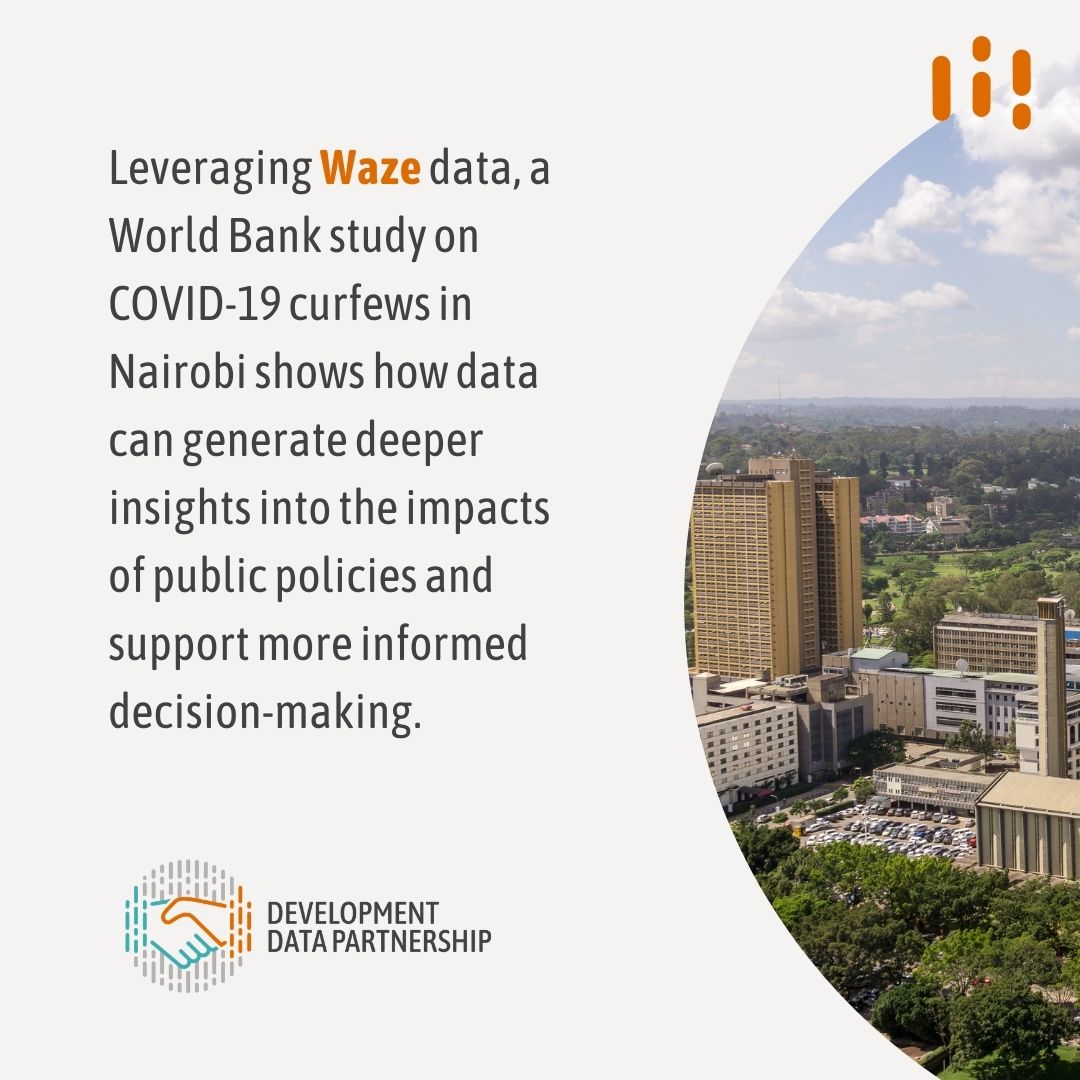
A World Bank study used @waze data to analyze mobility patterns during COVID-19 curfews, showing that fewer crashes during curfew hours were offset by increases beforehand as drivers rushed home, highlighting the value of data for policy insights.
https://t.co/xWKykAYYVc
A World Bank study using @waze data found that while COVID-19 curfews in Nairobi reduced crashes during restricted hours, crashes increased beforehand as drivers rushed home, highlighting unintended policy effects. https://t.co/xWKykAZwKK
Advancing #GenderEquality requires reliable, up-to-date, and large-scale data. On #IWD2026, read our new blog on how the International Energy Agency and @BIDInvest used @LinkedIn data to examine gender gaps.
https://t.co/PocYVQ570c
Leveraging @LinkedIn data, a World Bank study analyzed cross-border mobility of high-skilled digital talent, uncovering patterns of inflows and outflows that inform discussions on brain drain and brain gain.
https://t.co/O3A4F5fCQ8
As digital & AI skills reshape labor markets, high-skilled digital talent is becoming more mobile across borders. Using @LinkedIn data, a @WorldBank analysis highlights sharp imbalances in talent inflows and outflows.
https://t.co/O3A4F5fCQ8
The @WBGPubs Spring 2026 Catalog is here! 🌸📖
From the newly released Women, Business and the Law 2026 report to the forthcoming The Return Imperative and Why Labor Informality Persists, explore the key titles defining this season’s #development agenda: https://t.co/SLgI4FM5g2
A key lesson from the @WorldBankGroup’s new Statistical Performance Indicators update?
The biggest differences between high- and low-income countries boil down to the basics: census, household survey, civil registration, and administrative data.
More: https://t.co/6WSFfclz9U
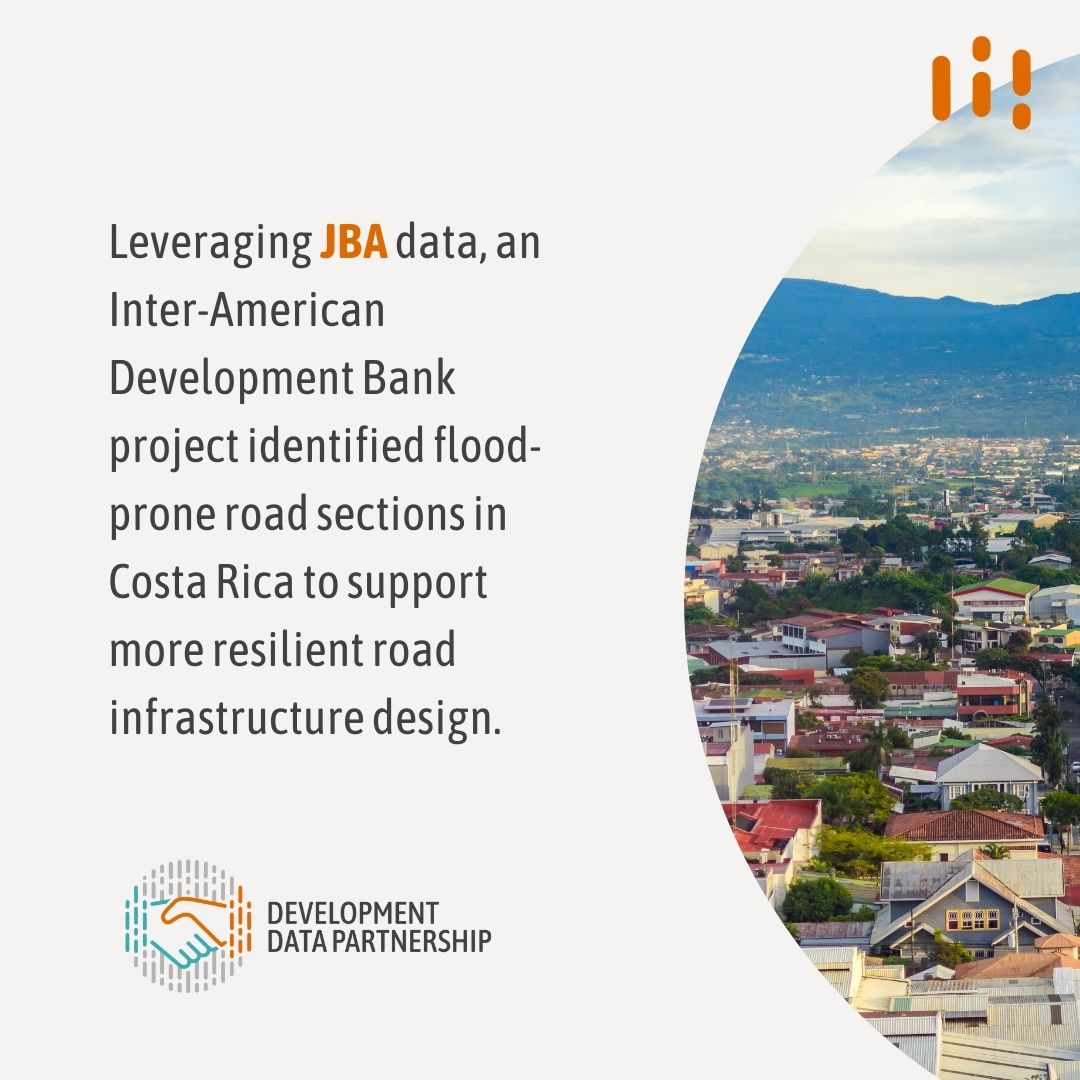
Flood hazards are a growing threat to road infrastructure in countries like Costa Rica. @the_IDB used @JBAConsulting data and hydrological, hydraulic, and geospatial analyses to identify flood-prone road segments. https://t.co/CyudVgybFC
To strengthen road resilience in Costa Rica, @the_IDB mapped flood hazards along the Bernardo Soto–Florencia section of National Route 35. Using @JBAConsulting data, the analysis identified flood-prone segments to inform resilient infrastructure design. https://t.co/CyudVgybFC
Higher-income countries import nutritious foods from more diverse partners. Many low-income and fragile countries depend on just one or two suppliers—especially for fruits and vegetables.
See why diversification matters for nutrition resilience. https://t.co/Nk7ZUQfF4r
Data can help advance women’s careers. @BIDInvest uses aggregated @LinkedIn data from 18 countries in Latin America and the Caribbean to track women’s career progression toward leadership. https://t.co/df7Hyuovmw
While it’s well documented that women face barriers to career advancement, identifying when participation declines remains a key challenge. A collaboration between @BIDInvest and @LinkedIn uses labour-market data to identify where declines occur.
https://t.co/df7Hyuovmw
Did you know? The @WorldBank’s Land Data Map is a new interactive platform that connects land data with jobs, growth, and development outcomes through maps, indicators, and real-world examples.
Learn more 👇 https://t.co/GrEWlCm3ac