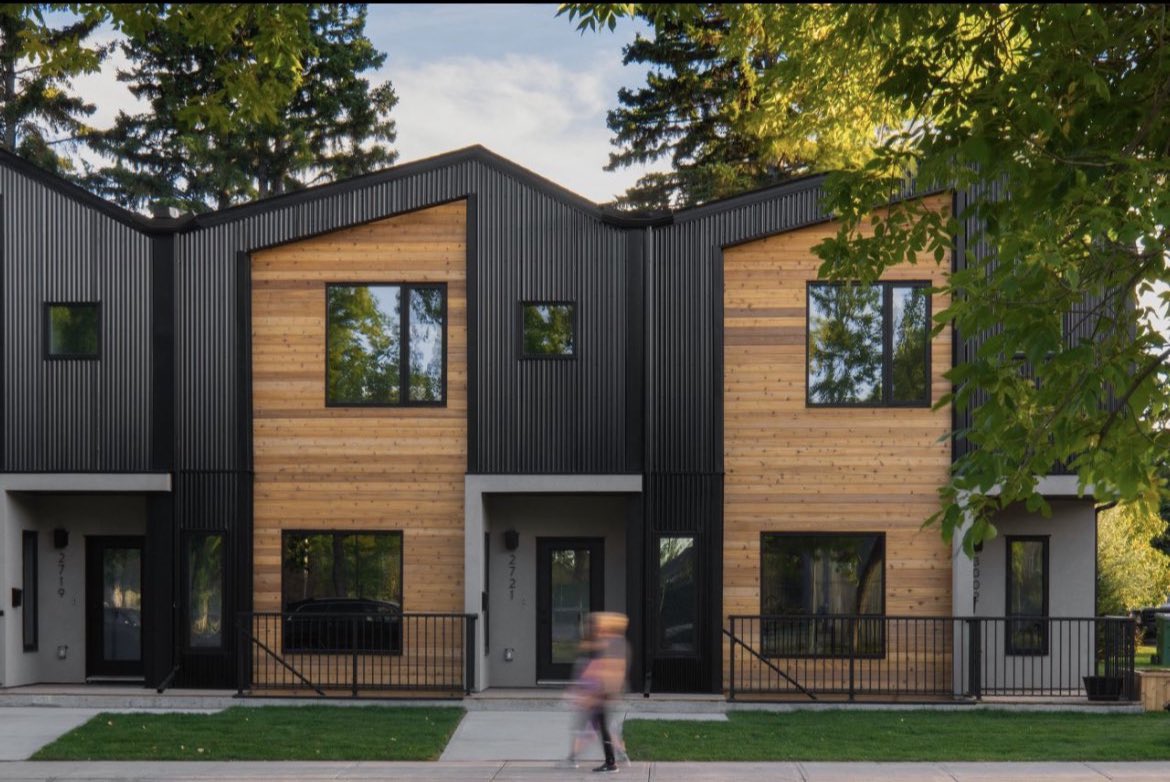
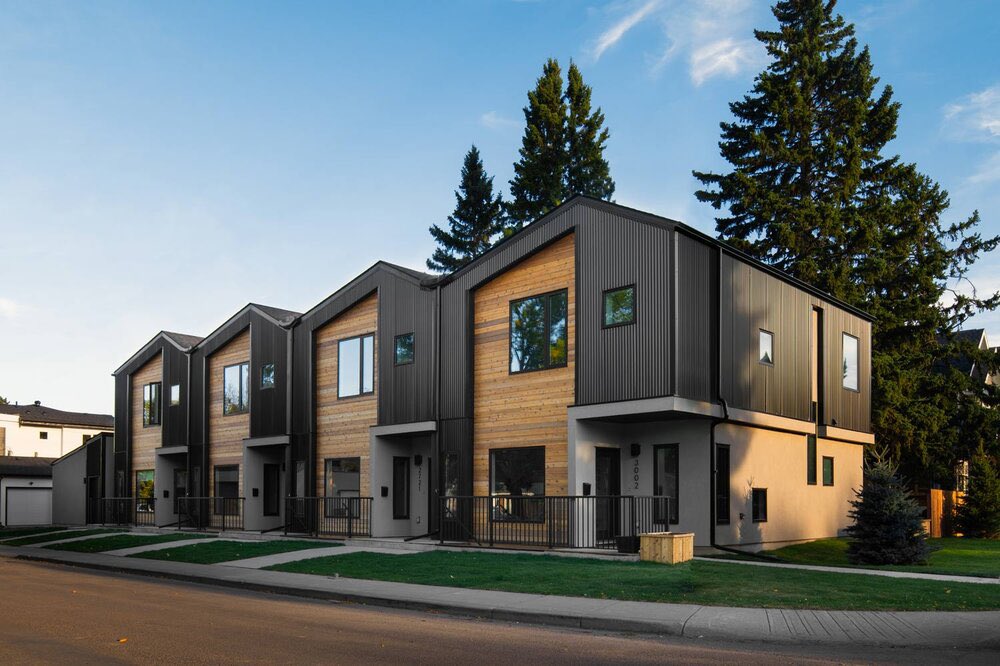
A simple build that I am incredibly proud of, which is often called “the missing middle.” Eight units on a 6,000 sqft parcel would have historically been one or two homes if redeveloped. I’m proud because the secondary suites have housed students, new immigrants and refugees, to name a few, while keeping them close to amenities and not requiring vehicles! The townhomes provide opportunities for families and empty nesters to stay inner city close to the core rather than depart for the suburbs. This right here is my jam and can have a significant impact on the housing crisis.
Window shrouds are probably the most underrated articulation detail in residential architecture. This project has a lot of thoughtful moves but the volumes are repeated with smart material transitions. Sometimes the restraint is the detail.
Policy and zoning create permission. Not housing. Too many cities riddle that permission with additional requirements without understanding the cumulative impact. We end up further back than where we started.
This is one of the largest fractures in the ecosystem. The gap between what a city says it wants and what it actually makes possible is where housing goes to die. Permitting timelines, fees, off street parking requirements, design guidelines that add cost without adding value. Every layer feels reasonable in isolation. Together they make the math not work.
You cannot solve a housing crisis with one hand while making it harder to build with the other.
The YIMBY candidates have half the equation (zoning & permitting) in their sights.
Unfortunately, their terrible approach to the other half of housing (financing & operating) makes them untenable.
Hi Jennifer. The progress is real and you have been one of the clearest voices on it. The scale of zoning reform across Canadian cities in such a short period is genuinely remarkable and worth acknowledging.
Where I keep landing is accountability. Tied funding was effective at getting cities to the table. What it did not do was build the conditions for reform to survive when the political ground shifted. Calgary proved that. The discomfort that was always there did not disappear when the policy arrived. It waited. And when the moment came it pushed back hard enough to undo what took years to build.
So the question I cannot shake is what good is change that can be walked back without consequence. We need to be honest about the difference between forced reform and durable reform.
Twisting arms gets you movement. It does not get you permanence. And for the industry, for small scale developers who made real bets on the direction things were heading, and for the communities that were starting to see what was possible, the instability is not a small thing. It is genuinely harmful.
The path forward has to include a real accountability mechanism. Not just incentives to change but consequences for abandoning it. And a culture of iteration when things do not go as planned rather than retreat. That is the conversation I think we still need to have.