"India cannot build world-class hardware."
It is time to retire that outdated mindset.
Right now, an incredible wave of Indian startups is engineering highly reliable BLDC Motors, ESCs, PDBs, and Controllers.
They are building them specifically for the demands of the Indian market.
If you are leading an R&D team, start testing these domestic components in your products.
I promise you, the ecosystem is not what it was 5 years ago.
The capability is here. We just need the adoption.
Resigning on moral grounds earlier (atleast after re-exam results were out) would've been the right option. GoI in its non-political form should always listen to feedback from the ground.
- Now can we get (more) initiatives & emphasis on aatmanirbharta in defence please. That's not even a controversial topic, so ig they won't have people protesting but if anyone is reading: get an FTB, sanction Kaveri 2.0, begin work on turboprops for C-295 MLU, select AMCA consortium, select engine partner & sanction IDDM 110+kN development et al... Most importantly fast-track IDDM IP efforts instead of rewarding "collaborations" & "co-development."
- Also need less glamorous PLI dvhemes with small allocations for various niche sectors & tech (not defence pov alone) that India lacks.
R&D leads to manufacturing, Manufacturing leads to jobs, jobs create wealth, wealth leads to demand, demand need Supply, and you get supply from?
That's right, Manufacturing.
You want to take out Poverty? Build!, Instead of giving freebies for a low esteem society. Indians need dignity not freebies.
Hear the man himself: Satyanarayan Nuwal, Chairman, Solar Defence & Aerospace Ltd. (SDAL):
“Bhargavastra is a complete system. Internal trials will finish in 2–3 months. The micro-missile has already been tested at Balasore and Pokhran, and the integrated system, including radar, EOTS, and missile has been validated. Our radar has a 10 km range and the EOTS 6 km, exceeding the Army’s current 2.5 km requirement. We have already begun work on a 6 km interceptor and are confident of realizing the PM’s ‘Sudarshan Chakra’ vision by 2030 with a layered 2.5 km, 6 km, and 25 km air defence system.”
Many won't know that when Ethereal Machines built 3 axis CNC machines for the first time, almost no one from Indian consumer side believed them since they thought that building such machines was outside the paygrade of Indians.
Ethereal Machines guys had to then shift to 'CNC Machining as Service' model (I dont know whether this kind of thing happens anywhere in the world) to survive.
It's only after seeing the results of these machines first hand did Indians slowly began to trust them.
To appreciate the scale of what India's youth just pulled off this month, we have to look at the cumulative math of the country's Olympiad history. What these students achieved in a single 7 day window matches what used to take the nation decades to accumulate in its early participation yrs:
- : India made its debut at the International Physics Olympiad in 1998. It took India 7 consecutive yrs of participation (from 1998 to 2004) to secure a cumulative total of 5 Gold Medals. This month, a single batch of 5 Indian students walked into Colombia & bagged 5 Gold Medals in 1 shot.
- India 1st debuted at the International Chemistry Olympiad 27 yrs ago in 1999. Throughout ~3 decades of competing, India had never managed a perfect all gold sweep. The 2026 team secured 4 Gold Medals, maintaining a 100% gold conversion rate. This single week delivered a historic, unmatched clean sweep that eluded the country for 27 yrs.
- India began participating in the International Mathematical Olympiad in 1989. It took the country 9 yrs of competing just to collect a handful of gold medals, often struggling against institutional hurdles & lacking proper training ecosystems. This month team added 2 Gold Medals to the national tally, ranking World No. 7 globally in 1 of the most brutal competitive brackets on earth.
- India made its debut at the International Biology Olympiad back in 2000. In the initial yrs of the country's participation, getting even a single gold medal took massive coordination. This month, at Vilnius, Lithuania, the 4 member Indian contingent hit a flawless 100% medal conversion rate, with Bhavyaa Gunwal securing a hard-fought Gold, alongside 3 Silvers.
These 12 golds proved that the real future of the country is not being written by noisy political commentators. Jai Hind!
The Indian civilisation is meant to be a space-faring civilisation. God doesn't award you a location so perfect for it only for you to launch twice a year. You are supposed to take off twice a day and honour the god's wish.
Indian government should make a priority desk of extreme importance, catering to the demands and policy ease in the following critical sectors. Name it The Apex 12 or something:
> Artificial Intelligence & Compute
> Space Economy
> Nuclear (Fission & Fusion)
> Quantum Technologies
> Biotechnology & Synthetic Biology
> Advanced Energy Systems
> Critical Minerals & Materials
> Autonomous Systems & Robotics
> Climate & Planetary Technologies
> Cybersecurity & Digital Sovereignty
> Advanced Manufacturing
> Defence & Security Technologies
For most of our lives, we are measured by ordinary questions.
How much do you earn? How much have you saved? What car do you drive? What is your company's valuation? Where did you spend your vacation? Which restaurants you eat in?
But every once in a while, you come across people who have quietly stopped playing that game.
They choose to wager their youth, their careers, their savings, and often their peace of mind on an idea that appears absurd to everyone else. They are drawn not by certainty, but by possibility. Their ambitions are so disproportionate to the odds that failure is almost the expected outcome.
Engineers who attempt moonshots belong to this rare tribe.
Today's Skyroot launch is one of those moments.
On Instagram, a narrative that the Chinese Army has entered Arunachal and captured 60 km of Indian territory is gaining traction.
I have counted almost 9-10 million views collectively on those reels. It appears to be a cheap paid job, using footage of the Royal Thai Army and depicting it as the Chinese Army, combined with some footage from Manipur to make it more dramatic.
It has been going on for around 7-8 days. I have been closely monitoring it and watching how quickly the Indian Army responds, since it is gaining traction.
The response came 3 days later from an official Indian Army fact-checking handle.
Guess the number of views - approx 19,000 by the time I am writing this post.
The Chinese will cook us so well in IW that the Indian Armed Forces will spend half a decade just fact-checking them!
Good luck, gentlemen.
If a salaried person wants to build a software application or digital services agency, the entry barrier is virtually zero.
They just need a laptop and an internet connection.
But if the same person wants to start manufacturing...
They need:
• Land
• Factory space
• Expensive machinery
• 6-12 months of approvals
• Huge upfront capital
My suggestion to the Government of India:
Build Manufacturing Parks for first-time entrepreneurs.
Instead of selling 10-acre plots, create buildings with 500-1,000 sq. ft. ready-to-use factory units.
Every unit should come with:
• 3-phase electricity already connected
• Pollution & fire approvals already cleared
• Shared CNC machines, injection moulding, testing labs & warehouses
• Common logistics and loading docks
• Month-to-month rentals instead of land purchases
• Single online portal to book a unit within 7 days
Let engineers keep their jobs while testing manufacturing on a small scale.
We built co-working spaces for software.
It's time we built co-factories for manufacturing.
@PMOIndia@PiyushGoyal@minmsme@NITIAayog
World's first OptoSAR satellite of @GalaxEye almost made it. And I want to tell that story honestly.
Mission Drishti reached orbit and earned accolades that meant the world to us. For a few weeks, we watched something we had built with our own hands come alive above the planet. Then, after those early weeks of operations, Drishti stopped performing the way we had dreamed it would.
I won't dress that up. It hurts. But here is the truth we're holding onto: what this mission taught us, we could not have learned any other way. We were bold enough to try. We got achingly close to bringing a breakthrough technology to the world. And the demand and excitement OptoSAR has already stirred only makes us more certain about where this is headed.
As I said before, Mission Drishti was never the destination — it was the beginning. We are now on our way to launching the next two satellites, 300 kg class, in the next 20–24 months.
To our beloved team, to our families who carried us through the long nights, to IN-SPACe, to the investors, to the government, and to every single person who believed in us: thank you. We could not be more grateful. Building from India, for the world, was never going to be easy. We came so close. And we will make it happen again — sooner than you think!🚀
Read more - https://t.co/fJTGJB1j5l
We won.
Banks are now using the words we started.
"Screwdriver India."
"Assembled in India."
A few years ago, nobody talked about this.
Today, even ads are saying it.
That means people are starting to see the difference:
Making in India vs Assembling in India.
This is only the beginning.
Now we need to make even more noise.
Create more awareness.
Talk about import substitution.
Fund Indian manufacturing.
Build in Bharat.
@KotakBankLtd
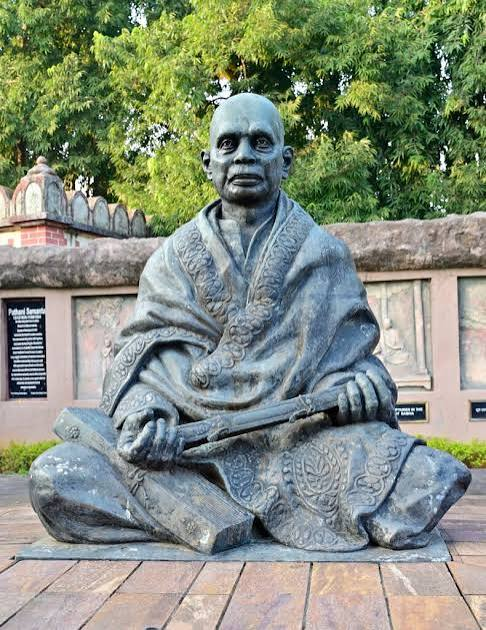
In the mid-19th century, while European astronomers were using massive glass telescopes & mechanical gears, a self-taught astronomer in the jungles of Odisha named Samanta Chandra Sekhar (popularly known as Pathani Samanta) noticed that the standard text-book predictions for planetary paths were failing. The stars were not where the charts said they should be.
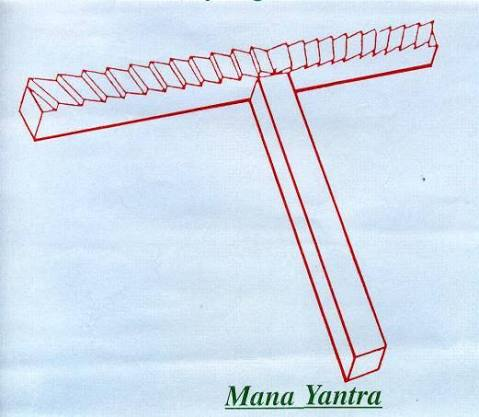
Pathani Samanta had zero access to Western telescopes/mathematics/printing presses. Refusing to guess, he decided to re-measure the entire night sky using naked-eye empirical physics. He designed & hand-carved a deceptively simple device out of local bamboo & wood: the Māna-Yantra (a T-shaped measuring stick)
The Māna-Yantra was a highly sophisticated application of trigonometric tangent scales. It consisted of a long central rod of a fixed length (L). A perpendicular crossbar slid smoothly along this rod. By placing the edge of the rod against his eye & sliding the crossbar until its edges precisely aligned with 2 stars/the 2 edges of the moon, he could read the angular separation directly off a logarithmic tangent scale he had calibrated & etched into the wood by hand.
theta = 2*arctan (W/2D)
Using nothing but this wooden stick, Pathani Samanta logged 1000s of nightly coordinate data points over decades. When he analyzed his data for the Moon, he discovered that its orbit was not a clean, repetitive loop. He detected minute, erratic "wobbles" in the lunar motion.
W/o knowing anything about Western calculus, Samanta independently discovered & mathematically isolated the 3 fundamental gravitational perturbations of the moon's orbit: Evection, Variation & Annual Eqn.
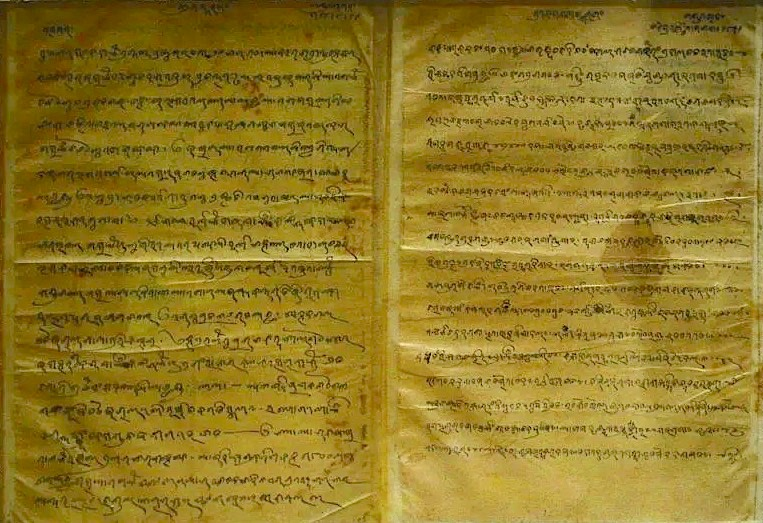
His handwritten Sanskrit palm-leaf manuscript, the Siddhanta Darpana, gained Western notice ~1899 (Nature & Knowledge praised it, comparing him favorably to Tycho Brahe as a "modern Tycho" for naked-eye precision).
Pathani Samanta's calculations of the Moon's orbital irregularities (evection, variation & annual eqn) showed strong agreement with modern values, often achieving high precision through naked-eye observations... typically within a few arc-minutes for key parameters rivaling the accuracy of pre-telescopic European astronomers.
He had mapped the complex, multi-body gravitational mechanics of the solar system using a piece of notched bamboo with a precision that rivaled Europe's multi-million dollar brass instruments.
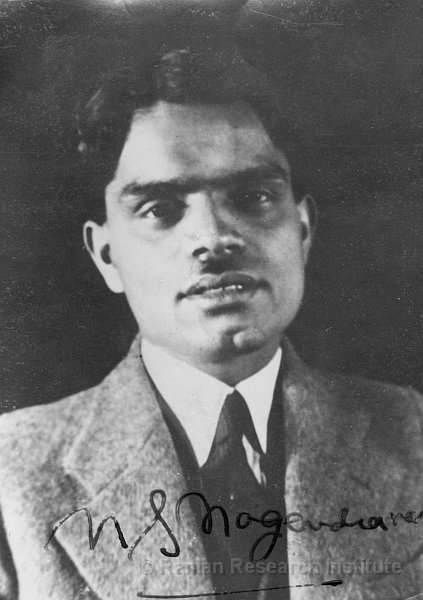
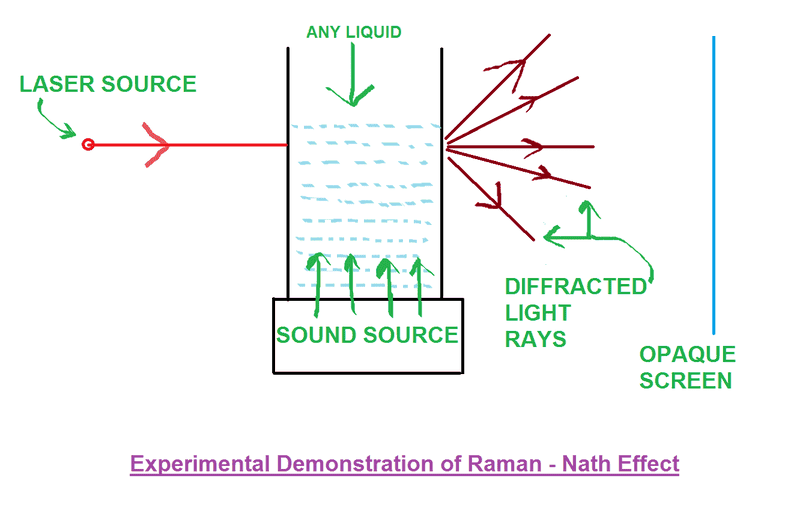
When people think of Chandrasekhara Venkata Raman, they think of the 1930 Nobel Prize for light scattering. But his 2nd breakthrough, executed in Bangalore with his brilliant student N.S. Nagendra Nath, fundamentally changed how humanity controls light waves.
In the 1930s, physicists discovered that if we pass a beam of light through a liquid containing high-frequency sound waves (ultrasonic waves), the light scatters. The sound waves create alternating high & low-density regions in the liquid, acting like a physical grating. Western labs tried to model this using complex, classical diffraction eqns, but the math kept collapsing. They predicted the light would just distort randomly.
Raman & Nath decided to look at the problem from a completely fresh perspective: Wave Phase Modulation. Instead of treating the liquid as a rigid obstacle, they realized that the sound wave acts as a corrugated refractive index that dynamically warps the phase of the incoming light wave.
They built an elegant laboratory setup at the Indian Institute of Science (IISc), modulating light cleanly using sound frequencies. They published a series of papers during 1935-37 creating the Raman-Nath Theory. They mathematically predicted that a single light beam could be sliced cleanly into a highly predictable, mathematically perfect array of multiple beams just by tweaking the acoustic frequency.
This was not just a neat optical trick; it was the birth of Acousto-Optics. Decades later, when lasers were invented, engineers realized they could not turn lasers on & off fast enough mechanically to transmit data. They turned directly to the Raman-Nath experiment.
Today, almost every high-speed laser scanner, Q-switched laser pulse & fiber-optic modulation system uses an "Acousto-Optic Modulator", a device running directly on the exact 1935 eqns written in Bangalore.
Ref: Generalised Theory (a key later paper summarizing & extending the work, 1936):
https://t.co/7LspnJxttZ
The economic and demographic effects of corruption.
Cost of land in our urban areas is far higher than what our GDP per capita would dictate. The ratio of land value to per capita GDP is probably higher in India than anywhere else. As an example, land prices in Chennai or Bengaluru rival that of cities like New York which has a vastly higher per capita GDP.
The key reason?
First, vast sums of political corruption money is parked in real estate. This raises real estate prices and high real estate prices affect everything downstream.
Second, corruption in building approvals and the like - the famous DTCP - raises construction costs, on top of already higher real estate costs.
Third, corruption in private school regulatory compliance enforcement raises school fees.
Fourth, corruption in private hospital regulatory compliance enforcement raises health care costs.
Fifth, household goods need sales outlets and those pay higher rents due to high real estate prices and construction costs.
So housing, education, healthcare and household goods - all of these now cost higher.
As a direct consequence, the economic burden on the average person gets worse. Young people, facing all these costs, postpone marriage, and postpone children or have fewer children.
That directly affects our demographics.
While this issue exists in many parts of India, Tamil Nadu, being the most urbanized of the bigger states, is particularly hit hard.
So corruption is becoming an existential threat to our society.
If you worry about the super-low birth rate in Tamil Nadu, way below replacement, understand that corruption raising our cost of living is one of the major causes, not the only cause, but a big one in our context.
Using breeder reactor nuclear process heat to produce hydrogen enables energy efficient carbon-free Hydrogen production.
Canada had demonstrated with conventional nuclear reactor but India has demonstrated with a breeder reactor - a world first.
One of the shady aspects of the Reich papers - using outliers to push the idea that Steppes ancestries were elevated at the top of the caste pyramid - by limiting samples and jatis in the mix. In 2024, Kerdoncuff published their results on a sample of 2700 Indians - no statistical significance was found between Steppes ancestry and jati segments.
Reading this excellent report on EV component manufacturing localisation in India by @ieefa_institute. The report suggests that powertrain, power electronics, and charging equipment could reach 90–100% localisation by 2030. But rare-earth supply, permanent magnets and semiconductor bottlenecks persist, and will continue to limit domestic value addition unless local manufacturing is established.
The report is very well researched and has brilliant figures and tables for EV manufacturing aficionados.
Source: https://t.co/Sj74Mvv0AT
There is an unfortunate phenomenon with the discourse around colonialism in India.
I believe it was absolutely catastrophic but not the Dukkhamul (origin of all pain) of modern India – a massive chunk of that lays at the feet of post-independence leaders.
Rather, colonialism, while being devastating for India as a whole, is used as a scapegoat for the Left to cover for the Republic's failures as LW leaders dominated its politics. Or to cast the British as the Great Dividers who destroyed the 'secular' utopia of Indo-Islamicate India.
But also by some of sections Right for not really acknowledging more challenging systematic problems in Indian society & culture.
The flip side of this is that you will come across policies & events from the British Raj that are so cartoonishly evil, they look like something out of a horror movie. Some of the figures are like real life supervillains in the flesh. So these extremities will indeed rile the emotions of Indians & understandably so.
Thus it becomes difficult to diagnose modern Indian ills today as colonial-derived (or further back into the Islamic Age if you're actually neutral & open-mindedly intelligent) or from post-independence policies.