Ya podéis descubrir los "Palacios de Madrid" con esta publicación disponible para descarga. Un recorrido por los palacios y palacetes de la @ComunidadMadrid a través de su historia.
+info: https://t.co/niJKVZJNAc
«No hay un libro para ser padre pero fuiste niño asi que un libro hay».
¡Cuánta inteligencia emocional tiene! ❤️
📹: Una entrevista grabada en las calles de Uruguay por el comunicador argentino Hernan Lucas Danolfo y la documentalista Agustina Danolfo.
Imagina que una empresa está todo el día con disputas internas por el poder con incentivos perversos, alianzas autodestructivas y malos comportamientos dividiendo los equipos en tribus con el amparo mediático respectivo que inquistan aún más los problemas durante generaciones.
A Norwegian neuroscientist spent 20 years proving that the act of writing by hand changes the human brain in ways typing physically cannot, and almost nobody outside her field has read the paper.
Her name is Audrey van der Meer.
She runs a brain research lab in Trondheim, and the paper that closed the argument was published in 2024 in a journal called Frontiers in Psychology. The finding is brutal enough that it should have changed every classroom on Earth.
The experiment was simple. She recruited 36 university students and put each one in a cap with 256 sensors pressed against their scalp to record brain activity. Words flashed on a screen one at a time.
Sometimes the students wrote the word by hand on a touchscreen using a digital pen, and sometimes they typed the same word on a keyboard. Every neural response was recorded for the full five seconds the word stayed on screen.
Then her team looked at the part of the data most researchers had ignored for years, which is how different parts of the brain were communicating with each other during the task.
When the students wrote by hand, the brain lit up everywhere at once.
The regions responsible for memory, sensory integration, and the encoding of new information were all firing together in a coordinated pattern that spread across the entire cortex. The whole network was awake and connected.
When the same students typed the same word, that pattern collapsed almost completely.
Most of the brain went quiet, and the connections between regions that had been alive seconds earlier were nowhere to be found on the EEG.
Same word, same brain, same person, and two completely different neurological events.
The reason turned out to be something nobody had really paid attention to before her work. Writing by hand is not one motion but a sequence of thousands of tiny micro-movements coordinated with your eyes in real time, where each letter is a different shape that requires the brain to solve a slightly different spatial problem.
Your fingers, wrist, vision, and the parts of your brain that track position in space are all working together to produce one letter, then the next, then the next.
Typing throws all of that away. Every key on a keyboard requires the exact same finger motion regardless of which letter you are pressing, which means the brain has almost nothing to integrate and almost no problem to solve.
Van der Meer said it plainly in her interviews.
Pressing the same key with the same finger over and over does not stimulate the brain in any meaningful way, and she pointed out something that should scare every parent who handed their kid an iPad.
Children who learn to read and write on tablets often cannot tell letters like b and d apart, because they have never physically felt with their bodies what it takes to actually produce those letters on a page.
A decade before her, two researchers at Princeton ran the same fight using a completely different method and ended up at the same answer. Pam Mueller and Daniel Oppenheimer tested 327 students across three experiments, where half took notes on laptops with the internet disabled and half took notes by hand, before testing everyone on what they actually understood from the lectures they had watched.
The handwriting group won by a wide margin on every question that required real understanding rather than surface recall.
The reason was hiding in the transcripts of what the two groups had actually written down.
The laptop students typed almost word for word, capturing more total content but processing almost none of it as they went, while the handwriting students physically could not write fast enough to transcribe a lecture in real time, which forced them to listen carefully, decide what actually mattered, and put it in their own words on the page.
That single act of choosing what to keep was the learning itself, and the keyboard had quietly skipped the choosing and skipped the learning along with it.
Two studies. Two countries. Same answer.
Handwriting makes the brain work. Typing lets it coast.
Every note you have ever typed instead of written went into your brain through a thinner pipe. Every meeting, every book highlight, every idea you captured on your phone instead of on paper was processed at half depth.
You did not forget those things because your memory is bad. You forgot them because typing never woke the part of the brain that would have made them stick.
The fix is the thing your grandmother already knew.
Pick up a pen. Write the thing down. The slower road is the faster one.
Hoy publico en @elmundoes una tribuna en homenaje a Jon González.
Esta semana cerró su cuenta en X. La cerró después de que un activista publicara un hilo destapando que trabajaba en una gran empresa, etiquetara a la compañía y sugiriera que aquello requería investigación interna. La idea de fondo: lo que se dice solo vale por quién lo dice.
Jon descargaba datos del INE, Eurostat y el Banco de España, montaba gráficos limpios y los publicaba a coste cero. Sin tertulia, sin grito, sin teatro. A veces incomodaba a una mitad del país, a veces a la otra. Decenas de miles de seguidores se han quedado sin ese material.
El método importa más que el caso particular. Cuando los números aprietan, el ofendido recurre a la falacia genética con una desfachatez que sería cómica si no fuera tan eficaz. No se discute el dato porque no se puede. Se desplaza la pregunta hacia el empleador del autor. La asimetría es la materia prima: yo etiqueto a tu empresa, tú te juegas el trabajo.
Mientras tanto, España atraviesa la mayor subida real de impuestos de su democracia por la progresividad en frío, el déficit contributivo de la Seguridad Social ronda el 4% del PIB, la vivienda se ha despegado del salario de los jóvenes y la productividad lleva una generación estancada. El país necesita más gente que sepa leer una serie temporal, no menos.
Cada uno de estos episodios entrena al siguiente analista joven a hacerse pequeño. Esa es la factura que pagaremos todos.
https://t.co/JRaMferxVS
El Misterio de la cripta embrujada, aventuras del detective sin nombre de Eduardo Mendoza.
Me ha gustado por dos motivos: porque es el Mendoza surrealista y divertido que uno espera leer, pero sobre todo, porque ha sido mi hija quien me recomendó leerlo. ¡Muchas gracias!
#Libros
Las fábricas europeas han abandonado un producto (automóvil de combustión) en el que eran líderes mundiales en calidad para apostar por otro (automóvil eléctrico) en el que no son capaces de competir adecuadamente. (1/5)
Mirad qué lección de cómo hablar en público y cómo comunicar eficazmente. Con esencia.
Un 10 a la forma pero sobre todo un 10 al fondo.
Resumiendo: ¡mis dieses!
La Reina, en Premios SM de Literatura Infantil y Juvenil 2026
🗨️ La lectura, siempre y cuando incluya comprensión, además de analgésica, quizá sea la razón última y la excusa perfecta. Cada uno de nosotros sabremos por qué podría ser la razón última y para qué la excusa perfecta
One of the deepest historical differences between the Spanish and English worlds in the Americas was not merely language, religion or legal tradition. It was the question of mixture, assimilation and intermarriage.
The Spanish Empire, like every empire of its era, was imperfect and often harsh. But from very early on, it also produced mixed societies on a massive scale. Spaniards married, integrated and formed families with indigenous populations throughout the Americas. Entire civilizations emerged from that process: mestizo societies blending European and indigenous ancestry, culture, language, cuisine and identity.
Some of the most famous figures of the conquest itself symbolize this reality. Hernán Cortés had children with Malinche, the indigenous Nahua woman who served as interpreter and intermediary during the conquest of Mexico. Their son Martín Cortés became one of the earliest symbolic mestizos of New Spain.
Across Spanish America this pattern repeated itself constantly. Soldiers, settlers, merchants and administrators often formed families with indigenous or mixed women. Over generations this created societies where biological and cultural mixture became normal and visible at every level of society.
The English colonial world evolved differently. Much more around separation, parallel societies and geographic displacement. In large parts of Anglo-America, indigenous peoples were pushed outward rather than absorbed into a broader mixed civilization.
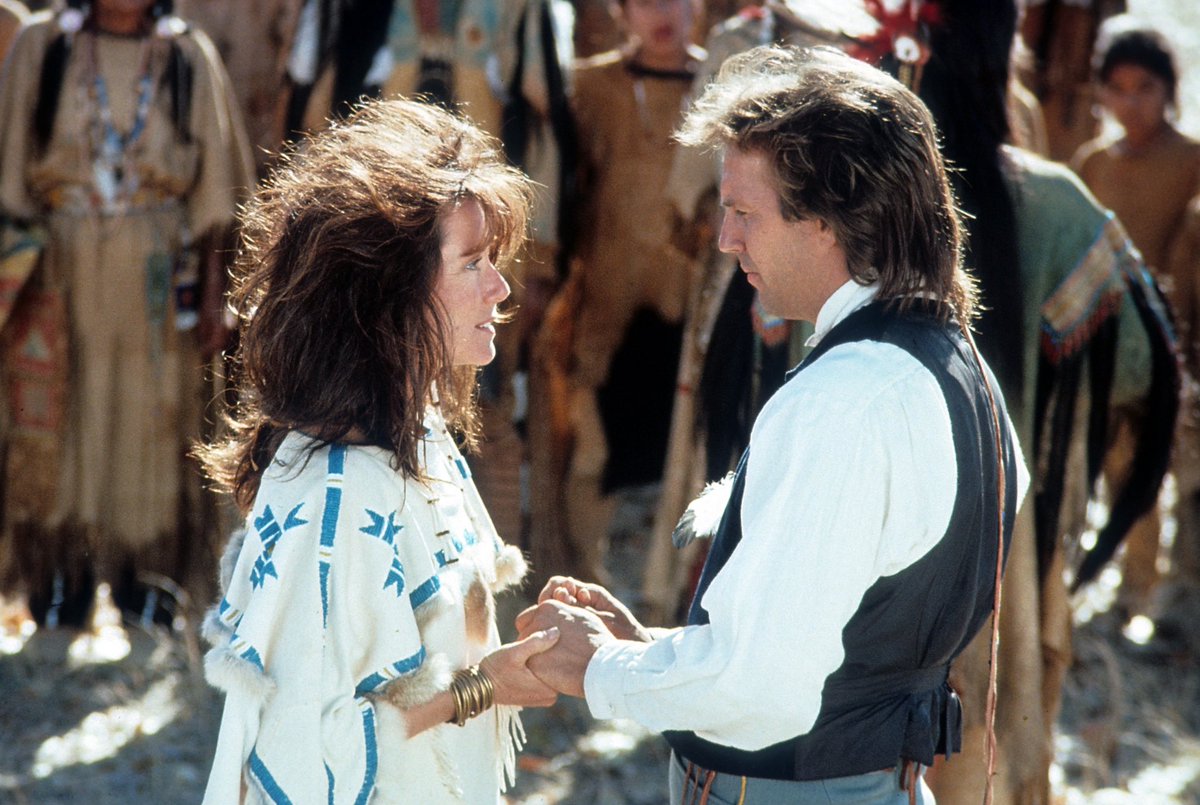
Ironically, even Hollywood still reflects this distinction.
In Dances with Wolves and The Last of the Mohicans, the central “Indian” romantic figure presented to mainstream audiences is not fully portrayed as culturally native in the civilizational sense.
In Dances with Wolves, Stands With A Fist is literally a white woman adopted into a Sioux tribe. In The Last of the Mohicans, Hawkeye is ethnically white and culturally framed as the bridge between civilizations. Anglo storytelling repeatedly makes the intercultural relationship emotionally acceptable through characters already substantially Europeanized or psychologically coded as Western.
That reveals something profound about the Anglo-American historical imagination. The frontier myth was often based less on mixture and incorporation, and more on mediation between separate civilizations.
Meanwhile, Spanish America normalized mixture centuries earlier as an everyday societal reality. Not as fantasy or exception, but as the foundation of entire nations.
You can still see the consequences today.
Most of Hispanic America developed national identities openly incorporating indigenous ancestry into mainstream culture and nationhood. In much of the Anglo world, identity remained more binary: settler versus native, white versus nonwhite.
None of this means one empire was morally pure or free of conflict. But it is historically false to pretend all colonial systems operated in exactly the same way. The Spanish and English worlds produced profoundly different civilizational outcomes in the Americas.
Decálogo para construir sociedad cívica pero paralizar tu carrera profesional:
1. Decir lo que piensas (con respeto) poniendo en evidencia las injusticias,
2. No hacer la pelota a quien tiene poder.
3. Criticar actos inaceptables, vengan de quien vengan +
@soniademare12 Esa es la interpretación, sí. Hubo un tiempo en que la belleza era objetiva, propiedad de las cosas. En la modernidad es una sensación placentera subjetiva, que propone una ilusión o promesa, y nos invita, reformando nuestra vida, a estar a la altura de ese idealismo
Mucho nivel en el XII Certamen de Pintura del Ateneo escurialense, sobre La sierra de Madrid y su entorno.
8 al 13 de mayo 2026, Casa de Cultura (Sala Félix Bernardino)
44 obras seleccionadas que puedes ver aquí 👇
https://t.co/ZD6Py5fwTd
La última vez que hablé con alguien de las limitaciones, obvias para tantísima gente, del sistema educativo actual, fue precisamente ayer, con el director del colegio de mi hija.
Tenemos que cambiar la rueda a la bici pero sin dejar de pelear.
#Educacion
En el hilo turras de hoy, vamos a ir con el primer hilo de otro arco largo para hablar de educación. En concreto de nuestros problemas con ella desde nuestra herética perspectiva, y vamos a compartir una propuesta al respecto que llevamos incubando tiempo.
Mucho nivel en el XII Certamen de Pintura del Ateneo escurialense, sobre La sierra de Madrid y su entorno.
8 al 13 de mayo 2026, Casa de Cultura (Sala Félix Bernardino)
44 obras seleccionadas que puedes ver aquí 👇
https://t.co/ZD6Py5fwTd