A $DGB block includes a reference to the block before it. That link is part of how the chain records an ordered history.
🎓️ Changing an earlier block changes its identifier, so the later references no longer fit the same way. Replacing history involves rebuilding a competing valid chain with the required proof of work.
The links and the work together explain why a blockchain is more than a file containing a list of payments. 🏗️
🎓️ A mining pool's payout to a participant is different from the $DGB reward created by a block.
The protocol sets what a valid block can claim. The pool then accounts for participants' work and pays them according to its own payout system.
💡 So a pool balance isn't the same thing as DGB already received in your wallet. The payout transaction is the point where that payment becomes an on-chain record you can examine.
🎓️ A $DGB wallet could add a display showing your #DigiDollar balance before adding the ability to send it. You'd be able to see your DD, but you couldn't make a DD payment from that app yet.
⚡️ When a wallet announces DigiDollar support, look for what you can actually do with it. Does it let you receive and send DD, or is the balance display the only feature available so far?
The DigiDollar wallet integration guide explains what developers need to add: https://t.co/O2IRI5xY3u
🎓 A wallet that supports $DGB doesn't automatically support #DigiDollar.
DigiDollar's rules are built into the $DGB protocol. That's what “native” means here: the network itself checks DD transactions.
Your wallet app still needs software that lets you use those features.
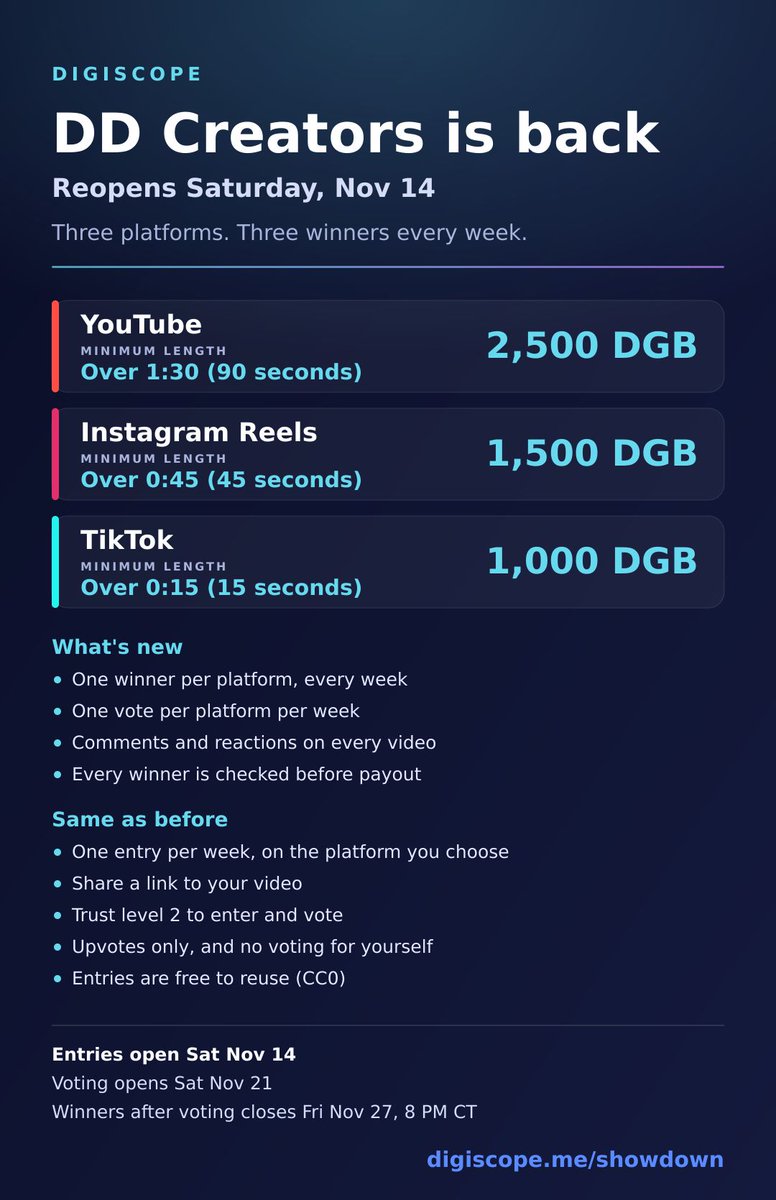
⚡️ Don’t leave that great video idea sitting in your drafts!
Submit it to the DigiByte #DDCreators Bounty. The $DGB community votes, and one creator wins 5,000 DGB this week.
Enter: https://t.co/iU0JqeI8P8
#DigiDollar spending uses confirmed DD inputs under the wallet integration rules.
Seeing a new incoming transfer doesn't mean its output can immediately be used in a chain of further unconfirmed sends.
⚖️ A $DGB block's validity depends on the consensus rules being enforced, including rules for the transactions it contains.
A wallet feature can make a transaction easier to construct without changing those rules. That's why a new button and a protocol change aren't interchangeable descriptions of an upgrade.
💡 When reading release notes, look for the behavior that changed. Sometimes the change helps the user see or do something the network already supported.
If you're recommending a $DGB merchant, include what they offer and a direct shop link.
Give the next person enough information to find the actual checkout, especially if the business has more than one website.
🎓️ A $DGB node doesn't accept a block simply because the sender calls it a DigiByte block.
It checks whether the block follows the rules its software enforces. The transactions inside it must satisfy those rules too. 🌐
💡 That local checking is useful even when the node operator knows none of the other participants. The node's view of valid history comes from verification, rather than a familiar name attached to a message.
DigiAssets and #DigiDollar aren't interchangeable names.
🎓️ DigiAssets is a separate asset protocol on DigiByte. Native DigiDollar has its own minting and collateral mechanics. Use the specific name when explaining which one a tool supports.
Today we're live with @DigiByteCoin@vivianonchain joins to talk crypto payments and how @UPayOfficial_EN brings Web3 into everyday spending
Nov 18 /// 11 AM EST //// 4 PM UTC
Set a reminder
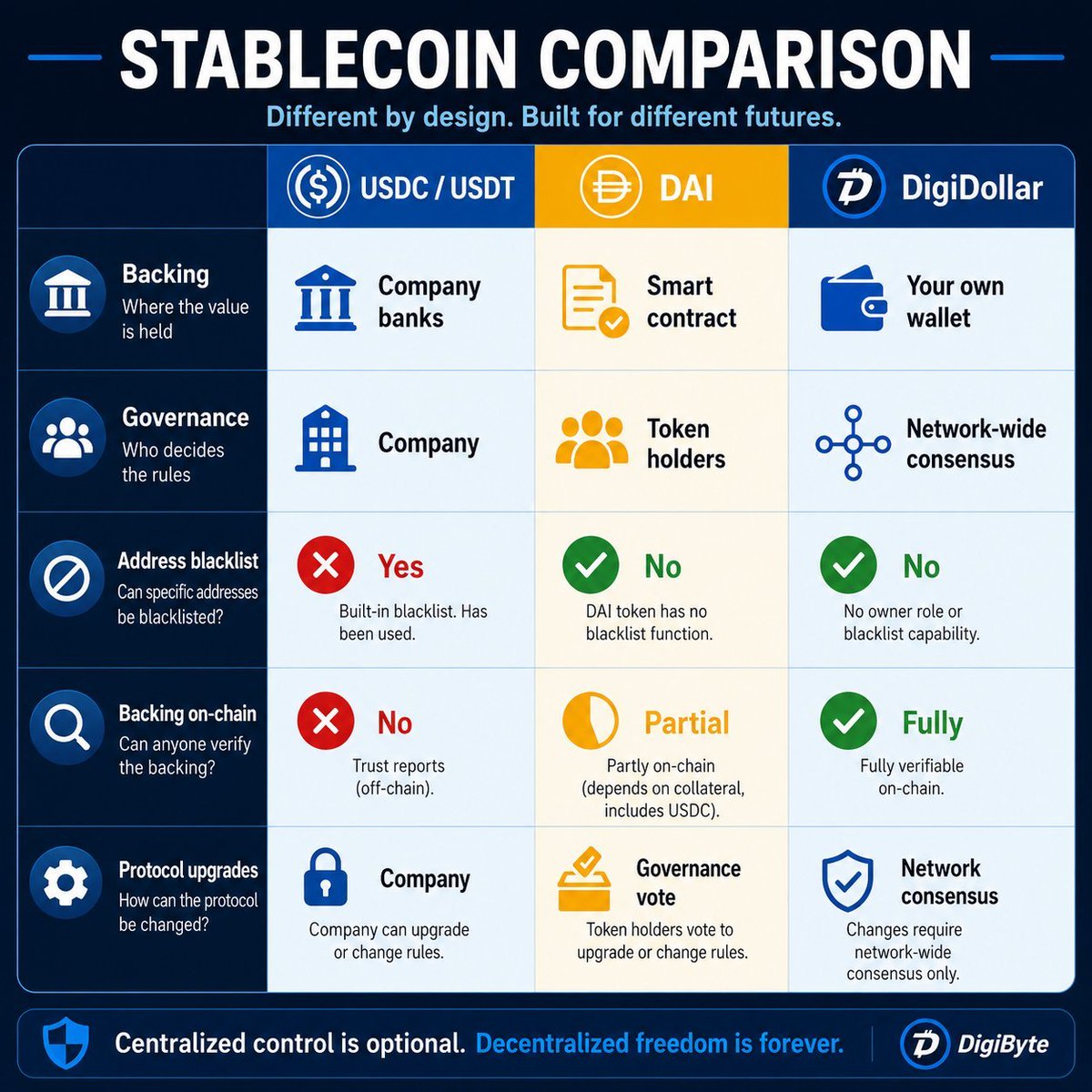
If you are confused about Digibyte's DigiDollar system, below is an excellent thread to bookmark that explains things very clearly.
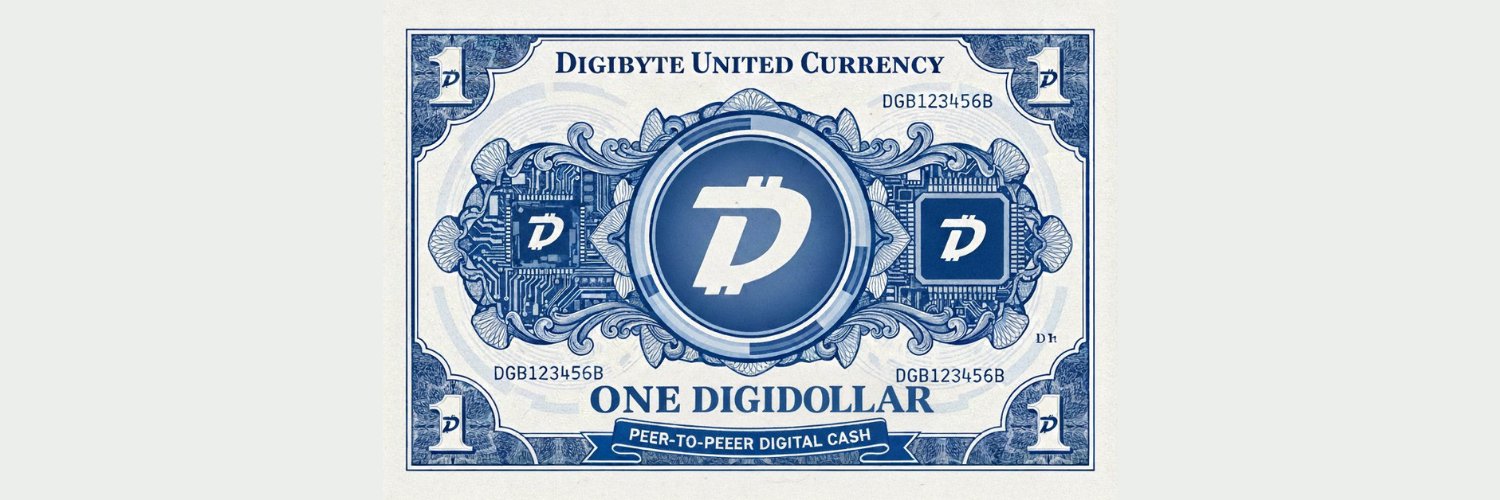
DigiDollars is the world's 1st decentralized US Dollar denominated stablecoin.
Fun fact: It's supply is auditted on-chain every 15secs.
3/3 To redeem the locked 🔒️ $DGB position, the owner needs the relevant keys and the DD required by the protocol's current redemption calculation.
💡 The DD burn is part of releasing the collateral. A DD balance by itself doesn't grant access to somebody else's vault, and an expired lock by itself doesn't complete the transaction.
1/3 🎓 A #DigiDollar vault involves a specific owner's collateral position. An ordinary DD transfer doesn't hand that position to the recipient.
The person holding the DD and the person controlling the vault can therefore be different people. Start with that distinction when explaining who can release the collateral.
2/3 The @DGB vault's timelock governs when its collateral becomes eligible for release.
💡 Reaching that point doesn't switch the vault into an automatic payment. It satisfies a timing requirement. The DGB stays subject to the position's other spending conditions until a valid redemption takes place.