Our EU power comes from something far less controllable and far more powerful: European society itself. Our universities, our research networks, our filmmakers, our foundations, our cities - this diffuse ecosystem is what gives Europe its global magnetic force.
And yet, instead of nurturing this advantage, we increasingly speak the language of militarisation, as if it were the only credible form of power left. 1/2
In the information age, wars are decided through narratives, perception, and legitimacy. In this context, whose narrative prevails can matter as much as whose army prevails.
To use a simpler image: if all you have is a hammer, every global challenge begins to resemble a nail. But the world we face today is not built of nails. It is built of networks and soft power.
I am concerned that Europe is not fully moving in the right direction. Influence does not come from how loudly you project strength; it comes from how intelligently you shape the system that others have no choice but to operate within. end
President Macron confirms that Zelenskyy will attend the G7 summit, and President Macron will try to “rebuild consensus” on support for Ukraine.
I read this in Le Monde.
I can anticipate several issues that will be discussed: militarisation, drones, the EU statute for Ukraine - again and again.
The European Union does not need to chase hard power as its primary reflex. The EU needs peace.
What exactly are we doing with hundreds of billions of euros if we believe power now lies only in force?
Power today moves through financial systems, digital infrastructures, cyber domains, climate governance, & the global management of shocks such as pandemics. This is the central terrain of geopolitical competition. The big challenge is not about transforming Ukraine into a military hub ( in addition - remember the context of nationalist and ideological tensions (see the recent case of Poland - Ukraine case))
1/1
@G7@EmmanuelMacron@GiorgiaMeloni@francediplo@alexstubb@donaldtusk
“Keep thinking, don’t accept easy answers.”
2019 laureates Abhijit Banerjee and Esther Duflo were awarded the economic sciences prize for developing new approaches to alleviate global poverty.
Listen to their best advice for students in the field.
Shocking video from Saint-Étienne in France.
An illegal migrant from North Africa entered the Cathedral of St. Charles and attacked a disabled elderly woman who had come to attend mass.
He grabbed her in a headlock, stole her gold chain & fled the scene
“The excitement of beauty calls forth strong fellow feelings, yearnings for companionship, and the word ‘comrade’ can be taken to mean ‘human being’.”
Remembering literature laureate Yasunari Kawabata.
A week in three places, connected by one theme: digital trade.
After discussing digital trade with experts at Xi’an University in China and engaging in conversations on the EU-India FTA at the European Parliament Europe India Centre for Business & Industry (EICBI)- European Parliament Accredited organisation in Brussels, I am looking forward to continuing the discussion in London on 12 June, where I will be teaching on the Digital Trade & Regulation programme at BICL. BIICL (British Institute of International and Comparative Law)
Questions around data flows, platform governance, privacy, cybersecurity, and the different approaches taken by the EU, the US, and China are increasingly shaping trade policy and business strategy.
Looking forward to exchanging views with participants and exploring how regulation is influencing the future of the digital economy.
Sir Arthur Lewis originally wanted to be an engineer but as a young man in Saint Lucia, a British colony, in the 1930s he was not able to because of the colour of his skin. Instead Lewis went onto study economics.
Learn more: https://t.co/dWKCBvZhgX
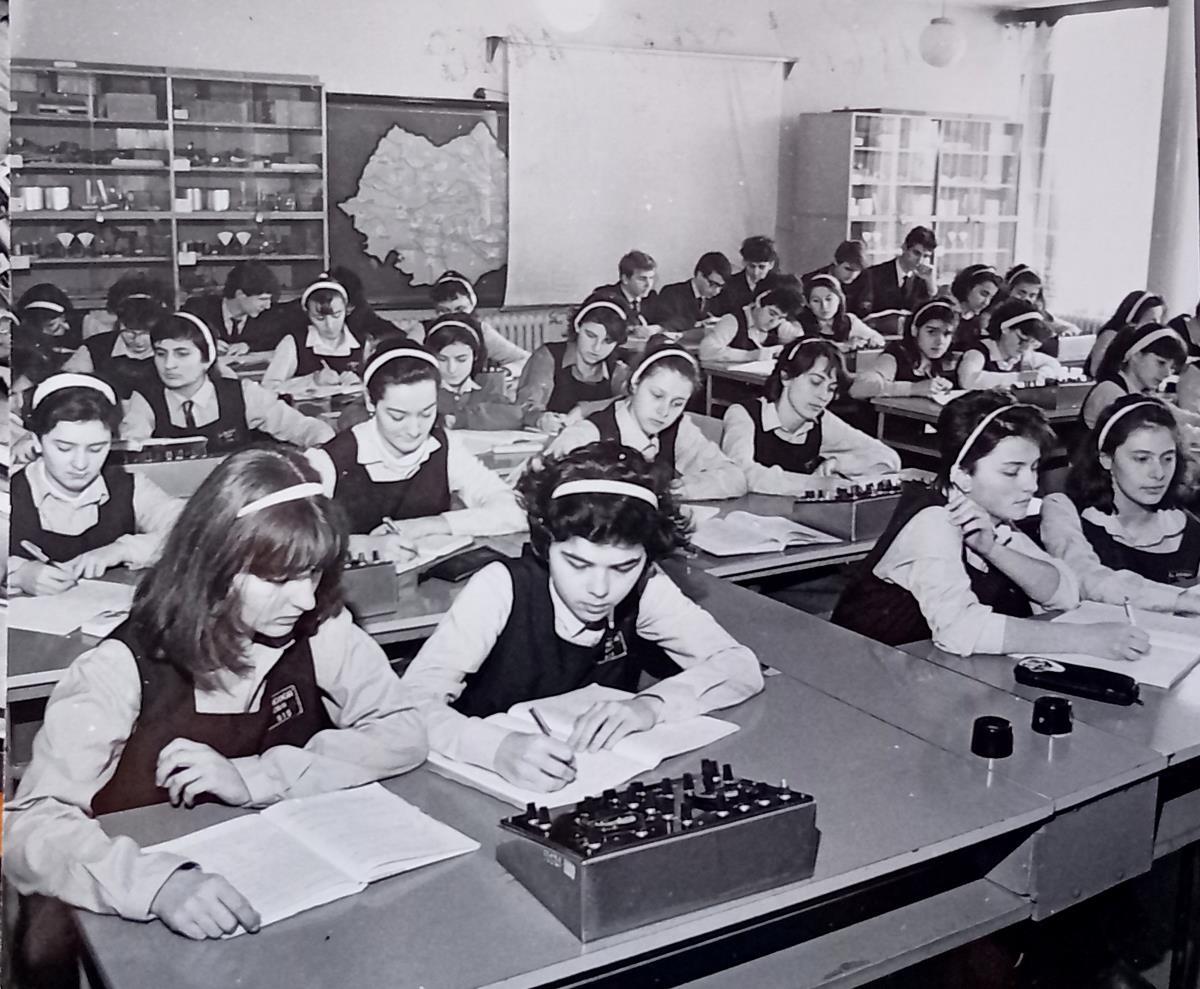
Not everyone in the European Union knows what the Gaokao is. Even many of those commenting on it may not fully grasp what it means in practice.
Yet, here lies an unexpected point of common understanding between China & Eastern Europe.
For many Chinese families, the Gaokao is a defining life event, a gateway to opportunity, and a powerful symbol of merit, effort, and social mobility. it has shaped values, family expectations, and the life trajectories of generations.
Those of us from Eastern Europe can relate to this experience more easily than many might imagine.
During the communist period, many Eastern European countries had highly competitive national examinations that played a similar role.
I know this not from theory, but from personal experience. I started preparing years in advance. We lived with the pressure, the expectations, and the understanding that these exams mattered profoundly.
Perhaps this shared educational culture also helps explain why many Eastern European countries continue to perform strongly in STEM disciplines and why, after EU enlargement, children from Eastern European backgrounds were often noted for their advanced preparation in mathematics and science.
For many people in Eastern Europe, its significance is easier to understand because, in different forms, we once lived through something remarkably similar ourselves.
@CasparVeldkamp@eu_eeas
Photo left: When Europe Had Its Own Gaokao
@Fred NUSS/Dumitru Chiselita
Photo right: High school students prepare for the National College Entrance Examination (NCEE), known as "gaokao," in Fuyang in eastern China's Anhui province on May 27, 2025. PHOTO: AFP
"I learned that any difficult problem can be solved by great effort."
Chemistry laureate Osamu Shimomura dedicated his life to studying the bioluminescence of the luminous jellyfish Aequorea, and discovered green fluorescent protein, GFP.
#WorldOceansDay
President Zelensky - You need to stop this madness. Choose wisdom over destruction. Instead, sit at the same table with Putin and talk. You are the only one who can speak in Russian with him. There are no real winners in this war only loss, suffering, and lives that can never be restored.
The people of your country are its greatest asset. Protect them from fear, grief, and death. Preserve the generations that will build the future.
Show the world that your nation can recover, rebuild, and thrive.
Continuing to target critical infrastructure in Russia will not bring peace or make Ukraine a winner. It is unlikely to end the war. Instead, it risks further destruction, environmental damage, and additional civilian suffering on both sides. Escalation may satisfy a desire for retaliation, but it does not necessarily bring a lasting solution closer.
The international legal order has been deeply shaken, and trust in global institutions has eroded.
Do not allow promises, expectations, or the hope of restoring a previous world order to become reasons to prolong the suffering in Ukraine.
@ZelenskyyUa
Today I received the news that I was banned from the European Parliament because a video I posted a few months ago was too controversial.
Freedom is just an illusion in Europe.
We live under a tyranny.
“Life is like riding a bicycle. To keep your balance, you must keep moving.”
@AlbertEinstein's life advice in a letter to his son Eduard on 5 February 1930. In the picture, Einstein is riding a bicycle in Santa Barbara, USA in 1933.
#WorldBicycleDay
On my way back from Luxembourg, I was scrolling through the comments on my post about Armenia - and honestly, the level of hostility was hard to ignore. It made me stop and think: why do we keep acting as if time alone will fix things?
It won’t. Peace and reconciliation don’t just happen on their own - they have to be built, deliberately, by people, by politicians, by leaders - willing to take responsibility. That, in many ways, is the simplest expression of our humanity.
Everything else feels like the opposite. Stirring division, pushing people against each other, distorting the truth -these things erode our ability to think clearly and to trust one another. And once that’s gone, everything becomes harder.
Let’s choose to struggle for peace among us. We only have one life to live, and even the most ordinary person can leave behind a legacy of humanity.
Ukrainian mathematician Maryna Viazovska solved a problem that had puzzled mathematicians for over 400 years. Even Johannes Kepler and Isaac Newton couldn’t crack it.
We live in a three-dimensional world, but Maryna solved a puzzle in an eight-dimensional space—something that’s very hard even to imagine.
She was born in Kyiv, studied at Taras Shevchenko University, worked in Bonn and Berlin, and at just 33 became a professor in Lausanne.
So what was the problem? It’s about how to pack identical spheres as tightly as possible in space. This question was first asked by Kepler back in 1611. Over time, scientists found answers for two and three dimensions—but not for eight.
Maryna proved that in eight dimensions, the densest packing is formed by a special mathematical structure called a lattice. What’s even more amazing is that she did it in just 23 pages, while earlier attempts took hundreds.
In 2022, she was awarded the Fields Medal, the most prestigious prize in mathematics. She became only the second woman in history to receive it.
Today, Maryna Viazovska works in Lausanne, supports Ukrainian mathematicians, and brings pride to Ukraine with her achievements.
“I woke up early in the morning and sat in the park. It was a beautiful day and the flowers were blooming."
#OnThisDay in 1951 Charles Townes sat on a park bench and came up with the theory that would lead to the laser.
Townes on his moment of discovery: https://t.co/nZ7StS7LIP