Great article offering insights into how a fast-website service is sold to businesses. Martin discusses the key sales questions and acquisition funnel that form the foundation of their sales process.
The best part? The questions and funnel are very similar for other B2B products as well!
Knowing how to code and read code in the age of AI is like knowing mathematics in the age of calculators: they can perform complex calculations faster and more accurately than humans, but understanding math is still useful. It helps you know when to use a calculator, recognize whether the result makes sense, and spot when it gives you a nonsensical answer.
Informational sources are often more valuable when they aren't heavily optimized to grab the reader's attention. There are hidden gems among books and blogs that aren't aggressively promoted but simply exist, waiting to be discovered, both online and offline.
Social media content, on the other hand, is much more likely to be optimized to capture and hold people's attention. Coincidentally, it's also often more superficial and dumbed down.
This year, I've realized that my mind tends to project its own expectations onto other people. There are certain qualities that are important to me, and I unconsciously expected others to share them. When they didn't, I found myself getting frustrated. Some examples:
• Punctuality
• Reciprocity in relationships
• Professional achievements
What's fascinating is that once I became aware of this mechanism, the frustration either disappeared completely or was significantly reduced.
Sometimes, simply understanding how your mind works is enough to change how you feel and react. The human mind is truly mind-blowing. 🤯
Unless we're targeting our customers, the build-in-public community is a great place to stay up to date with the latest trends and sometimes even get a bit of emotional support.
But there's a price to pay: the constant fear of missing out and, at times, the feeling of being invisible. The platform's primary goal is to grab your attention at any cost.
There's a fine line between healthy and toxic social media use. Let's make sure we don't cross it.
I think I've entered my low social media era. I use them. Just not that much. I post and engage. Just not that much. It all feels a bit like a hamster wheel sometimes.
There have been so many new internet vulnerabilities publicly disclosed during Black October. AI can now find security loopholes much faster than humans, which means individual hackers are losing their informational edge. What used to be their biggest advantage is being taken away by machines. Can we say hackers are losing their jobs? 😀
For anyone thinking about bringing an iOS subscription app to Android:
Subscription apps have lower conversion rates on Google Play than on the Apple App Store. According to RevenueCat, median conversion rates on Android are 2-3 times lower across different categories.
Digital products are often listed for sale at a certain price and a multiple of their net profit. But is the asking price your total cost? Usually not. You also have upfront costs associated with growing the product, such as your time, development, and marketing expenses. A more accurate equation is: total cost = acquisition cost + growth costs.
Hustling and building something from scratch develops skills that are always valuable. Even if the venture wasn't successful, the experience and skills you gain can be a big plus when applying for jobs: independence, persistence, strategic thinking, risk management, sales and marketing skills etc.
Talent, intelligence, and temperament are innate traits that nature gives people across all social classes, regardless of their background. That could change if genetic engineering advances to the point where these traits can be deliberately enhanced. They could then be selectively cultivated among the wealthiest people who can afford it. That kind of future looks frightening.
Switzerland brings together beautiful cities, crystal-clear lakes, and breathtaking mountains in a remarkably small area. It’s the perfect destination for both hiking in nature and exploring the cities!
In the age of AI agents, product management skills are more relevant than ever:
- What is the core value of the product?
- What are its key features?
- Who is the product built for?
- What is the product interface?
- How does the product make money?
Agents are shifting people from being developers to becoming product managers.
There are at least two things needed to contribute to open-source software:
1. Coding skills to write code. Agents lower this barrier to some extent. Some meaningful contributions can now be made using natural language, while others still arguably require human oversight and coding expertise.
2. Creativity to come up with ideas for meaningful contributions. I’ve often come across awesome open-source projects but contributed nothing because I simply couldn’t think of how I could make them better.
I wonder how agents affect creativity. My agents implement my ideas and make me more productive, but I can’t really say that they make me more creative.
Have agents had any impact on your creativity?
This is so important for well-being! It’s 100% true that anything that triggers my negative emotions becomes MY problem.
It’s difficult for me to imagine completely withdrawing from emotions. I think both positive and negative emotions are useful because they motivate us to take action. If we withdrew from everything, wouldn’t we become kind of like zombies?
Okay, let’s be more specific and talk about emotionally withdrawing from irritating situations. Avoid emotional engagement in any situation you already know will irritate you. The easy way is to avoid the situation altogether. The hard way is to stay in the situation but avoid getting emotionally involved.
I believe all smart people live by this rule. At the same time, I feel it can lead to a kind of social ignorance. But hey, most people simply prefer to hold on to their emotions, even if it means ignoring certain situations or people. In the end, quality of life depends on the quality of our emotions.
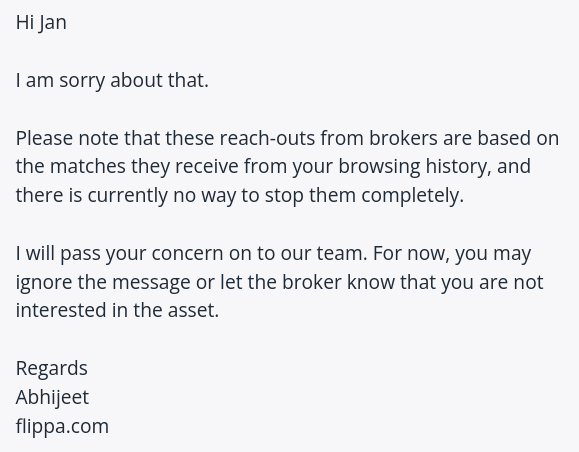
Flippa brokers reaching out via DM with unsolicited offers are really annoying. They’re completely off-target for my niches, just clutter my inbox, and there’s no way to stop them, even with an active Flippa Premium subscription! @Flippa, please do something about this.
It’s funny how much of the behavior encouraged and normalized by online platforms like social media feels dysfunctional in the offline world.
+1 to Jason for a genuinely funny article on the topic.
https://t.co/M2Kky2bQW7
One aspect of how social media became asocial media.
These techniques are often recommended to increase engagement: take a strong stance, be contrarian, make extreme claims, talk about polarizing topics, and so on. What they have in common is that they trigger strong, often negative emotions, prompting people to engage and leave comments.
This is very different from most personal interactions. People rarely deliberately try to trigger negative emotions when interacting with others, whether acquaintances or strangers. The reason is that they have skin in the game. Generating negative emotions in a personal interaction usually comes back to the person who caused them.
Social media, however, removes that skin in the game. That makes these techniques effective, but also makes social media interactions fundamentally different from real-life personal interactions.