Elon Musk's children don't go to normal school. And the reason why will change how you think about education.
He pulled his kids out of one of the most prestigious schools in Los Angeles. Parents were furious. Media called him arrogant. The school had a waitlist of thousands.
His response: "They're teaching kids to solve problems that already have answers. I need them to solve problems nobody's thought of yet."
So he built a school. Inside SpaceX. Called it Ad Astra. No grades. No tests. No subjects in the traditional sense.
A nine year old could take apart a rocket engine and present their findings to actual SpaceX engineers. Students didn't study history. They debated whether they'd make different decisions than historical leaders using the same information available at the time.
The school had no grade levels. A seven year old could work alongside a thirteen year old if they were interested in the same problem.
When asked why he structured it this way, Elon said something that stuck with me:
"I don't care if they know the answer. I care if they know which questions are worth asking."
Most people spend their entire education learning how to be right. Elon teaches his children how to be curious.
The system rewards answers. Life rewards questions.
My gf is banned from reviewing places in Europe on Google Maps after she gave one restaurant in Portugal a 1-star review
When she reviews inside EU it gets auto rejected, outside EU she can review any place
Free speech in Europe has sadly died a long time ago
The RF world is insane.
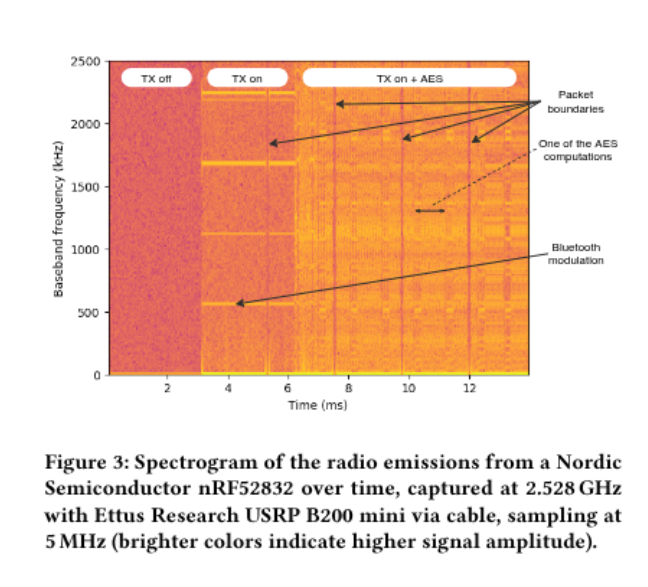
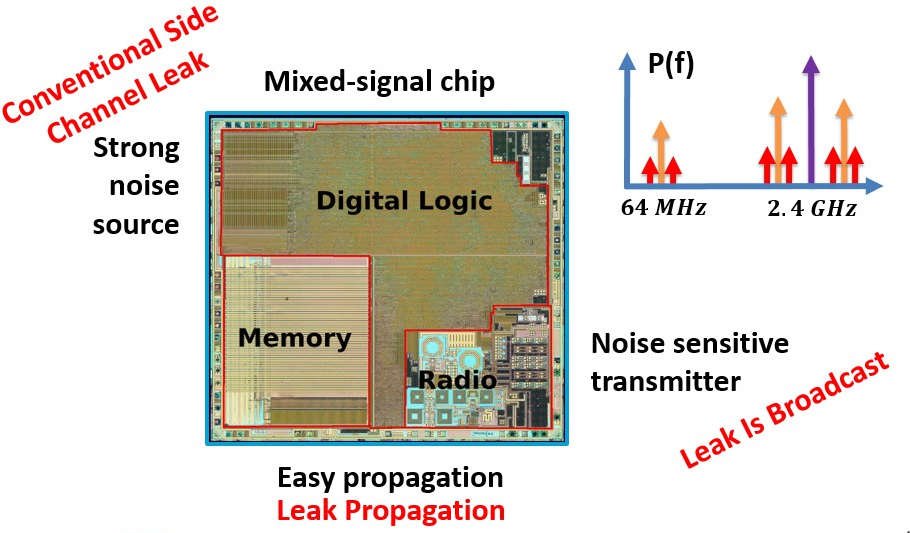
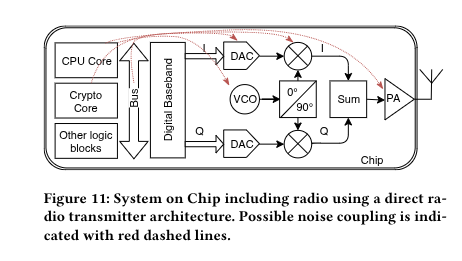
Researchers recovered AES-128 keys from a Bluetooth chip by listening to its own antenna from 10 meters away.
Crypto-engine switching noise couples into the RF chain, rides the 2.4 GHz carrier, and leaks out as radio.
@Paul_Reviews@thorsheim How?
If password contains many random characters (and doesn't come from a password manager, and it probably shouldn't, the first time) then it is difficult to type, right?
‼️🚨 NEW RESEARCH: Fiber-optic cables can be turned into a hidden microphone and used for eavesdropping.
Researchers from Hong Kong's PolyU and CUHK just proved it works in real conditions. The paper was presented at NDSS 2026, one of the top cybersecurity conferences in the world.
When someone talks in a room, the sound waves cause tiny vibrations in everything around them, including the thin glass fiber that runs into your apartment from your internet provider. Those vibrations slightly disturb the laser light traveling through the cable. If an attacker plugs the other end of that cable into a special device called a Distributed Acoustic Sensing system, they can read those tiny disturbances and turn them back into recognizable speech.
The problem for the attacker: a normal fiber lying along your baseboard is not sensitive enough on its own. Sound fades too fast in the air, and the fiber is too thin to pick it up.
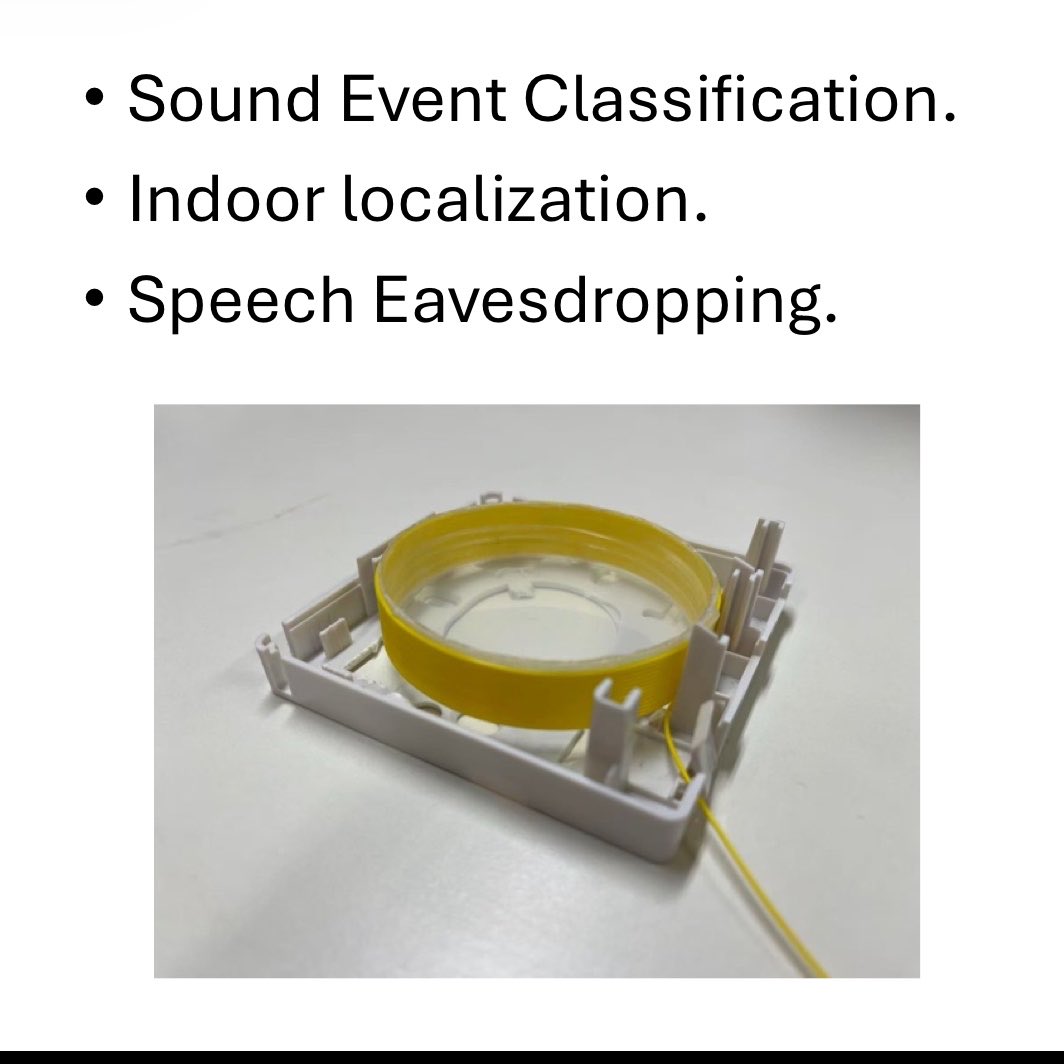
So the researchers built a small device they call a "Sensory Receptor." It is basically a 65mm plastic cylinder with about 15 meters of fiber wound around it. The cylinder catches and amplifies sound waves enough for the fiber to register them. Crucially, it is small enough to hide inside the same little plastic junction box your internet installer leaves on the wall to manage extra cable.
What the attack can actually pick up:
🔴 Daily activities (typing, walking, snoring, washing dishes): 83% recognition accuracy
🔴 Where in the room a sound is coming from: accurate to within about one meter
🔴 Spoken words at meters from the receptor
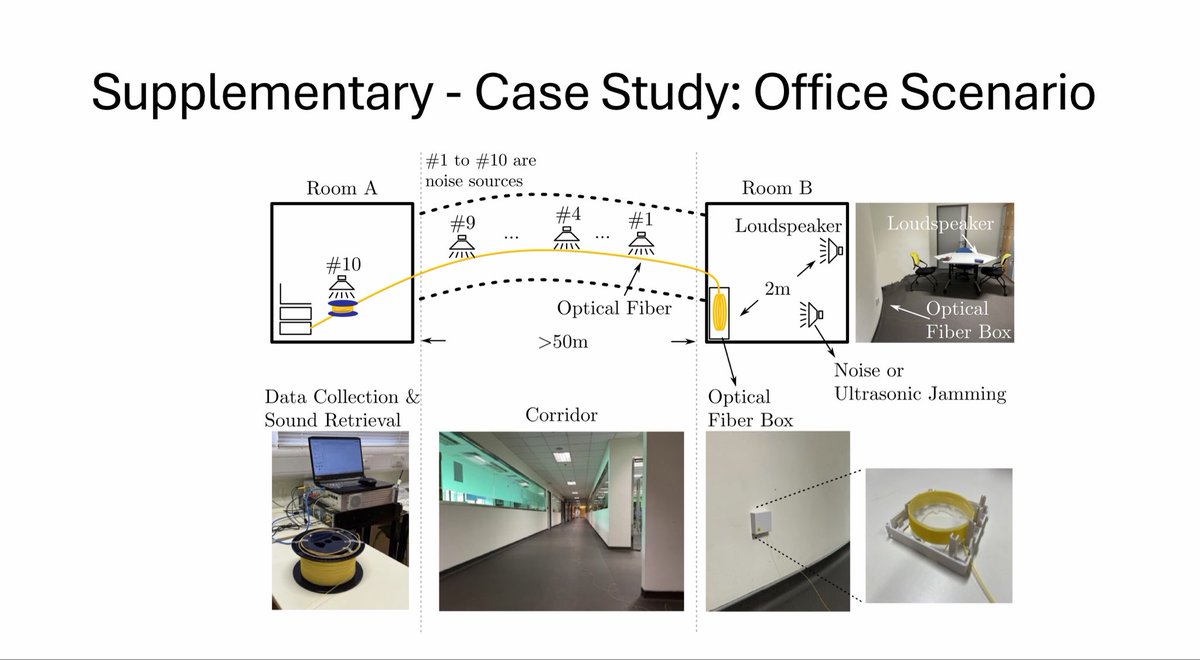
🔴 In a real office test, with the receptor hidden in a fiber box and the attacker 50+ meters away in another room, around 80% of the conversation was recoverable
Why this attack is different from a hidden microphone:
🔴 No electricity, no batteries, no radio signals
🔴 Cannot be found by professional bug sweeps that look for hidden mics or cameras
🔴 Cannot be jammed by ultrasonic jammers (the kind some boardrooms use against phone microphones)
🔴 Looks identical to a normal fiber cable
The researchers tested a commercial ultrasonic jammer right next to their device and it had zero effect. The defenses meant to protect sensitive meetings simply do not see this attack coming.
What you can do:
🔴 If you run a sensitive office or meeting room, ask your IT team about polished fiber connectors and optical isolators. Both make this attack much harder.
🔴 Do not let your internet installer leave excess fiber coiled up inside the room. Have them coil it inside the wall or in a sealed box outside the room.
🔴 Keep fiber cable runs away from desks and walls that resonate with conversation.
🔴 In high-security spaces, soundproof the walls and ceilings where fiber runs.
A 2005 state-designed worm designed to corrupt physics simulations sat undetected on VirusTotal for nearly a decade. Fast16, intercepted executable files at the kernel level and silently rewrote floating-point calculations to make them produce slightly wrong answers. Targets: high-precision engineering suites used for structural analysis, crash simulations, and physical process modeling, including LS-DYNA, a tool cited in reports on Iran's nuclear weapons research. The sabotage vector relied on deployment of the driver across a network via worm, corrupting calculations on every machine, and eliminating the possibility of cross-checking results against a clean system. Stuxnet got the documentary. Fast16 got twenty years of nothing. https://t.co/3qfJMziXVd
Your "stealth" browser fakes a GPU and it gets detected by pixels.
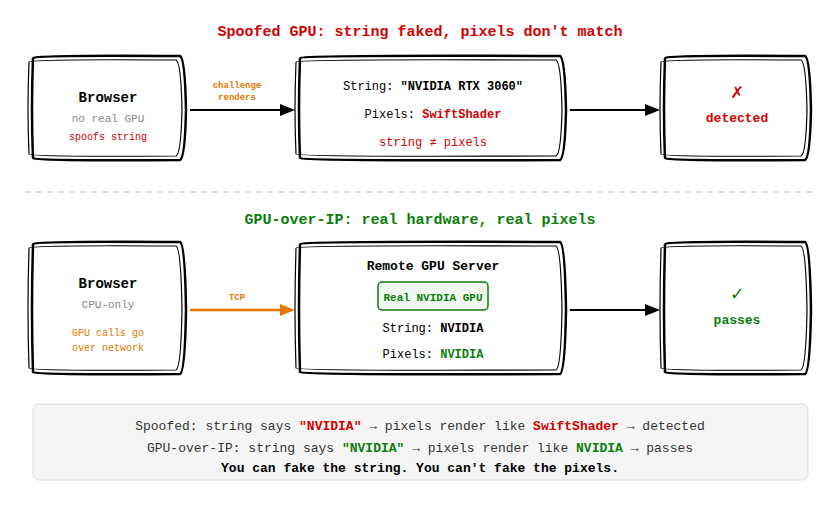
Antibot scripts draw test scenes through WebGL and Canvas APIs, then read back the pixel output.
They're checking the rendered pixels, not your spoofed renderer string.
Fake GPU = SwiftShader. String says NVIDIA. But pixels say software. Detected.
GPU-over-IP forwards calls from a CPU-only machine to a real GPU over TCP. Real hardware, real pixels.
You can fake the string. You can't fake the pixels.
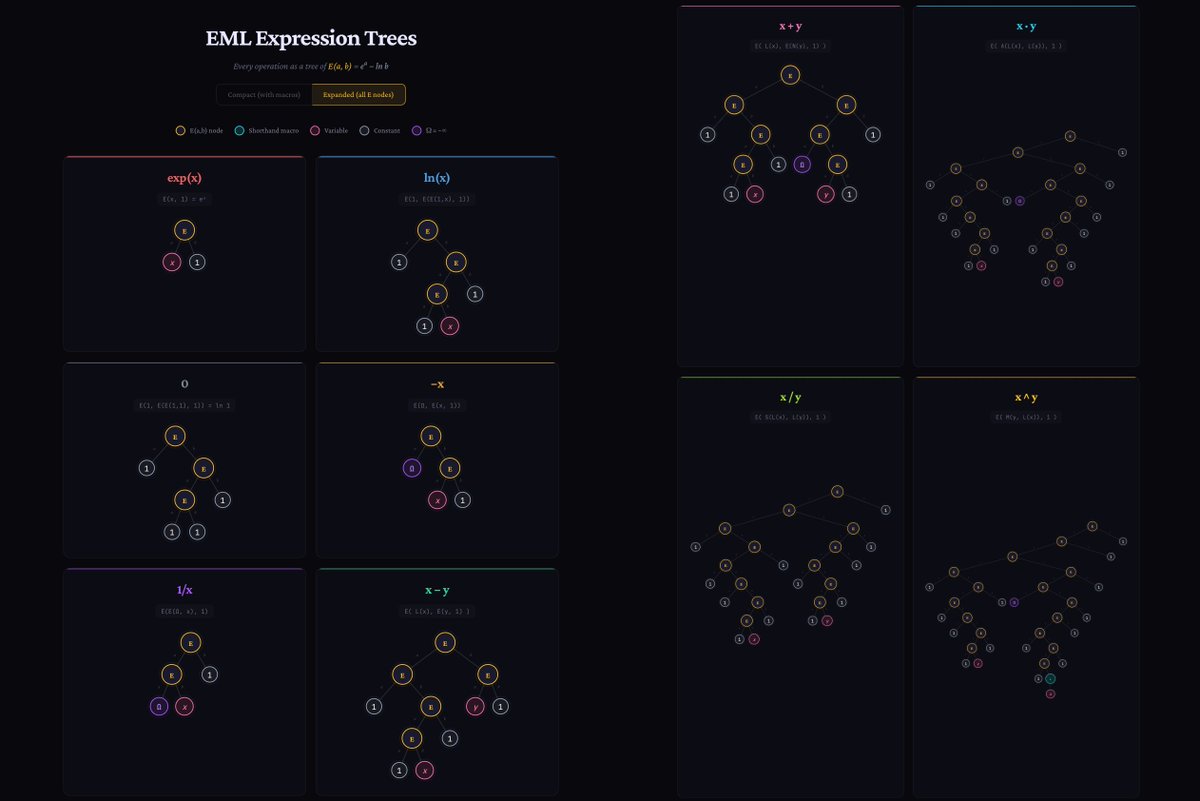
This Polish theoretical physicist just proved you can recreate all math functions from JUST one operation.
E(a, b) = e^a - ln(b)
Every single operation: +, -, x, / , trig, log, as you can see below.
Extremely mathematically elegant.
A regular lightbulb isn’t “incoherent”; it just depends on how fast you look.
At,
10⁻¹⁶ s → you see clean EM waves
10⁻¹⁴ s → perfect interference patterns
10⁻⁶ s → classic messy bulb light
Coherence isn’t a property of source; it’s timescale.
Your brain peaked musically somewhere around age 16. Everything since then has been a dopamine echo.
Between the ages of 12 and 22, the mesolimbic dopamine pathway, the same circuit that processes cocaine and sex, fires at levels in response to sound that it will never reach again for the rest of your life. A 2011 McGill study used PET scans and fMRI simultaneously and found that music triggers dopamine release in the striatum at peak emotional arousal. The caudate nucleus lights up during anticipation of the good part. The nucleus accumbens lights up when it hits. Your brain is treating a guitar riff with the same reward architecture it uses for food-seeking and pair bonding.
During adolescence, that response is dramatically amplified. Pubertal hormones are flooding the system. The prefrontal cortex is still wiring itself. Memories formed during this window get encoded with a density of emotional tagging that nothing in your 30s or 40s can replicate. Researchers at the University of Leeds identified this as the “reminiscence bump”: the period when your sense of self is forming, and the music playing during that formation becomes structurally integrated into your identity.
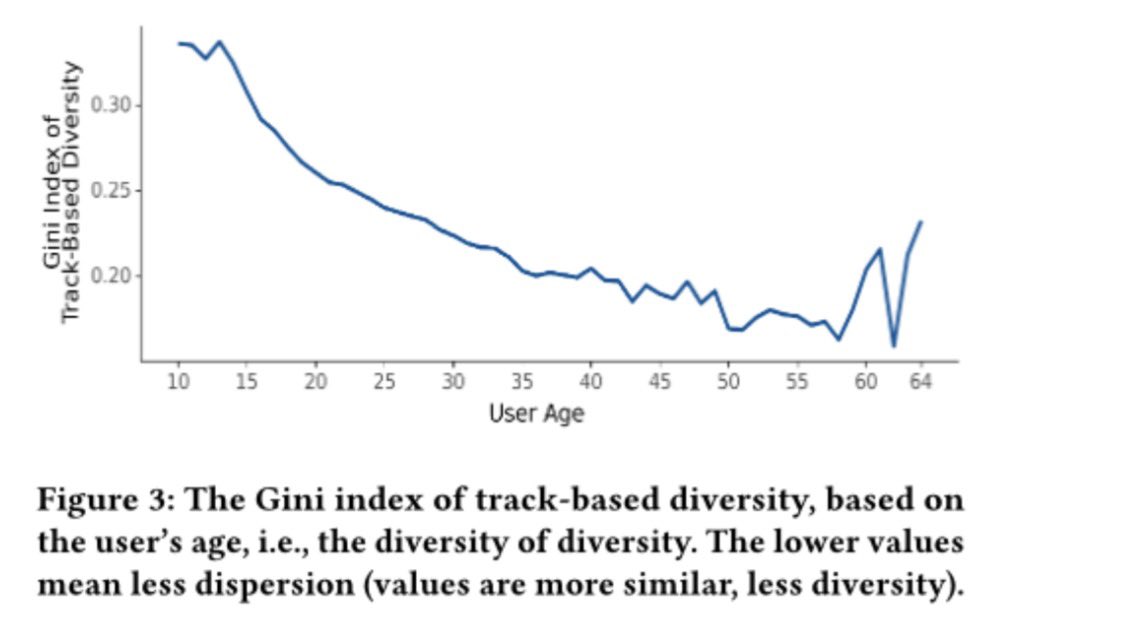
A 2025 longitudinal study from the University of Gothenburg analyzed 40,000 users’ streaming data across 15 years. Younger listeners explored broadly across genres. Older listeners collapsed into increasingly narrow loops, almost entirely anchored to music from their teens and early twenties.
Your brain stopped losing interest in new music years ago. It’s running a cost-benefit analysis. Familiar songs deliver guaranteed dopamine with zero processing cost. New songs require pattern recognition, expectation-building, and repeated exposure before the reward circuit kicks in. Past 25, most people stop paying that tax.
The one variable that predicts whether someone keeps exploring: the personality trait “openness to experience.” Score high, you keep seeking. Score average, you default to the familiar forever.
The fix, if you want one: deliberate exposure. Three listens minimum before your auditory cortex builds enough predictive models to generate a reward response. One passive listen on a playlist will never get there. Your brain needs repetition to find the pattern, and it needs the pattern to release dopamine.
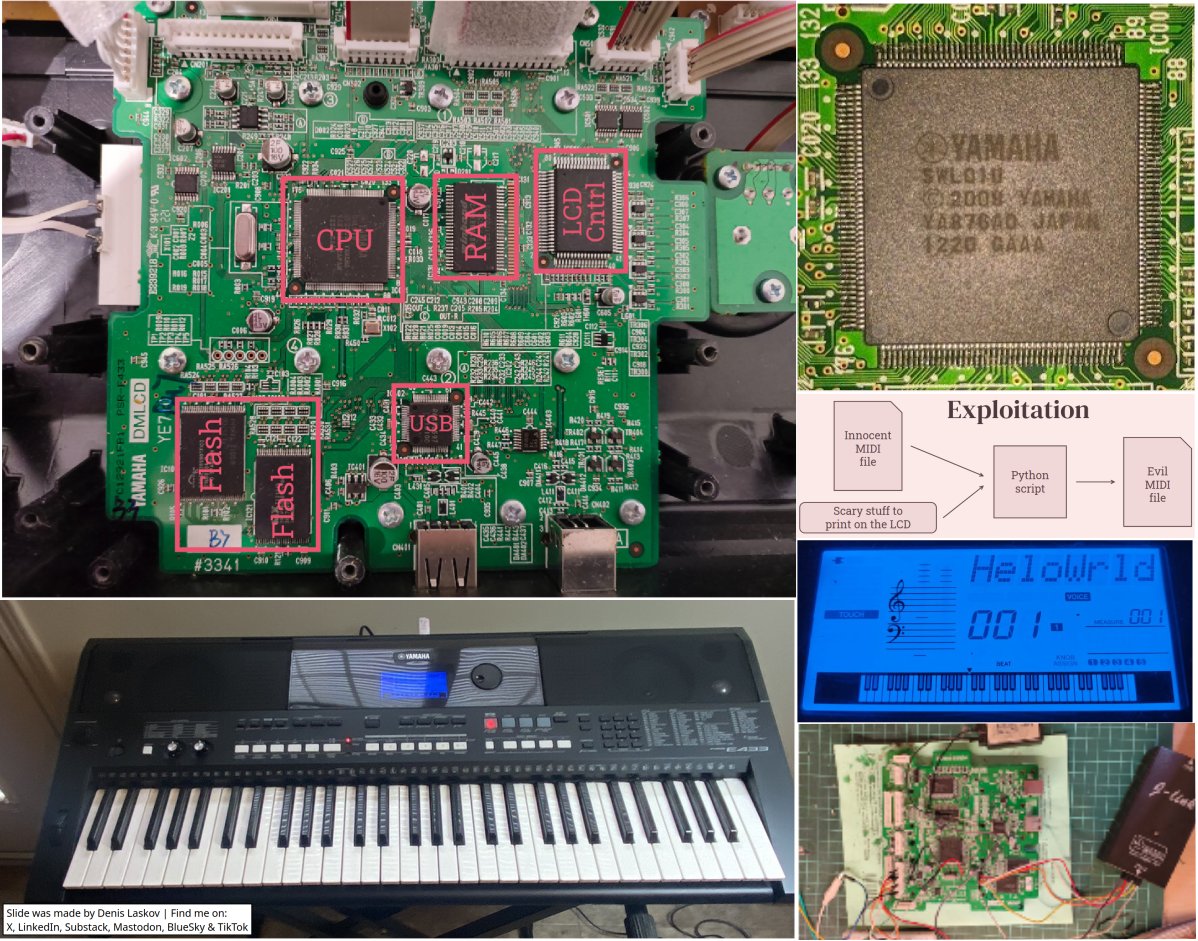
Remote Code Execution (RCE) in Yamaha synthesizers: an exploit in MIDI files & a hidden backdoor 🎹♫💉👨🏻💻🎉
More details on:
LinkedIn: https://t.co/tbjClhHRqq
Substack: https://t.co/R6DLQmGZPX
One bit flip to corrupt it all:
Exploitation of an old Linux kernel vulnerability using PageJack, a modern technique to create Use After Free bugs.
Here @AzazheI shows you how
https://t.co/MLKX0pykhe
⚡️0-Day Alert: Android Qualcomm msm kernel - exploit in-the-wild since December 2025.
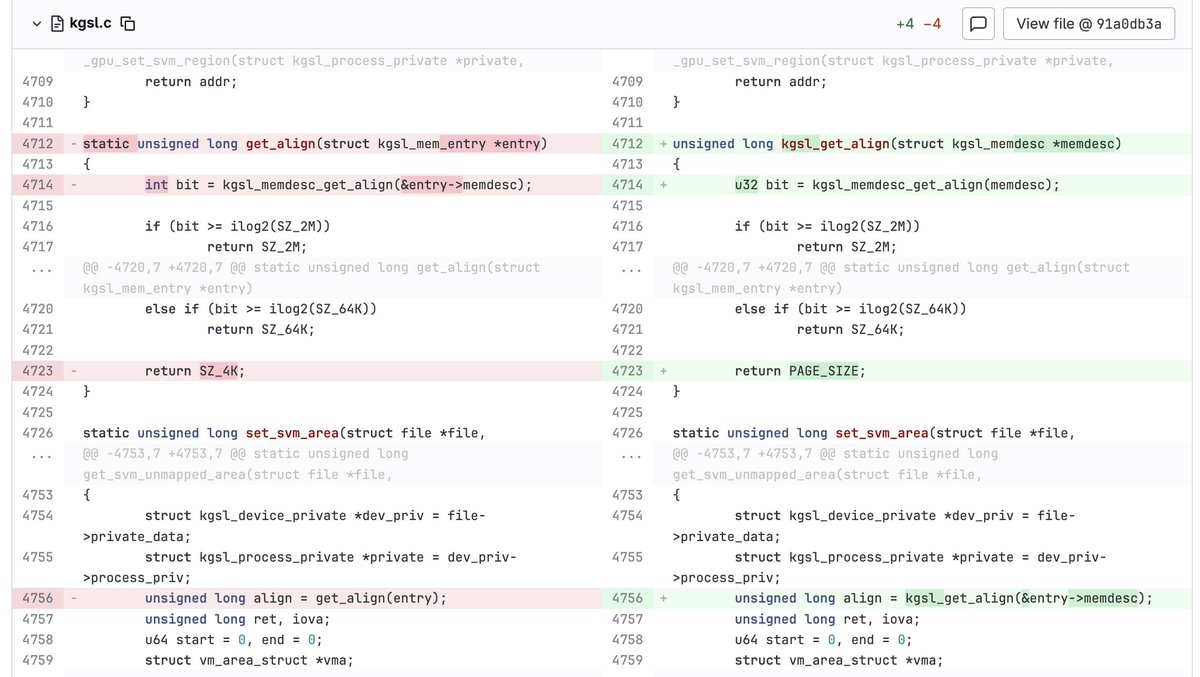
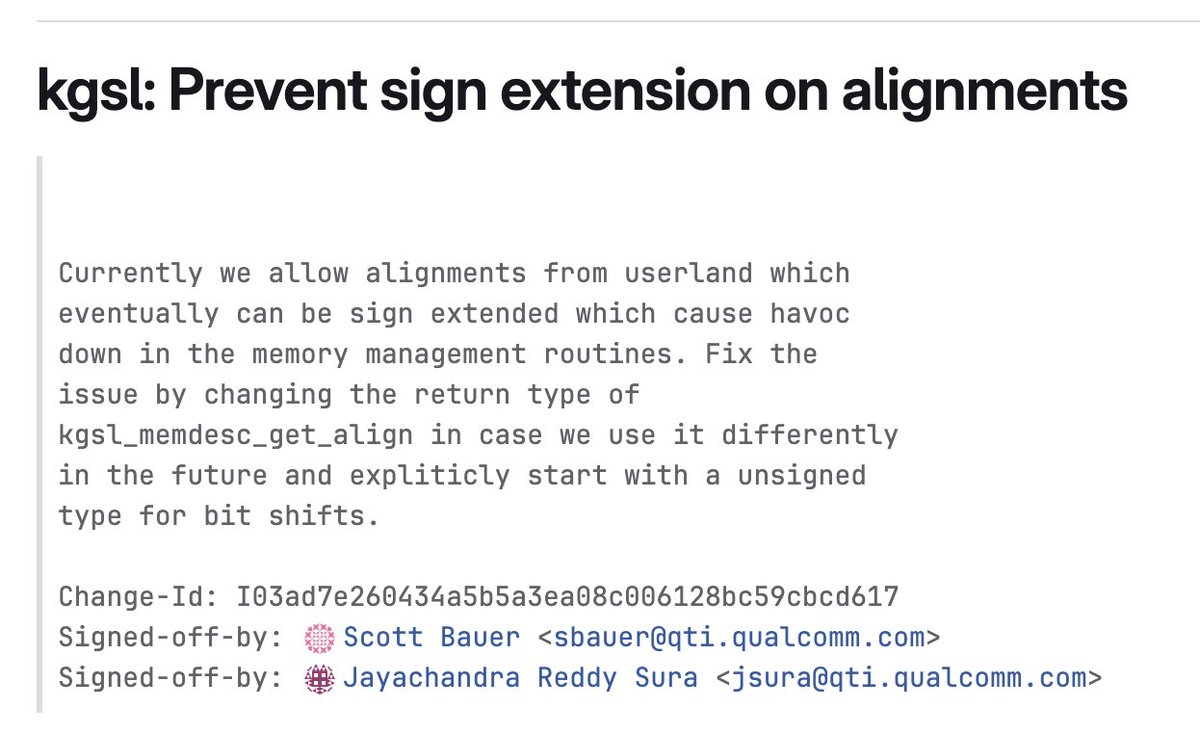
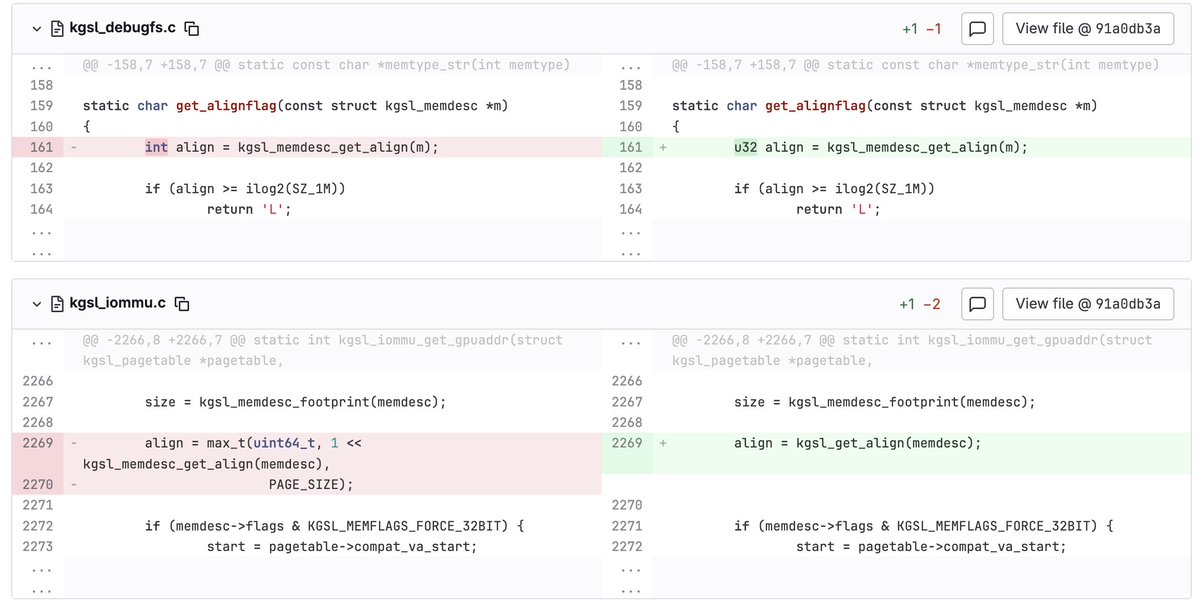
CVE-2026-21385: kgsl uses unsanitized alignment parameter from ioctl and other input vectors to calculate GPU memory allocation variables, leading to memory corruption via an integer overflow.
The bug primitive is powerful enough to allow Elevation of Privilege – not just OOBR.
kgsl is an open source GPU driver in Qualcomm msm kernel that ships in many Android devices.
Patched in 2026-03-05 Android security update.
Extended the Pixel 8 KGDB article with the instructions on how to set up GEF. slub-dump, buddy-dump, and some other commands now work. Huge thanks to @bata_24 for implementing all required pieces.
https://t.co/dgz0HQllmP
We recently achieved guest-to-host escape by exploiting a QEMU 0day.
We’ll share details on a new technique leveraging the latest glibc allocator behavior and what we believe is a novel QEMU-specific heap spray/RIP-control primitive.
Writeup coming next week.