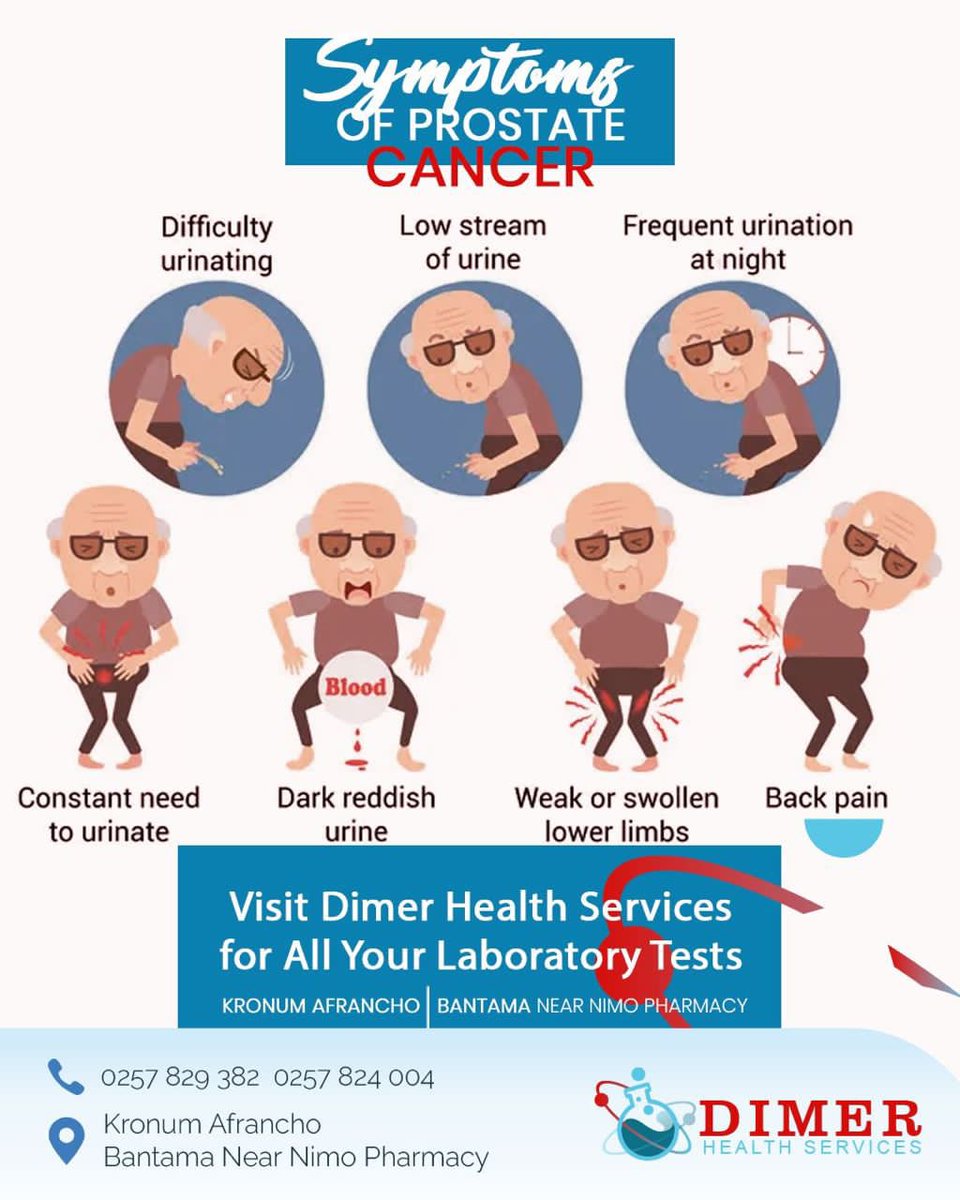
Understanding the risk factors and symptoms can aid in early detection and treatment, which significantly improves the prognosis for individuals with prostate cancer. Regular screenings and consultations with healthcare providers are recommended for those at higher risk.
2. National Cancer Institute:
•Offers comprehensive information on prostate cancer, including statistics, clinical trials, and research.
•https://t.co/TN5qcdlvHK
4.Genetics: Certain genetic mutations, such as those in BRCA1 and BRCA2, can increase the risk.
https://t.co/mpMombvgel: A diet high in red meat and high-fat dairy products and low in fruits and vegetables may increase the risk.
This week is dedicated to raising awareness about prostate cancer. Did you know prostate cancer is one of the most common cancers in men? Follow us on all social media platforms all week for important facts, tips, and support information. #ProstateCancerAwareness#DimerHealth
HIV, viral hepatitis and sexually transmitted infections continue as significant public health challenges globally cause 2.5 million deaths each year: New WHO report https://t.co/Bhk81u16VQ