"Hurt" is not an original by Johnny Cash. The song was written by Trent Reznor (Nine Inch Nails) in 1994 for the album The Downward Spiral. Rick Rubin had to insist several times on Cash recording his version, at first Johnny found the idea completely insane because the original version is industrial and noisy. At 71, already very ill, almost blind and with trembling hands, Cash completely transformed the band.
The iconic video, directed by Mark Romanek, was filmed at the House of Cash (his own museum). June Carter Cash appears looking at him fondly, the video was shot in February 2003, a few months before she died (May) and Johnny himself (September).
Trent Reznor was so moved that he declared, "This song is not mine anymore." It is considered one of the best covers of all time.
Did you know?
An explosion of zinc fireworks occurs when a human egg is activated by a sperm enzyme, and the size of these “sparks” is a direct measure of its ability to develop into an embryo.
In other words, life begins with a flash of light.
🚨 This isn’t our Galaxy 🤯
You’re looking at billions of stars in the Andromeda galaxy, captured by the Hubble Space Telescope—and almost every one likely has planets.
Let that sink in.
Researchers at the University of Pennsylvania have developed an innovative antiviral chewing gum that neutralizes over 95% of certain viruses in saliva, offering a simple, plant-based way to potentially curb transmission through everyday chewing.
Led by Henry Daniell at Penn's School of Dental Medicine, the team created a clinical-grade gum incorporating a natural antiviral trap protein called FRIL (Flt3 Receptor Interacting Lectin), derived from lablab beans (Lablab purpureus, also known as hyacinth beans). This protein binds to complex-type N-glycans on the envelopes of various viruses, entrapping them and preventing infection or spread.
Building on earlier work with a different gum containing plant-produced ACE2 (which reduced SARS-CoV-2 in saliva samples by >95% and is now in clinical trials), the latest formulation targets a broader range of pathogens. Lab tests showed that just 40 mg of the bean-based gum (from a 2-gram tablet) achieved more than 95% reduction in viral loads for influenza A strains (H1N1 and H3N2) and herpes simplex viruses (HSV-1 and HSV-2). The gum releases FRIL effectively during chewing, acting as a molecular decoy right at the site of viral replication in the mouth—key for limiting spread via talking, coughing, sneezing, or close contact.
The product is engineered for real-world practicality: it remains stable and fully functional at room temperature for over 790 days, meets FDA clinical-grade standards, and uses safe, natural ingredients. While the ACE2 version (targeting COVID-19) has advanced to human trials, this FRIL-based gum shows strong promise for seasonal threats like flu and herpes, and researchers are even exploring lablab bean powder against bird flu (H5N1) in animal feed.
If proven effective in upcoming clinical studies, this could become a low-cost, non-invasive tool for high-risk settings—schools, dental offices, public transport, or during outbreaks—helping reduce oral viral transmission without drugs or vaccines.
[Daniell et al., "Debulking influenza and herpes simplex virus strains by a wide-spectrum anti-viral protein formulated in clinical grade chewing gum," Molecular Therapy (2024). DOI: 10.1016/j.ymthe.2024.12.008]
Scientists have resurrected "extinct" enzymes from ancient cannabis ancestors that lived millions of years ago, opening the door to more powerful anti-inflammatory treatments and dramatically cheaper drug production.
A team at Wageningen University in the Netherlands used ancestral sequence reconstruction—a cutting-edge technique that reconstructs the genetic history of a species—to revive long-lost enzymes from the prehistoric relatives of the cannabis plant.
Unlike modern cannabis, which relies on highly specialized enzymes to produce specific cannabinoids such as THC or CBD, these ancient enzymes were remarkably versatile ("promiscuous"). They could generate a wide range of cannabinoids at once, revealing how early cannabis plants likely evolved sophisticated chemical defenses against ancient pests and diseases.
The breakthrough has major implications for medicine and biotechnology. One resurrected enzyme proved exceptionally efficient at producing CBC (cannabichromene)—a cannabinoid prized for its potent anti-inflammatory effects but scarce in today's strains. By reintroducing these ancient genes into modern plants or using them in microbial fermentation systems, researchers aim to develop far more efficient, scalable, and cost-effective ways to produce therapeutic cannabinoids.
This work not only sheds new light on the evolutionary origins of cannabinoids but also provides a powerful new toolkit for engineering the next generation of affordable, high-potency plant-derived medicines.
[Villard C, Baser I, van de Peppel AC, Cankar K, Schranz ME, van Velzen R., "Resurrected Ancestral Cannabis Enzymes Unveil the Origin and Functional Evolution of Cannabinoid Synthases", Plant Biotechnology Journal. 2025 Dec 26. Advance online publication. DOI: 10.1111/pbi.70475]
Cannabis compounds like THC & CBD trigger cancer cell suicide, halt growth, block blood vessels to tumors, and stop metastasis!
Triggering cancer cells to self-destruct (apoptosis).
Activating a process where cells "eat" damaged parts (autophagy).
Stopping cancer cells from dividing at certain stages (cell cycle arrest).
Slowing or stopping cancer cell growth (anti-proliferation).
Preventing new blood vessels from forming to feed tumors (anti-angiogenesis).
Blocking cancer from spreading to other parts of the body (anti-metastasis).
https://t.co/0gwt2JCMEy
Japan develops spherical solar cells that capture light from all directions.
Japan has highlighted a solar technology called Sphelar, developed by Kyosemi Corporation, that uses tiny spherical silicon solar cells instead of flat panels.
Each cell is about 1-2 millimeters wide and can absorb sunlight from all directions. Unlike traditional solar panels, these cells don’t need to be tilted toward the Sun or mounted on tracking systems. They can collect direct sunlight, reflected light, and diffused light, which helps maintain power generation even on cloudy days or in shaded areas.
The reported efficiency is around 20%, similar to many standard silicon solar panels. The main advantage is not higher peak efficiency, but more consistent energy collection throughout the day.
Another benefit is manufacturing. The cells are made by forming silicon directly into spheres, which reduces material waste compared to cutting flat silicon wafers. This could lower costs if produced at scale.
The technology is still best suited for niche and building integrated applications rather than replacing conventional rooftop panels.
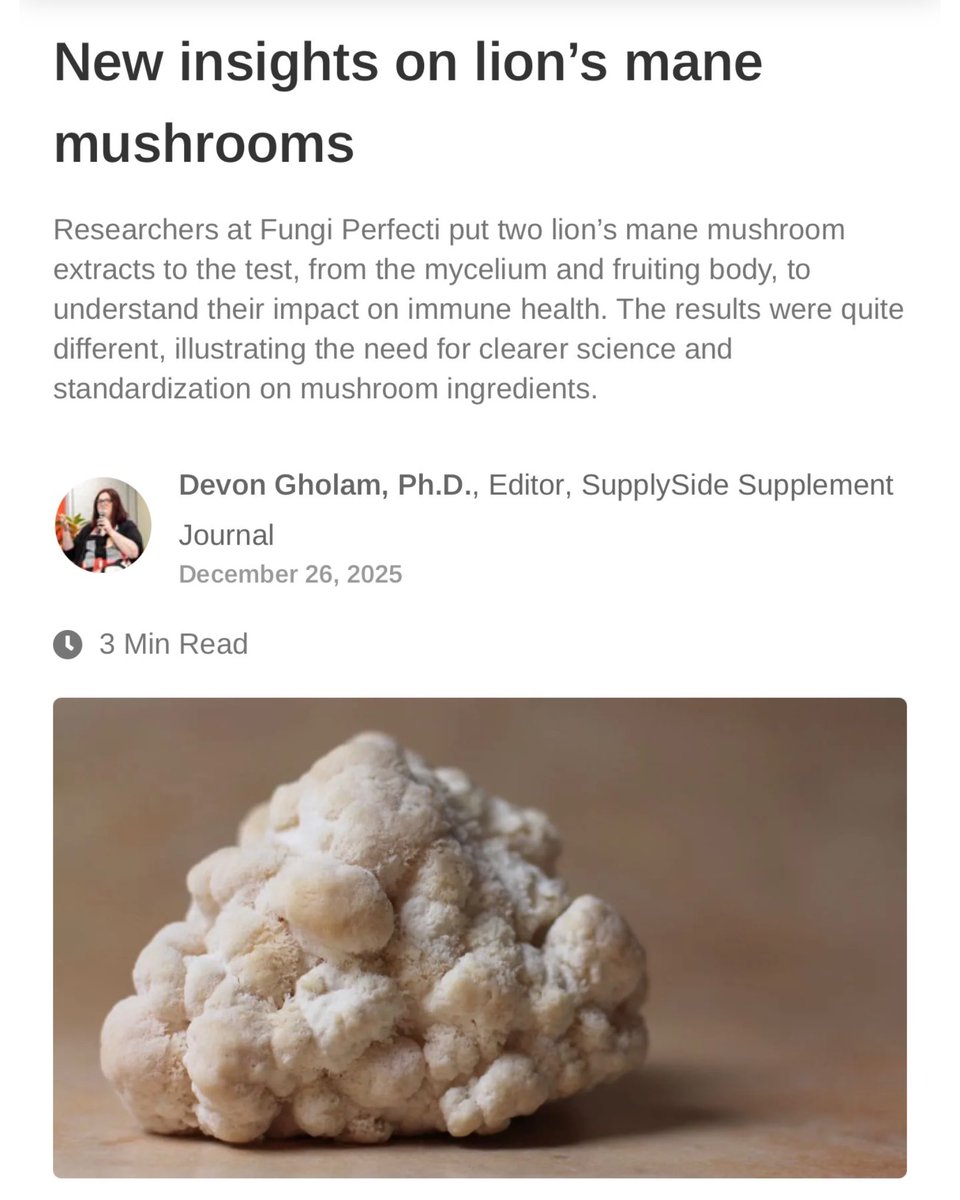
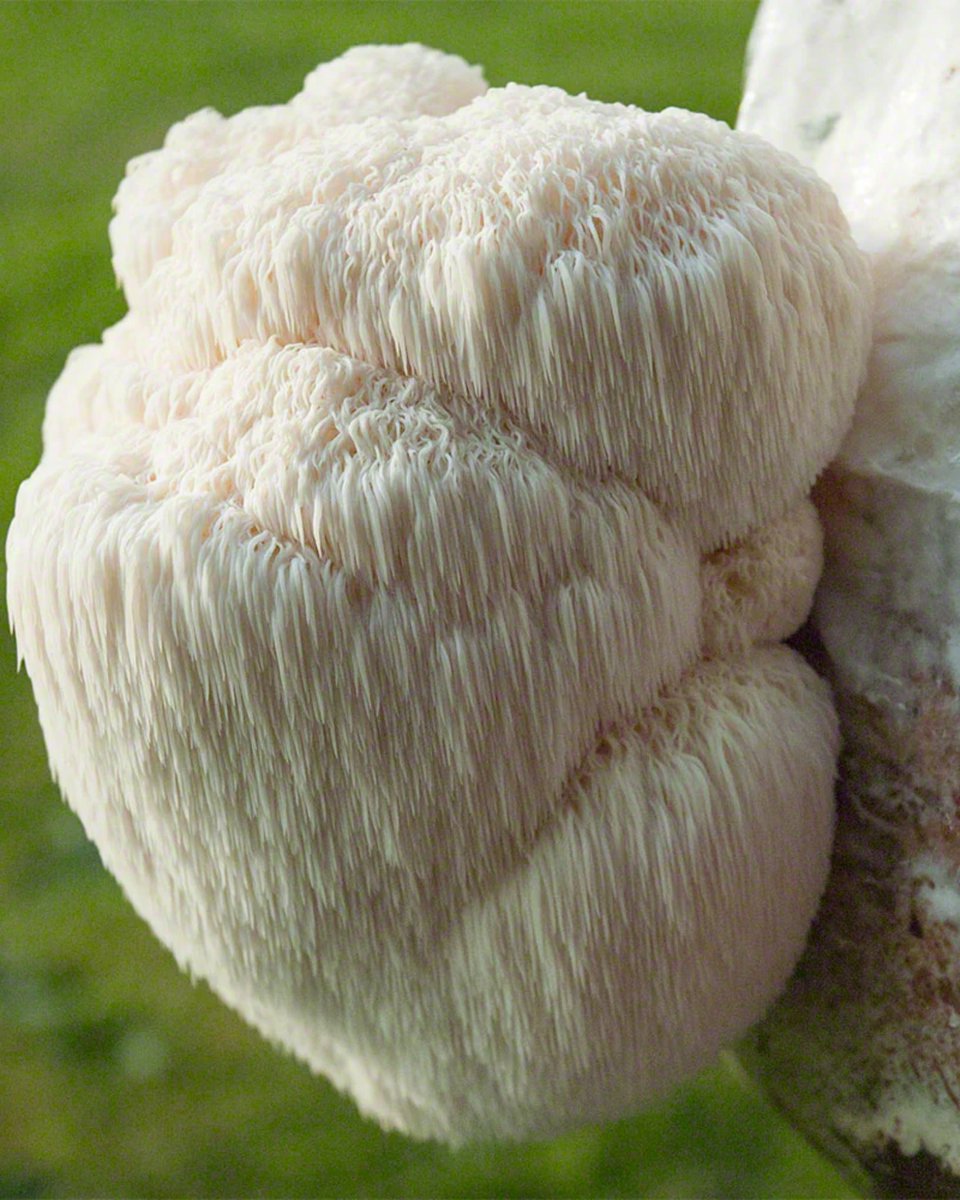
Lions Mane Mycelium out performs Lions Mane Fruitbody.
New research from @fungiperfecti and @HostDefense compared lion’s mane mycelium and fruiting body extracts, and the immune responses were notably different.
The mycelium extract supported a balanced, adaptable immune response. Under certain conditions, the fruiting body extract increased pro-inflammatory signaling.
As functional mushrooms move into the mainstream, rigorous science, proper extraction, and ingredient standardization are essential. Mushrooms are complex organisms, and oversimplifying them leads to poor outcomes.
These results track with two recent double blinded clinical studies using mushroom mycelium fermented rice - compared to a rice placebo, post ingestion.
Disclosure: I own Host Defense. The science is solid.
Learn more: https://t.co/VaooLFpGVw
A remarkable new study shows that a single high-equivalent dose of psilocybin in mice can rapidly increase neuroplasticity by repairing and creating new neural connections in the brain. Researchers observed structural remodeling of dendritic spines in the medial frontal cortex, effectively rewiring neural networks. (As seen in this https://t.co/5y0DHhmtPn article: https://t.co/qzF0xIbmF2) These changes were network-specific, strengthening pathways tied to perception and the brain’s default mode network, while quieting repetitive cortical loops. This work deepens our understanding of how psilocybin may support mental health by reshaping large-scale brain connectivity.
Watch the video by @NCIUniversity to learn more: https://t.co/Tcnjlv8DZm







![Rainmaker1973's tweet photo. Researchers at the University of Pennsylvania have developed an innovative antiviral chewing gum that neutralizes over 95% of certain viruses in saliva, offering a simple, plant-based way to potentially curb transmission through everyday chewing.
Led by Henry Daniell at Penn's School of Dental Medicine, the team created a clinical-grade gum incorporating a natural antiviral trap protein called FRIL (Flt3 Receptor Interacting Lectin), derived from lablab beans (Lablab purpureus, also known as hyacinth beans). This protein binds to complex-type N-glycans on the envelopes of various viruses, entrapping them and preventing infection or spread.
Building on earlier work with a different gum containing plant-produced ACE2 (which reduced SARS-CoV-2 in saliva samples by >95% and is now in clinical trials), the latest formulation targets a broader range of pathogens. Lab tests showed that just 40 mg of the bean-based gum (from a 2-gram tablet) achieved more than 95% reduction in viral loads for influenza A strains (H1N1 and H3N2) and herpes simplex viruses (HSV-1 and HSV-2). The gum releases FRIL effectively during chewing, acting as a molecular decoy right at the site of viral replication in the mouth—key for limiting spread via talking, coughing, sneezing, or close contact.
The product is engineered for real-world practicality: it remains stable and fully functional at room temperature for over 790 days, meets FDA clinical-grade standards, and uses safe, natural ingredients. While the ACE2 version (targeting COVID-19) has advanced to human trials, this FRIL-based gum shows strong promise for seasonal threats like flu and herpes, and researchers are even exploring lablab bean powder against bird flu (H5N1) in animal feed.
If proven effective in upcoming clinical studies, this could become a low-cost, non-invasive tool for high-risk settings—schools, dental offices, public transport, or during outbreaks—helping reduce oral viral transmission without drugs or vaccines.
[Daniell et al., "Debulking influenza and herpes simplex virus strains by a wide-spectrum anti-viral protein formulated in clinical grade chewing gum," Molecular Therapy (2024). DOI: 10.1016/j.ymthe.2024.12.008]](https://pbs.twimg.com/media/G_wsfqWXgAAicxU.jpg)
![Rainmaker1973's tweet photo. Scientists have resurrected "extinct" enzymes from ancient cannabis ancestors that lived millions of years ago, opening the door to more powerful anti-inflammatory treatments and dramatically cheaper drug production.
A team at Wageningen University in the Netherlands used ancestral sequence reconstruction—a cutting-edge technique that reconstructs the genetic history of a species—to revive long-lost enzymes from the prehistoric relatives of the cannabis plant.
Unlike modern cannabis, which relies on highly specialized enzymes to produce specific cannabinoids such as THC or CBD, these ancient enzymes were remarkably versatile ("promiscuous"). They could generate a wide range of cannabinoids at once, revealing how early cannabis plants likely evolved sophisticated chemical defenses against ancient pests and diseases.
The breakthrough has major implications for medicine and biotechnology. One resurrected enzyme proved exceptionally efficient at producing CBC (cannabichromene)—a cannabinoid prized for its potent anti-inflammatory effects but scarce in today's strains. By reintroducing these ancient genes into modern plants or using them in microbial fermentation systems, researchers aim to develop far more efficient, scalable, and cost-effective ways to produce therapeutic cannabinoids.
This work not only sheds new light on the evolutionary origins of cannabinoids but also provides a powerful new toolkit for engineering the next generation of affordable, high-potency plant-derived medicines.
[Villard C, Baser I, van de Peppel AC, Cankar K, Schranz ME, van Velzen R., "Resurrected Ancestral Cannabis Enzymes Unveil the Origin and Functional Evolution of Cannabinoid Synthases", Plant Biotechnology Journal. 2025 Dec 26. Advance online publication. DOI: 10.1111/pbi.70475]](https://pbs.twimg.com/media/G_NHegFWgAArfYf.jpg)