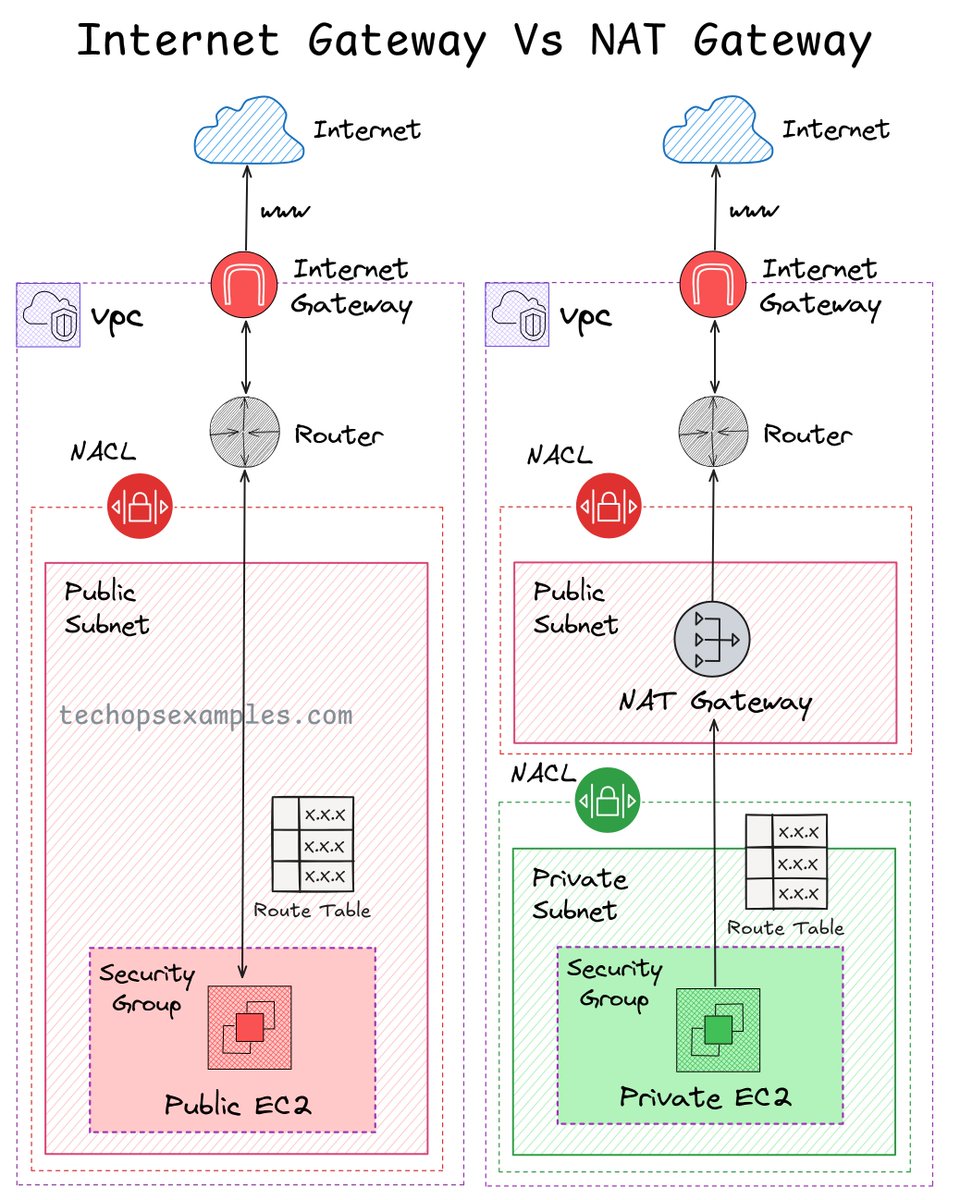
Many Cloud Engineers don’t fully understand Internet and NAT Gateway differences or their implications.
Here, We’ve made this to help you better understand.
🔴 50K+ read my DevOps and Cloud newsletter: https://t.co/YGRG6jXqBa
What do we cover:
DevOps, Cloud, Kubernets, IaC, GitOps, MLOps
🔁 Consider a Repost if this is helpful
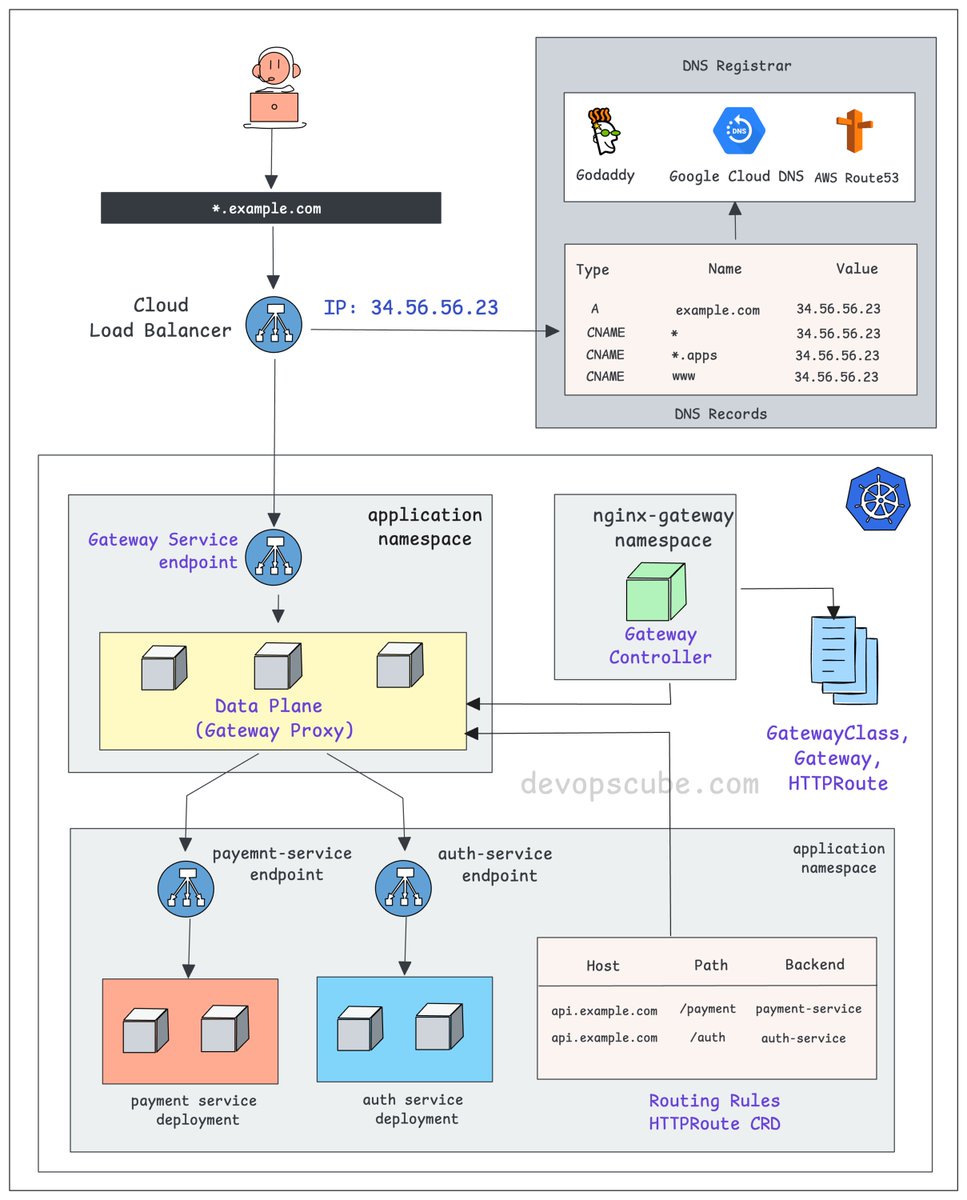
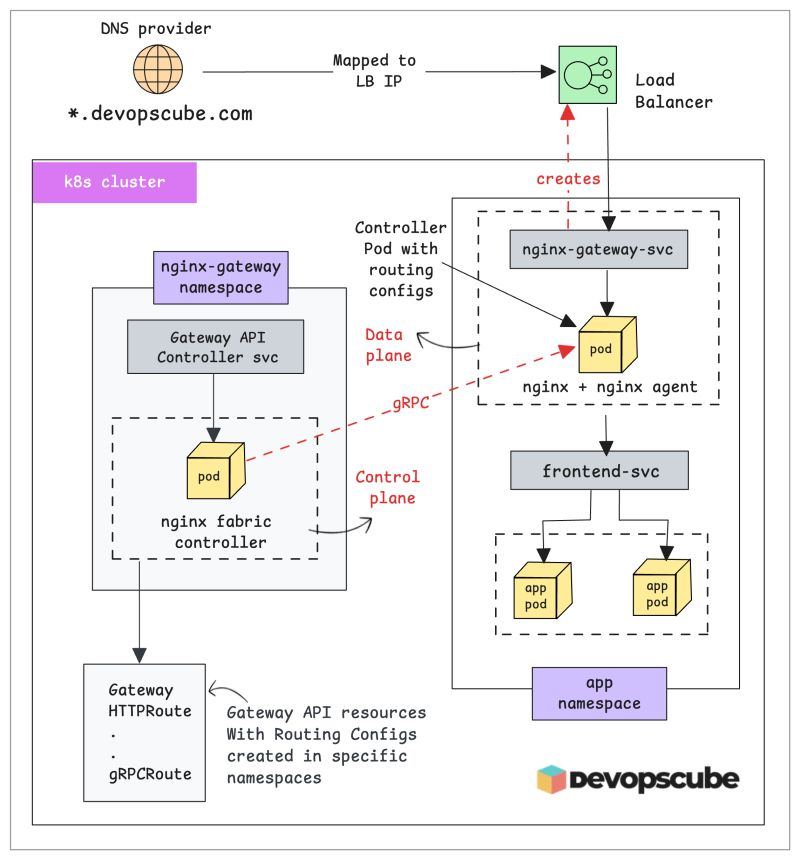
From DNS to Pod: How k8s Gateway API actually works.
- You create a DNS record pointing to your cloud Load Balancer IP.
- The Load Balancer forwards traffic to a Kubernetes Service, specifically the Gateway Service endpoint.
- This Service points to the gateway proxy pods. These could be nginx, Envoy, or any compatible proxy.
- The Gateway Controller (Ex: Nginx Fabric) watches for HTTPRoute, GRPCRoute, and similar resources.
- When you apply these routes, the controller automatically configures the gateway proxy with the right configuration.
- The HTTPRoute resource is what decides where your traffic actually goes. For example, /payment to payment-service, /auth to auth-service
So the full traffic flow looks like this 👇
DNS to Cloud LB to Gateway Service to Gateway Proxy to your backend Service and finally to your Pod.
If you understand the Ingress flow well, relating it to the Gateway API is very easy.
A key difference is that in the classic Ingress model, the controller itself acts as the proxy.
In the Gateway API, the controller configures and manages dedicated proxy instances (Gateways), creating a clear separation of concerns.
---
Every week, in our newsletter, we share one practical deep dive with illustrations and hands-on examples.
It will help you learn something new.
📚 𝗝𝗼𝗶𝗻 𝟮𝟬𝗞+ 𝗘𝗻𝗴𝗶𝗻𝗲𝗲𝗿𝘀 (𝗜𝘁'𝘀 𝗙𝗿𝗲𝗲): https://t.co/8ES8o7NE29
♻️ If you find it useful, repost and share it with the community.
#kubernetes #ckne #devops
Over to you…
Are you using Gateway API in production?
If yes, we would love to hear your experience with it.
♻️ If this helped, repost it so others can learn too.
#kubernetes
🚨 THIS IS ACTUALLY INSANE
Python developers are still installing five different tools to manage one project.
`pip` for packages.
`virtualenv` for environments.
`pyenv` for Python versions.
`pipx` for CLI tools.
`poetry` for project management.
uv replaces all of them with one tool.
And it’s written in Rust.
The headline number:
10–100× faster than pip.
But speed isn't even the most interesting part.
uv can:
→ Create and manage Python projects
→ Resolve dependencies with a universal lockfile
→ Create virtual environments
→ Install and switch between Python versions
→ Run standalone Python scripts with dependencies
→ Install CLI tools with `uvx`
→ Compile and sync requirements
→ Manage Cargo-style workspaces
The workflow becomes ridiculously simple:
`uv init` → create a project
`uv add` → add dependencies
`uv run` → run your code
`uv lock` → lock dependencies
`uv sync` → reproduce the environment
And if you're already using pip?
You don't have to throw your workflow away.
The `uv pip` interface is designed as a drop-in replacement while giving you the speed boost.
The other clever bit:
uv uses a global cache to deduplicate dependencies and save disk space.
So instead of assembling a Python toolchain piece by piece, you get one fast CLI that covers the whole workflow.
And unlike a lot of newer developer tools, uv is already considered stable and production-ready.
If you work with Python, this is one of those tools you should probably try once.
You might not go back.
#Python #DevTools #Rust #OpenSource #Programming #AIEngineering
https://t.co/Pt1rI5U2mU
Anthropic's leaked IPO stats for 2025:
$4.6 billion in revenue
-$8 billion in operating loss
-$42 billion in total net loss
$2 Trillion in IPO valuation
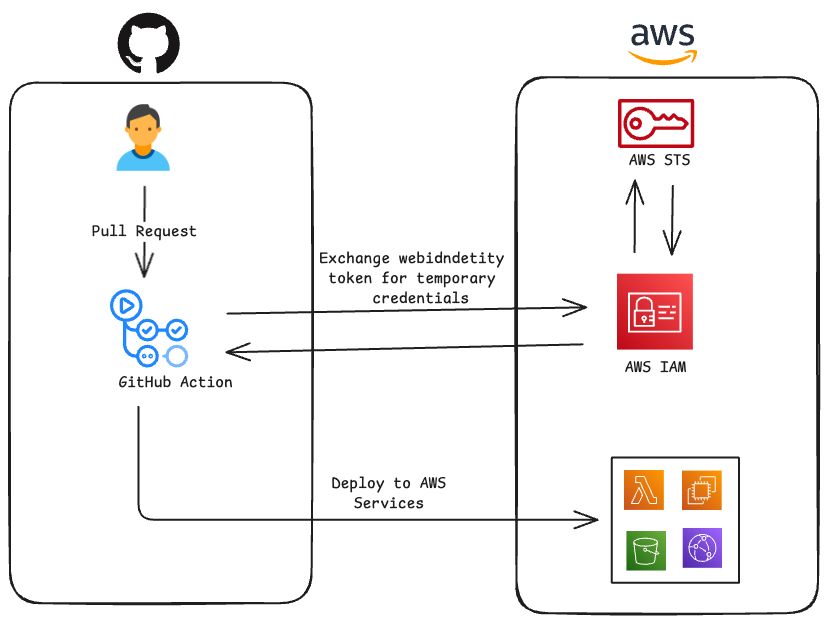
OpenID Connect (OIDC) is a modern identity layer that enables secure authentication of workloads without requiring long-lived credentials or hardcoded secrets.
Instead of storing access keys, platforms like GitHub Actions can request short-lived identity tokens on demand. These tokens are then trusted by cloud providers like AWS, which issue temporary credentials in return.
This approach:
• Improves security posture
• Enables automatic rotation
• Simplifies access management for CI/CD pipelines
Here’s how OIDC works between GitHub and AWS:
- GitHub generates a signed OIDC token when your workflow runs.
- AWS verifies that the token against GitHub’s identity provider.
- Once verified, AWS STS issues short-lived credentials to the workflow.
- The workflow uses these credentials for actions like deploying to S3 or ECS.
No static keys. No manual rotation. Just secure, on-demand authentication for every workflow run.
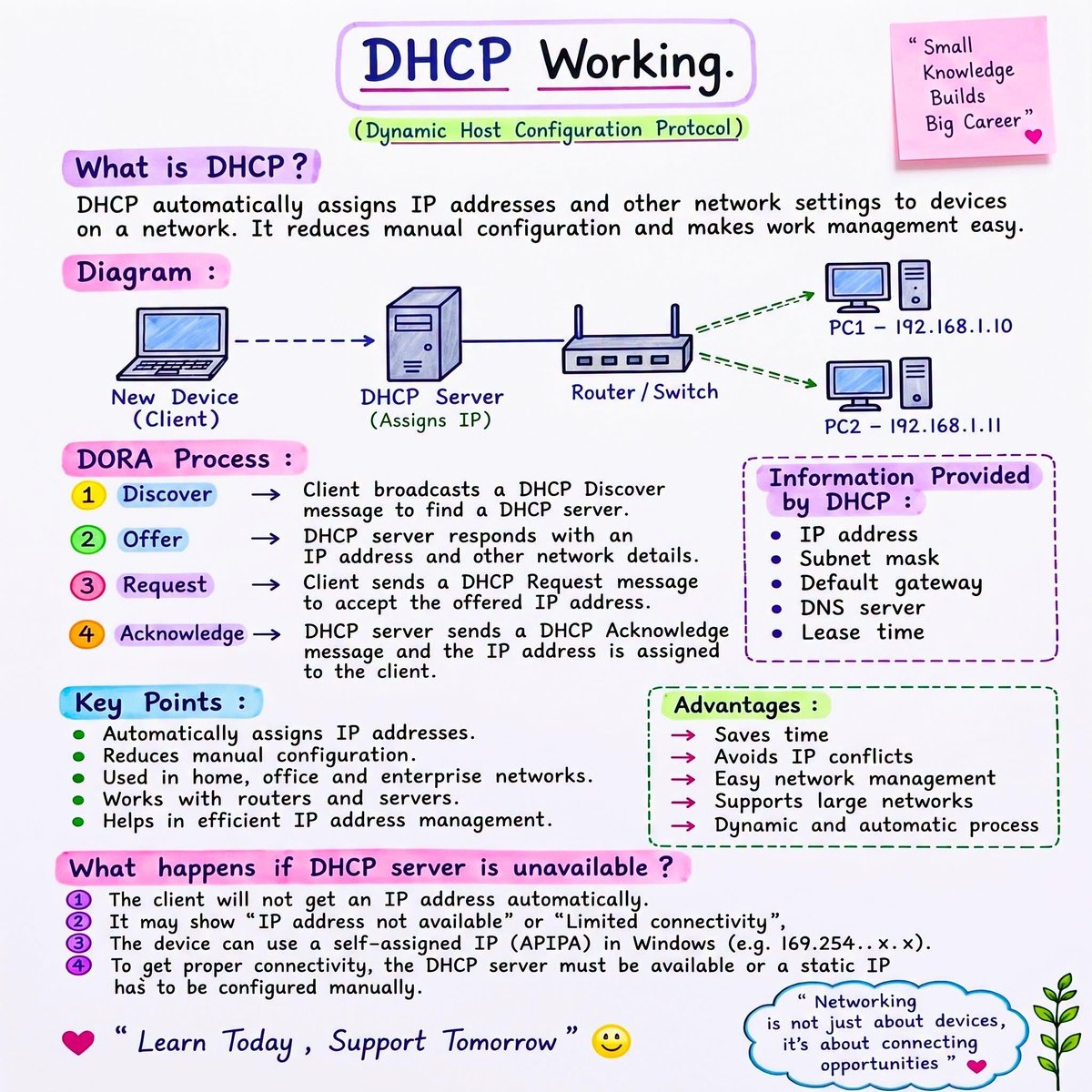
💻 Learn DHCP!! — Not Just Theory!
Learn networking with real configuration examples and hands-on labs.
🏆All You Need to Be a Network Engineer!✨
🥇 IPCisco GOLD Membership
✓ Cisco Configuration Examples
✓ Packet Tracer Labs
✓ GNS3 Labs
✓ Thısands of Practice Questions
✓ Cheat Sheets Library
✓ CCNA to CCIE Training Resources
👉 Get full access with IPCisco GOLD Membership
.
#network #networkengineer #cisco #cisconetworking #ccna
OAuth 2.0 is an authorization framework that lets third-party apps access user data on another service without sharing passwords.
And this course teaches you how it works.
You'll learn about the four OAuth roles, building the authorization server, debugging, and lots more.
https://t.co/yfjHc7hPET
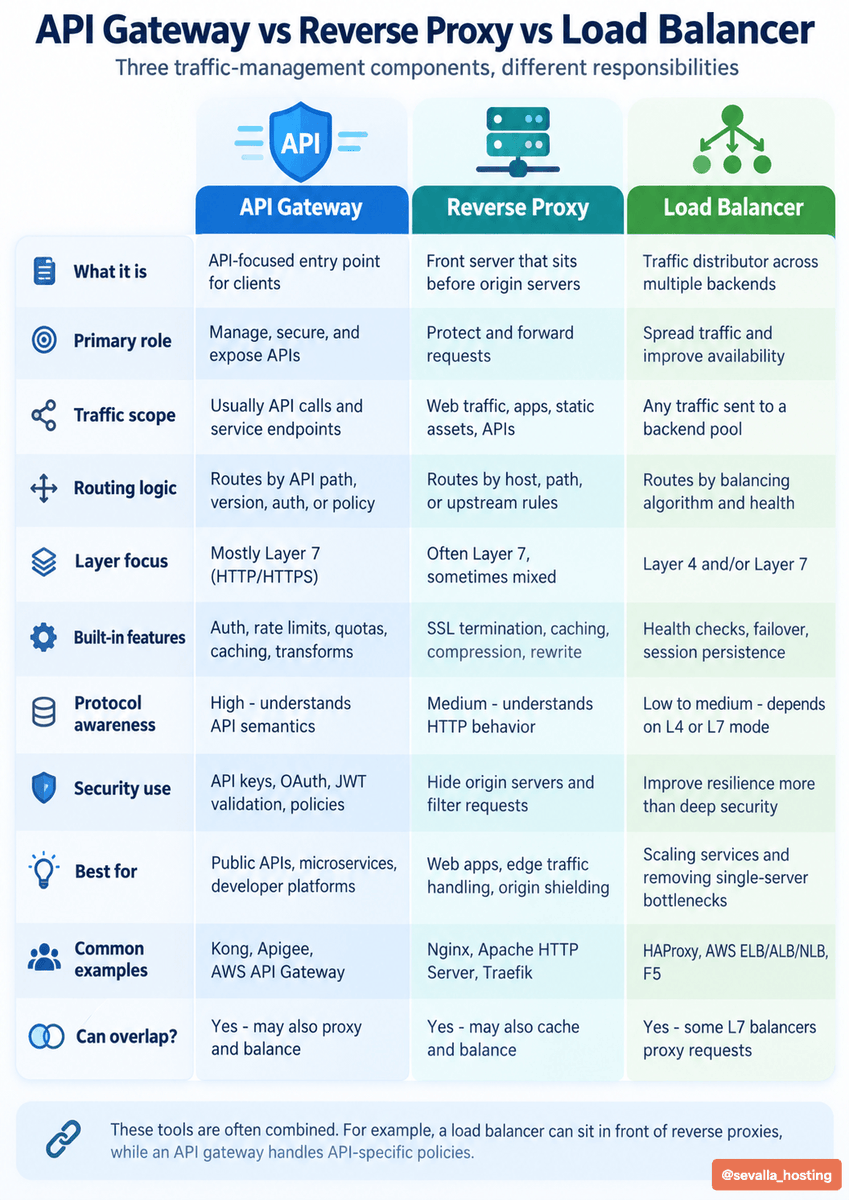
API Gateway vs Reverse Proxy vs Load Balancer 🌐⚙️
They can all sit between users and backend services, but they solve different problems.
🔵 API Gateway
- Built for APIs and microservices.
- Handles auth, rate limits, quotas, routing, and transformations.
🟢 Reverse Proxy
- Sits in front of origin servers.
- Forwards requests, hides backends, terminates SSL, and can cache content.
🟣 Load Balancer
- Distributes traffic across multiple servers.
- Improves availability, scalability, and fault tolerance.
The big difference is their main focus:
API Gateway → API management
Reverse Proxy → request forwarding
Load Balancer → traffic distribution
In real systems, these tools often overlap and are frequently used together. 🚀
Gateway API vs Ingress Controller.
Here is the Key Difference You Should Know
In Kubernetes, the Ingress object only defines routing rules.
The actual traffic routing happens through the Ingress Controller, which acts as both the controller and the proxy.
With Gateway API, that workflow is almost similar.
You define resources like Gateway and HTTPRoute to control traffic flow.
The Gateway API controller (NGINX Gateway Fabric) then translates these configs into real routing rules and infrastructure.
But here is the big difference with NGINX Gateway Fabric.
It has separate control plane and data plane.
When you create a Gateway resource, the controller sets up a dedicated NGINX proxy pod (data plane) to handle traffic.
However, in Ingress, the controller itself acts as the proxy.
We break down Gateway API, Ingress and other core Kubernetes concepts step by step (with illustrations) in our CKA course.
If you are learning Kubernetes or preparing for CKA,
𝗝𝗼𝗶𝗻 𝗛𝗲𝗿𝗲: https://t.co/ugC88YhYGF
Have you experimented with Gateway API yet?
What are your takeaways so far?
#Kubernetes #CKA #GatewayAPI #DevOps
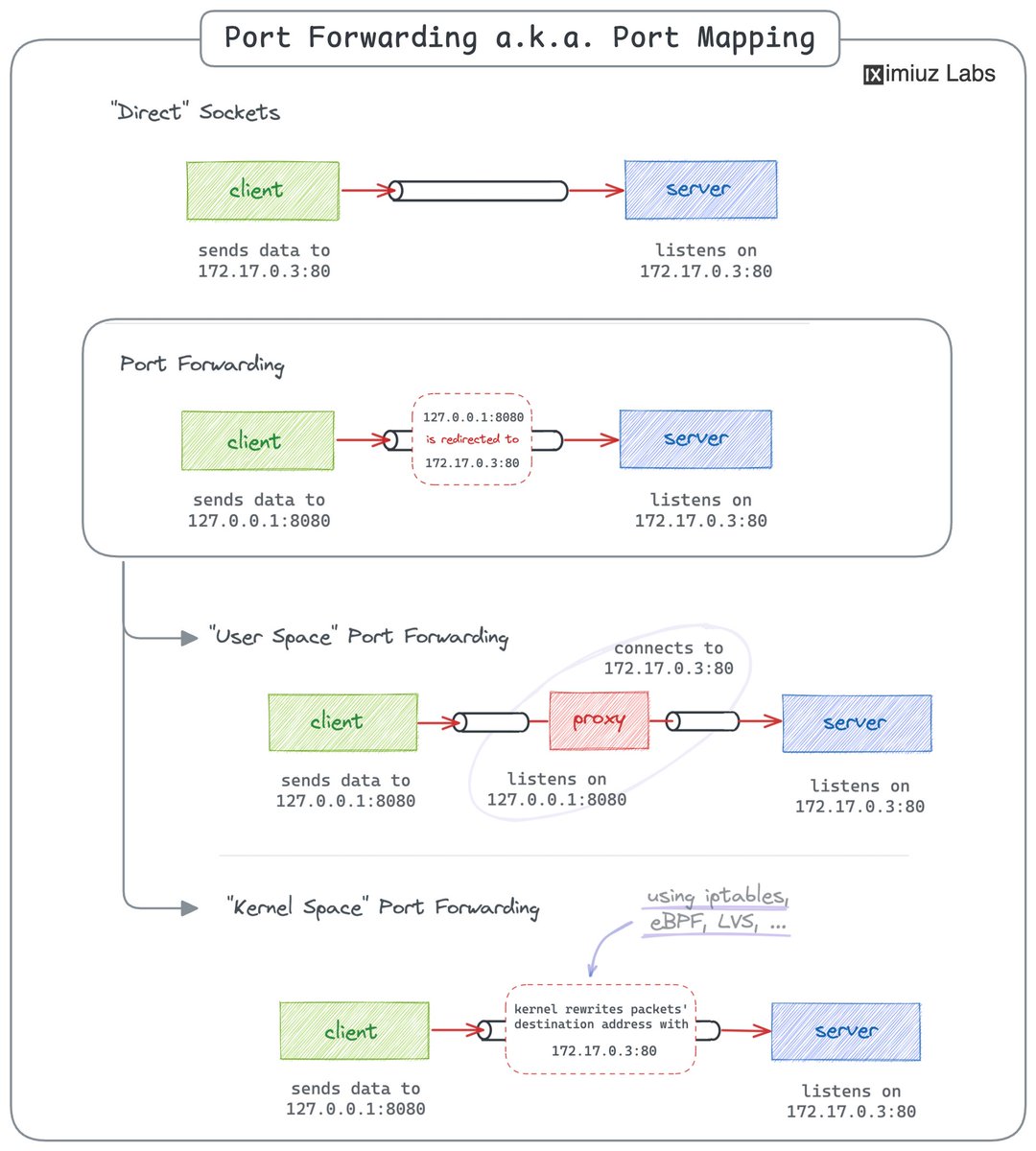
Networking 101: Port Forwarding 🧙♂️
Port forwarding, a.k.a. port mapping, is a networking trick that redirects packets from one address to another without changing either the sender or the receiver.
Technically, it is a form of Network Address Translation (NAT), and there are multiple ways to implement it. Practice forwarding ports using:
- socat: https://t.co/BMJ4tflgpL
- netcat: https://t.co/ANRAQITrvP
- without using a proxy process at all: https://t.co/GphEAaEHxS
Happy hacking!