1/ As a medical student I was taught:
Less well off people die earlier than more well off people (Marmot)
Those that need our help are least able to access it. (Tudor-Hart)
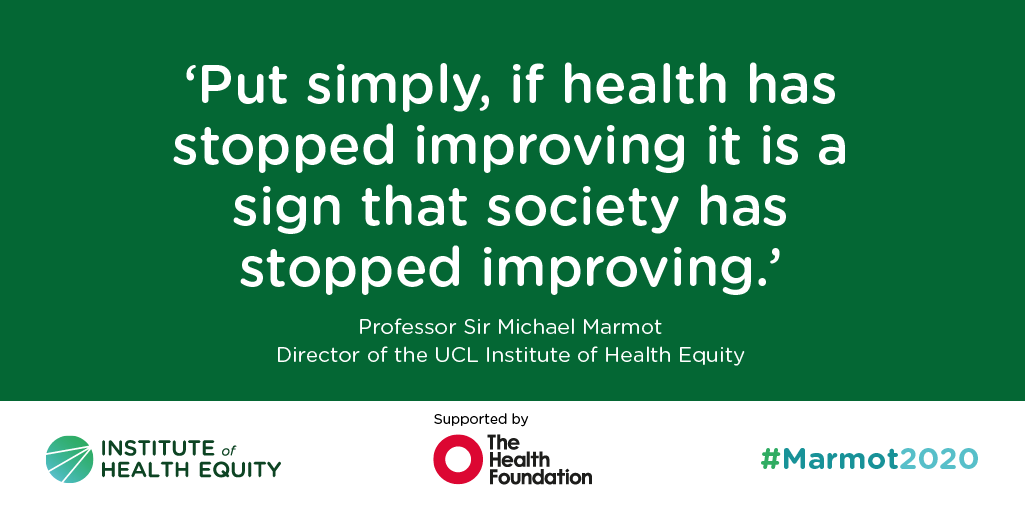
I'm summarising #Marmot2020 with key graphs. Apologies if I've lost nuance here @MichaelMarmot. #FOAMed
Confirmed by @TheMarmotReview: life expectancy stops improving, has actually fallen for poorest women, health inequalities widen and health deteriorates #Marmot2020 supported by @HealthFdn https://t.co/xXQZqUPRHZ
How Americans aged 25-35 spend their free time, 1920-2026. A shift toward ever more leisure and solitude. The most underrated change is the loss of time spent “doing nothing” (i.e. introspecting).
https://t.co/FBA2Ck504V
Supplementation with Vitamin D or calcium, or both does not help prevent fractures or falls. From a new systematic review of 69 randomized trials and >150,000 participants
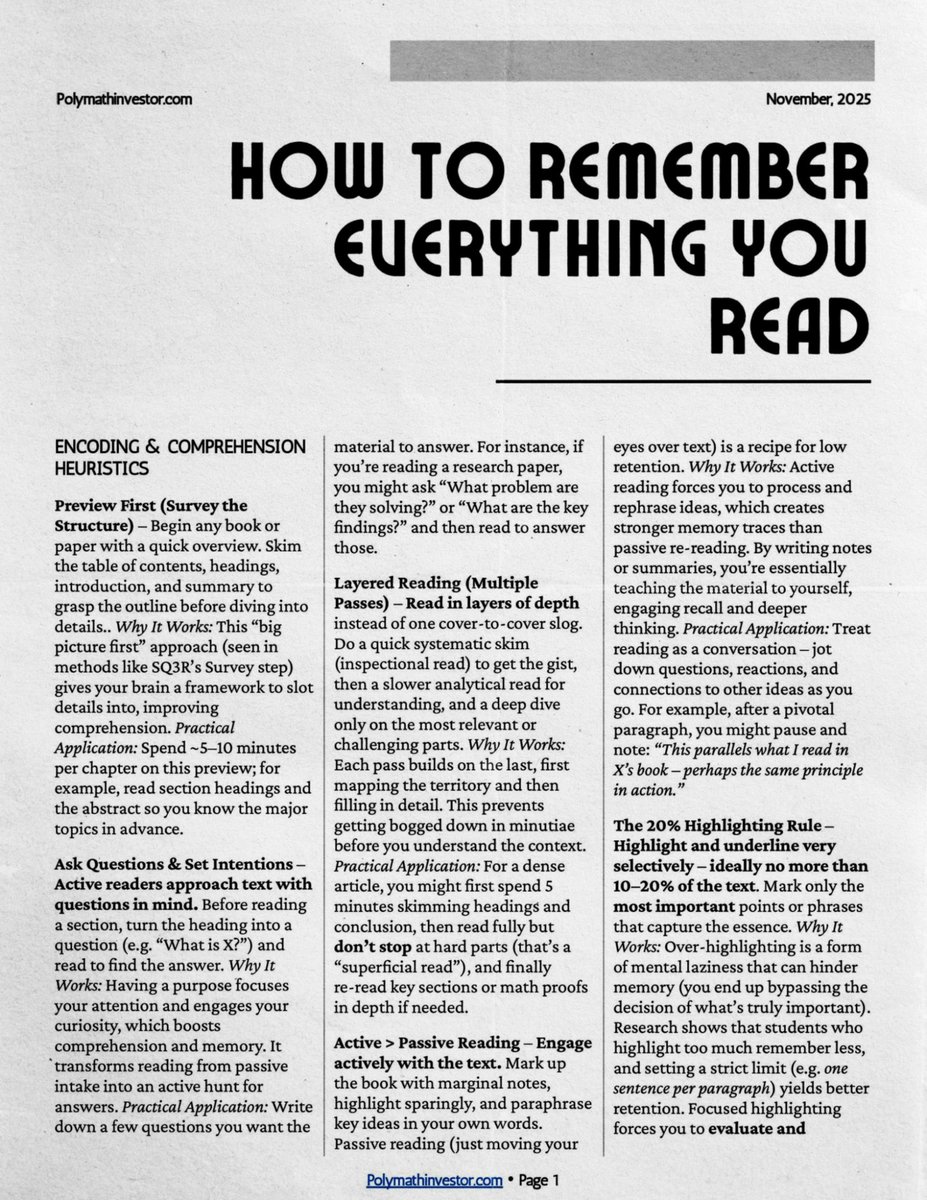
A few months back, I published this guide on how to remember everything you read.
Re-sharing it here for anyone who finds these protocols useful.
(1/11)
Teachers need to ban students from using laptops in classrooms.
Taking notes by hand leads to better understanding of concepts and better recall compared to laptops.
Your brain is not shaped by a single decision. It is shaped by thousands of exposures accumulating across decades.
Every night of poor sleep.
Every chronic stress cycle.
Every city you lived in.
Every relationship.
Every hormone fluctuation.
Every period of cognitive overload.
Neuroscience now refers to this as the exposome.
The total environmental and biological load acting on your brain across your lifespan.
What most people experience as “intuition” or “mental sharpness” is often the visible output of invisible exposures interacting with neural architecture for decades before the moment arrives.
Your cognitive performance did not emerge in isolation.
It was built.
One of my favorite data journalists is @jburnmurdoch and he is cooking once again with this piece: “In country after country the birth rate plunged after the introduction of smartphones, no matter what the previous trend was…the modern digital media environment has had profound effects on society that have led to a decline in romantic coupling”. Read here: https://t.co/F5age67LUm
1/14
Why can't you use direct oral anticoagulants (DOACs) in patients with mechanical valves (MVs)?
DOACs have been one of the most important advances in my career. And yet, the presence of a MV is one of the few contraindications.
The reason highlights the unique nature of thrombus formation in those with a MV and provides insights into the evolution of human hemostasis.
Broad evidence shows the detrimental effect of austerity on health life expectancy, yet this remains largely unspoken within mainstream health and policy discourse.
The evidence is clear, but the narrative isn’t
https://t.co/fHVGPiQ9GB
The older I get, the more I believe happiness lives in the ordinary. Pets. Plants. A quiet morning coffee. Blue sky. Cotton clouds. Birds singing. The gentle breeze through the trees. A clean, cosy house. Good food. Good hearted simple poeple. So much of life’s beauty is quiet, gentle, and already here. And somehow, one of the sweetest feelings is knowing I get to wake up and meet it all again tomorrow.
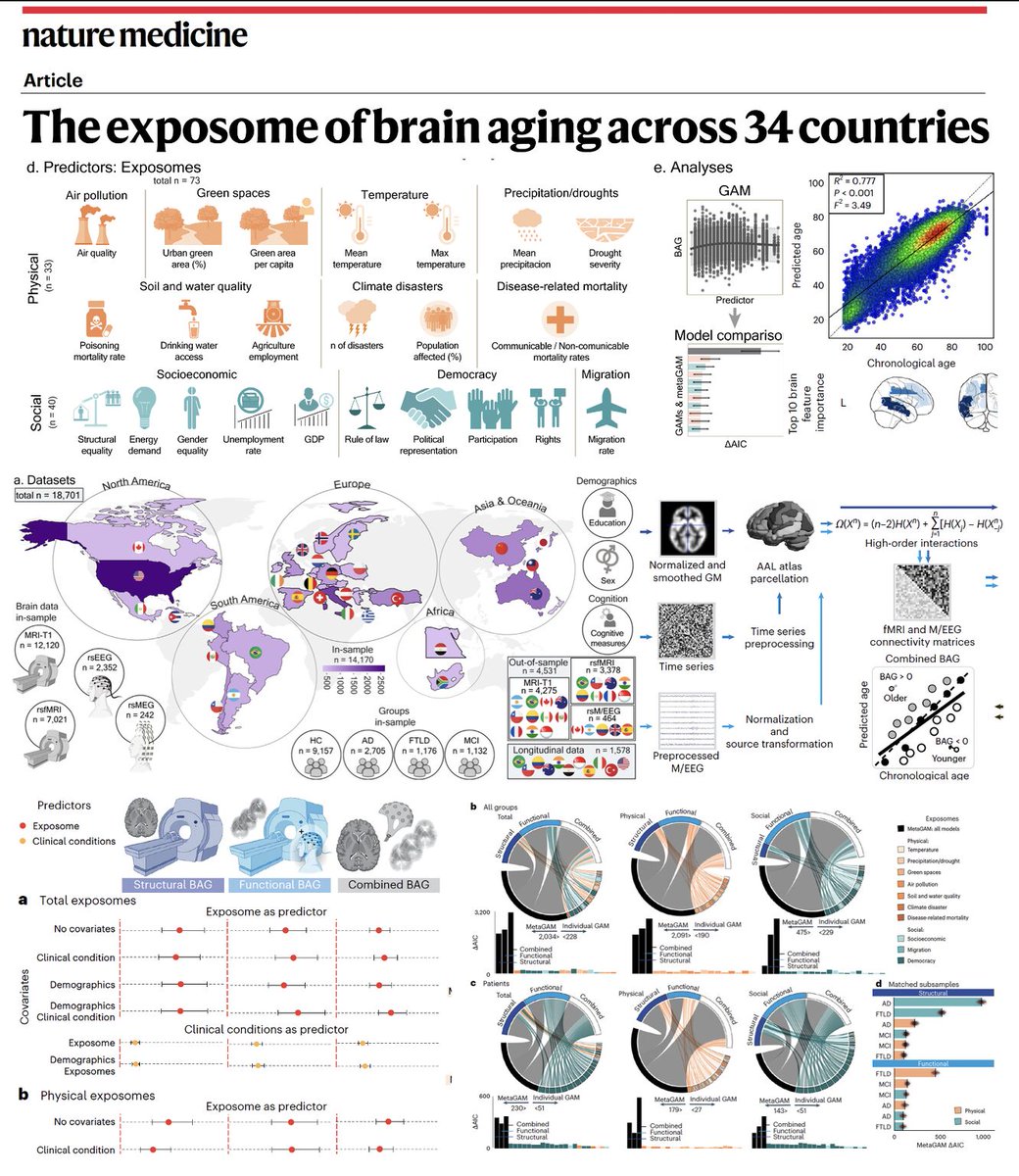
Your brain ages partially according to the country you live in.
Not just your genetics. Not just your habits. Your environment.
This Nature Medicine study analyzed nearly 19,000 people across 34 countries and found that cumulative exposure to pollution, instability, inequality, and poor infrastructure strongly predicts accelerated brain aging.
Most people still think cognitive aging begins internally. It does not.
The brain continuously models the environment surrounding it. Chronic unpredictability and physiological stress force the nervous system into long-term vigilance and adaptation.
Over time, that becomes structural.
The brain is not aging in isolation inside the skull.
It is aging in negotiation with the conditions of daily life.
In 458 BC, Rome was on the brink of collapse.
An invading army had trapped the Roman consul and his legion in a mountain pass. Panic spread through the city. The Senate did the only thing they could think of:
They sent messengers to find a 60-year-old farmer plowing his field.
His name was Lucius Quinctius Cincinnatus. He had once been a senator, then lost his fortune paying his son's bail. Now he worked his own four-acre plot just to feed his family.
When the Senate's envoys arrived, they found him sweating behind a plow. They asked him to put on his toga so they could deliver an official message.
The message: Rome was making him dictator. Absolute power. Total command of the army. No checks. No oversight. No term limit.
He accepted.
Within 16 days, Cincinnatus had raised an army, marched out, surrounded the enemy, and forced their surrender. The republic was saved.
He had legal authority to rule for six months. He could have stayed. He could have expanded his power. He could have done what every other ruler in human history did when handed unlimited control.
Instead, he resigned on day 16.
He took off the toga, walked back to his farm, and finished plowing the field he'd left half-done.
Twenty years later, when Rome faced another crisis, they called him back. He was 80 years old. He took command, crushed the conspiracy, and resigned again, this time after just 21 days.
He died poor. On his farm.
2,200 years later, when George Washington was offered a kingship after winning the American Revolution, he refused and went home to Mount Vernon. The reason he was hailed as "the American Cincinnatus" is because Europeans literally could not believe a man who had won would willingly give up power.
King George III, on hearing Washington would resign rather than rule, said: "If he does that, he will be the greatest man in the world."
The lesson isn't that Cincinnatus was humble.
The lesson is that for most of human history, the people most qualified to lead were the ones who didn't want to. And the moment a society starts rewarding those who chase power instead of those who flee from it is the moment the republic begins to die.
Cincinnati, Ohio is named after him.
Most people who live there have no idea why.
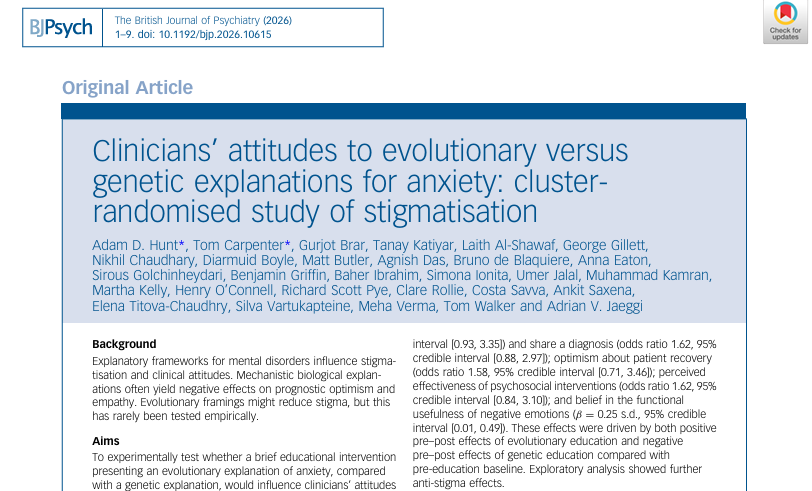
🚨Just published in the British Journal of Psychiatry!🚨
Evolutionary explanations of anxiety rated as 5x more useful for patients and 3x more useful for clinicians than genetic explanations of anxiety!
Our paper is the largest RCT of evolutionary explanations to date!
Becoming a physician is not good for your health.
- High stress
- Sleep disruption
- Intense workload
- Feelings of isolation
- Putting your life on hold
- Limited time for exercise
- Exposure to traumatic cases
- Not having time for family and friends
- Always having to be perfect because the stakes are so high
https://t.co/88TiBA8tBA
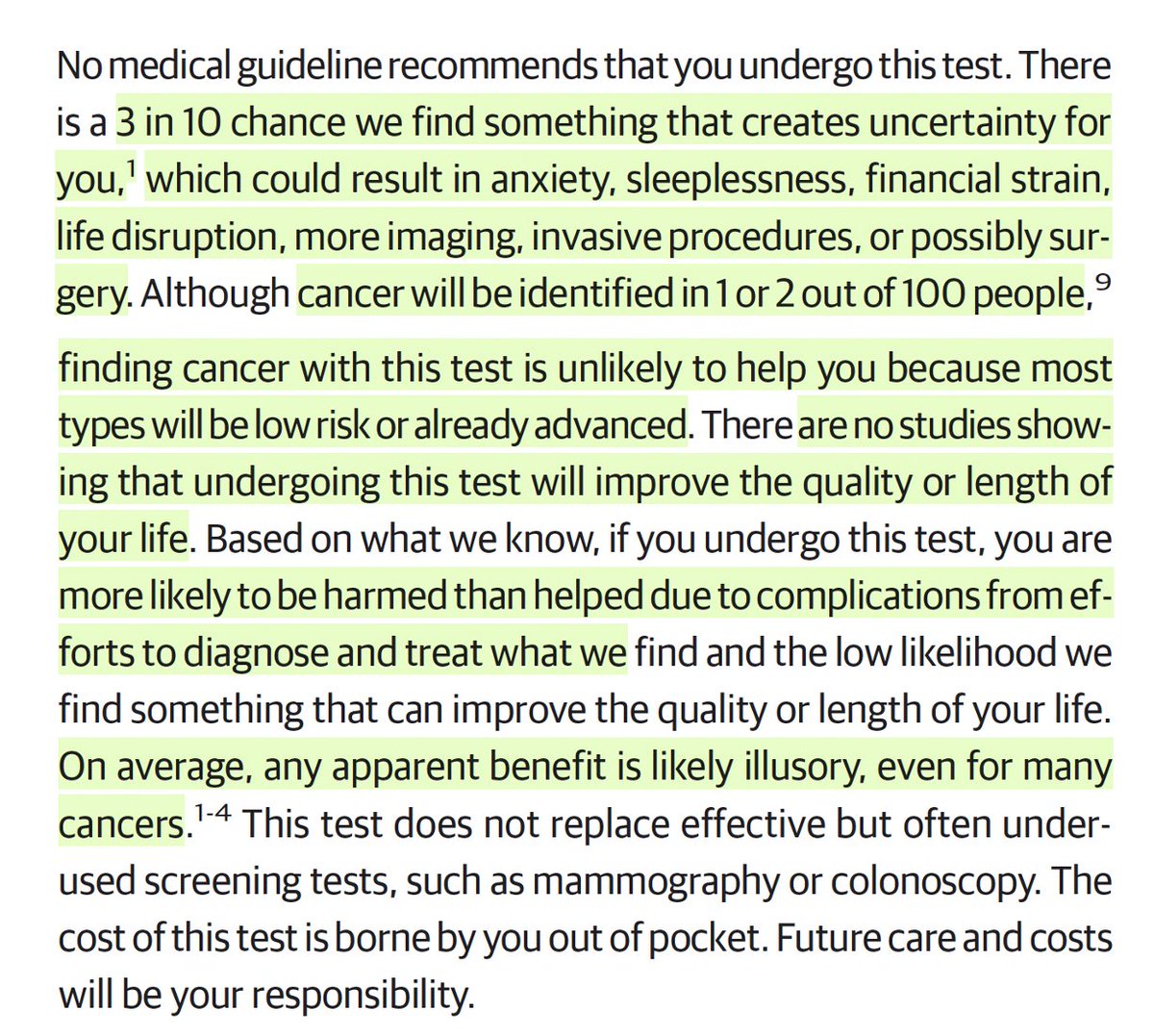
At @JAMA_current today, 2 radiologists publish what should be the consent form for a total body MRI in healthy people
Note: "no major medical society recommends whole-body MRI screening in the general population because it is unproven, and the harms likely outweigh the benefits."
https://t.co/TRSkxDwb6K
A Mediterranean-style diet supplemented with fish oil can improve mental health in adults suffering from depression
Laurie Keefer @DOMSinaiNYC findings highlight that Med diet is more than nutrients that meet daily needs!
#DDW2026@DDWMeeting
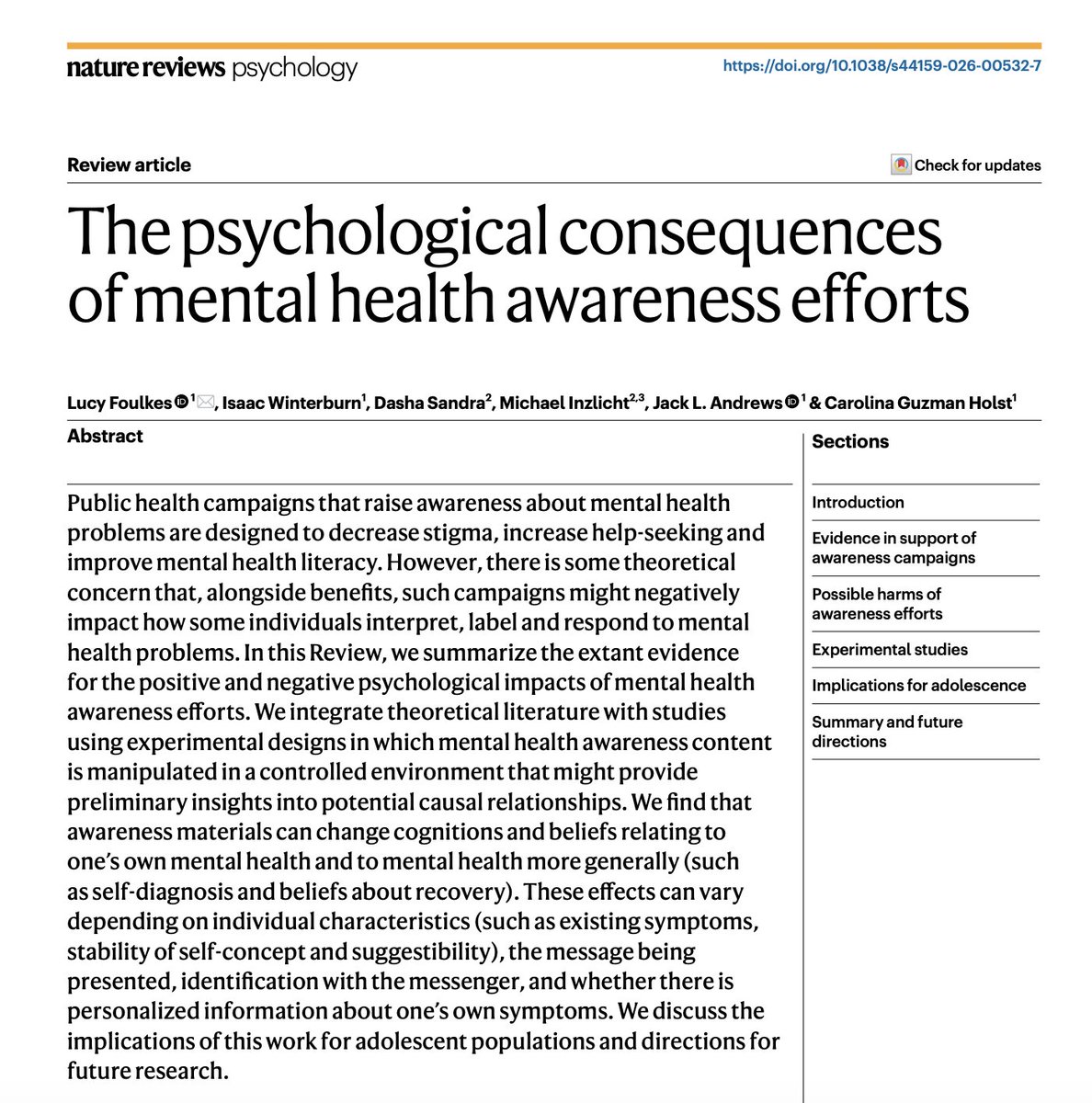
From the paper: "Several high-quality trials have shown that universal mental health interventions based on mindfulness, cognitive behavioural therapy, dialectical behavioural therapy and general mental health awareness can all have negative outcomes, including an increase in internalizing symptoms."
As critics have been arguing all along, individualised, medicalised and decontextualised models & narratives are not only net ineffective, but even contribute to and exacerbate social & psychological issues and distress.
We dont face a crisis of 'mental disorders' in need of medical or cognitive treatment, we face a socio-psychological crisis and a crisis of medicalisation in need of a societal rethink.
Yale Prof. Akiko Iwasaki writing in Nature:
"Our inability to remain open and engage in rational discussions about controversial subjects may be eroding public trust in science."
"I remember a colleague whose daughter developed a life-threatening autoimmune encephalitis after receiving the human papillomavirus (HPV) vaccine. I watched her struggle with obstacles in even asking whether her daughter’s illness might be linked to the vaccine. These questions are not only unwelcome in the field but also could jeopardize one’s career and credibility."
"The pressure to stay within the consensus view is at an all-time high, for fear of reputational damage, funding exclusion and lack of career promotion, which is amplified at a massive scale on social media. However, there are broader epistemic consequences to staying within the consensus and suppressing alternative viewpoints, which could undermine trust and progress in science."
"scientists are unable to freely inquire about the risk of [post-vaccine syndrome] without being labelled as ‘anti-vaxxers’."
"True scientific progress depends on a culture that
protects dissent"










![matthewshaw1111's tweet photo. Yale Prof. Akiko Iwasaki writing in Nature:
"Our inability to remain open and engage in rational discussions about controversial subjects may be eroding public trust in science."
"I remember a colleague whose daughter developed a life-threatening autoimmune encephalitis after receiving the human papillomavirus (HPV) vaccine. I watched her struggle with obstacles in even asking whether her daughter’s illness might be linked to the vaccine. These questions are not only unwelcome in the field but also could jeopardize one’s career and credibility."
"The pressure to stay within the consensus view is at an all-time high, for fear of reputational damage, funding exclusion and lack of career promotion, which is amplified at a massive scale on social media. However, there are broader epistemic consequences to staying within the consensus and suppressing alternative viewpoints, which could undermine trust and progress in science."
"scientists are unable to freely inquire about the risk of [post-vaccine syndrome] without being labelled as ‘anti-vaxxers’."
"True scientific progress depends on a culture that
protects dissent"](https://pbs.twimg.com/media/HHZjKfxXoAAT5NU.jpg)


