If you open port 8333 on your router to turn your Knots node into a listening node then you may also want change the "maxuploadtarget" setting so your node isn't open to attacks by malicious peers who will request initial blockchain download over and over again. I set mine to 1MB bc I was using over 4000gb of data a month thanks to faggots like @PortlandHODL and his friends.
🔥 Svenska banker har gjort det svårt för kryptoanvändare i flera år.
⚡Det ändrar vi på nu!
Tillsammans med Marginalen Bank lanserar vi Sveriges första bankkonto för dig som äger krypto:
✅ Statlig insättningsgaranti
✅ Betalkort & Swish
✅ E-faktura och autogiro
✅ Handel i 250+ kryptovalutor
✅ Staking
Allt detta i samma app!
Begränsat antal platser vid lansering!
👉 Säkra din plats: https://t.co/fqO0w1f4wm
Someone built an algorithm to find inactive Bitcoin wallets, reported them to the NYPD as "lost property" - and is now suing to own them.
39,069 wallets. ~3.8M BTC. $286 billion.
No private keys. Just a court order.
The most audacious Bitcoin lawsuit in history.
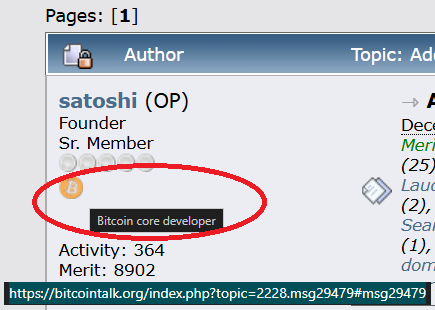
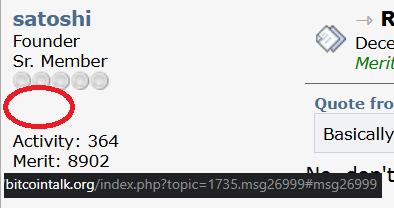
BitcoinTalk,org claiming Satoshi Nakamoto as a "Bitcoin Core Developer" is inaccurate. Satoshi never made any commits to Bitcoin Core. Bitcoin on sourceforge migrated to eventually "Core" on github after Satoshi left. "Bitcoin core developer" tag is absent in some instances too.
A reminder: Citrea don't need the blockchain - they need your mempool which is why spam filters had to be ridiculed and ripped out of Core for Citrea to be able to confidently build and launch their product.
Kill it today by refusing to host their stuff in your mempool.
CAPTURE
An investigation across four articles into how informal power over Bitcoin Core was assembled, exercised, and defended.
Article Two: The Lever
https://t.co/72sC4969Tm
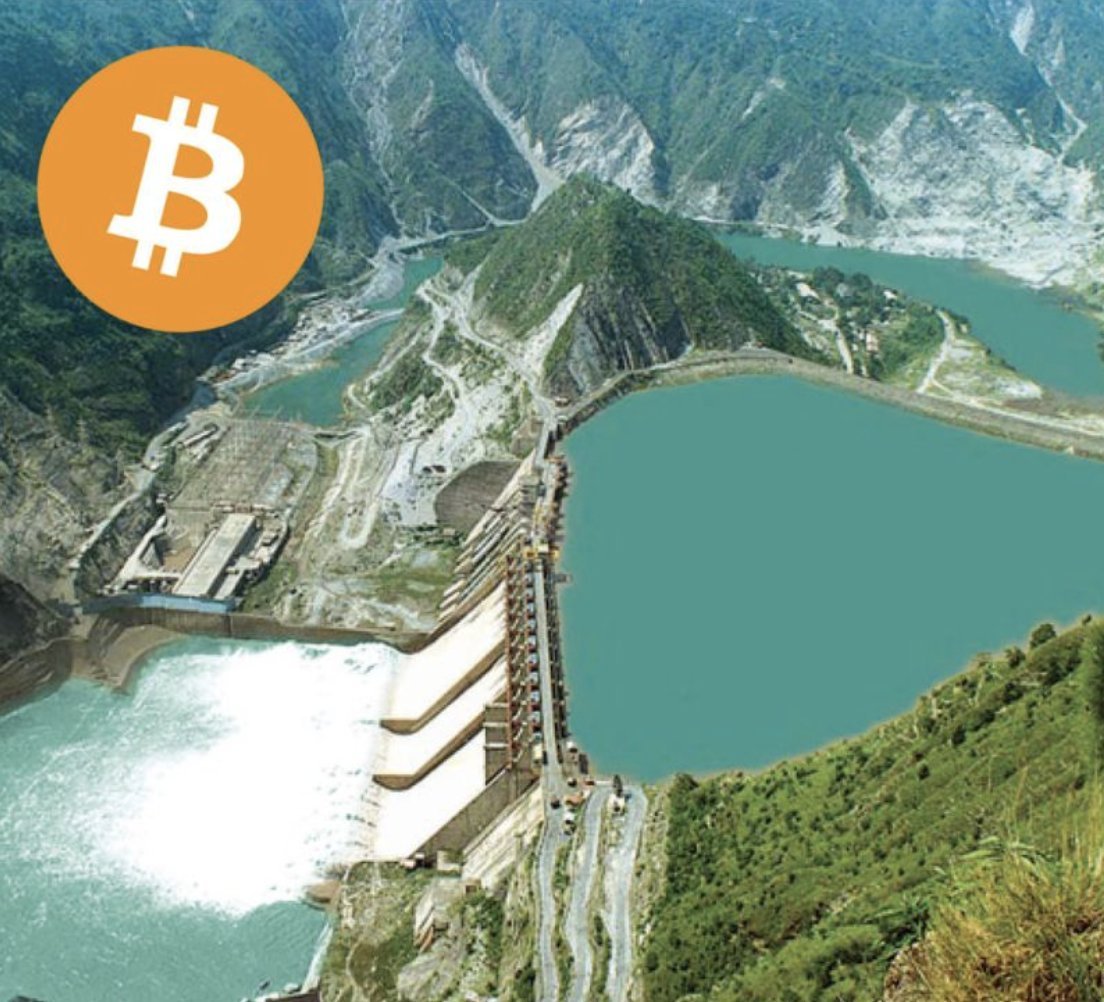
We now have official EEP data that shows Bitcoin mining has nearly doubled Ethiopia’s annual net transmission grid expansion rate
Even more importantly, it has catalyzed an unprecedented level of new construction activity never before reported by EEP at this scale.
Consider this context:
Delivery of power to rural Africa, alongside combatting youth unemployment is one of the two biggest political changes in sub-Saharan Africa.
Bitcoin mining has just demonstrated it can be a viable solution for one of them
Let's dig in.
Ethiopia made $220 million from Bitcoin mining in 2024/25 which is expecting to increase to $312 million this year (source: https://t.co/oqTCnWhvSq
This electricity would otherwise have been wasted
Why?
Although Ethiopia has the capacity to generate 6 Gigawatts from the new dam, Ethiopian Electric Power (EEP) hasn't yet built the transmission lines to supply all that electricity generated.
So, in the meantime the dam authorities sell electricity to Bitcoin mining companies.
These electricity sales to Bitcoin miners were 67% of EEP's total Foreign Exchange revenue last year, vastly improving profitability.
source: https://t.co/5KWbElZYOb
What do they do with that unexpected extra profit?
EEP has stated repeatedly that the revenue from Bitcoin mining is used to support "infrastructure expansion" and "rural electrification" source: https://t.co/k94weeyjNQ
News channel Aljazeera recently confirmed
"Ethiopia doesn't yet have the distribution network to take electricity to 1/2 the population...The idea is the fees paid by the Bitcoin miners will go towards funding the expansion of the grid."
source: https://t.co/RLlzTJsw31
Significantly, EEP's own data shows revenue from Bitcoin mining supported EEP's 2024/25 fiscal year
* 28,571 km new power lines built
* 8,700 substation bays installed
Source: https://t.co/5KWbElZYOb
Bitcoin mining revenue has already almost doubled EEP's rate of energized network buildout from ~358 km/year average to +662 km last year.
But more important is what is in the imminent pipeline: the 28,571 km of new power lines is larger than the entire size of their grid!
source: https://t.co/jvRxu55nMX
Let's be clear, we cannot say that "Ethiopia build more than their whole grid in a year" because not all of that new capacity has been fully energized yet, so that would be an apples-for-oranges comparison.
But it is still an unprecedented rate of new construction.
The good news is that the bulk of this infrastructure constructed but not yet fully energized is not “waiting years”, it is in active commissioning right now and is expected to come online progressively over the next 12–18 months.
Source: Birr Metrics (EEP’s 2025/26 budget announcement) https://t.co/t7B8rCNc9S
When that new network is fully energized, the increase in the speed of energized network buildout will not be 2x. It will be substantially higher, potentially more than 10-20x the historical average as the backlog comes online.
Read that last sentence again.
A forecast 10-20x faster buildout of Ethiopia's electrical grid.
Rural electrification of Sub-Saharan Africa is a key strategic focus for over 20 global institutions and development banks, including the UN, World Bank, IRENA, African Development Bank, and Rockefeller Foundation.
It is even explicitly one of the UN’s Sustainable Development Goals (SDG 7), where Target 7.1 calls for “universal access to affordable, reliable, and modern energy services by 2030.” Sub-Saharan Africa accounts for 85% of the world’s people still without electricity (mostly in rural areas), making this one of the biggest global priorities.
How Ethiopia is achieving this should be one of the biggest stories at the UN right now.
Far from “taking renewable power away” from people, Bitcoin mining’s use of otherwise wasted renewable energy is catalyzing the accelerated delivery of electricity to rural Africa. Bitcoin mining has created a pragmatic solution to an issue that has plagued powerful global institutions for decades.
If you are still gaslighting Bitcoin mining in 2026 (based on early studies, now been widely debunked), you are no longer just uninformed. You are perpetuating harmful myths that slows down power delivery to people living without electricity.
I’m tired of your insults.
I am providing investigative journalism, everything is sourced with screenshots and URLs. I’m doing it because I care about Bitcoin.
You sit there arrogantly handwaving honest concerns, throwing insults and ad hominems towards people uncovering extremely alarming behavior and governance by Bitcoin’s reference implementation, while being invested in all kinds of grifts, while not even commenting on fucked up emails connecting you to Epstein’s island.
You have fallen completely, Adam. Just sad to see. Now fuck off.
@BahnhofAB Har ni sett över att kombinera BTC mining för att hålla er till kontraktet med er el-leverantör så ni kan stabilisera förbrukningen?
@BitcoinToday__
We're happy to announce a long-term partnership with Motorola. We're collaborating on future devices meeting our privacy and security standards with official GrapheneOS support.
https://t.co/8flkjD52Eg
To prioritize Bitcoin as a decentralized, incorruptible, secure monetary network, I'd run Bitcoin Knots with BIP-110 enabled.
Knots adds policy-level spam filters (e.g., against inscriptions/Ordinals) while staying consensus-compatible, boosting node operator control without forcing changes network-wide. BIP-110's temporary soft fork caps non-monetary data at consensus (e.g., ~34-byte outputs, limited OP_RETURN), shrinking attack surface from bloat and keeping block space focused on value transfer—lowering costs for monetary users long-term.
Core's neutrality is solid for broad validation, but allowing unchecked data risks diluting the monetary focus and raising barriers. Knots + BIP-110 better aligns with lean, censorship-resistant money.