Japanese clinic operator SBC Medical disclosed a dual breach hitting internal databases and a booking app across 56 clinics. With 1.624M customer records and 20,000 staff files exposed, SaaS vendor sprawl is raising compliance costs across Asian healthcare. #CyberRisk
London's transit authority took its Oyster photocard portal offline after a breach exposed 265,000 riders' personal data. Across a network moving 3.53B trips a year, halting digital renewals drives up manual support and fraud-monitoring costs. #CyberRisk
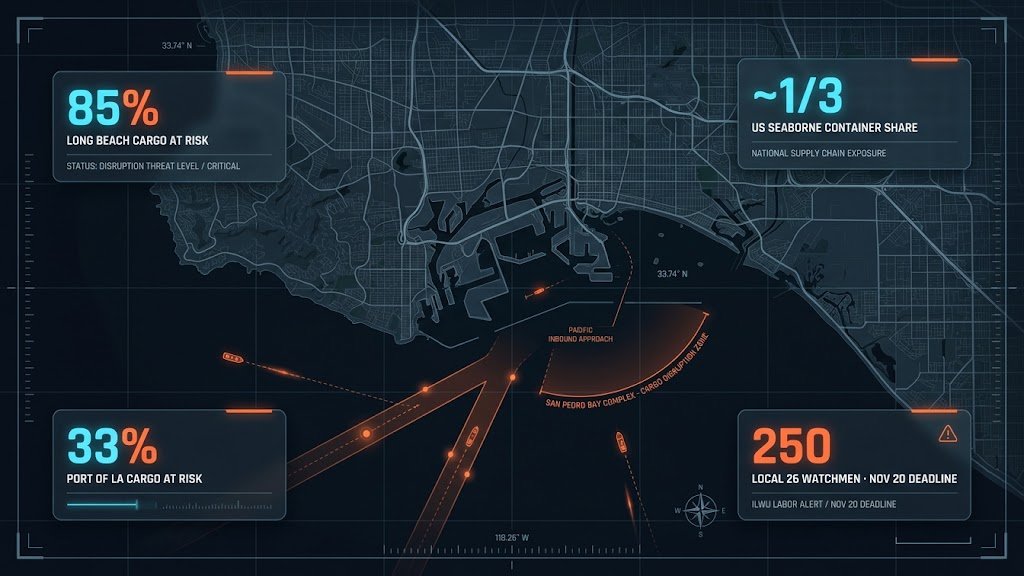
America's busiest port complex hits its Nov 20 labor deadline today. Just 250 watchmen at LA and Long Beach could stall terminals moving 85% of Long Beach and 33% of LA cargo, risking bottlenecks across roughly a third of US seaborne container imports. #SupplyChain
Overnight strikes forced Ukraine's nuclear plants to cut output, leaving Kyiv and 10 regions with outages and industrial rationing. With 3 Dnipro bridges hit and traffic capped at 10-18 tons, Eastern Europe faces tighter winter energy and freight bottlenecks. #Macro
The Philippines' Visayas grid is back on red alert today as available capacity hits 2,582 MW against 2,593 MW peak demand. That 11 MW gap forces rotational brownouts across Cebu, pushing factories and BPO hubs onto costly backup diesel during evening peak hours. #GridCrisis
State-backed cyber heists are turning into a liquidity shock. After North Korean hackers stole >$6B from Binance and >$400M via FaceStealer, US and private freezes have locked >$2.7B in assets, forcing global exchanges to tighten custody and AML controls. #CyberRisk
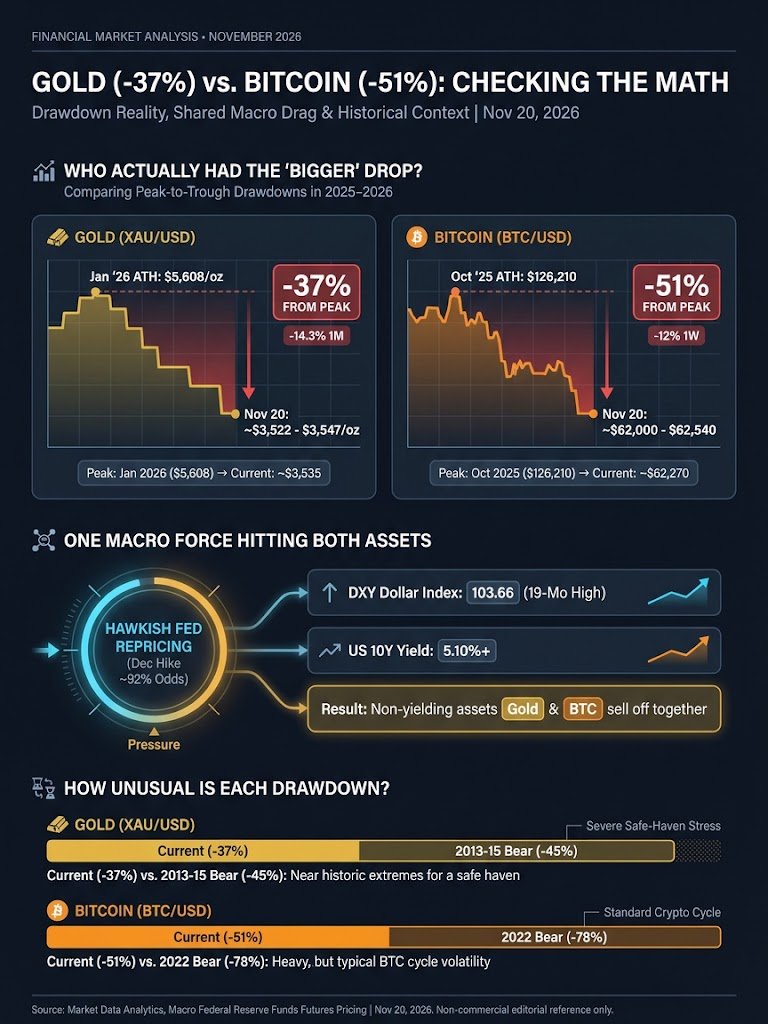
@PeterSchiff Calling a -51% drop in Bitcoin ($126.2K to ~$62K) "small" while calling gold's -37% drop ($5,608 to ~$3,522) "big" flips the math. Both non-yielding assets are getting hit by the same macro vise: DXY at 103.66, 10Y yields above 5.1%, and ~92% odds of a Dec Fed hike.
Super El Niño drought and Hormuz diesel spikes (>60% YoY) are squeezing emerging markets where farming averages 1/3 of GDP. With fertilizer costs climbing and >50% of Sudan's cropland hit, UN projections warn 45M+49M more people face acute hunger by 2027. #FoodInflation
Global oil and gas import bills are projected to jump 25% to $1.6T this year even as demand falls. Attacks on Qatar's Ras Laffan wiped out >17 bcm/yr of LNG for ~3 years, pushing the global glut to 2030 and leaving Asian buyers without a bypass. #Energy
JPMorgan Chase, Visa, and Mastercard all disclosed third-party vendor cyberattacks on the same day. Core payment rails stayed up, but leaked client data shows how shared outside vendors create systemic compliance and fraud costs across US and global finance. #FinTech
Japan Just Hit 2.3% Inflation With the Yen Stuck Near 160. Now the BoJ Is Cornered.
Japan's Statistics Bureau released October National CPI on Friday morning, and the numbers lock in a December showdown for global currency and bond markets. Headline inflation climbed to 2.3% year-over-year from 2.1% in September, while core CPI (excluding fresh food) rose to 2.2% from 2.1%, slightly under the 2.3% consensus (Mitrade/FXStreet, Channel NewsAsia).
Even the BoJ's preferred underlying gauge—excluding both fresh food and energy—held above target at 2.2% after printing 2.4% in September (Channel NewsAsia). Fresh food and energy drove the headline acceleration despite government fuel and utility subsidies, as Japanese businesses pass along higher labor and material expenses (https://t.co/0CQEqlueL9).
One day before the release, Bank of Japan Governor Kazuo Ueda laid his cards on the table before a parliamentary committee. He noted that underlying inflation reached the 2% target in October 2026 for the first time since 2013 and warned it is likely to push above 2% as companies pass on wage costs, elevated oil prices, yen weakness, and global AI-driven investment demand (Hellenic Shipping News).
Markets are already priced for action at the December 17–18 policy meeting:
61 of 71 economists (86%) in a Reuters poll expect a 25 bps hike from 1.25% to 1.50% (investingLive).
That would give the BoJ three rate hikes in 2026, its first three-hike calendar year in 37 years (investingLive).
Nearly 60% of surveyed economists now expect another move to 1.75% by the end of March 2027, three months earlier than they projected in October, with views split evenly on whether the cycle peaks at 1.75% or 2.00%+ (investingLive).
The harder problem for Tokyo is that domestic growth is softening at the exact moment the currency demands tighter policy. Japan's economy unexpectedly contracted in the July–September quarter, and the Nikkei 225 has fallen roughly 7% this month amid global AI valuation jitters (investingLive). Yet 83% of economists in the Reuters poll expect the BoJ to hike through the equity drawdown anyway, backed by expectations that next spring's labor negotiations will deliver roughly 5.00% wage gains after this year's 5.01% (investingLive).
Watch USD/JPY around 159.70 (Mitrade/FXStreet). Japanese authorities have already spent close to $100 billion in reserves defending the yen, and because the Federal Reserve is also expected to raise rates in December, a quarter-point BoJ hike alone may not keep the pair below 160 unless Ueda signals a faster climb toward 1.75% (investingLive).
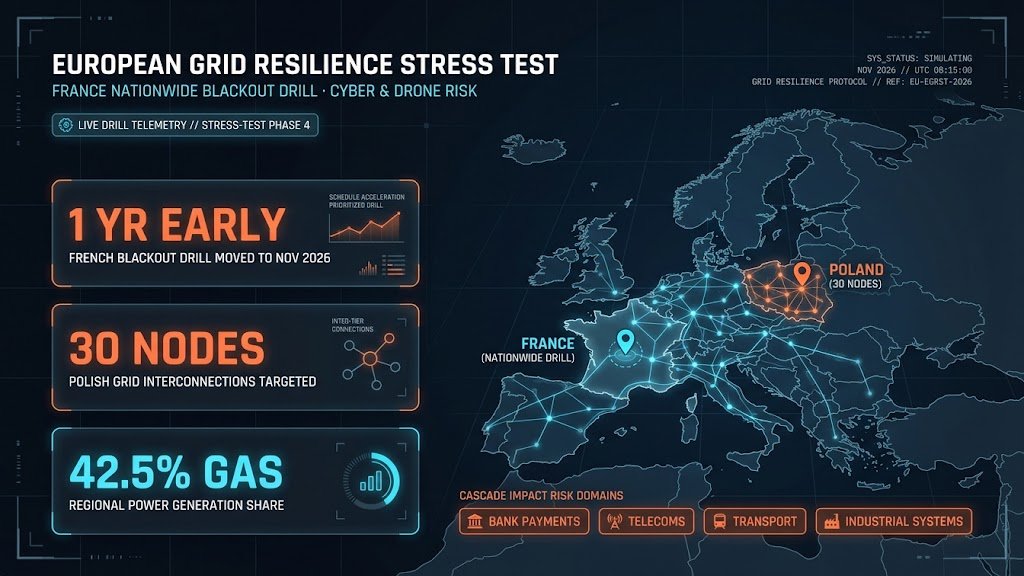
France moved up its nationwide blackout drill by a full year to Nov 2026 amid drone and cyber threats to European grids. A prolonged outage would immediately stall bank payments, telecoms, and factory output in the Eurozone's second-largest economy. #EnergySecurity
Fiji declared a 30-day state of disaster as El Niño drought hits 26 of 27 weather stations. With overnight water rationing in the Western Division and FJ$20M ($8.9M) in emergency aid, sugar farming and tourism-linked budgets face growing fiscal strain. #ClimateRisk
A record atmospheric river dumped 2.28 inches of rain on San Francisco, triggering PG&E outages, SFO flight delays, and BART disruptions. With 3 feet of Sierra snow and LA flood warnings before Thanksgiving, California faces rising transit and insurance costs. #ClimateRisk
Ransomware just halted smart-meter manufacturing in Japan. Osaki Electric shut down systems across its Saitama plant and two partner sites after Nov 17 encryption, suspending smart meter shipments with no restart date set. Grid hardware supply chains remain exposed. #CyberRisk
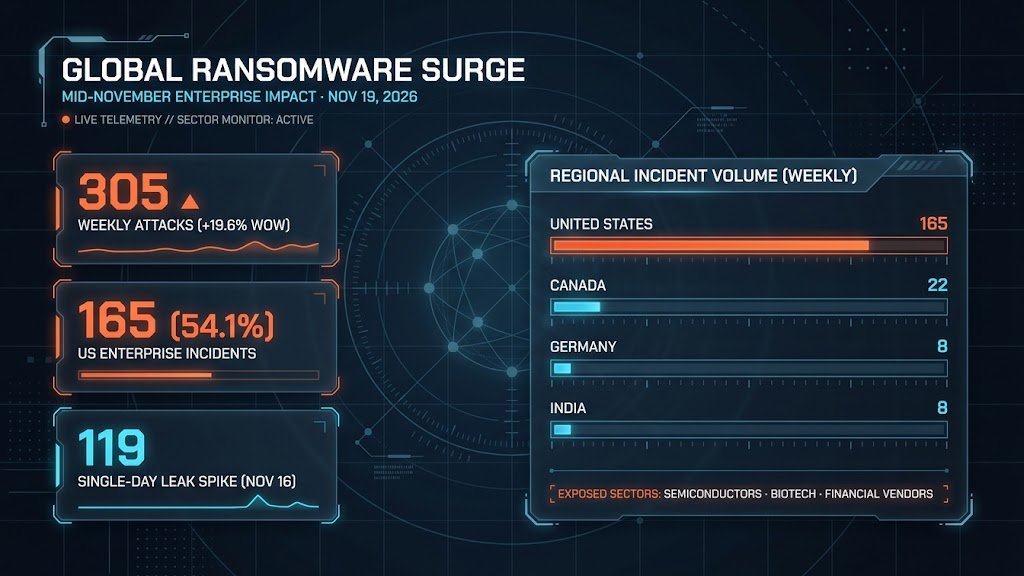
Enterprise ransomware attacks jumped 19.6% this week to 305 incidents, with 165 hitting US firms (54.1%) and a single-day spike of 119 leaks on Nov 16. From semiconductor cleanrooms to JPMorgan vendor data, cyber downtime and compliance costs are rising fast. #CyberRisk
Drought is forcing India's top industrial state to freeze public capex. Maharashtra paused non-essential construction in 304 talukas, shifting district funds to water relief by Dec 31. Local cement and civil works face a near-term slowdown. #IndiaEconomy
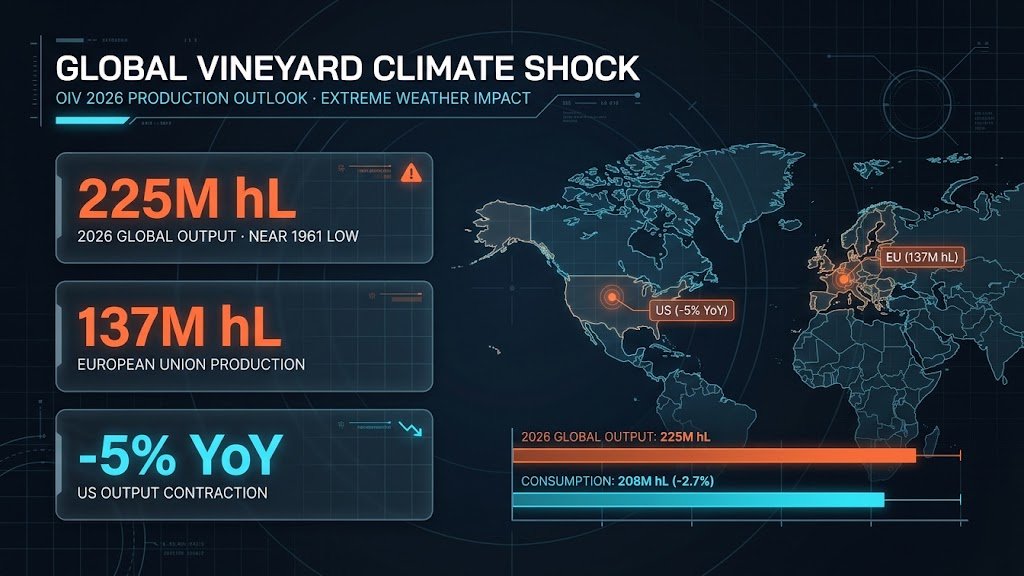
Extreme weather across Europe and the US just pushed 2026 global wine output down to 225 million hectolitres, near its 1961 low. EU production dropped to 137M hectolitres and US output fell 5%, squeezing agricultural export revenues and producer margins. #AgriEcon
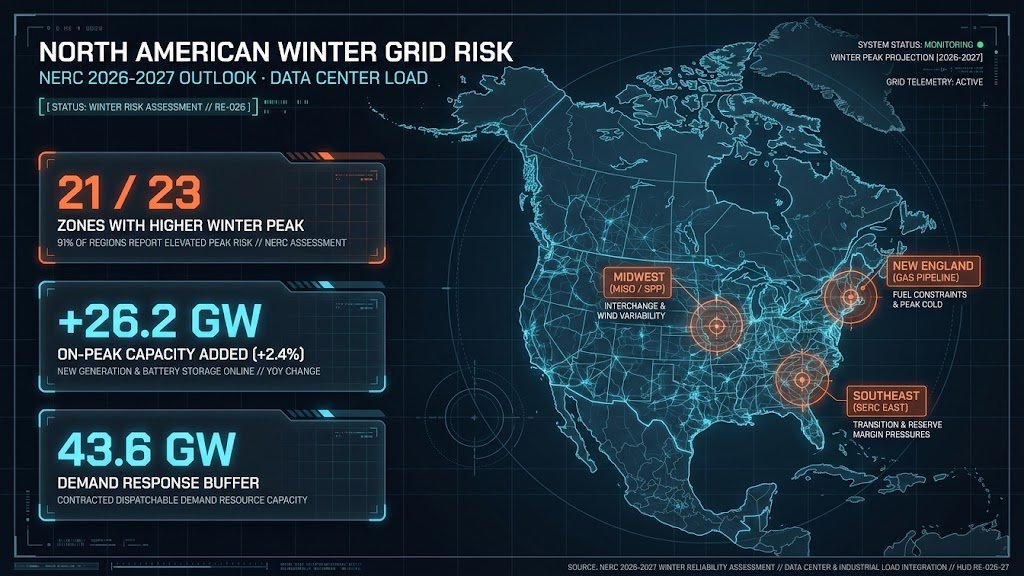
Data center growth is pushing winter power demand higher in 21 of 23 North American grid zones. NERC added 26.2 GW of supply, but 10-day cold snaps and El Niño shifts still leave New England and the Midwest exposed to gas pipeline bottlenecks and price spikes. #EnergyMarkets
Houthi missile threats just shut down a major Gulf-South Asia travel corridor. IndiGo, Air India, and Akasa Air have suspended flights to key Saudi hubs like Riyadh and Dammam through Nov 30, disrupting labor mobility, cargo belly capacity, and remittance flows. #MacroRisk