This is the result of Good Governance. Despite having similar cultures, Nepal, Bhutan, and Sikkim have diverged in wealth.
From 93.5% of India’s average in 1990-91 to 319.1% in 2023-24.
30% of Nepal's GDP comes from remittances. 35% of Sikkim's GSDP comes from manufacturing.
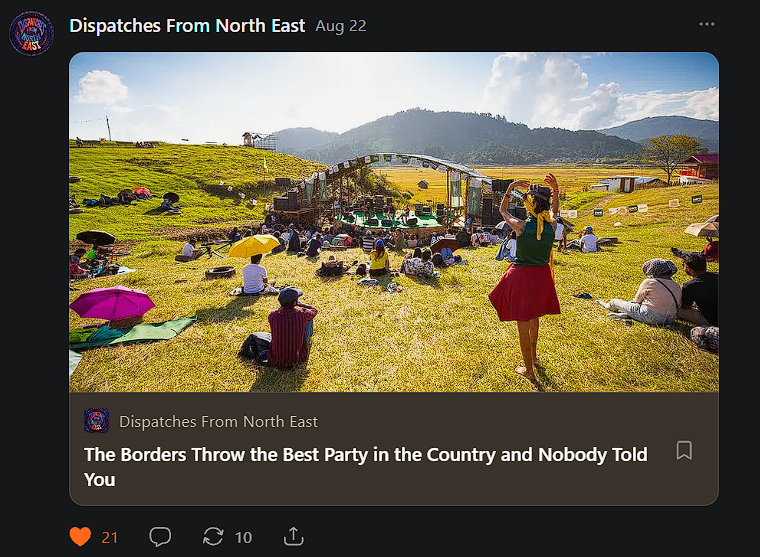
@prasannavishy The most major impact of the concert economy, can be seen in India's Northeast. Why do all the international artists visit tier 1 cities and then the Northeast without any other stops in between? Uncover on our Substack. Article link in bio. 🔗
On Indira Gandhi’s remembrance day, the people of India's Northeast remember her for the wrong reasons.
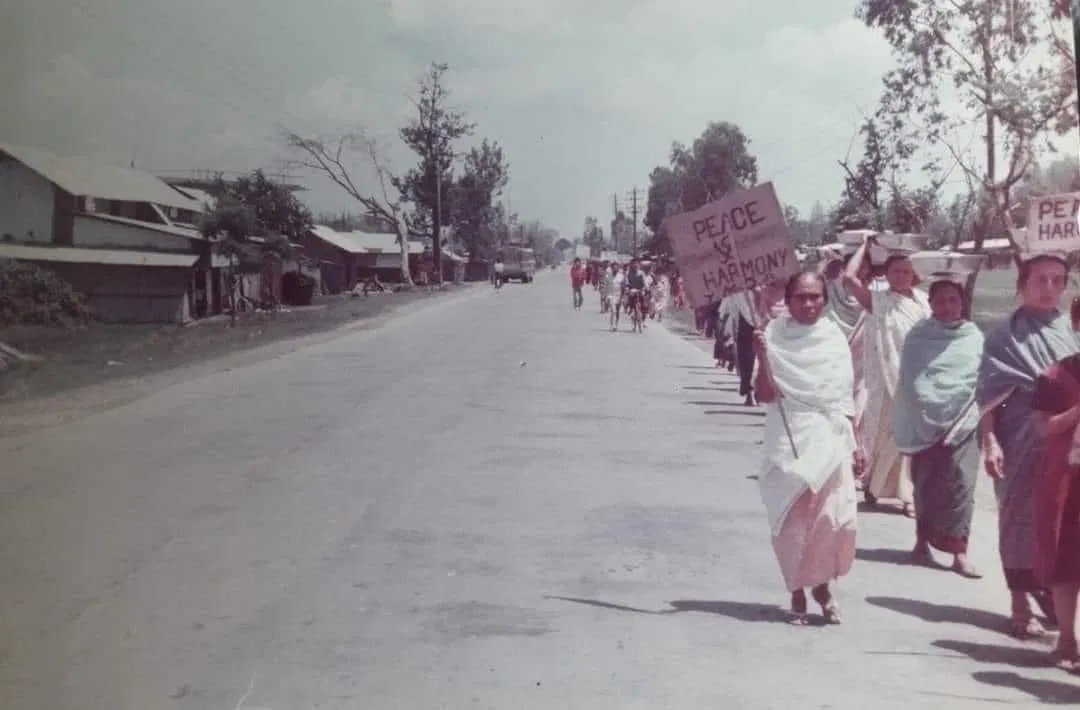
In 1969 she told the people of Manipur: “You must behave like a civilized people.”
A statement such as this from a sitting PM is unforgettable.
On Indira Gandhi’s remembrance day, the people of India's Northeast remember her for the wrong reasons.
In 1969 she told the people of Manipur: “You must behave like a civilized people.”
A statement such as this from a sitting PM is unforgettable.
Assam is witnessing an economic transformation where its dependency on central funds is reducing and its economic output is accelerating.
By contrast, the rest of NE states are stagnating economically while their economic dependence remains just as high as it was earlier.
The Upper Siang protests are not purely local. Their most visible face, Bhanu Tatak, was already exposed for receiving nearly ₹21 lakh from organisations in the UK, Ireland and the Philippines.
People of AP must see the network keeping them exposed to China’s 60,000 MW dam.
Nehru (1947): “Bhutan is Independent under India’s protection. Sikkim is an Indian State but different…”He refused merger, saying it must “grow according to its own genius.” Denying integration delayed Sikkim’s growth for decades. Only after 1975 did it prosper under India.
This is the result of Good Governance. Despite having similar cultures, Nepal, Bhutan, and Sikkim have diverged in wealth.
From 93.5% of India’s average in 1990-91 to 319.1% in 2023-24.
30% of Nepal's GDP comes from remittances. 35% of Sikkim's GSDP comes from manufacturing.
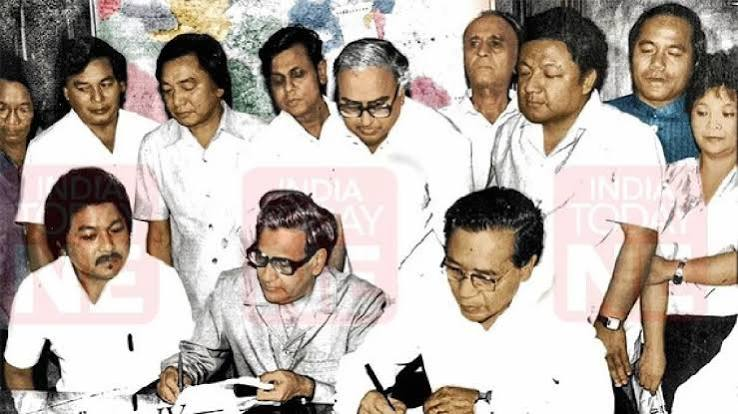
His Pakistani passport bore the name Peter Lee. It got him to the talks in Geneva. Peace took another decade. On 30 June 1986, he signed the Mizo Accord and his fighters gave up arms. The man who had fought to leave India became Mizoram’s Chief Minister.
An Indian who travelled on a Pakistani Passport 🚨
In the 1970s, “Peter Lee” flew to Geneva to meet Indian officials. He was Laldenga, leader of an armed revolt to take Mizoram out of India. Now he wanted the integration of Mizoram under the Constitution of India.
Pakistan armed and trained the rebels. After East Pakistan became Bangladesh in 1971, Laldenga fled to Rawalpindi. From there, his aides contacted India’s mission in Kabul. He told Indira Gandhi that a solution lay within India’s Constitution.
In 1864, Gorkha soldiers brought Durga Puja to Shillong, not with clay idols, but with and earthen pot, khukris and military rituals. The first public idol only arrived in 1896 after a brutal 3-day bullock cart journey from Kumartuli.
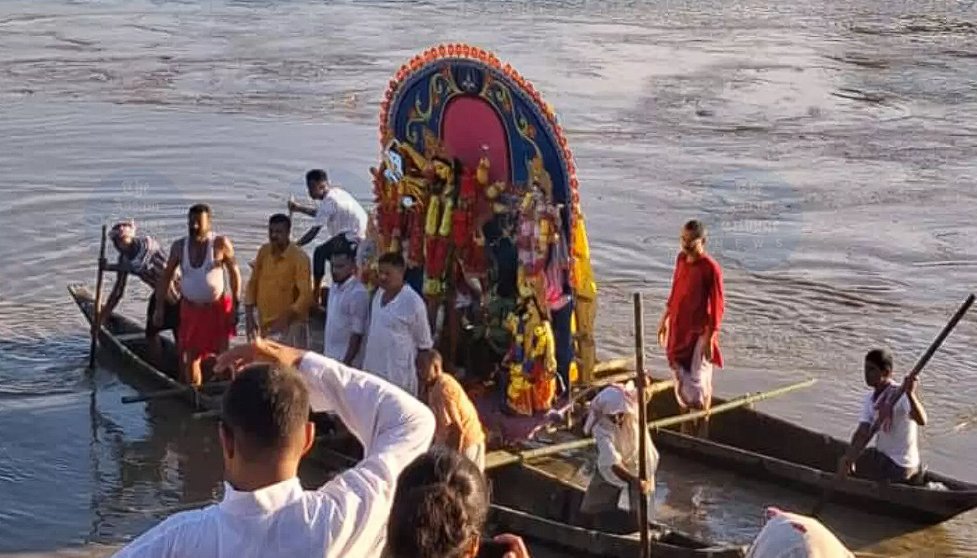
Alongside the public Devi Dol puja, Sivasagar has long-running household worship. The Kujibali Haahsora estate has continued family puja for over 100 years and still carries the deity on shoulders to the Dikhow River for immersion.
At Devi Dol in Sivasagar, the first Maha Ashtami prasad goes to a Muslim family. Their ancestors played the dhak at the royal puja under the Ahom kings. The temple still honours that service. The same prasad goes to the Koncheng Borpatra Gohain family.
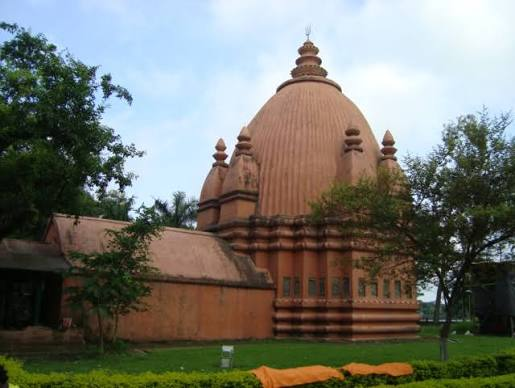
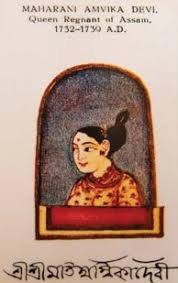
The centre of that royal tradition is Devi Dol, built in 1734 by Queen Ambika, wife of Swargadeo Siva Singha, beside the Sivasagar Tank. The temple has bas-relief panels of Durga in many forms, and scholars under Siva Singha standardised the rituals that are still followed.
When a fragile peace came in the late 1990s, more than 1,000 people had died, hundreds of villages were destroyed and 100,000 were homeless. The trust between the two communities never fully returned.
Eight people from the Naga and Kuki communities were killed in the last few days. The hostility goes back to the 1990s, when a dispute over land became a war. UNC estimates of those killed - 1992-97: 470 Kukis and 207 Nagas. 👇
Entire villages were burned. Families took what little they could carry and fled to areas where their own community was the majority. Neighbours who had shared fields and festivals for generations ended up on opposite sides.