China's surplus (unfortunately) isn't going away without big changes in Chinese policy.
The IMF would do the world a service by indicating that this a problem that won't solve itself ...
1/
https://t.co/BpeT1uTBLN
Semantics are an always nice touch.
Germany, France, Sweden have sectoral specialisations but don’t collectively build 50+ per cent of global capacity in industries, detached from demand.
Unlike China they also still do imports both within and in other sectors.
1/
“The EU could well conclude that it can’t act (against China) because the short-term costs are too high. In which case it will have given in to coercion both now and later.”
Great piece by Soumaya Keynes. With a shoutout to Brad and my work.
1/
For weeks, Rome frustrated at the Commission over what it calls insufficient measures to tackle the energy crisis. Last week, letter leaked: exempt energy from decifit or Italy skipping the SAFE programme. At key industry meeting, Meloni points finger at “bureaucratic giant” EU.
Reverse tech-transfer in action
Det er en myte, at #Kina kun kopierer teknologi, på nogler områder - fx #elbiler - er de rigtig langt fremme.
Som en del af industripolitik vil EU forsøge fremadrettet at sikre, at kinesiske virksomheder skal dele deres teknolog med os
@thinkeuropa #eudk
Surprising, not surprising.
Germany has many pockets of industrial and deep tech strength left.
But if you follow the public debate it sometimes feels like a lot of folks have forgotten it.
Germany also continues to excel in clean technologies - dare I say it.
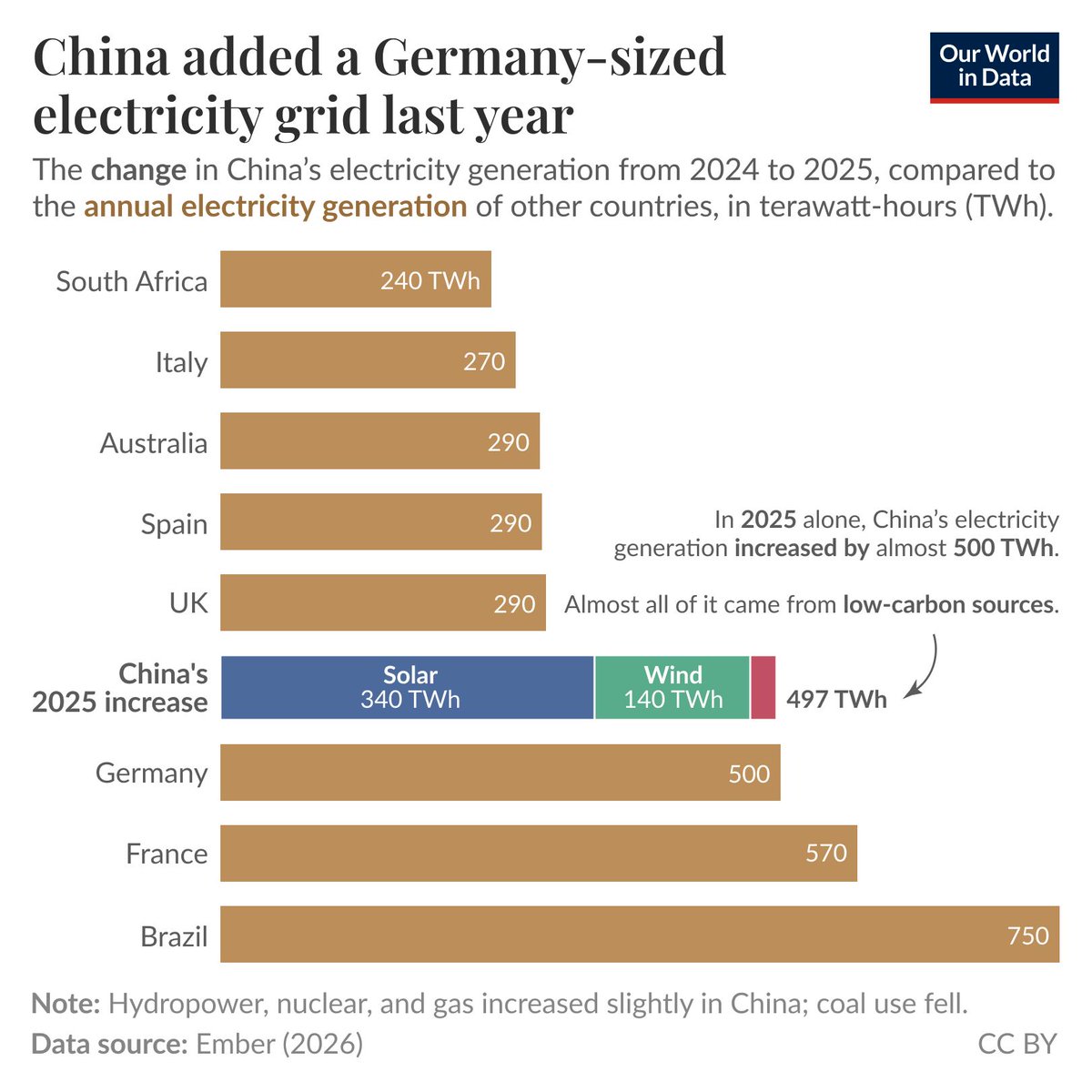
China added a Germany-sized electricity grid last year—
(This Data Insight was written by @_HannahRitchie and Pablo Rosado.)
We’ll often see headlines quoting how many gigawatts of new solar farms or coal plants China is building. But it’s hard to get a meaningful sense of scale for how electricity generation in China is changing.
The chart puts it in perspective.
In 2025 alone, China’s electricity generation increased by almost 500 terawatt-hours (TWh). This is compared here to the total amount of electricity that whole countries generate each year.
Germany generates almost exactly that amount. That means China effectively added a Germany-sized grid to its electricity system in just one year.
What’s also quite staggering is that almost all of this new generation came from solar and wind. China generated 340 TWh more electricity from solar than the year before.
That’s more than our two home countries, the UK and Spain, generate from all sources each year.
Low-carbon sources grew so much that coal power in China actually fell slightly.
Europe will not become a serious power until every member state accepts one reality:
Integration creates trade-offs.
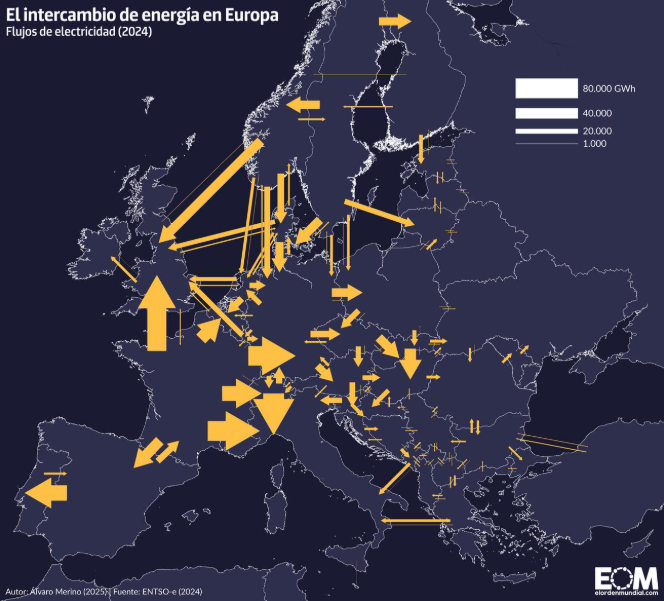
Connecting Iberia properly to the rest of Europe would strengthen Europe’s energy security — but it could also weaken France’s advantage
The EU-Mercosur deal would cover 700M+ people and boost EU exports in cars, machinery, chemicals, wine and services — but it also pressures farmers in countries like Poland and Ireland.
Capital Markets Union could mobilise part of Europe’s €10T in household bank deposits into companies, infrastructure and industry — but it would also pressure weaker national financial systems.
Joint defence procurement could reduce waste in a Europe spending almost €400B on defence in 2025 — but it means less national control over contracts.
Most common policies benefit the majority. Some benefit export-led economies. Others benefit agricultural economies, energy gateways, financial centres or industrial regions.
That is normal. It happens in the United States. It happens in China. Large unions always distribute gains unevenly across regions.
But the Union is what creates the scale.
Europe cannot demand the benefits of continental power while refusing the costs of integration.
EU households hold around €10T in bank deposits — over 30% of household savings — compared with a U.S. system where more than 50% of households own stocks
It means European citizens earn lower long-term returns, build less net worth, and own less of the companies driving future growth.
It also means European companies receive less equity financing, trade at lower valuations and depend more on banks or foreign investors.
The U.S. turns household savings into market power. Europe leaves too much of its wealth inside banks.
A real Capital Markets Union is not a technical reform. It is strategic autonomy. Europe needs to turn European savings into European ownership.
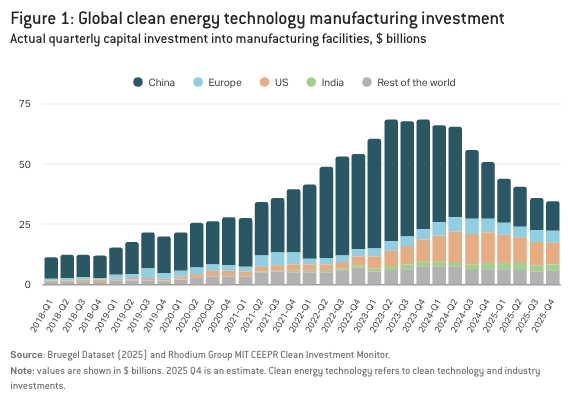
Investment in clean technology manufacturing facilities is falling worldwide, despite global demand for clean technologies growing rapidly.
Our new piece joint @Bruegel_org@rhodium_group unpacks the important trends.
A thread / 4. 👇
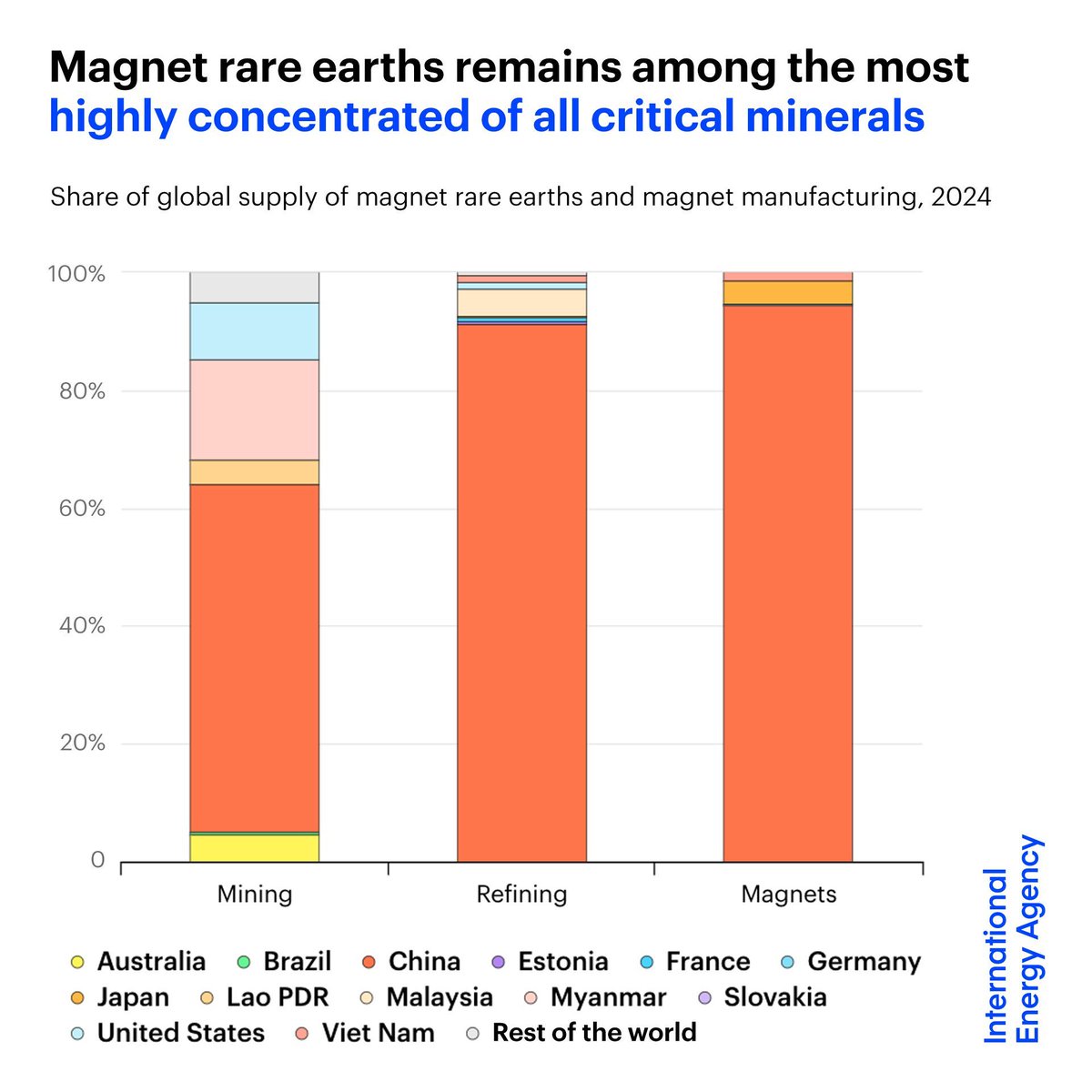
Supplies of rare earths used to produce high-performance magnets are among the most highly concentrated of all critical minerals
Today, China makes up about 60% of global mined production & its share of refining & magnet manufacturing is over 90% 👉 https://t.co/EYgwYCWIsF
Germany ranks among the weakest EU performers in real private sector investment growth from 2000 to 2025 (+11.9%). Only Greece (−25.7%), Portugal (−1.1%), and Luxembourg (+1.0%) had lower growth. Highest private investment growth in Romania (+180.1%), Bulgaria, Malta, Lithuania
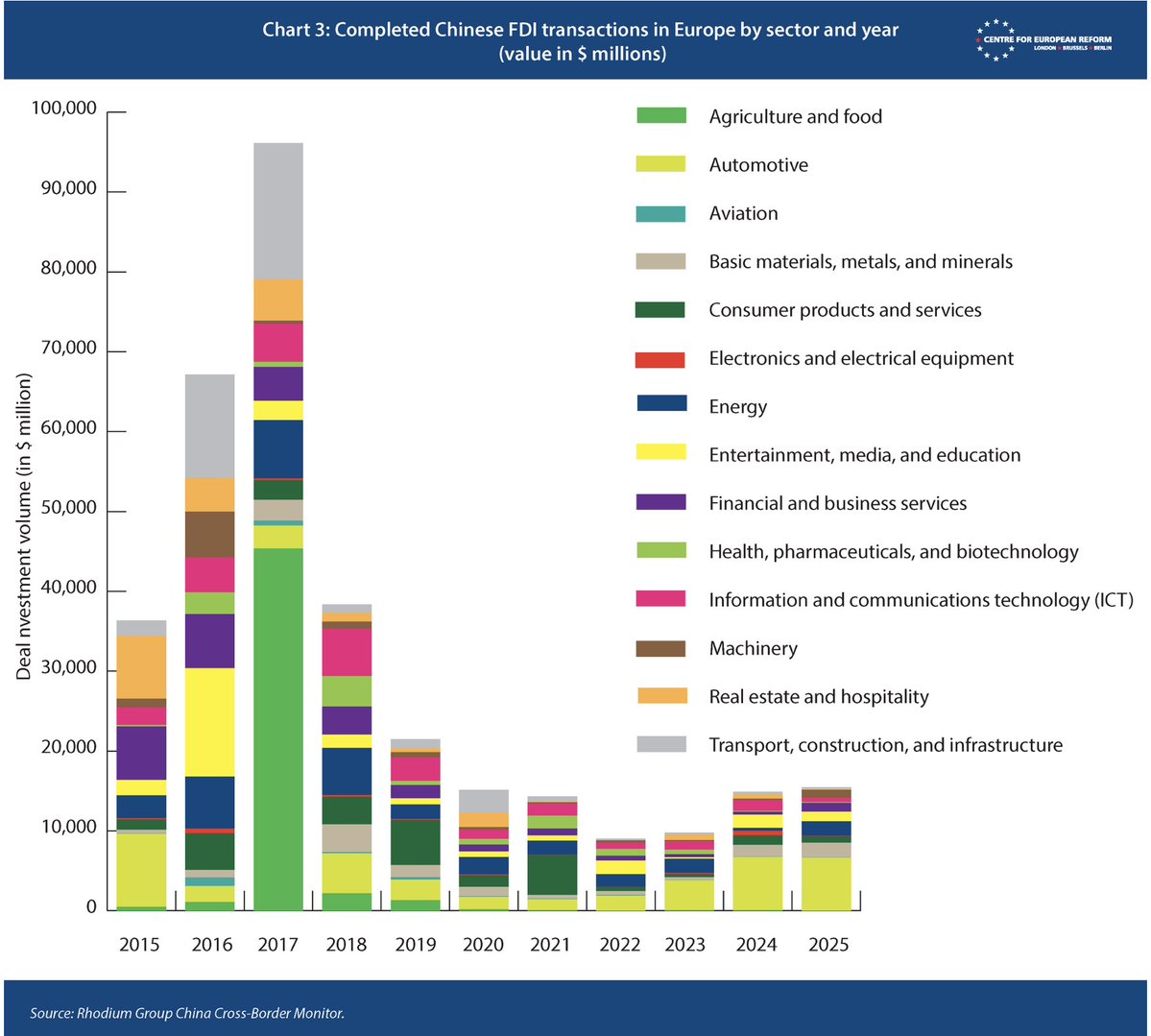
A lot of commentary on Chinese investmeint in the EU miss the most importat observation.
Chinese FDI in the EU is tiny, a fraction of what it was 10 years ago. But EU's trade deficit with China is ballooning, up another 30% this year. The implications should be obvious.
1/
Despite the ongoing global gas crunch, EU gas storage levels have been slowly rising (still some heating needed on cold nights). At the current rate, storages would be just 60% full by November. The refill pace needs to double to hit the goal of 90%.
På søndag skal EU's længst siddende og mest kontroversielle leder, Viktor #Orbán på valg
Udover at være et problembarn, er Ungarn en vigtig spiller i EU's industrielle fødekæder og dybt afhængig af russisk energi
Læs vores explainer om #Ungarns rolle i EU på - politik, økonomi og energi og lyt med #P1 i morges 👇
@thinkeuropa #eudk @alfredarnborg