Today is World Elephant Day
A denarius of Julius Caesar with an Elephant trampling a serpent meaning the triumph of good (elephant) over evil (serpent).
This is the first coinage to bear Julius Caesar's name, commencing after Caesar crossed the Rubicon in January 49 BC
It was a cry torn from the soul of exhausted men. After months of frostbite, ambush, hunger, and betrayal — after marching over mountains and bleeding through enemy country — the shout rose from the vanguard like a hymn:
“Thalatta! Thalatta!” — The sea! The sea!
They had made it.
Ten thousand Greek mercenaries, stranded deep in the heart of the Persian Empire, had survived an ordeal no army was meant to survive. Hired to fight in a foreign civil war, they had marched to Babylon in service of a Persian prince — and returned, battered but unbroken, by sheer force of discipline and will. It was not a general who led them out. It was a philosopher.
Xenophon of Athens had come not to command, but to fight and observe — a student of Socrates with a sharp mind and a modest commission. The war they had entered was one of dynastic rivalry: Cyrus the Younger, a satrap and younger brother of King Artaxerxes II, had raised an army in rebellion. His promise was power. His weapon was gold. And Greece, fractured after decades of the Peloponnesian War, offered no shortage of hungry mercenaries eager for silver and glory.
In 401 BC, Cyrus led his forces — tens of thousands strong, with a hardened Greek phalanx at their core — to the plains near Babylon. There, at Cunaxa, they clashed with the King’s army. The Greeks broke the enemy line. But while they drove forward, Cyrus was charging recklessly into the center — straight toward his brother’s guard. He was cut down in the melee.
The Greeks had won their fight. But they had lost the war. Their paymaster was dead.
Suddenly alone in a hostile empire, they were offered a truce — food, guidance, and safe passage — by the Persian commanders. Trusting in diplomacy, the Greek generals accepted an invitation to parley. It was a trap. The generals were seized, betrayed, and beheaded.
What followed was not a retreat. It was an odyssey. Xenophon, without rank or official command, stepped forward and took control of the Greek soldiers. Through snow-choked mountains, freezing rivers, and hostile territory, he led the Ten Thousand north — from the Tigris River to the Black Sea. They fought through ambushes, navigated terrain no Greek was prepared for, and endured the bitter cold of Armenia and the highlands of Kurdistan.
Every step was a battle.
But Xenophon did more than march. He inspired. His Anabasis — the account of their journey — is both war memoir and philosophical treatise, a meditation on leadership, courage, and the agony of moral choice in the fog of survival. He turned a broken group of soldiers into a marching army. He kept them together with speeches worthy of Pericles, steel-spined discipline, and the quiet fire of a man who believed that virtue could be lived — not just discussed.
At last, from the heights of Mount Theches, they saw the shining waters of the Euxine Sea — the Black Sea — and salvation beyond it. They wept, embraced, and shouted: “The sea! The sea!” That moment, echoing across centuries, became legend.
Xenophon would return to Greece and write. He chronicled the sayings of Socrates, the customs of Sparta, and the story of a thousand-mile march through hell. He had not sought command — but when their leaders were dead, he rose. And in doing so, he showed that philosophy, when paired with courage, can carry men just as far as the sharpest swords.
#archaeohistories
Lo que ha sucedido es un ataque a la integridad territorial de España y merece nuestra más rotunda y enérgica condena.
Toda España está con la ciudadanía de Ceuta. El Gobierno de España está con la Ciudad Autónoma.
Gracias por la cooperación que siempre hemos mantenido con el gobierno de la ciudad.
Utilizaremos todos los recursos del Estado para garantizar la seguridad y la convivencia.
Y nuestro compromiso total y rotundo con el futuro de la Ciudad Autónoma de Ceuta.
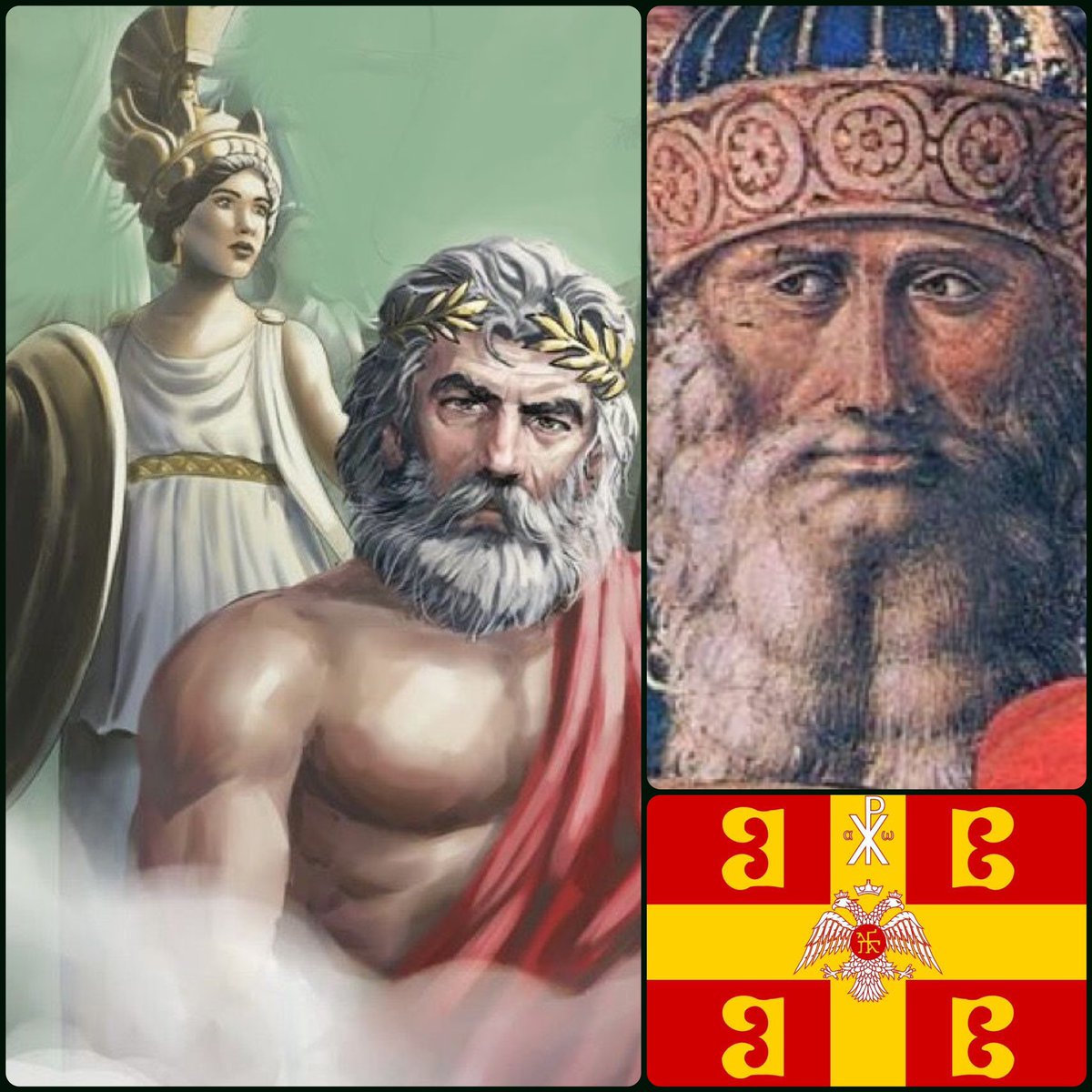
There was one Roman, or perhaps he would have preferred the term Hellene, who actually became a pagan and advocated for a return to the ancient Gods. “Although he had defended the case of Orthodoxy at the Council of Florence, Plethon in his old age fell into neo-paganism.”
To be accurate he was proposing a new and modified pantheon based on the old, but not an identical one. “In a treatise called, like Plato’s, The Laws, he advocated a somewhat modified ‘Hellenic’ pantheon, headed by Zeus, who was assisted by Poseidon (married to Hera!) and four types of other gods of descending power. Plethon professed a belief in both the message of Zoroaster and that of the Seven Wise Men, and posited the immortality of the soul before its descent into the body. He also believed in fatalism, probably under the influence of Islam.”
This strange mix of beliefs was quite clearly heresy to the rest of the Roman world. “No wonder that when, some time after his death, the master copy of the Laws was handed to the patriarch of Constantinople, Gennadios Scholarios, the latter ordered it to be burnt. As a result, we know of Plethon’s religious system mainly from refutations by the same patriarch, from numerous fragments copied by Plethon’s adherents, Plethon’s own handwriting. He may have exerted some influence on his Italian admirers, but had only a few followers among his fellow countrymen. Fittingly, his ashes repose in the Tempio Malatestiano of Rimini, the most pagan of Renaissance churches.”
“It is tempting to imagine the aged Plethon, who died one year before the fall of Constantinople (1453), sitting on the hill of Mistra within sight of ancient Sparta as he devised his ‘Hellenic theology’, complete with its rites and prescribed prayers to the gods. Perhaps he was getting senile, but it is just possible that he did come to understand what had been evident to Julian the Apostate eleven centuries earlier, namely that Christianity, much as it came to be indebted to Hellenism, in the end was incompatible with it.”
It is hard to know what he truly thought about it all. There was no way the position he advocated for would ever have been accepted widely by his kin, but he is an interesting character nonetheless.
Source: The Oxford History of Byzantium. Chapter 11: Palaiologan Learning by Ihor Sevcenko
Le moment de l'Odyssée qui fait tirer les larmes, même dans le film de Nolan! Quand le vieux chien d'Ulysse, Argos, reconnait son maître après 20 ans d'absence....
Alors qu'il est abandonné de tous sur un tas de fumier près du palais d'Ulysse, le seul à reconnaitre le mendiant est son fidèle limier Argos qui, remue la queue mais à bout de force ne oeut rejoindre son maitre:
" Or, un chien couché leva la tête et les oreilles ; c’était Argos, le chien qu’Ulysse au cœur plein d’endurance avait nourri lui-même, mais dont il n’avait tiré aucun profit, car il partit trop tôt pour la sainte Ilion. "
Argos meurt de vieillesse juste après avoir retrouvé son maitre qu'il a attendu toute sa vie.
Cette monnaie romaine retrace cette histoire. Elle est frappée en 82 avant JC, en pleine guerre civile entre Sylla et Marius par Caius Mamilius Limetanus .
En effet la gens Mamilia se prétendait descendante de Télégonos, fils de la magicienne Circé et d'Ulysse.
Cela nous renvoie au drame de ce dernier, dans la suite de l'Odyssée non contée par Homère, mais faisant partie du cycle troyen d'autres auteurs postérieurs.
Télégonos partit à la recherche de son père à Ithaque mais en débarquant, Ulysse crut qu'on s'attaquait à ses troupeaux. Une bagarre éclate, Télégonos blesse mortellement Ulysse de sa lance armée d'un ardillon de raie pastenague, que lui avait confectionnée Héphaistos.
Mais les deux hommes se reconnaitront avant le dernier souffle du roi d'Ithaque, réalisant ainsi de vieilles prophétie selon Sophocle.
Et comme les histoires bizarres de l'Odyssée ne suffissent pas, les deux orphelins épouseront chacun leurs belles-mères éplorées : Télégonos partira vivre sur l'île des Bienheureux avec Pénélope, et Télémaque avec Circé!
l
Üzgünüm ama çok çok zayıf iddialar bunlar. Birkaç not paylaşayım:
1. Aristoteles’i natüralist ve gözlemci Yunan düşüncesini boğan kişi olarak sunmak tarihsel açıdan saçma bir iddiadir. Aristoteles yaşamı boyunca doğa, hareket, hayvanlar, bitkiler, üreme ve beden üzerine çalışmıştır. Eserlerinin en az çeyreği bilimsel karaktere sahiptir.
2. Platon ve Aristoteles olmasaydı Yunan düşüncesinin natüralist kalacağı iddiasi hiç de açık değil. Onların mateyalizm eleştirisi de vakumdan çıkmadı zaten. Pisagorculuk, Orfik gelenekler materyalizme mesafeliydi. Anaksagoras evreni düzenleyen Nous'tan, Stoacılar ilahi bir akıl olarak kozmostan söz ediyorlardı. Atomculuğu sadece Platon ve Aristoteles reddetmedi. Tanrıya sadece onlar inanmadı.
3. Natüralizm tek başına modern bilimi üretmedi zaten. Antik atomculuk oldukça natüralistti. Fakat bundan doğrudan Newton mekaniği, deneysel kimya veya modern biyoloji çıkmadı. Tersine, Aristoteles materyalist olmadığı halde gözlem, sınıflandırma, nedensel açıklama ve sistematik araştırma geleneklerine daha büyük katkıda bulundu.
Natüralizm ile empirizm aynı şey değildir. Birisi ontolojik, diğeri yöntemsel bir tutumdur. Materyalist olup kötü bilim yapılabileceği gibi, teist olup başarılı doğa araştırması da yapılabilir. Ve yapılmıştır da. Bilimi empiricizm ilerletti, natüralizm değil.
Aslan pek bilim okur yazarı olmadığı için bunun farkında değil tabi.
4. Orta Çağ’ı atlayarak modern çağa geçmek iddiası ise tarih okur yazarı herkesin komik bulacağı bir iddia. Çağ atlama bilgisayar oyununda level atlama mi yahu? Bir bakin bakalım tarihsel dönüşümler nasıl oluyor.
5. Hristiyan ve Müslüman kurumların modern bilimin ortaya çıkmasında önemli payı vardır. Uzun uzun yazmayayım araştırın. Devir bilgi devri.
Bizdeki medeniyetçilik positivist teoloji soslu tarihsel maddeci, nostaljik küçük burjuva ideolojisidir. Ne muhafazakardır ne anti kapitalist. Dağları, dereleri, insanı küresel emperyalizmin talanına açarken hiç de “batı” karşıtı değildir.