ILLEGAL ALIEN CHILD SEX TRAFFICKERS BROUGHT TO JUSTICE.
Thanks to an investigation led by our @HSI_HQ law enforcement, these depraved illegal aliens will be behind bars for years.
We will never stop fighting to protect innocent children from heinous criminals like these.
The situation is growing more desperate by the hour in Venezuela as people dig through the rubble of collapsed homes and apartment buildings three days after twin earthquakes struck the country.
Jorge Rodriguez, the president of the National Assembly, said Saturday afternoon the death toll has risen to 1,430. Another 3,238 people are injured, he said.
Venezuelans have taken the search for missing loved ones into their own hands, citing a scarcity of government rescuers. Aid agencies consider the first 48 to 72 hours to be a crucial time frame to retrieve people alive, though that can be extended if they have access to food and water. CBS News’ Camilo Montoya-Galvez reports from La Guaira, Venezuela.
In the Philippines, large shopping malls often include chapels where Masses are held. Greenbelt Chapel is a Catholic chapel located within the Greenbelt complex in Makati City, Philippines.
Image: Omar Seguna
Jesus in the Eucharist visited the streets of America’s most historic city Saturday, drawing thousands of people on a sunny morning in Boston.
The procession, which lasted two hours and 15 minutes, went by portions of the Freedom Trail, a 2 ½-mile-long red line of paint and bricks begun in 1951 that helps visitors find many of the most famous sites in the city, including many associated with the American Revolution.
Boston Archbishop Richard Henning pointed out to the crowd before the procession began that they would be walking by some of the most historic places in the country. But then he added: “We will make history.”
“Because this will be the first time that we journey along the Freedom Trail as the people of God, led by our Lord and savior, Jesus Christ,” Henning said.
A National Eucharistic Pilgrimage official estimated the crowd at 2,500 to 3,000. Archbishop Henning said later that whenever he turned around from the front he could never see the end of it in the back.
Jason Shanks, president of National Eucharistic Congress, which oversees the National Eucharistic Pilgrimage, said the crowd in Boston was the largest since this year’s version up the East Coast began May 24 in St. Augustine, Florida.
“It was a beautiful moment to see the people of God sort of show up for Jesus, and you could really hear their voices,” Shanks said during a press conference Saturday afternoon at the Cathedral of the Holy Cross in the South End of Boston.
Hymns and prayers through a portable loudspeaker were led by Polish, Latino, Vietnamese, and Cape Verdean groups, among others, along with English speakers.
Participants experienced the sights and sounds of the city. When Archbishop Henning spoke at the beginning, near the visitors center on Boston Common, he occasionally competed with a jackhammer on nearby Tremont Street.
The beginning point was about a two-minute walk from where another group of organizers was setting up a Hare Krishna festival, and about a three-minute walk away from where St. John Paul II celebrated Mass on Oct. 1, 1979 before an estimated 1 million people in the pouring rain.
Saturday’s procession included a portion of the route on Commercial Street that the canonized pope took in an open vehicle through the North End more than 46 years ago.
The procession also proceeded from the top of Old South Meeting House, the former Congregational church (now museum) where the Boston Tea Party began in December 1773, and on a house in Charlestown, near where the Battle of Bunker Hill took place in June 1775.
The walk began on Boston Common at about 10 a.m. amid sunny skies and with the temperature at 72 degrees, with a slight breeze. It turned warmer as the morning went on. Unseasonal fog covered large portions of Boston Harbor near the North End, but procession route remained clear, with high visibility.
Participants said the first three decades of the Joyful Mysteries of the rosary on waterside sidewalks along Commercial Street, near where the molasses flood of January 1919 killed 21 people after a poorly constructed tank collapsed during a thaw.
As the rosary blared out over an artificial turf field along the harbor, players on a women’s softball team occasionally looked away from a team huddle to watch. A short distance to the north, sunbathers on the outfield grass of a Little League field also took notice.
EWTN News spoke with several participants, including some who noted that the United States is about to celebrate the 250th anniversary of the Declaration of Independence on July 4.
Nancy Goggin, a parishioner of Immaculate Conception and St. James in Stoughton, which is southwest of Boston, was asked why she came.
“Because I love our Lord. And I just think it’s really such a beautiful thing to celebrate our 250th anniversary of the country in this way,” Goggin said. “To process with Jesus through the Thirteen Colonies is so important.”
English Puritans who wanted to purify the Church of England from all Catholic influences founded Boston in 1630 and laid out Boston Common, where the Eucharistic pilgrimage began, in 1634. Goggin was asked what the Puritans would make of a Catholic procession of the Blessed Sacrament.
Goggin, who was passing out rosaries as a member of the World Apostolate of Fatima, said she is a descendant of an English Separatist Puritan who sailed to the then-new Plymouth Colony in the early 1620s, not long after the Pilgrims arrived.
“They came here for religious freedom, and they came here to worship God,” she said. “And so I think it’s really fitting.”
Asked what she hoped will come from the Eucharistic procession, she corrected the question.
“It’s not ‘come from it.’ It’s happening,” she said. “There’s a resurgence in the Catholic Church that is so beautiful. So many people are entering.”
Tho Dinh, 57, who lives in Quincy, attended with a contingent from St. Ambrose, a Vietnamese parish in Dorchester, which is the largest section of Boston.
He told EWTN News he left Vietnam as one of the Boat People after Communist North Vietnam took over South Vietnam, spending three years in a refugee camp in Malaysia and then six months in the Philippines learning English and American culture before coming to Boston in September 1991.
“We have to worship God and thank God for all the blessings we have,” Dinh said, explaining why he came for the procession.
He said a Eucharistic procession far from church has different meaning from ordinary parish worship.
“It’s community, so it’s more connection. It’s unity of the Church, so it’s good,” he said.
“We hope for peace in the world. And we pray for peace, and people unified with each other,” Dinh said. “We hope for a better future for young children. And people coming back to the Church.”
Valentina Zamora, 15, a member of St. Anthony’s in Everett, whose parents are from El Salvador, said she hoped the faith would become “stronger than it already is” because of the procession.
She also told EWTN News the outdoor setting, which included the grass and trees and hills of Boston Common, was a good place for it.
“Because this is what God created, so it would be nice to hear more about God in his creation,” she said.
Marice Moline, 57, of St. Michael the Archangel Parish in Winthrop, said the procession offers people a chance to see Jesus in the Eucharist who might not otherwise see him.
“It’s an opportunity for public display of Christ,” Moline said.
“To remind people that there’s hope. To remind people that there’s something greater in the world than themselves right now,” she added.
Filomena Brandao, 69, of Randolph, who told EWTN News she came to the United States from Cape Verde alone at age 22, said she came to the Eucharistic procession in Boston partly out of patriotism.
“Because we’re celebrating independence — 250 years. All the history, all the stories. As an immigrant, I wanted to experience it much more,” said Brandao, who now has a husband, four children, and six grandchildren.
“We have a lot to thank God for,” she said.
https://t.co/f9TJbciyeS
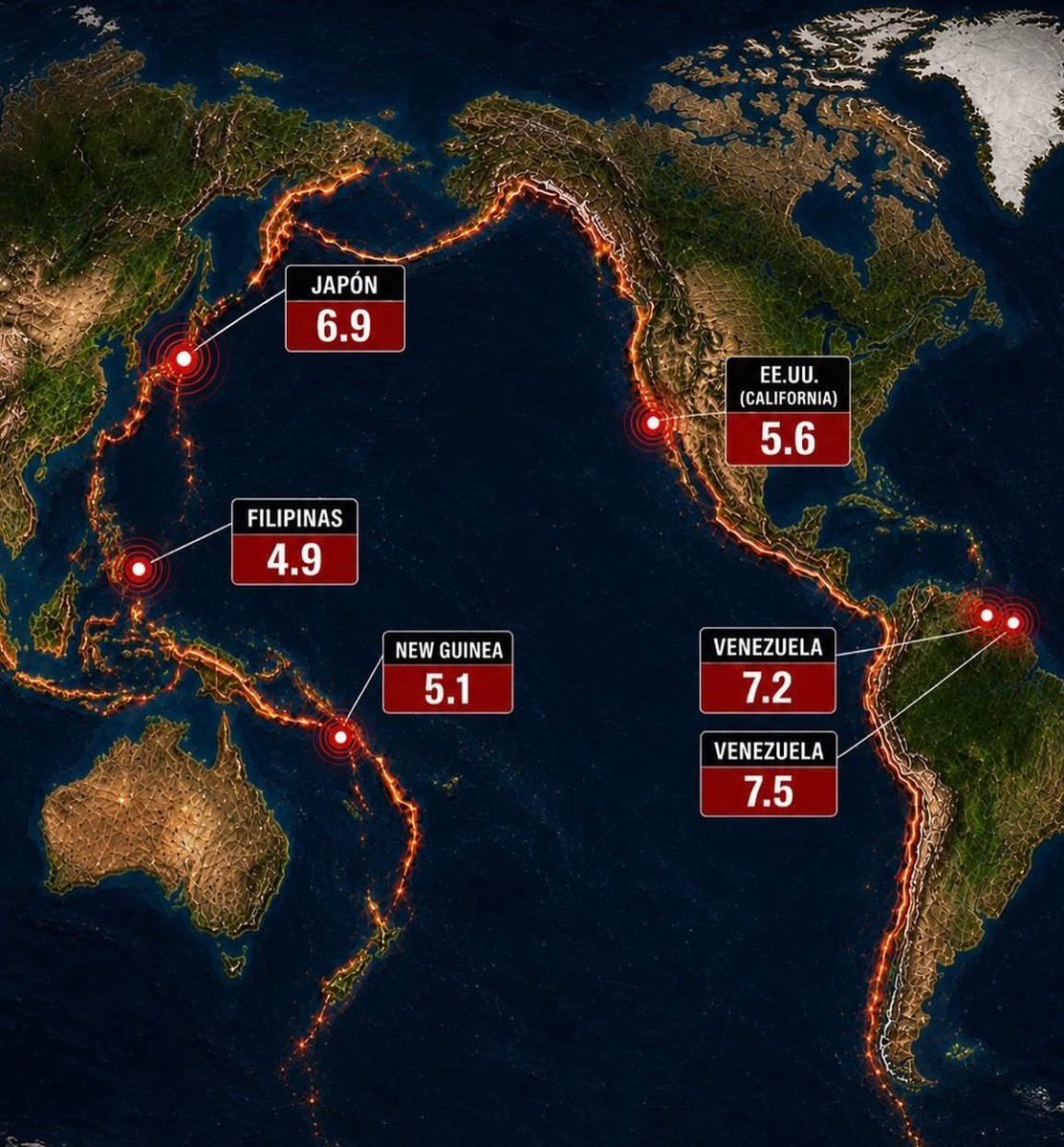
RING OF FIRE 🫨: A busy few days around the Pacific Ring of Fire. From Japan to the Philippines, Papua New Guinea, California and South America, several moderate to strong earthquakes struck between June 24 to 26. According to the USGS, this activity is consistent with the Ring of Fire's frequent seismic activity, where tectonic plates are constantly colliding, subducting and sliding past one another.
As rescue efforts continue following Venezuela’s devastating earthquakes, crews from multiple nations are searching for thousands of people still missing. Fr. Edgar Magallanes, National Director of the Jesuit Refugee Service in Venezuela, shares what they are doing to help.
It is with great sadness that I learned about the aftermath of the earthquakes in Venezuela and the loss of life they have caused. Our condolences go out to all affected families. I wish a speedy recovery to everyone injured and strength to all those searching through the rubble and working to save lives.
Ukraine hopes that the world will find ways to help the Venezuelan people in this tragic situation, and we stand ready to assist – our first responders could join the search-and-rescue operations. We are now in communication with the Venezuelan side and the Europeans, awaiting the response to our proposal.
Venezuelan government officials reported June 28 that the death toll reached 1,450 and thousands more were injured in the earthquakes.
https://t.co/Fju13mxzqt
Pope Leo XIV expressed his solidarity with the people of Venezuela following the devastating twin earthquakes. The Holy Father offered prayers for those who lost their lives, the injured, their families, and all those affected by the disaster.
Pray for Venezuela. 🙏
Our hearts are with the people of Venezuela after the devastating earthquakes.
As of June 28, 2026, nearly 1,500 people have died, more than 3,000 have been injured, and over 50,000 people remain unaccounted for as rescue teams continue searching.
In this time of grief, we turn to Our Lady of Coromoto, the patroness of Venezuela.
Our Lady of Coromoto appeared to the indigenous chief Coromoto and his wife, calling them to be baptized and follow Jesus Christ. When Coromoto resisted, she appeared again on September 8, 1652. He reached out to seize her, and she disappeared, leaving behind a tiny image of the Virgin Mary holding the Child Jesus in his hand.
Her apparition became a lasting reminder of Mary's motherly care and her desire to lead every person to her Son.
Please join us in praying for everyone who has died, for those who are still missing, for the injured, for their families, and for the rescue workers risking their lives to save others.
Our Lady of Coromoto, pray for Venezuela. 🇻🇪🙏
Global health officials say more than 1,300 deaths have been linked to the record heat wave blanketing Europe.
That toll is likely to rise, as France alone reported at least 1,000 deaths above normal last week during some of the country's hottest-ever days for the month of June.
In Berlin over the weekend, police shot water cannons to cool down sweltering crowds.
On Monday, temperatures soared to more than 100 degrees Fahrenheit in Budapest, Hungary, far above normal — even for summer.
Meanwhile, tens of millions of Americans are also under extreme heat warnings this week. Triple-digit temperatures will bake the Midwest and East Coast as the country prepares for July 4 celebrations.
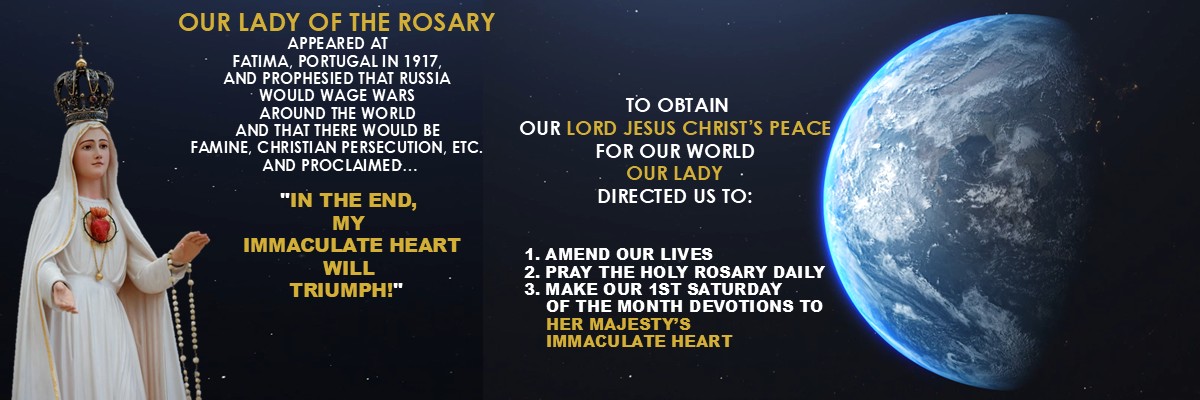
Our Lady of the Rosary at Fatima, please pray for God's Peace for the world. Please pray Our Lady's Holy Rosary daily and make your 1st Sat of the month Devotions to Her Majesty's Immaculate Heart for our Lord Jesus Christ's Peace for our world.🙏🏼🙏🏼🙏🏼🩷https://t.co/JwBRxinCwc
Unidos en oración por Venezuela. "La generosa gratitud de Dios Padre tiene en cuenta hasta el más pequeño gesto de amor y de servicio prestado a nuestros hermanos. Los voluntarios... Se hace por amor, simplemente por servicio. La gratitud, el reconocimiento, es en primer lugar una señal de buenos modales, pero también es una característica distintiva del cristiano. Es un simple pero genuino signo del reino de Dios, que es el reino del amor gratuito y generoso." Papa Francisco, ángelus, 28 de junio de 2020.
Ilustración de @RichEscalona
Evangelio según san Mateo (10,37-42):
En aquel tiempo, dijo Jesús a sus apóstoles:
«El que quiere a su padre o a su madre más que a mí, no es digno de mí; el que quiere a su hijo o a su hija más que a mí, no es digno de mí; y el que no carga con su cruz y me sigue, no es digno de mí.
El que encuentre su vida la perderá, y el que pierda su vida por mí, la encontrará. El que os recibe a vosotros, me recibe a mí, y el que me recibe, recibe al que me ha enviado; el que recibe a un profeta porque es profeta, tendrá recompensa de profeta; y el que recibe a un justo porque es justo, tendrá recompensa de justo.
El que dé a beber, aunque no sea más que un vaso de agua fresca, a uno de estos pequeños, solo porque es mi discípulo, en verdad os digo que no perderá su recompensa».
Palabra del Señor.
Pope Leo XIV prayed for victims of the devastating earthquakes in Venezuela, expressing solidarity with grieving families and urging prayers for relief efforts.
https://t.co/8k9IhYH0Xc
Pope Leo XIV blesses the pallia on the Solemnity of Saints Peter and Paul and imposes them on the 35 metropolitan archbishops appointed over the past year. The pallium—a white woolen vestment symbolizing pastoral authority and communion with the pope—is first placed at the tomb of St. Peter, the first Bishop of Rome, before being blessed. It represents the bishop carrying Christ's flock, especially the lost and vulnerable, in imitation of the Good Shepherd.
Today we honor Saints Peter and Paul, the two supreme pillars of the Church whose combined witness laid the foundations of the Christian faith.
Watch the Pope Leo's Papal Mass with the blessing and imposition of the Pallium
Watch Now 👉 https://t.co/NlV4y2NUBb
Today the Church celebrates the feast day of Sts. Peter & Paul. As early as the year 258, there is evidence of an already lengthy tradition of celebrating the solemnities of both Saint Peter and Saint Paul on the same day. Together, the two saints are the founders of the See of Rome, through their preaching, ministry and martyrdom there.
Peter, who was named Simon, was a fisherman of Galilee and was introduced to the Lord Jesus by his brother Andrew, also a fisherman. Jesus gave him the name Cephas (Petrus in Latin), which means ‘Rock,’ because he was to become the rock upon which Christ would build His Church.
Peter spent his last years in Rome, leading the Church through persecution and eventually being martyred in the year 64. He was crucified upside-down at his own request, because he claimed he was not worthy to die as his Lord. He was buried on Vatican hill, and St. Peter's Basilica is built over his tomb.
St. Paul was the Apostle of the Gentiles. His letters are included in the writings of the New Testament, and through them we learn much about his life and the faith of the early Church. Before receiving the name Paul, he was Saul, a Jewish pharisee who zealously persecuted Christians in Jerusalem. Scripture records that Saul was present at the martyrdom of St. Stephen.
St. Peter & St.Paul Pray for us!
https://t.co/MbdTTBWJbc