NIGERIANS, GO AND VERIFY (8)
TRANSFORMING COMMERCE, INDUSTRY AND INFRASTRUCTURE: BUILDING AN ECONOMY THAT WORKS
Peter Obi
I have always believed that economic development must go beyond the construction of roads and buildings. It must create opportunities, stimulate enterprise, support local industries, and improve the productive capacity of society. Government must not merely spend money; it must create the conditions that enable people and businesses to prosper.
When I assumed office in 2006, Anambra State already possessed enormous entrepreneurial energy. From Onitsha to Nnewi, Awka, and other commercial centres, our people had demonstrated remarkable ingenuity and enterprise. What was required was a government that could provide the infrastructure, institutional support, and enabling environment to harness this potential.
Under the Anambra Integrated Development Strategy (ANIDS), we therefore pursued a deliberate programme of commercial and industrial development, with particular emphasis on public-private partnerships (PPPs). Our objective was to modernise the business environment, attract investment, strengthen indigenous enterprises, and create employment.
Our approach was guided by a simple conviction: commerce must be supported by production, and industrial development must be supported by infrastructure. We could not continue to depend largely on buying and selling without deliberately creating the conditions for manufacturing, processing, and value addition.
MODERNISING COMMERCE: THE ONITSHA BUSINESS PARKS
Recognising Onitsha’s historical position as the commercial hub of the South-East, we initiated the First and Second Onitsha Business Parks. We wanted to provide organised, modern, and secure business environments capable of accommodating growing corporate and financial activities.
The parks attracted important financial institutions and corporate operations, including facilities for banks, alongside capital market operators and other businesses.
We also conceived the second phase of the Onitsha Business Village as a centre for information and communications technology-related activities. The intention was to move beyond traditional commercial arrangements and provide facilities that would accommodate emerging business opportunities and technology-driven enterprises.
Another initiative was the LG World-ANIDS project, conceived as a one-stop centre for electronic goods, services, and training. We wanted to connect commerce with technology, skills development, and modern business practices.
Our intention was to move commercial activities beyond the limitations of informal arrangements and provide the infrastructure necessary for modern corporate operations.
DEVELOPING HOSPITALITY AND TOURISM: AGULU LAKE RESORT AND PROTEA HOTEL
We also recognised that a growing commercial centre must have the hospitality infrastructure to support investors, business travellers, and tourists. A state that seeks to attract investment must be prepared to accommodate those who come to do business. This informed our conception of two important projects.
The Agulu Lake Resort was designed to harness the natural beauty and tourism potential of Agulu Lake, creating a destination for leisure, hospitality, and conferences. Beyond tourism, we saw the project as an opportunity to stimulate economic activities in the surrounding communities and create employment.
Similarly, the five-star Protea Hotel project in the GRA, Onitsha, was conceived as a public-private partnership to provide high-standard accommodation and hospitality services. We envisaged a facility that would serve investors, business travellers, and visitors while expanding the State’s hospitality infrastructure. Although the project was subsequently abandoned, its original conception reflected our determination to provide the facilities required by a modern commercial economy.
The Federal Government should seriously consider regulating or even banning Ray-Ban Meta smart glasses in Nigeria.
These devices raise serious privacy and security concerns, especially when people can be recorded without their knowledge or consent. Not everything should be exposed, and Nigerians deserve protection from the misuse of hidden recording technology.
Our privacy must not be sacrificed in the name of technology.
Leadership Beyond Identity: The Courage to Serve and Defend Humanity.
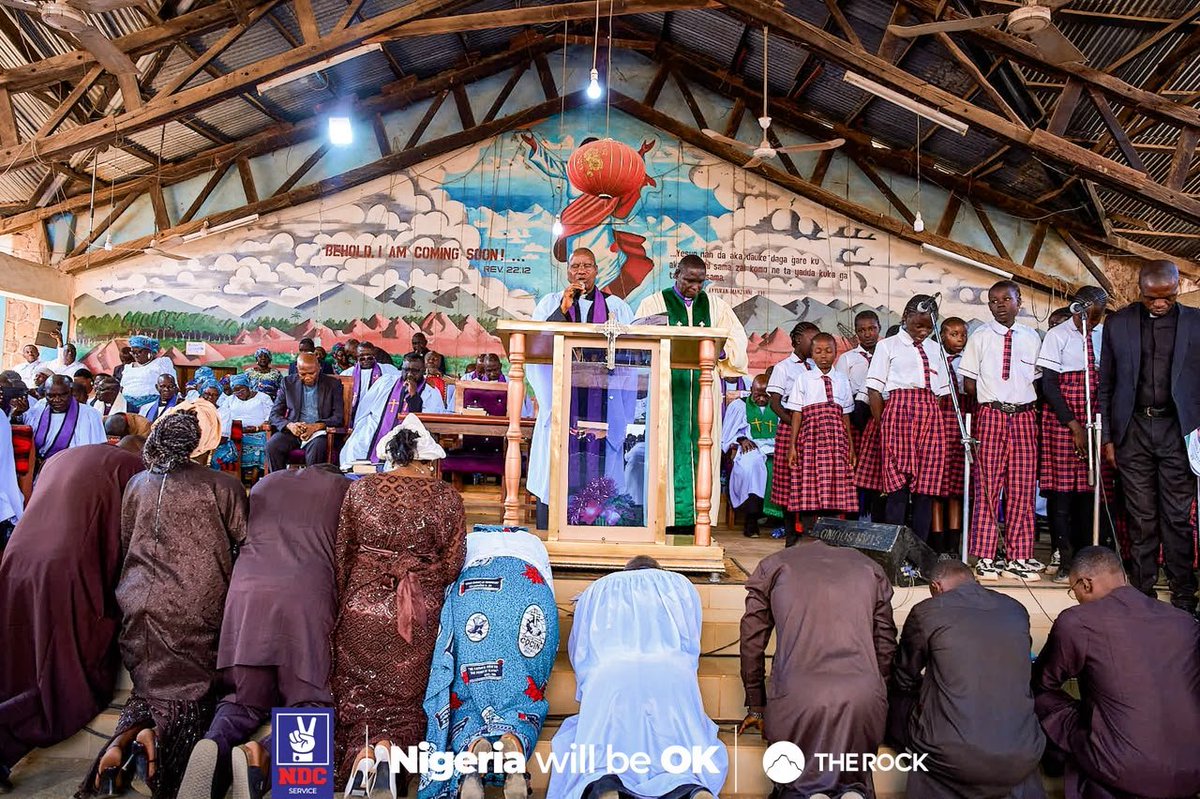
Yesterday, I was honoured to attend the retirement service of Reverend Ezekiel Dachomo in Plateau State. Although it was my first opportunity to meet him personally, I have long admired his courageous advocacy, his compassion for victims of violence, and his steadfast dedication to truth, justice, and the sanctity of human life.
Rev. Dachomo’s example reminds us that faith is expressed not only through what we profess in places of worship, but also through the courage to protect the vulnerable, challenge those in power with the truth, and uphold what is right, even when doing so is difficult or unpopular. The conclusion of formal service should not mark the end of one’s commitment to truth, justice, and humanity.
I also used the occasion to consider the leadership and choices Nigeria requires. Those who support me should not do so because I come from a particular tribe, belong to a particular religion, or benefit from personal sentiment. Their support should be based on my record, character, competence, and the principles I have consistently demonstrated in public service. Nigeria must move beyond identity-based politics and assess leadership according to the ability to deliver results, the integrity to account for public resources, and the compassion to serve those who depend most on government.
Our faith, ethnic identities, and political affiliations must never be used to divide us. Instead, they should reinforce our common humanity and our shared duty to create a nation in which every Nigerian, regardless of background, can live with peace, dignity, and opportunity.
I remain firmly convinced that Nigeria does not lack resources or potential. What we require is leadership that recognises public office as a responsibility rather than a privilege, and as a call to serve rather than an avenue for personal enrichment.
May God continue to strengthen Reverend Ezekiel Dachomo and all who, in their respective callings, remain steadfast in upholding truth, justice, and the dignity of every human being. May He also grant us the wisdom and courage to build the Nigeria we all deserve.
A New Nigeria is POssible. -PO
Vote for your Tinubu in peace. Let us vote for our Obi in peace. But trying to steal our votes to announce Tinubu as winner will lead to revolution. We allowed what happened in 2023; 2027 won’t be the same silence!
— Political analysts warn
“You do not judge a government by its intentions. You judge it by the result of its actions.
You do not judge a government by how it treats the 1%. You judge a government by how it treats the masses.”
— Dapo Adaramewa
I have just received the terrible news of the challenges faced by President Tinubu. The lack of running water in Aso Rock is sad news to us all . I will encourage him to vote for Peter Obi in 2027 so that we can create a Nigeria that works.
I have always wanted to say this, but since I am not an insider, I can be accused of stating bogus claims.
Most people who have deserted the Peter Obi's camp, did so because they could not siphon money from him.
It's okay to leave for this reason.
But be honest with it because it takes a lot to work with a man like Peter Obi.
And people need money.
Not every one can work for you without personal financial benefits.
State so, instead of castigating him and spreading lies just because what you ordered for was not what was delivered to you.
A man who had all the opportunities in the world to steal public money when he was governor of a state, but didn't do it, is not a man that will use his personal hard-earned money any how.
However, if you stay with him in his struggle, and he succeeds, you too will benefit.
And use his leverage and influence to create legitimate wealth for yourself.
People will trust you and your judgment.
And they can invest in you, your business and even show you kindness without expecting much in return.
Good morning, and have a blessed week ahead.
"You are not for Tolu, Jimmy or the BOT, none of them died for you" - Bishop Mike Okonkwo.
This should be the trending video today not how someone worked in or danced against their imaginary enemies.
“Don't you have to worry, don't you be afraid. Joy comes in the morning.” What a powerful reminder that sorrow doesn't last forever. Joy is coming! ❤️🙌
We must not pull Peter Obi down to get appointed. He might be destined to be president and we may not. Let's change from now on.
__ Governor Hope Uzodinma
NIGERIANS, GO AND VERIFY (7)
LIFTING THE VULNERABLE : ANAMBRA’S BLUEPRINT FOR POVERTY ALLEVIATION AND SUSTAINABLE EMPOWERMENT (2006–2014)
Economic growth that does not translate into improved living conditions for ordinary citizens is incomplete. This is one of our fundamental concerns with President Bola Ahmed Tinubu's government. Development must ultimately be measured by its impact on human lives, particularly those of the poor and vulnerable. This was underpinned by the Anambra Integrated Development Strategy (ANIDS). We believed that infrastructure, education, healthcare, agriculture, and social protection must reinforce one another. Poverty was not merely a shortage of money; it was also a lack of access to opportunities, productive resources, and the basic conditions necessary for a decent life.
Our poverty alleviation strategy, therefore, went beyond temporary handouts. It focused on restoring dignity, creating economic opportunities, and equipping vulnerable citizens with the means to become self-reliant.
Our approach attracted recognition beyond Anambra. In May 2010, Magnus Kpakol, then National Coordinator of the National Poverty Eradication Programme (NAPEP), commended our commitment to poverty reduction, declaring: “We are prepared to support you in the excellent work you are doing in Anambra State.”
1. POVERTY MAPPING: KNOWING WHERE POVERTY LIVES
We recognised that poverty could not be effectively addressed without knowing where it was concentrated and what caused it. We, therefore, undertook a poverty-mapping exercise to identify the most deprived local government areas and communities.
The exercise revealed that some of our poorest communities were also important food-producing areas. Their challenges included poor access to markets, agricultural inputs, electricity, water, and other economic opportunities.
Areas including Anambra West, Orumba South, Awka North, and Ogbaru required particular attention. The findings informed our development priorities, enabling us to direct roads, agricultural support, and social interventions toward neglected communities.
2. EMPOWERING WOMEN, WIDOWS, AND COOPERATIVES
We recognised that rural women, widows, and indigent households bore a disproportionate burden of poverty. Across the 21 local government areas, we provided financial assistance and productive support to thousands of beneficiaries.
Our administration provided financial assistance to support the establishment and expansion of small businesses and farming activities. We also introduced revolving loan schemes to promote enterprise development, economic self-reliance, and improved livelihoods.
We distributed productive equipment, including sewing machines, generators, ovens, cookers, hair dryers, shoe-making machines, and welding equipment. The objective was to help beneficiaries establish sustainable livelihoods rather than remain dependent on government assistance.
We also promoted access to microcredit and cooperative financing to enable small entrepreneurs to expand their businesses, improve their incomes, and create employment.
Our philosophy was simple: rather than merely giving people money to survive today, the government should help them acquire the means to earn a living tomorrow.
3. AGRICULTURE AND FADAMA: MAKING RURAL COMMUNITIES PRODUCTIVE
Agriculture was central to our poverty-reduction strategy because many rural households depended on farming.
Through partnerships with the Federal Government, the World Bank, and other development partners, particularly under the FADAMA programme, we supported farmers with finance and productive assets.
In November 2009, our administration disbursed millions to FADAMA Community Associations across the state. By October 2010, the National FADAMA office was commending Anambra’s commitment. Its National Project Coordinator, Buka Tijjani, represented by Charles Ugwuona, described Anambra as the leading state in the programme.
SmartBallot : Towards credible and Transparent Ballot
I have consistently believed that technology, combined with the creativity and resourcefulness of young Nigerians, can help reinforce our democracy and advance free, fair, and credible elections.
I am pleased to endorse SmartBallot (https://t.co/YgbAq2cLxE), a platform developed to facilitate grassroots mobilization, civic engagement, and election monitoring.
I urge our supporters and NDC candidates to register on SmartBallot and examine how its tools can assist them in organizing their communities, coordinating voters and polling unit agents, expanding grassroots engagement, and supporting transparent election monitoring.
Through the effective use of technology and collective action, we can reinforce our democratic institutions and help ensure that every vote is counted.
Credible elections require preparation, active participation, and peaceful vigilance. Let us make full use of every available resource to create a more organized, engaged, and empowered electorate.
A New Nigeria is Possible. -PO
A man has taken a swipe at Port Harcourt residents, describing their perceived ruggedness as mere noise while claiming that FCT Minister Nyesom Wike still controls the political affairs of Rivers State even from outside the state
A man has taken a swipe at Port Harcourt residents, describing their perceived ruggedness as mere noise while claiming that FCT Minister Nyesom Wike still controls the political affairs of Rivers State even from outside the state