Long before women were even expected to enter engineering, Belthur Ranganayakamma quietly changed the rulebook.
After losing her father at just 14, continuing school seemed impossible.
But she refused to give up.
Cycling 6 km daily and supported by teachers who believed in her, she pursued engineering and, in 1965, graduated from the National Institute of Engineering, Mysuru as the first female engineer from Mysore University.
She later joined the Aeronautical Development Establishment (ADE), contributing to India’s UAV and aerospace research, with work linked to global studies including NASA research.
From a determined teenager to a pioneer in India’s aerospace sector, her journey opened doors for generations of women in STEM.
This Women’s Day, celebrate the women who dared to break barriers, and scroll down to discover Belthur’s incredible journey.
#WomensDay #WomenInSTEM #InspiringIndia #internationalwomensday
[Belthur Ranganayakamma, Women’s Day, International Women’s Day, Mysuru First Female Engineer, Women in STEM India]
BREAKING NEWS
The Royal Swedish Academy of Sciences has decided to award the 2024 #NobelPrize in Chemistry with one half to David Baker “for computational protein design” and the other half jointly to Demis Hassabis and John M. Jumper “for protein structure prediction.”
Very sorry to see such state of affairs! @CSIR_IND@IndiaDST In the comments section of this tweet, not only PhD scholars but PIs are lamenting on non-disbursement of funds. Urge both bodies to take immediate steps to restore our faith in them.
The salary for my JRF @MuskanOsley employed for the CSIR project (37/1751/23-EMRII) is due from January 2024. UC/SoE submitted in April 2024. Not a single penny has been released. Please help as she might have to quit @CSIR_IND@HRDG_CSIR@shekhar_mande@DrJitendraSingh
Salary 7 CR
Income Tax 3 CR
Business Revenue 20 crore
Income Tax 50-80L
Agriculture Revenue 40 CR
Income Tax 00000
Political party revenue 7,000 crore
Income Tax 00000
IPL revenue 12,000 crore
Income Tax 00000
And they ask when is India’s brain drain going to stop!
#incometax #india
New in AI and protein design: @generate_biomed presents, Chroma, a generative AI model that creates novel proteins not previously found in nature with experimental validation in the lab. The code will be made open-source.
My latest article for @GENbio:
https://t.co/IPf3nbaz1u
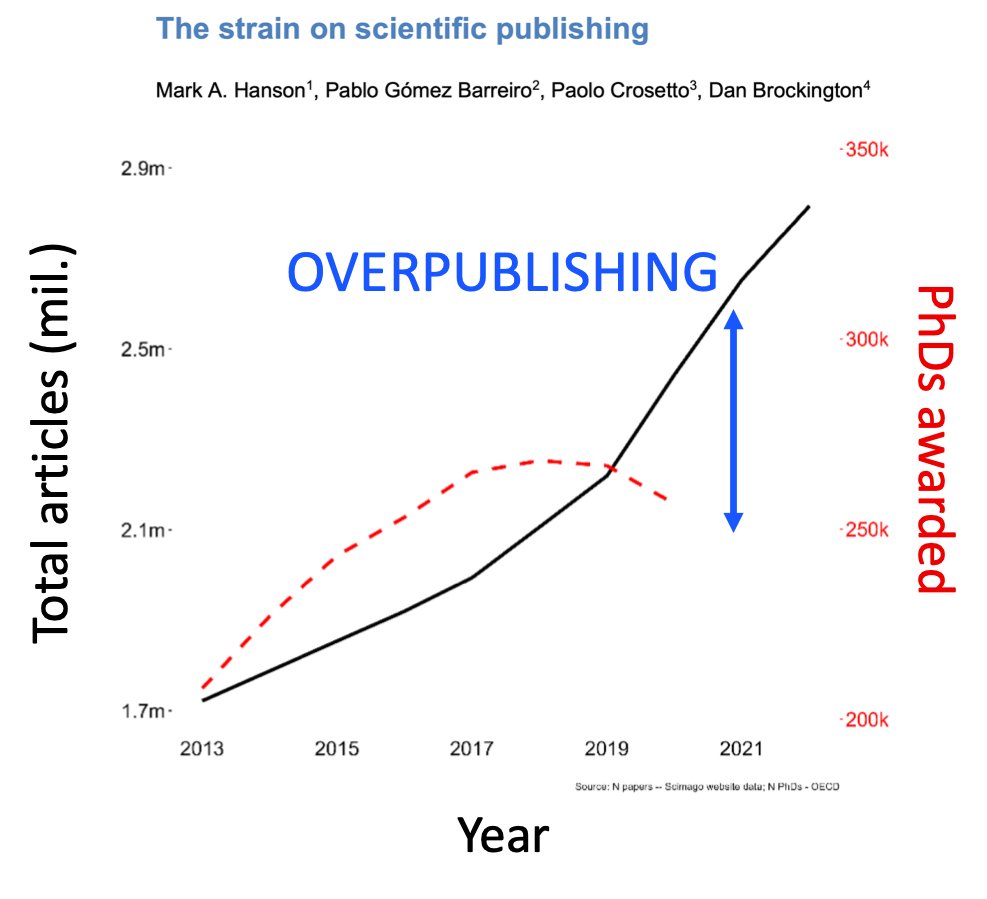
Overpublishing puts enormous stress on students and PIs.
And brings tons of money to publishers in STEM.
A new study shows that the number of papers is increasing FASTER than the number of #PhD graduates.
It’s an amazing work with very useful statistics. Huge kudos to the authors!
▫️
Main outcomes:
1️⃣ In 2022 the number of articles is 47% higher than in 2016. The amount of writing, reviewing and editing workload per scientist is increased enormously.
2️⃣ “Special issues” is a strategy for publishing lots of papers with reduced review time. This is possible due to the “publish or perish” pressure and clearly benefits the publishers.
3️⃣ The publishing time varies widely!
MDPI = 37 days. Frontiers = 72 days. Elsevier = 134 days. Springer = 157 days. Nature = 185 days.
4️⃣ The article rejection rates do not seem to correlate with publisher growth. However, rejection rates decline with increased use of special issue publishing.
5️⃣ Certain for-profit gold-open-access publishers create an increasing number of special issues, with uniquely reduced turnaround times, and in specific cases, high impact inflation and reduced rejection rates.
6️⃣ The authors suggest a new metric - Impact Inflation, which is reflected in self-citation within the same journal. For example, MDPI has a high impact inflation due to excessive self-citation compared to other publishers.
Conclusions and my opinion:
- Scientists have to spend a lot more time on reviewing and writing than before (on average).
- The more papers are published, the more the quality is compromised.
- Scientific progress has become partially bound to the business models of publishers and their revenue (a sad reality today).
- There is a huge lack of transparency. Much of these data had to be ‘web-scraped’ from numerous sources in order to get a full picture. We clearly need regulators to mandate open access to publisher’s statistics.
- Reduce the number of special issues! Those typically have low standards.
▫️
Science, publishing and funding make a trio that is very hard to disentangle.
However, research quality is controlled by the community.
This is why preprint + community review can make a big difference.
#AcademicTwitter #AcademicChatter
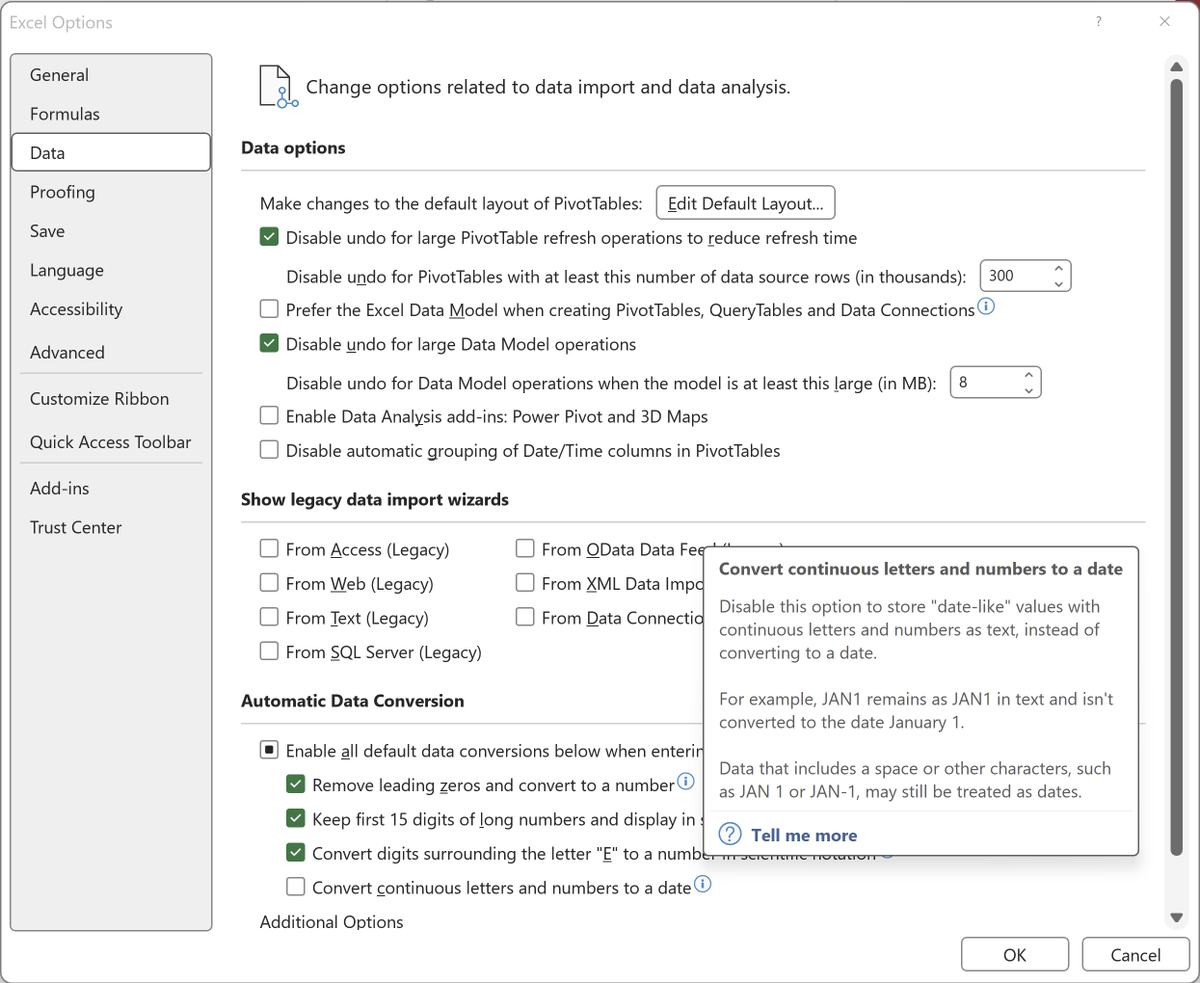
Finally: #Microsoft@Office listened ... no more gene name to date conversions in #Excel.
Go to File > Options > Data
and deselect "Convert continuous letters and numbers to a date".
https://t.co/IuPTH1GAdq
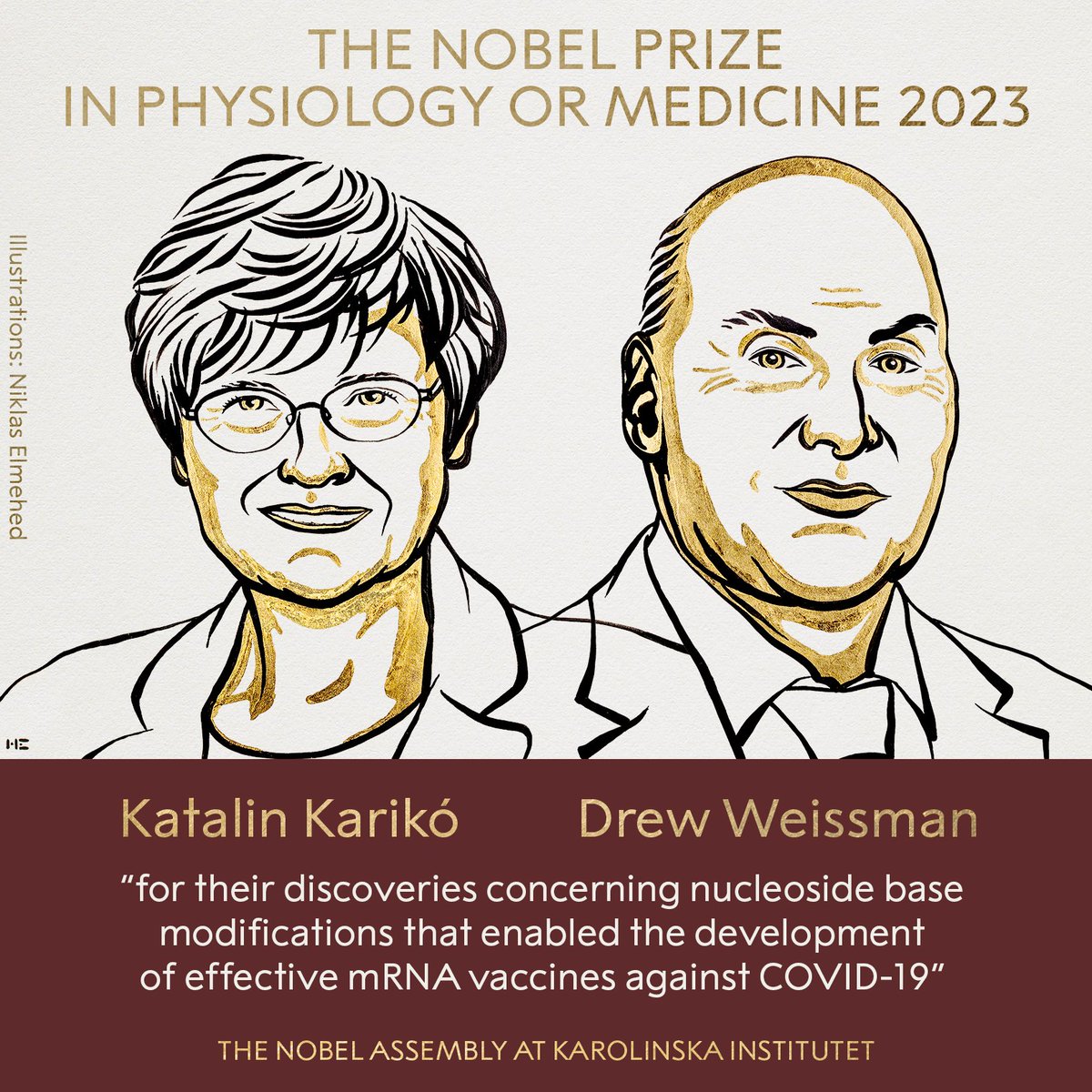
BREAKING NEWS
The 2023 #NobelPrize in Physiology or Medicine has been awarded to Katalin Karikó and Drew Weissman for their discoveries concerning nucleoside base modifications that enabled the development of effective mRNA vaccines against COVID-19.
Teachers' Day Thoughts
In ancient times, teachers were the custodians of knowledge, and access to that treasure was impossible without them. However, with the advent of the printing press, knowledge became more democratized. (1/7)


![thebetterindia's tweet photo. Long before women were even expected to enter engineering, Belthur Ranganayakamma quietly changed the rulebook.
After losing her father at just 14, continuing school seemed impossible.
But she refused to give up.
Cycling 6 km daily and supported by teachers who believed in her, she pursued engineering and, in 1965, graduated from the National Institute of Engineering, Mysuru as the first female engineer from Mysore University.
She later joined the Aeronautical Development Establishment (ADE), contributing to India’s UAV and aerospace research, with work linked to global studies including NASA research.
From a determined teenager to a pioneer in India’s aerospace sector, her journey opened doors for generations of women in STEM.
This Women’s Day, celebrate the women who dared to break barriers, and scroll down to discover Belthur’s incredible journey.
#WomensDay #WomenInSTEM #InspiringIndia #internationalwomensday
[Belthur Ranganayakamma, Women’s Day, International Women’s Day, Mysuru First Female Engineer, Women in STEM India]](https://pbs.twimg.com/media/HCxV5ZTakAAR5PA.jpg)