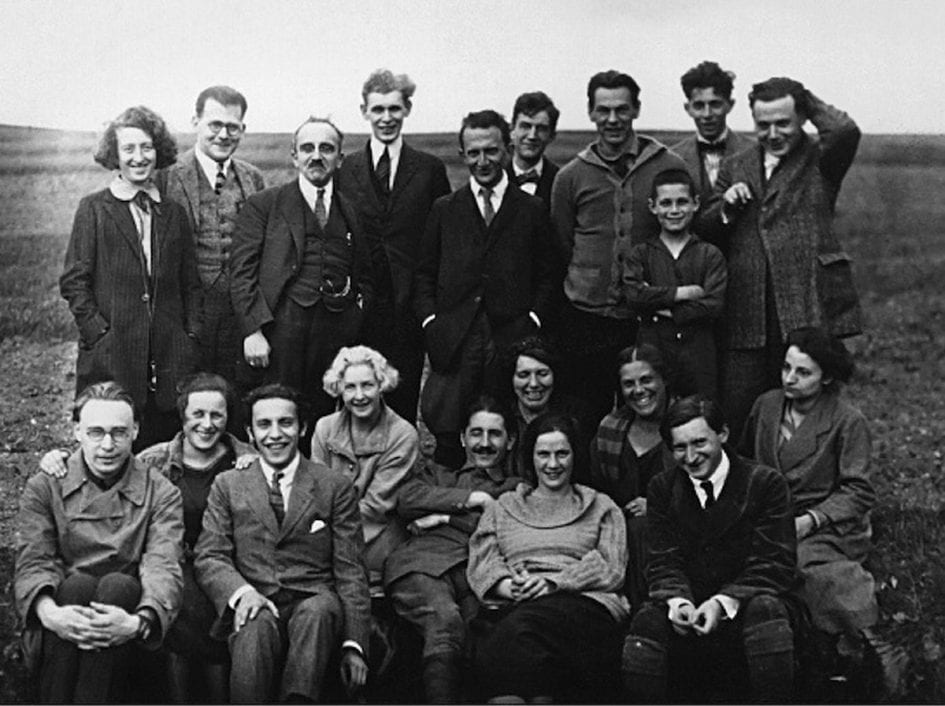
By the 1930s many Western intellectuals reluctantly realised that classical Marxism had failed and the proletariat wasn’t revolting. But then a group of exiled German Marxists led by Max Horkheimer, Theodor Adorno, Erich Fromm and Herbert Marcuse decided to change the battlefield.
Instead of economics, they targeted the “cultural superstructure”: family, religion, tradition, sexual norms and the very idea of objective truth. Their weapon was Critical Theory - a relentless campaign of negative criticism designed to portray every Western institution as inherently oppressive and capitalism as not just economically flawed, but psychologically and morally corrupt.
Marcuse gave the strategy its most powerful tactical manual in his 1965 essay “Repressive Tolerance”: true liberation, he argued, required “liberating tolerance” - tolerance only for progressive ideas and outright intolerance for conservative or “regressive” ones. Free speech, in other words, was only legitimate when it served the revolution.
The intellectual poison of the Frankfurt School was extraordinarily influential and as its graduates and intellectual heirs colonised universities, media, NGOs and corporate HR departments, Critical Theory evolved into today’s identity politics, DEI mandates and cancel culture - a cultural Marxism that attacks the individual in the name of group grievance. What began with a small circle of German émigrés in the 1930s now shapes the moral vocabulary of much of the Western elite. The result has been a softer, more pervasive authoritarianism: the dictatorship of the politically correct.
@brivael Great posts. But what about Nietzsche? Surely the Will to Power has a place in this French story. See 'Why we Are Not Nietzscheans', Ferry and Renaut
Brett Kavanaugh, a man in his 50s, had been valedictorian of his high school, at Yale College and a star student at Yale Law, had clerked for the Supreme Court, had a top career as an appellate lawyer and federal judge and a pristine reputation, and then a random woman from the town he grew up in claimed he had groped her at a party 35 years earlier when they were in high school.
Kavanaugh didn’t try to argue that the incident was consensual. He didn’t claim he remembered things differently than she did. He immediately stated that he had never even met the accuser. Denying ever meeting the accuser is a much stronger claim than merely denying assaulting her, and much easier to refute. After Kavanaugh made this denial, Christine Blasey-Ford no longer had to prove he had sexually assaulted her to scuttle his nomination, she only had to prove that the two of them had attended a party together at which such an assault might have occurred.
She was unable to do so. She did not know whose house the alleged assault occurred at. None of the people she claimed attended the party corroborated any aspect of her account. Leland Keyser, a friend of Blasey-Ford’s, who the accuser claimed was at the alleged party, said she recalled no such event and had never met Kavanaugh.
Kavanaugh produced a detailed calendar he had kept during the summer Blasey-Ford alleged she was assaulted, which included his whereabouts of every weekend night and listing who he was with. Kavanaugh argued that he could alibi himself and provide witnesses for any night Blasey-Ford claimed she might have been at a party with him. Blasey-Ford responded that she did not know the date of her assault and was not entirely certain it even occurred that year. Instead of being seen as persuasive, Kavanaugh’s calendar was mocked in both mainstream and social media because the reason he kept it was for a drinking contest he was having with his friends.
Nearly a decade later, there is still not a single shred of proof or a single witness who will corroborate the claim that Brett Kavanaugh and Christine Blasey-Ford were ever in the same room before she testified at his confirmation hearing. Nonetheless, people like Nick Kristof still claim Kavanaugh was “credibly accused” of sexually assaulting this woman.
'Antiracist Critical Pedagogy': Penn State Law School's New Strategic Plan, Devoted to 'Antiracism,' Raises Legal Questions @aaronsibarium@FreeBeacon
https://t.co/OLPAwP5Egy
Ken Griffin at Milken:
“What the mayor of New York has made clear to my partners, and principally my New York partners, is that we need to double down on our bet in Miami"