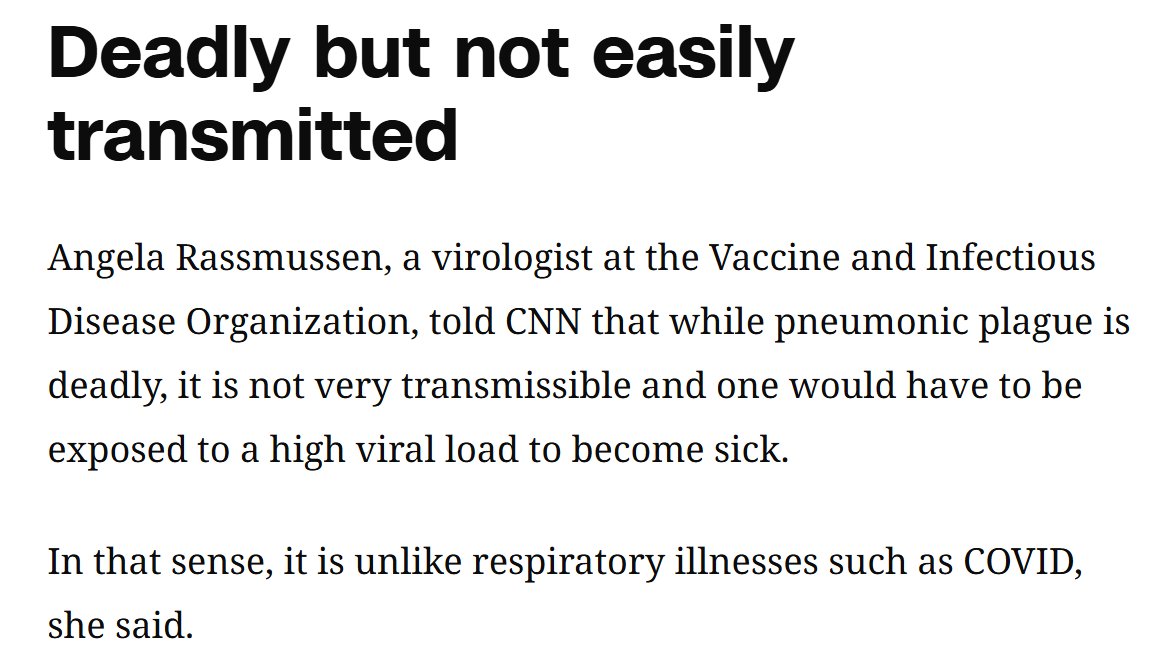
@InlandCaGuy https://t.co/LhS6WcMJRh, "In the 1970s and 1980s, the Union of Soviet Socialist Republics manufactured large quantities of antibiotic-resistant Y. pestis for dissemination into the air as a bioweapon"
Plague is caused by a bacteria (Yersinia pestis), not a virus. But, who knows if this strain has been modified since it leaked from a lab….that 100 catch receiver potentially on HGH to continue the analogy
I feel like being this kind of virus is like being the 100 catch receiver on a 2-15 team, like sure respect and all, but end of the day we're not scared of you, you don't matter that much.
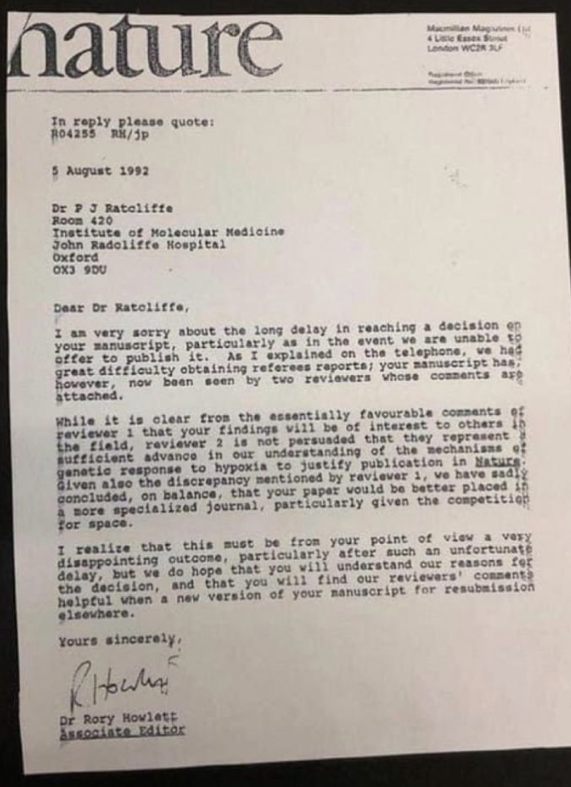
In 1992 Peter Ratcliffe received this rejection from Nature.
Almost 30 years later he won the Nobel Prize for the same discovery.
Don't lose faith in the things you believe in.
Kidney injury hurts the lungs, and NK cells are part of the bridge. New in @AmJTransplant: depleting CD94+ NK cells protects both organs after IRI and improves survival after mouse kidney transplant. Fantastic work by Reena Bharti and team @UCSFDOM. https://t.co/iHVyQRVtNw
Out in @ATSBlueEditor: severe PGD is linked to CMV reactivation and mortality in latent CMV+ donor lungs. Led by the terrific Marian Poley @UCSFDOM with our LTOG partners at @PennMedicine. First chapter of a bigger story, more to come. https://t.co/80n2W9uCA3
ICYMI - A genetically modified pig kidney kept a man off dialysis for nine months before a successful human kidney transplant, according to a world-first report in The Lancet.
Read now: https://t.co/lJuHejCJIS
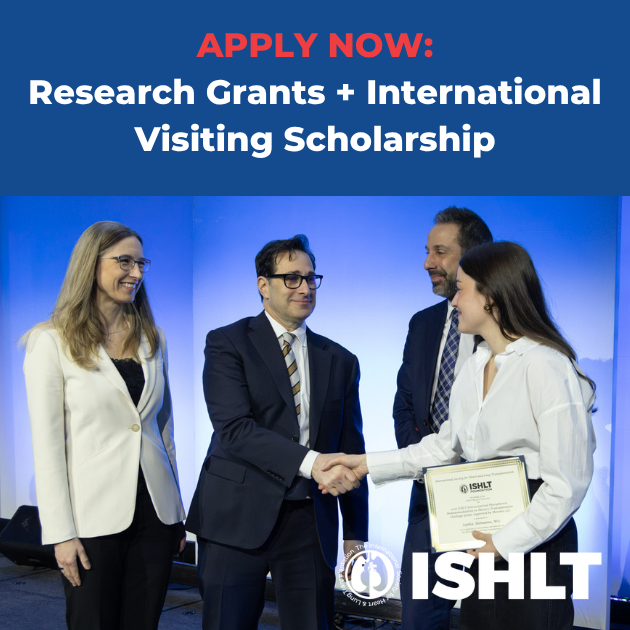
⏰ Applications for 3️⃣ #ISHLTResearchGrants and the #InternationalVisitingScholarship are due in two weeks!⠀⠀⠀
📅 Submit by 30 September at 11:59 p.m. ET / 1 October at 03:59 UTC⠀
📖 View eligibility criteria + apply at 🔗 https://t.co/MXV2cEe8o4
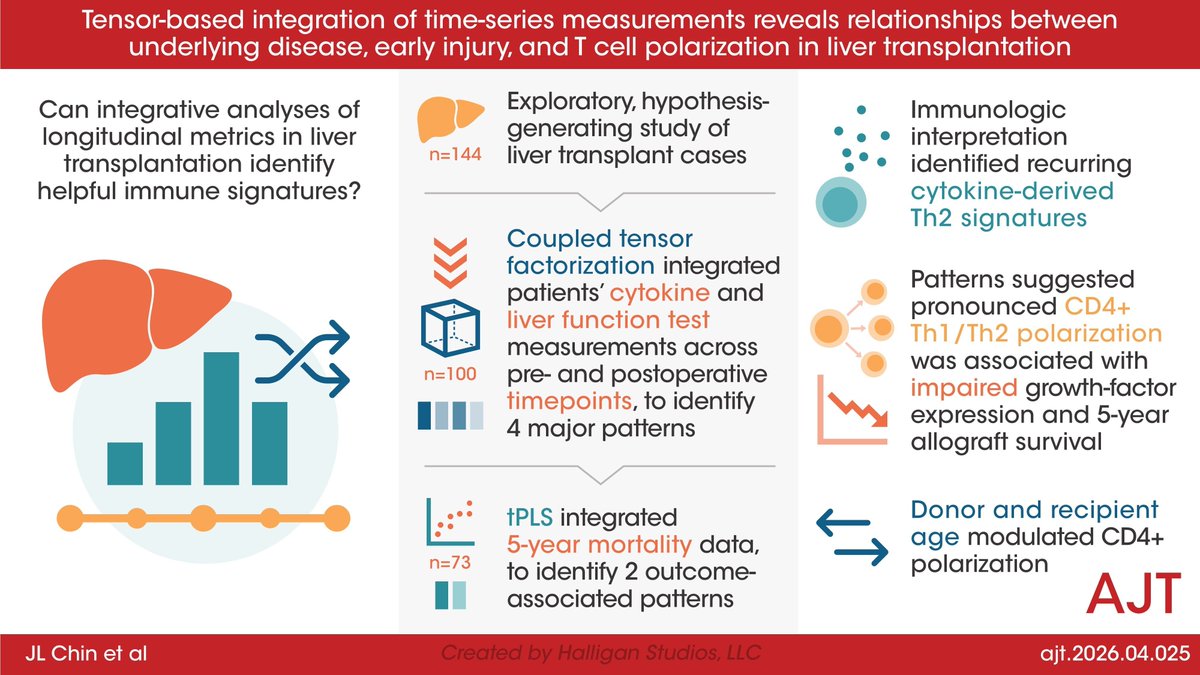
🚨 Editor’s Choice 🚨
"Tensor-based integration of time-series measurements reveals relationships between underlying disease, early injury, and T cell polarization in liver transplantation," by Chin et al
https://t.co/LhBZLnXtKu
#LiverTransplantation#TransplantImmunology
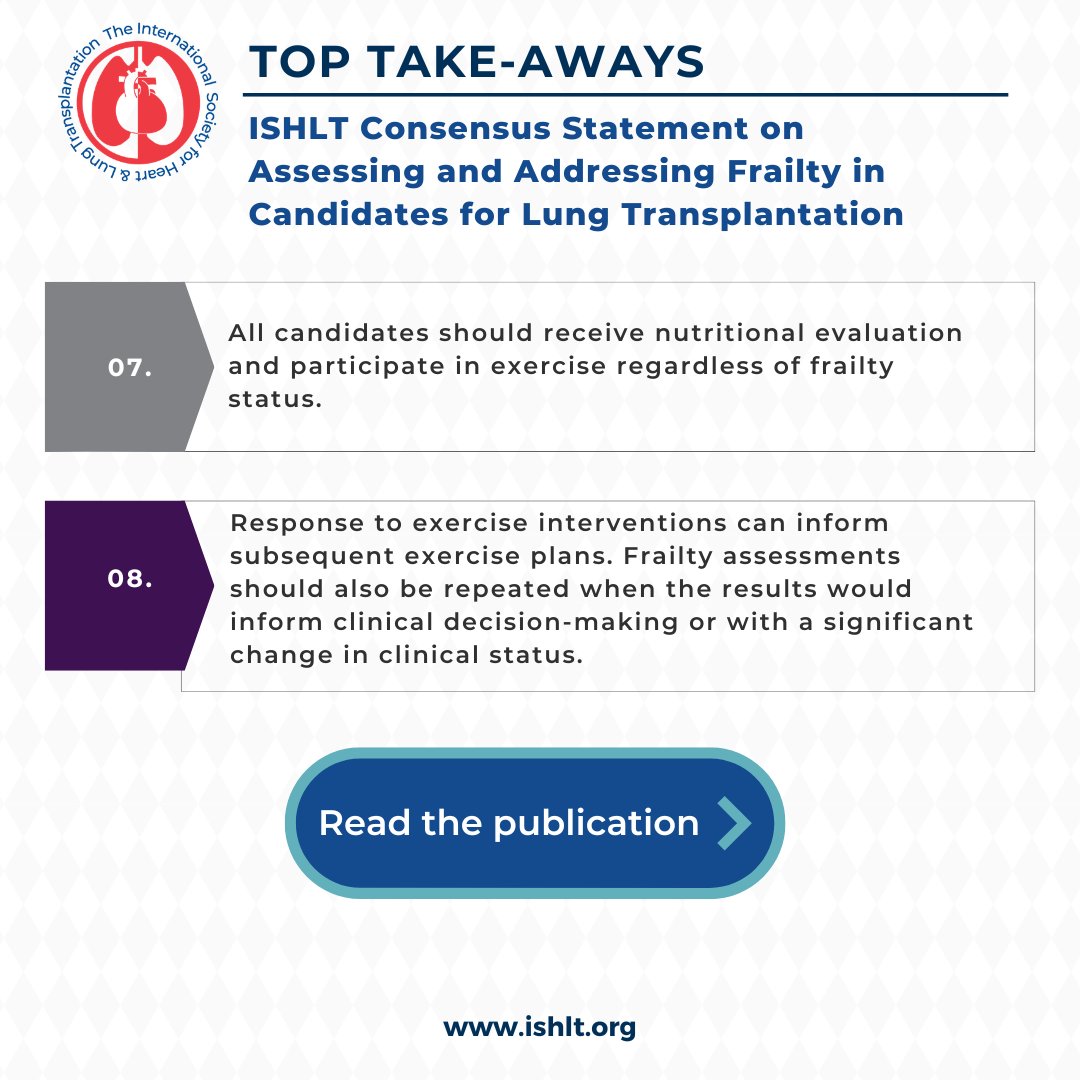
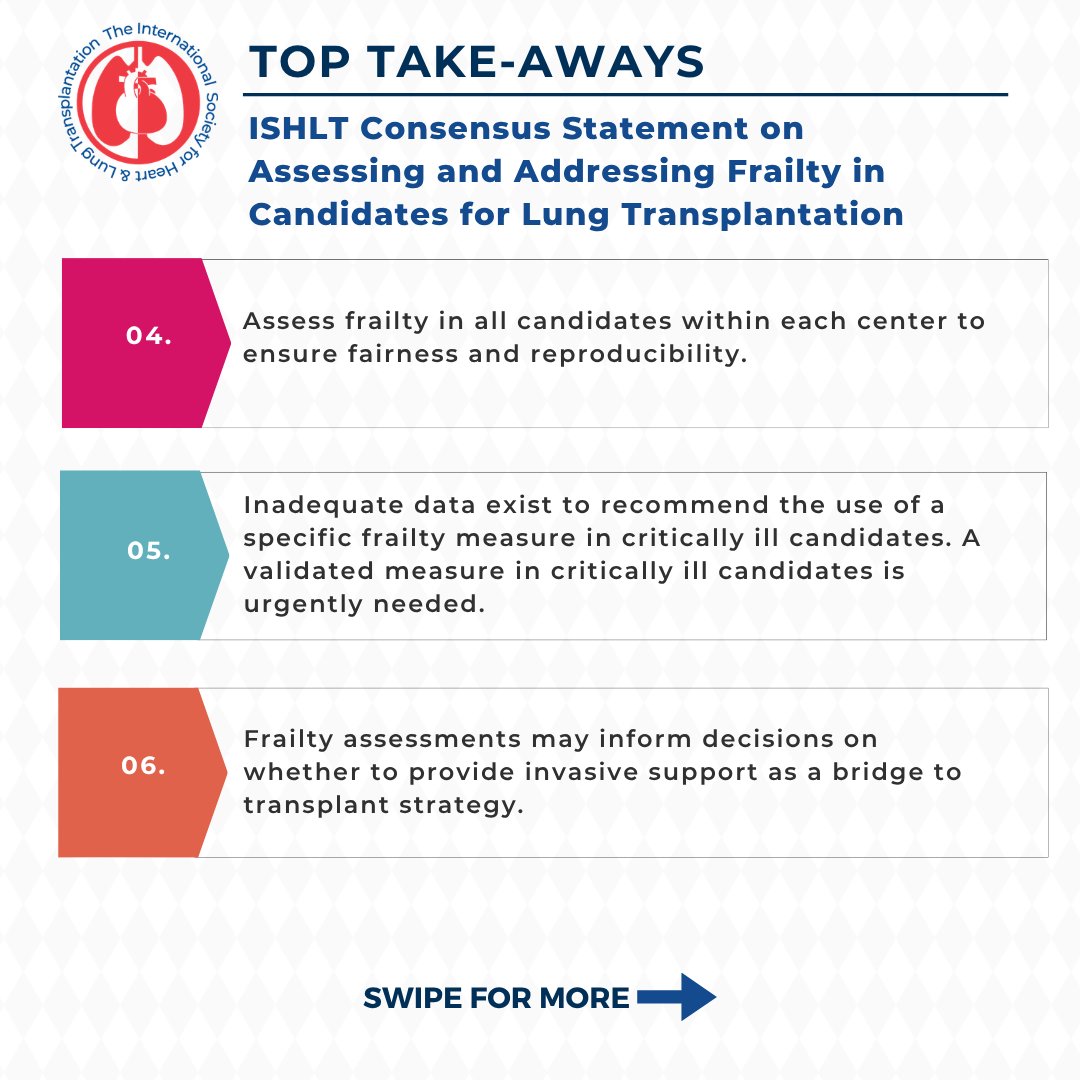
📢 A NEW #ISHLTConsensusStatement on Assessing and Addressing #Frailty in Candidates for #LungTransplantation is now available. 📖💡🫁 This document provides practical guidance on how to integrate frailty assessments into clinical practice.
⠀
View the top 8️⃣ takeaways ⤵️
A defining mark of #LungTransplant dysfunction: https://t.co/cq3gHSfnAB
Chitaru Kurihara & team @NUFeinbergMed identify POSTN-positive fibroblasts as key contributors to fibrotic restrictive chronic lung allograft dysfunction after lung transplantation. Moreover, the presence of POSTN-positive fibroblasts distinguishes restrictive allograft syndrome from bronchiolitis obliterans syndrome, both of which lead to lung transplant dysfunction.
@AnkitBharatMD@miyasea1225@NM_Lung@NorthwesternMed@NIHFunding
#PulmonaryFibrosis
Laying down a data infrastructure can help facilitate novel collaborations and innovations, as Aartik Sarma, MD, @UCSF, explains on the ATS Breathe Easy podcast.
This research was part of the ATS ICU Pause program, which aims to educate health care providers, including trainees, intensivists, hospitalists, and advanced practice providers around patient safety and equity in diagnosis at the time of ICU discharge.
Watch the episode on ATS NOW or tune in wherever you listen to podcasts: https://t.co/Dekb4vlmC6
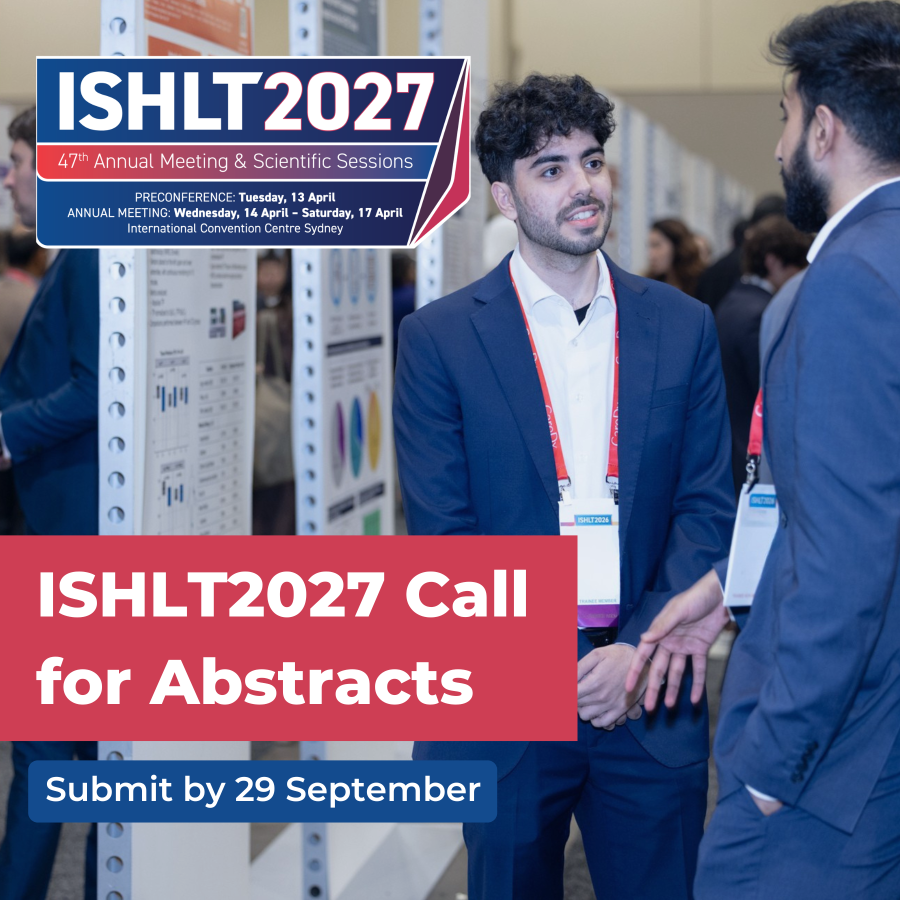
The deadline to submit your abstracts to #ISHLT2027 closes earlier this year. ⏰ Have your science in the treatment of advanced #heart and #lung disease, #transplantation, #MCS, and #PVD presented on a global stage. 🫀🫁🌎
Congrats to @SumiRamendra on the successful defence of her PhD today @UofT_LMP. Sumi’s incisive work has uncovered novel roles for B cells in lung fibrosis. Bonus: the thesis was accepted without corrections! Well done Sumi!
Of course. The superior outcomes that everyone (me included) tout from countries with universal or socialized healthcare get a bit complicated. The US private and public health R&D is 1/2-2/3 of global invested $. We also subsidize low drug prices elsewhere through our high costs