Польський публіцист Єжи Вуйцєк в статті про скандал у Польщі у звʼязку із присвоєнням підрозділу ССО України почесної назви «імені героїв УПА».
–––
"Європейський Союз ніколи не був і не є клубом історичної чистоти, де перед входом спеціальна верифікаційна комісія перевіряє біографії вуличних відвідувачів на предмет їхнього гуманізму. Якби це було критерієм вступу, Європейський Союз сьогодні складався б із порожніх стільців…
Кожна з цих країн несе із собою потужні історичні жахіття, з якими справляється за власний кошт і у власному темпі. Ставити Україні таку ультимативну умову в момент, коли вона бореться за екзистенційне виживання, є неоколоніальною спробою диктувати суверенній державі, як вона має пам’ятати своє минуле."
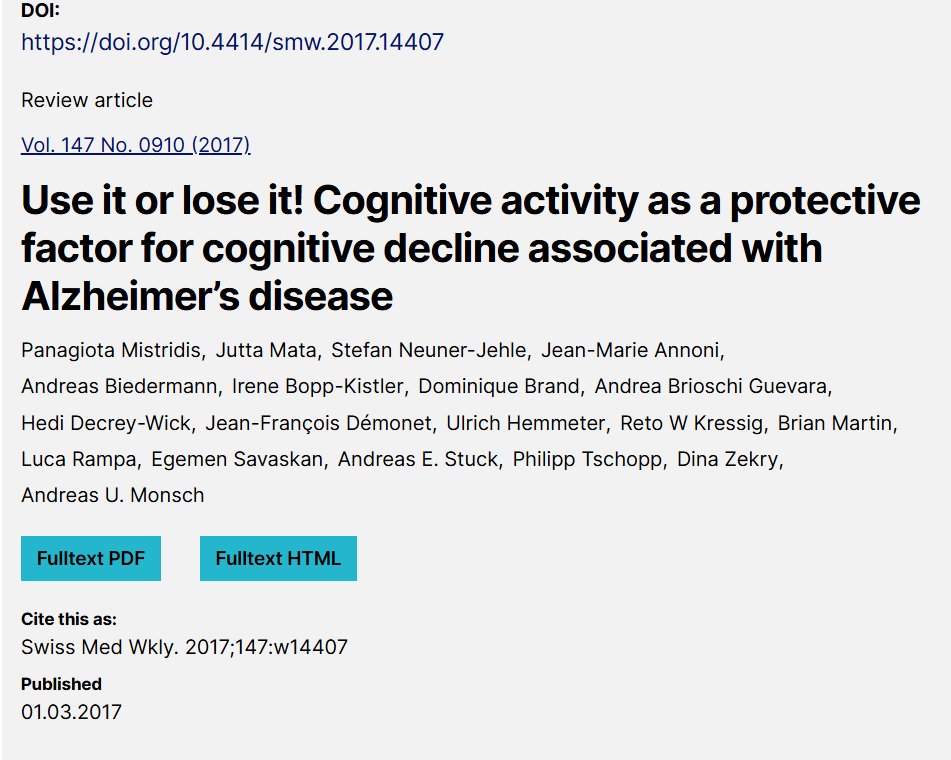
The people most at risk cognitively are not the people who stop working.
They're the people who stop learning.
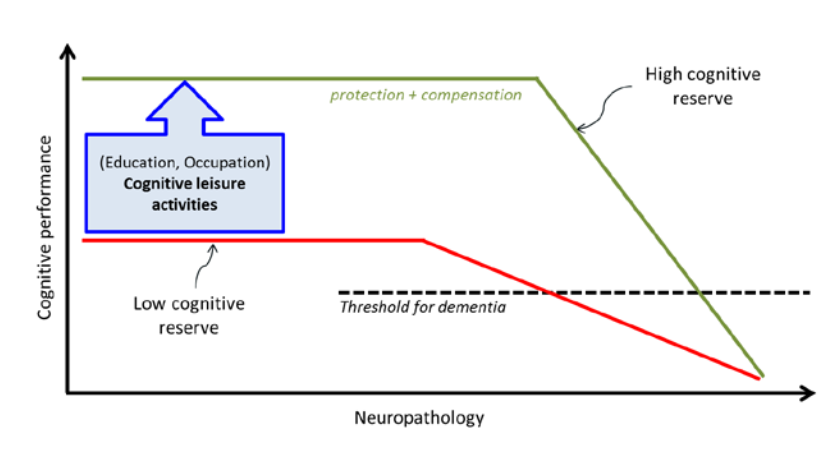
Your brain was designed to adapt to challenge. Remove the challenge, and the neural systems responsible for adaptation begin to lose efficiency.
Cognitive reserve is built through demand, not comfort.
When somebody ignores your text, the part of your brain that hurts is the same part that lights up when you feel physical pain.
Her name is Naomi Eisenberger.
She is a professor of psychology at UCLA. In 2003, she ran an experiment that quietly changed how scientists think about heartbreak, ghosting, and every other thing we used to file under "just hurt feelings."
Here is what she did.
She took 13 people, slid them into a brain scanner, and started them on a simple computer game. Three players, throwing a virtual ball back and forth. Pass, catch, pass. The other two players were not real. They were programs set up to do one specific thing.
For the first few minutes, the game was normal. Everyone passed the ball to everyone.
Then the two computer players started leaving the human out.
They threw the ball to each other. Over and over. The person in the scanner watched it happen, click after click, with no way to make it stop. A child's playground move, run by adults, inside a million-dollar machine.
Eisenberger was not watching the game.
She was watching the brain.
Specifically, she was watching one region. The anterior cingulate cortex. A small piece of brain near the front of your head that does one main job in life. It tells you when something is wrong. Pain neuroscientists have studied it for decades, because when you stub your toe, or get cut, or burn your hand, the anterior cingulate is the part that says, "This hurts. Pay attention. Fix this."
She wanted to know if the same region would fire when someone got left out of a ball game.
It did.
Not a little. Not in a vague, distantly-related way. The same brain region, with the same activation pattern, with intensity that scaled to how upset the person reported feeling.
The paper was published in the journal Science in October 2003. The title was a question. "Does Rejection Hurt?"
The answer, in the brain, was yes. The same way physical pain hurts.
That was the first half of her career.
The second half made it harder to look away.
In 2009, she ran a follow-up with two colleagues. They took 122 people and tested a specific gene called OPRM1, which controls how your body processes pain. There is a variant of this gene that makes some people more sensitive to physical pain than others. Stub the same toe, feel it more.
Then they put a smaller group of those people back in the scanner and ran the ball game again.
The same people who had the pain-sensitivity gene variant also had the strongest brain response to being left out. Their dorsal anterior cingulate fired harder. They reported feeling more upset. The same gene that shapes how much physical pain hurts also shapes how much rejection hurts.
They are not two separate systems. They are one system, doing one job.
The job is to warn you when something has gone wrong with your body, including the social body. Being cut off from your group is not metaphorically dangerous. For most of human evolution, it was actually dangerous. Get kicked out of the tribe, you die. Your brain wired the alarm to the same circuit because, from a survival standpoint, it is the same alarm.
So here is what your brain is doing right now.
Every time you reach for your phone to check if they replied, that is the alarm. Every time a message sits unread and you can feel it in your chest, that is the alarm. Every time you walk into a room and nobody notices, that small tight thing behind your sternum, that is the alarm. The same circuit that would fire if you sliced your hand on a knife.
You are not weak for feeling it. You are not dramatic. You are not being too sensitive.
You are being correctly informed by a system that has kept your species alive for two hundred thousand years.
The system does not know the difference between a tribe and a group chat. The pain feels the same because to the part of your brain that decides what counts as pain, it is the same.
Eisenberger has spent her career making one argument.
Social connection is not a luxury. It is not optional. The brain treats it the way it treats food and water and shelter, as something the body needs to survive. When it is taken away, the brain rings the same bell it rings for any other injury.
Most people go through their whole life thinking their feelings are weakness.
They are not weakness. They are data.
Probiotics measurably reduced rumination, a loop of recurring negative thoughts, in a 4 week RCT.
Even more evidence that a healthy microbiome could help prevent and treat depression.
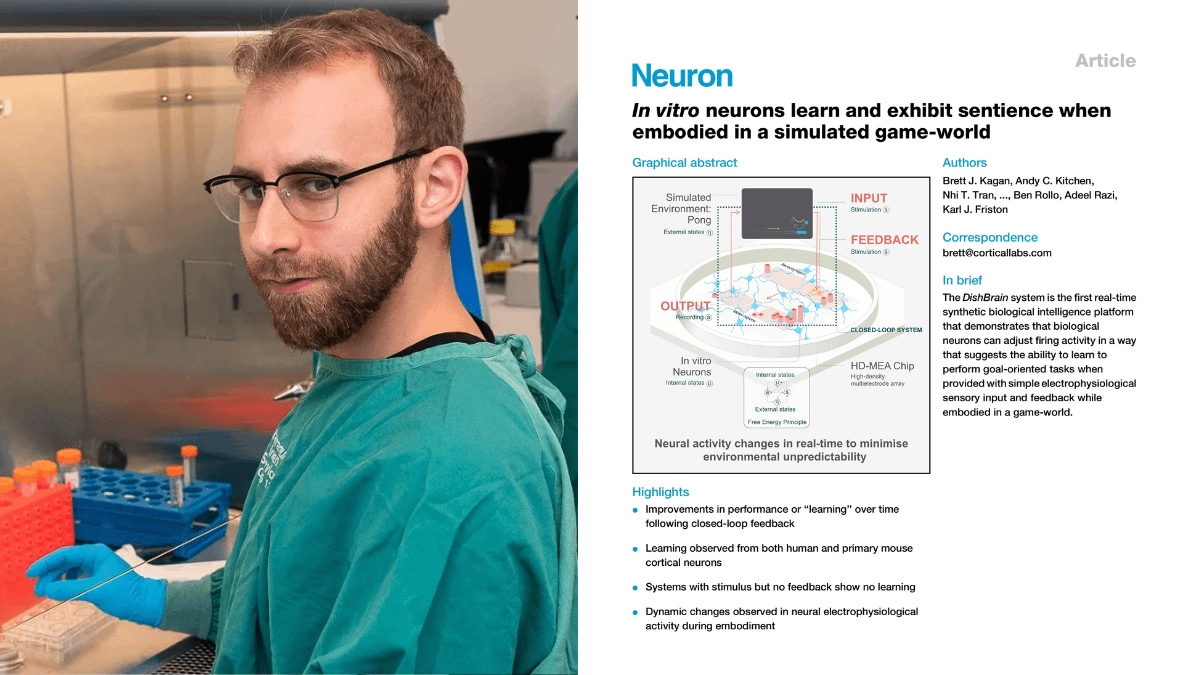
An Australian scientist took 800,000 human brain cells, kept them alive in a dish, wired them to a computer, and taught the cells to play the video game Pong in five minutes, which is faster than any AI on Earth had ever learned the same game.
His name is Brett Kagan.
He runs the science team at a Melbourne company called Cortical Labs, and the paper that broke the story was published in the journal Neuron in October 2022. The title sounds like a science fiction novel. In vitro neurons learn and exhibit sentience when embodied in a simulated game-world.
The setup was simple, and that is what made it so strange.
Kagan and his team took some brain cells from mouse embryos. They took some human brain cells grown from stem cells. They placed them on a chip covered in tiny electrodes, the size of a small coin, and they hooked the chip up to a computer running Pong.
The electrodes could do two things. They could read what the cells were doing. They could also send small bursts of electricity back into the cells.
The team used those two channels to talk to the dish.
When the ball was on the left, they fired the electrodes on the left side of the dish. When the ball was on the right, they fired the electrodes on the right. The closer the ball got to the paddle, the faster they fired. The cells could move the paddle by sending their own signals back.
That was the whole game.
Then the team added one more rule, and this is the part that changed everything.
When the cells missed the ball, they got a random, chaotic burst of electricity for four seconds. Noise. Static. Pure unpredictability. When the cells hit the ball, they got a clean, steady, predictable signal.
That was the only feedback the dish ever received.
Within five minutes, the cells started getting better at the game.
The rallies got longer. The hits got more frequent. The dish was not winning, but it was clearly playing, and it was improving, and nobody had told it the rules.
It had figured them out by itself.
The reason this worked is the part that should stop you for a second.
Brains hate surprise. That is the thing they are built to avoid. Karl Friston, who is one of the most cited neuroscientists alive and a co-author on the paper, has spent his whole career proving this. The brain is not really a thinking machine. It is a prediction machine. It runs on a single quiet rule. Make the world less surprising.
The cells in the dish were doing the same thing.
The chaotic stimulus felt like surprise. The clean stimulus felt like calm. The only way to get more calm and less chaos was to stop missing the ball. So the cells learned to stop missing the ball, not because anyone trained them, and not because they wanted a reward, but because the only way to quiet the noise was to play the game well.
They were not learning Pong. They were learning to make their own world more predictable, and Pong just happened to be the world they were stuck inside.
The same thing your brain is doing right now.
Every choice you make today, every word you reach for, every plan you build for tomorrow, is your brain trying to make the next moment less surprising than the last one. The feeling you call thinking is mostly your head doing the same thing those cells did. Trying to quiet the static.
The dish learned Pong faster than any AI had at the time, using around 800,000 cells and almost no power, while the AI systems running the same game needed thousands of times more energy and far longer training runs.
Kagan said it plainly in his interviews after the paper came out.
He said the cells were not trying to win. They were trying to feel less lost. And the moment he said that, half the room realized he was no longer just describing the dish.
He was describing them.
Вибачте, знов несу фейсбук у твітер, але ж пооріть зі мною
На цей раз від вакцинації від 100% смертельного сказу відмовляють годуючу маму, бо не хочуть брати відповідальність за наслідки для дитини
Далі намагаються без жодних показань ввести з вакциною несумісний з годуванням грудьми препарат (який, до того ж, може знижувати імунну відповідь на вакцину)
Як ви думаєте, звідки береться неіснуюча відповідальність за неіснуючі наслідки, і де взяти реальну відповідальність медичних працівників за реальний шанс померти від смертельної хвороби?
Чому українці мають вибивати собі право на гарантовану законом медичну допомогу?
На тренінгу мала дискусію з людьми щодо цієї повальної неіснуючої відповідальності, і пані казала, це зашкарубла система. А я так не думаю. Система побудована людьми, управляється людьми, функціонує завдяки людям. Нормальні люди затвердили нормальний, такий як в усьому світі порядок надання допомоги при підозрі на сказ. А ненормальні почали відмовляти жінці у вакцині. А до того інші ненормальні їх навчили цьому.
Будь-які зрушення в медицині мають починатись з університетів, а будь-яка відповідальність має протокол, стандарт допомоги, номер наказу.
На щастя, усе, що я люблю, має номери наказів:
Загальнодоступні дефібрилятори, догоспітальне переливання крові, вакцинація.
Залишилось донести це все до конкретних людей, і не можна просто чекати, поки вони вимруть - вони навчають нових. Так що треба доносити.
У травні 1945 року українське та польське підпілля змогли зробити те, що багатьом сьогодні здається неможливим. Після років кровопролиття вони домовилися припинити взаємну боротьбу та зосередитися на спільній загрозі - радянському імперіалізмі (Перемир'я в селі Руда-Ружанецька).
Пізніше були й спільні операції УПА та польського антикомуністичного підпілля проти комуністичних репресивних структур. Це реальна сторінка нашої спільної історії.
Тому сьогодні варто згадувати не лише трагедії українсько-польських відносин, а й приклади примирення та політичної мудрості. Бо майбутнє будують не на нескінченному перераховуванні старих образ, а на здатності робити висновки.
Так, серед поляків є люди, які засуджують українців або український погляд на історію. Це їхнє право. Але варто звернути увагу на інше: дуже часто ті самі наративи про «неправильних українців», «неправильну пам'ять» та «неправильну державу» сьогодні просуває і російська пропаганда. Не тому, що її хвилює історична правда. А тому, що її стратегічна мета - посварити українців і поляків.
Перебуваючи в російському полоні, я неодноразово чув від росіян відверту ненависть саме до Польщі. Якщо Україну вони часто намагаються подавати як «заблудлого брата», то Польщу їхня пропаганда роками малює одним із головних ворогів росії.
Тому коли хтось починає розповідати, що головна загроза для польсько-українських відносин - це виключно українська історична пам'ять, варто поставити собі просте питання: кому це вигідно найбільше?
Сьогодні саме Україна стримує росію. Українські військові фактично тримають фронт, який захищає всю східну частину Європи. У тому числі Польщу. У тому числі ті країни, які сьогодні можуть дозволити собі жити мирним життям, тому що українці воюють з однією з найагресивніших держав світу.
При цьому Україна не розповідає іншим націям, яких героїв їм шанувати, якою мовою навчати дітей у школах або як їм трактувати власну історію. Ми можемо погоджуватися чи не погоджуватися з чужими поглядами, але право народу самому визначати свою ідентичність - це базовий принцип свободи.
Саме тому дивно бачити, коли окремі політики намагаються будувати рейтинги на історичних претензіях до сусідів. У кожного є свій електорат. У кожного є спокуса заробити кілька додаткових відсотків на гучних заявах. Але саме так закладається фундамент майбутніх конфліктів. Маленькі політичні вигоди сьогодні дуже часто стають великими проблемами завтра.
Особливо дивно це виглядає зараз, коли Україна протистоїть не просто росії, а фактично бореться за сам принцип того, що великі держави не мають права вирішувати долю менших. Коли деякі країни, які свого часу гарантували безпеку Україні в обмін на відмову від ядерної зброї, дедалі частіше керуються не принципами, а політичною кон'юнктурою.
Для когось це лише бізнес і політика. Для нас - це життя наших людей, безпека наших родин і саме право України на існування.
Тому я переконаний: чим швидше наші союзники відмовляться від імперських амбіцій, старих образ і спроб повчати інших, тим швидше ми зможемо перейти від боротьби за виживання до побудови справді міцного миру.
Історія рідко пам'ятає тих, хто просто підлаштовувався під настрої натовпу. Вона пам'ятає тих, хто мав сміливість дивитися далі за наступний рейтинг, наступні вибори чи наступний заголовок у пресі. Бо справжній лідер думає не про те, як сподобатися людям сьогодні. Він думає про те, в якій країні їхні діти житимуть завтра. Мир і процвітання між народами завжди починаються з відповідальності, а не з популярності. Саме тому справжні лідери будують мости навіть тоді, коли набагато простіше будувати стіни.
Пані, проблема цього допису не в тому, що ви пишаєтеся поляками. Це нормально і природно. Проблема в тому, що ви намагаєтесь пояснити поведінку цілих народів через зверхні історичні стереотипи.
Ви пишете про шляхетного поляка і «приниженого українського селянина». Але якщо шляхетність справді передається через національний характер, то чому ж в історії Польщі були зради, боротьба за привілеї та власну вигоду?
І навпаки: якщо українець думає лише про корито, то як пояснити сотні тисяч добровольців, волонтерів і військових, які віддають життя та здоров’я за інших людей?
Я українець, і за останні роки бачив безліч людей, які безкоштовно евакуйовували незнайомих людей з під обстрілів, збирали останні гроші на армію, прихищали чужі родини у власних домівках. Це не дуже схоже на описаний вами менталітет.
Так само я бачив багато поляків, які допомагали українцям. Але ніколи не думав, що вони допомагають через якусь особливу національну вищість. На мою думку, вони допомагали тому, що залишилися людьми.
Справжня шляхетність проявляється не в тому, щоб назвати свій народ шляхетним ( росіянє з радістю б посперечались з вами хто шляхетніший за вашою версією характеристик шляхетності).
Але думаю шляхетність проявляється в повазі до гідності в тому числі до інших народів та націй. Навіть тоді, коли між нами є образи, суперечки чи розчарування.
Тому я щиро вдячний багатьом полякам за допомогу Україні.
Але не приймаю думку, що одна нація народжується шляхетною, а інша - ні.
Можливо ви сплутали слово шовінізм з шляхетністю? Тоді сенсу пояснювати щось - немає.
Reasons why you should throw away plastic chopping boards like this:
> shed microplastics during cutting
> older / damaged boards shed more
> microplastics enter ecosystems
> pollute environment
> microplastics absorbed when eaten
> now found in every tissue: brain, lung, GI, placenta, breast milk
> found in 100% of testicles when tested
> trigger for inflammation + oxidative stress
> act as endocrine disruptors
> found in atheromas and carotid plaques
> driver for cardiovascular risk
> possible link to IBD and cancer
> damaged boards also trap bacteria
Wooden boards produce no microplastics and are easier to clean 💡
Зробили разом отаку галєту. Трошки спала спека і можна знов таскати малого в ергорюкзаці😅інакше нічого не зробиш: скрізь лізе все йому треба 🫠з острахом думаю про повернення до роботи і як я це все встигатиму😵💫а ще як завершити ГВ😵💫
Recent studies have revealed the synchronization of neuromodulators including norepinephrine, serotonin, acetylcholine, dopamine, and histamine during sleep.
A new #ScienceReview explores what potential role the synchronization of these oscillations may play in health. https://t.co/fcDdHm1SDP