In 2021, the head of the UN World Food Programme said $6 billion from Elon Musk could solve world hunger.
Elon replied: publish the plan, right here, publicly, and I'll sell Tesla stock on the spot.
The plan came out. And when you read it, it wasn't a plan to solve hunger. It was one year of food for 42 million people. A twelve-month subscription. And the year after? Start over.
A few months later, Elon summed up his view: if you care about the reality of goodness rather than the perception of it, philanthropy is extremely difficult.
"Reality of goodness over perception of goodness."
That line stuck with me for weeks. Does philanthropy actually work?
Gates-style philanthropy is first and foremost institutional capture. Foundations funding NGOs, funding governments, funding programs, producing reports, producing photos. Everyone's happy, and the aid machine keeps itself alive. Sixty years and hundreds of billions later, much of Africa is still dependent on aid. Zambian economist Dambisa Moyo laid it out in Dead Aid: aid breeds dependency, feeds corruption, and short-circuits the only mechanism that has ever lifted a country out of poverty.
So what actually works?
It's been tested. In Kenya, Berkeley researchers working with GiveDirectly randomly selected villages and gave every poor household about $1,000 in cash. No program. No training. No conditions. Just cash.
The result: people bought metal roofs, livestock, started small businesses. Barely any inflation. And every dollar injected generated around $2.50 of economic activity locally, including for neighbors who received nothing.
Why? Because you didn't give them charity. You gave them capital. You primed the pump.
And that's where everything hinges: ownership. Hernando de Soto showed that the world's poor hold trillions of dollars in assets, but without recognized property titles, it's dead capital. You can't borrow against it, pass it on, or grow it. Where property rights are respected, the system starts running. Where they aren't, no amount of aid will ever be enough.
Now reread Elon's post.
"Next year, I will give one of my SpaceX shares to every kid in America. This will be the first of many."
That's not a meal. That's not a handout. That's a property title. A piece of the company building the infrastructure of a multiplanetary civilization, owned directly by millions of kids.
A kid who gets a handout depends on the state. A kid who owns a share of SpaceX owns a piece of the future. He learns what an asset is, he has a stake in the economy working, and one day he'll vote as an owner, not as a client of the state.
Gates buys perception. Musk distributes ownership.
The reality of goodness versus its perception. And it's absolutely brilliant.
@brivael Le socialisme n'échoue jamais faute de bonnes intentions
Il échoue parce que personne ne dépense l'argent des autres aussi bien que le sien
Demande au Venezuela, premières réserves de pétrole du monde et rayons vides
Right now in the US, part of the Democratic Party has decided to play the "socialist" card. Days before the midterms, DSA candidates are winning primaries and the word isn't taboo anymore.
So today I'm going to show you why socialism never works. Not with ideology. With mechanics.
Let's start with a dumb question. How much should a loaf of bread cost?
You don't know. Neither do I. Nobody does. And that's exactly the point.
The price of a loaf of bread is the instant synthesis of millions of pieces of information that no single person holds: the wheat harvest in Kansas, the price of gas for the oven, the baker's wages, the shop's rent, a drought in Argentina, a war on the Black Sea, whether people feel like bread this morning or a bagel.
In 1920, Ludwig von Mises published a paper that should have ended the debate. His argument: without private ownership of the means of production, those means are never exchanged. No exchange, no prices. No prices, no economic calculation. The planner can't know whether a steel mill is worth more than a dam or a hospital. He's flying blind. He can't even tell that he's wrong.
In 1945, Friedrich Hayek drove the point home in "The Use of Knowledge in Society." Useful knowledge is scattered across millions of minds. The baker knows things about his neighborhood that no ministry ever will. Prices are a telecommunications system: when tin becomes scarce somewhere in the world, its price rises, and millions of users economize on it without even knowing why. No committee, no ministry, no plan can replicate that. The market isn't an ideology. It's a distributed information processor.
Then Milton Friedman picked up a simple pencil. The wood comes from Washington State, the graphite from South America, the rubber from Malaysia. Thousands of people who don't know each other, don't speak the same language, maybe even hate each other, cooperate to make something none of them could make alone. Nobody gave them orders. Prices were enough.
Now run the experiment in reverse. Set the price yourself.
Cap rents below market: landlords stop maintaining, stop building, housing disappears. Swedish economist Assar Lindbeck, a man of the left, said rent control is the most efficient technique known for destroying a city, short of bombing it.
Cap the price of flour: shelves empty, lines form, the black market takes over. Venezuela, 2016. The country with the largest oil reserves on earth, and people standing in line for hours to eat. Nearly 8 million Venezuelans eventually fled.
Socialism smashes the thermometer and then acts surprised that the fever keeps rising.
And this is where it gets serious.
Because when the plan fails, and it always fails, the planner has two options. Admit the plan is wrong. Or blame the people. Saboteurs, speculators, kulaks, enemies of the people.
He always picks the second one.
Hayek saw it in 1944 in The Road to Serfdom, in a chapter with a chilling title: Why the Worst Get on Top. A central plan requires central power. Central power attracts those who crave power. And when reality resists the plan, reality has to be broken. Which means people have to be broken.
Stalin. He collectivizes the land. Output collapses. He blames the peasants and seizes the harvests. The Holodomor, 1932-1933: millions starved to death in Ukraine, the breadbasket of Europe. Add the Gulag, the purges, the deportations.
Mao. The Great Leap Forward, 1958-1962. Backyard furnaces producing useless steel, insane grain quotas, local officials inflating numbers to avoid punishment, and the state requisitioning food based on those fake numbers. The result: the worst famine in human history. Estimates range from 30 to 45 million dead.
Pol Pot. The Khmer Rouge abolish money, markets, property, and empty the cities. The dream of total planning, carried all the way. In four years, roughly one in four Cambodians dies.
Hitler. He sent communists to the camps, but his party called itself National Socialist and the economy answered to the plan and the party. Companies stayed private on paper, but the state decided what to produce, at what price, and for whom. Hayek dedicated The Road to Serfdom "to the socialists of all parties" precisely because he saw the same root: the idea that the state must steer society toward a collective goal, and the individual must step aside.
Different eras. Different continents. Different cultures. Same mechanism. Same ending.
This isn't a bug. It's a feature of the system. Remove prices and you remove information. Remove information and you remove the ability to correct. And when you can no longer correct through prices, you correct through force.
So let me say it plainly. Socialism always starts nice. A rent freeze. Public grocery stores. Make "the rich" pay. Nobody promises the Gulag on day one.
But if America truly goes down this road, the rest of the story is already written. The plan will fail. There will need to be culprits. There will need to be power to punish them. And a socialist government holding the American state apparatus, its surveillance capabilities, its technology, its military, wouldn't be a regional tragedy. It could be the greatest tragedy in history.
The 20th century paid for this lesson with tens of millions of lives. We don't get to forget it in one generation.
Prices aren't the enemy of the people. Prices are the voice of the people.
This letter says it all. ❤️🤍💙
A single mom received $250 for her son’s future. She now wants to add $100 of her own every month. 👍
A small start can change everything. 🇺🇸
Elon Musk was asked what advice he would give to his younger self. The audience expected something about business, persistence, or risk. His answer was personal in a way that the audience wasn't prepared for.
He paused for several seconds. Then he said he would tell his younger self to "not be so serious all the time." The room went quiet. It was not the answer anyone expected from a man who appears to take everything seriously. It was a confession delivered as advice. The seriousness he would warn against is the seriousness he still carries.
He elaborated: as a young man, he was so focused on building, on surviving, on proving something to a world that had bullied him and a father who had ignored him, that he forgot to enjoy any of it. The money came. The companies came. The recognition came. And at no point during the ascent did he stop to experience the joy that the ascent was supposed to produce. By the time he could afford to enjoy his life, the pattern of not enjoying it was so deeply installed that enjoyment felt like theft from the mission.
The advice is heartbreaking because it's advice he cannot take. Knowing what he should have done differently and being able to do it differently are separate capacities. He knows he should be less serious. He knows he should enjoy more. The knowledge doesn't produce the behavior. The machine doesn't have a mode for enjoyment. It has a mode for building and a mode for sleeping. The absence of a third mode is the thing he would warn his younger self about, knowing the warning would change nothing.
Every piece of advice Elon gives about business is actionable. Start companies. Take risks. Build hardware. This advice, the personal one, is the opposite: it is the one insight from his life that he cannot implement despite knowing it is correct. The builder who can implement anything cannot implement joy.
The richest man alive would tell his younger self to lighten up. The younger self wouldn't listen. The older self knows this. The advice was not for the younger version. It was for the audience. He was saying: do what I couldn't. Learn from the thing I can identify but cannot fix.
The most powerful kind of compound interest isn’t financial. It’s generosity. ❤️🤍💙
Sidney wrote, “When I am a parent, I will always remember what you’ve done for me.”
And Sidney’s beautiful closing wish:
“I hope you have a super terrific, fantastic, amazing life.” ❤️
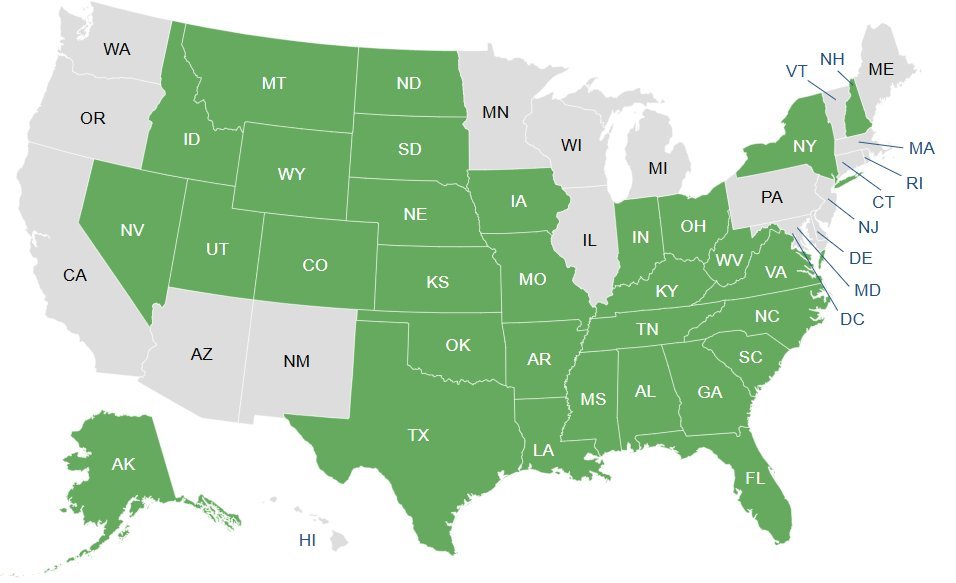
If you live in one of the gray states, your governor has blocked scholarships from the new Trump federal scholarship program from being given to kids in your state.
And I would recommend upgrading to a better governor.
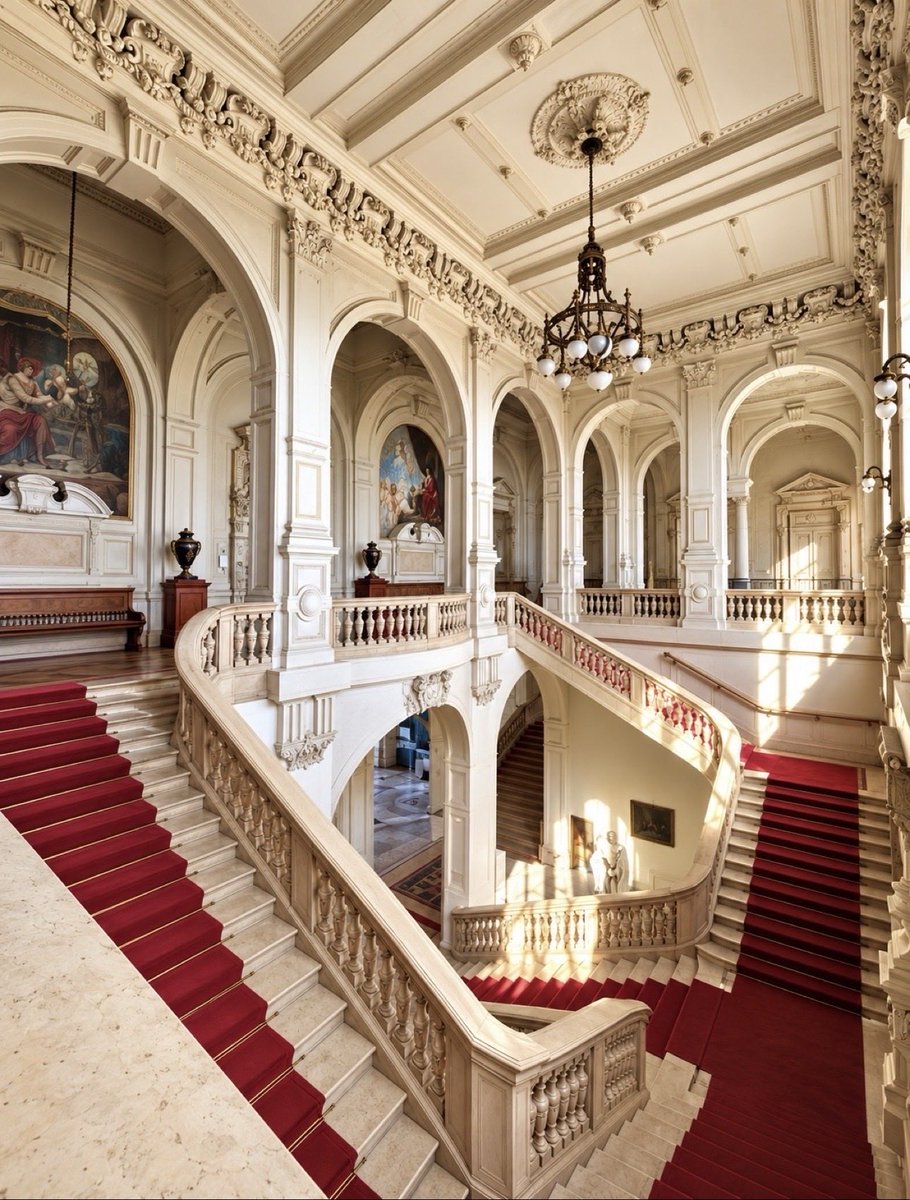
🇫🇷 Je suis en larmes… voici les rares photos de la mairie de Limoges, vue de l’intérieur. 143 ans d’histoire et de beauté, ravagés en une nuit. Elle avait survécu à deux guerres mondiales.
Inaugurée le 14 juillet 1883 grâce au legs d’Alfred Fournier, pensée par l’architecte Charles-Alfred Leclerc (Grand Prix de Rome), elle était le château de la République des Limougeauds : style néo-Renaissance inspiré de l’ancien Hôtel de Ville de Paris, escalier d’honneur aux marbres roses, toiles marouflées d’Henri-Paul Motte sur le palier (l’union du Limousin à la France et l’atelier de Léonard Limosin), plafond du Salon Bleu, salle des mariages peinte avec son « Ubi Fides Ubi Amor »…
Tout cela, les ors, les boiseries, les allégories de l’orfèvrerie et de l’émaillerie, le campanile de 43 mètres, parti en fumée.
La partie historique est quasi entièrement détruite à l’intérieur. La toiture s’est effondrée, le beffroi est tombé.
Il ne reste qu’une coquille vide là où des générations se sont mariées, ont fait enregistrer leurs enfants, ont siégé pour décider de l’avenir de la ville.
Un monument historique depuis 1975, symbole de la maison commune, brûlé volontairement en quelques heures.
Les Limougeauds sont sous le choc, en colère et en deuil.
La République tient encore, disent certains, mais le cœur patrimonial de la ville a été arraché. On parle déjà de reconstruction, mais rien ne remplacera ces décors, ces souvenirs, cette lumière particulière qui filtrait dans ces salles.
🚨 🚨🚨 I think we're living through a civilizational turning point. And most people haven't realized it yet. 🚨🚨🚨
We keep hearing that the globalist project is collapsing. It isn't. It's alive and well in the European Union, where Brussels keeps marching on as if nothing happened. And in the United States, it didn't die. It mutated.
If you want to see what that mutation looks like, read what DataRepublican just published. According to the audio and the thousands of documents she scraped, a network of former USAID and State Department officials, organized under a group called Renew to Thrive, is working on what they call "the day after tomorrow": what a rewritten American government should look like.
And they're not alone. She reports that this group sits inside a much larger, extremely discreet umbrella, the United Democracy Alliance, which coordinates the major "resistance" NGOs: when protests get deployed, on what timeline, how to respond. Operationalized, according to her, by an organization of 1,600 former military, intelligence and diplomatic officials.
The most chilling part: they've reportedly drafted a list of "red lines" past which the elected federal government should be declared illegitimate. The one they discuss most is invoking the Insurrection Act. And the mechanism doesn't even require governors to sign anything. They just have to refuse federal troops in their state and let the network do the rest.
Senator Mike Lee said he was speechless. Elon replied with one word: "Troubling."
Understand this: for these people, it isn't politics anymore. It's survival. They lost power at the ballot box, so they're building the machinery to contest the very legitimacy of the people who won. Their influence, their networks, their money, their impunity, everything they've built over decades depends on getting back in. So they're going all in.
And this fight is happening at the most decisive moment in human history: the arrival of superintelligence.
Whoever controls the state when AI surpasses humans won't just win an election. They'll win the century.
I only see two scenarios.
Scenario one: the Democrats take back power. Remember what Elon said in 2024: "If he loses, I'm f*cked. How long do you think my prison sentence is going to be?" Everyone laughed. Read those documents again and tell me he was joking. If a movement that pre-writes the criteria for declaring an elected government illegitimate comes back to power, there's a very strong chance Elon gets persecuted. Him, X, and everyone who dared to speak up.
And the world that follows is 1984 with GPUs. A hyper-class owning all the means of production: AI, robots, data, energy. The rest of humanity locked into a form of techno-feudal slavery, on a drip, surveilled, docile. Communism always promised equality and delivered a nomenklatura. With AI, the nomenklatura won't even need the people anymore.
Scenario two: Elon wins with the Republicans. And this deathly project gets dismantled. Not reformed, not slowed down. Dismantled. Every network, every unelected structure, brought into the light. And we finally do what history never had the courage to do: the Nuremberg of communism. The great moral and historical trial of an ideology that killed tens of millions of people and is still trying to sneak back in through the back door.
There is no third way. No lukewarm scenario. The coming decade will decide.
Pick your side while you still have the right to.
If you’re born and raised in Dubai and spend your whole life there, you’ll never get citizenship, let alone political rights. If you commit a crime, you’ll either be executed or deported and banned for life. The same is true for most Arab countries.
Meanwhile in the West, foreigners who enjoy the same rights as the natives will still burn down the countries that took them in, because they know there will be no consequences.
Bologna has become a warzone 🇮🇹
Of course the Palestinian flag is waving.
All that flag brings is violence and destruction.
The Free Palestine movement was always a Trojan horse for destroying the West
A BIG THANK YOU to our legendary friend, @ElonMusk, for his incredible generosity in giving SpaceX Stock to millions of American children through TRUMP ACCOUNTS! This is exactly what was envisioned when we created TRUMP ACCOUNTS — Bringing together the GREAT PRIVATE SECTOR, Elon and so many more, to invest in our children, by far our greatest and most important asset, and give every American Child a piece of the American Dream. Thank you Elon! President DONALD J. TRUMP
The Singham network's reach goes far beyond France. BreakThrough News publishes a dramatic video from the Paris suburb of Saint-Denis showing a far-left mayor "protecting" students from police — it racks up 346,000 likes in one day. From Brazil, teleSUR shared clash footage with a dramatic soundtrack. Self-described Marxist Twitch influencer Hasan Piker, who traveled to Cuba earlier this year and met Singham's wife Jodie Evans of CodePink, likes the content.
A Fox News Digital investigation traces how France's student protests over education cuts are being hijacked by a sprawling network of communist activists, labor unions and far-left political parties — all amplified by a transnational propaganda machine funded by Neville Roy Singham, an American-born tech tycoon based in China who supports the Chinese Communist Party.
Fox News Digital's senior editor of investigations @AsraNomani tracked 50 groups in a 'red-green alliance' involved in a transnational network organizing, promoting and amplifying the student protests in France.
– Only 15 groups, or 1 of 3, is a youth student group
The 35 other groups for adults are all left-leaning.
– 12 labor groups
– 8 communist or socialist organizations
– 5 civil-rights and human-rights groups
– 5 groups focused on issues from taxes to media
– 4 political parties, including La France insoumise and French Communist Party
– 1 Palestinian advocacy group
On the ground in Paris, the hammer and sickle flies alongside Palestinian flags. The French Communist Party's national secretary poses with protesters. Far-left politicians from La France Insoumise pose for photos with students.
Groups like the Young Communists Movement of France march behind bright red banners reading "Class War" and demanding an end to "Imperialist Wars."
"What we're seeing here is the same Red-Green ecosystem that disrupts infrastructure chokeholds in our country such as the Brooklyn Bridge, college campuses and congressional hearings," says Heritage Foundation senior fellow Mike Gonzalez @Gundisalvus.
In the U.S., BreakThrough News — a pro-communist outlet in the Singham network — pushes the protests to a global audience, racking up hundreds of thousands of likes, including from influencer Hasan Piker, on dramatic anti-police clips while laying the groundwork for the next student explosion, this time in India.
Around the world the protests are said to be triggered by “higher prices and less access to services”, and while those symptoms are real, the cause is hidden from the uneducated masses.
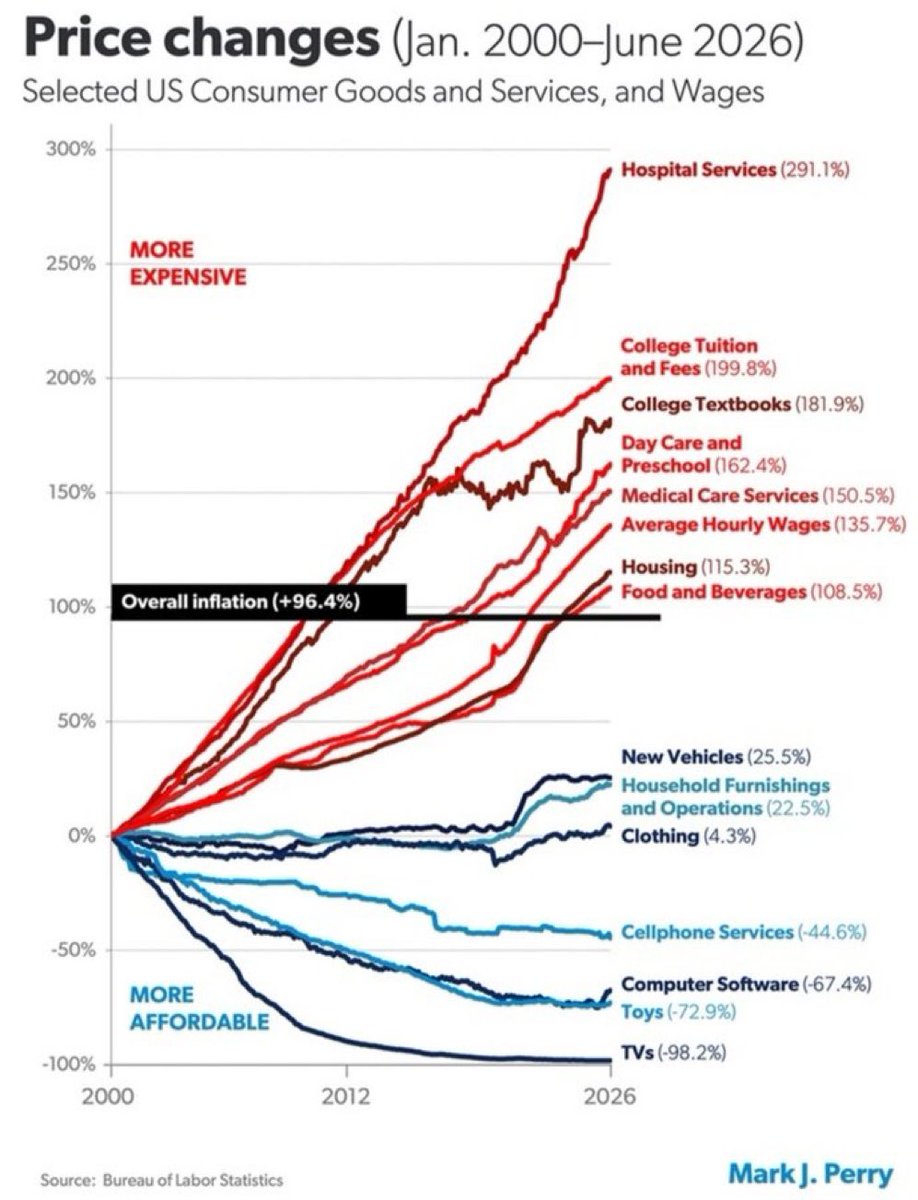
A look at this chart reveals the root cause: The State
Anything the state touches gets more expensive. They add demand without adding supply, and worse, their regulations and incentives cause supply destruction.
Anything the state stays away from, and markets can move more freely, prices go down, access becomes cheaper, food become more abundant.
The chart makes it simple to grasp:
Capitalism is the force that drove down the price of almost everything it touched. The state is the force that blew up the price of almost everything it captured.
And young people blame the first for the crimes of the second. Why?
Because the education comes from The State.
Public school, govt supported universities, gov funded media, training the masses to look at everything through an
“Oppressor v Oppressed” lens.
Because it’s never your fault, always the fault of someone, something, we need to be able to blame something.
And the State is never going to educate you to look at them as the problem, in fact… most inside The State aren’t even aware themselves.
But it all boils down to the most simplest of ideas, economics 101
Supply V Demand
So we need more supply than demand, and the chart shows us, we need less state intervention to get there.
Less gov funded demand
Less gov boots on supply