Retd. GP & Med politics. Angry at state of NHS. Love books food drink laughing Archers walking photography and travel espec India @thedoctorangry.bsky.social
DO NOT LEAVE THE VOTING BOOTH UNTIL YOU ARE SURE THE MACHINE REGISTERED YOUR 'DEMOCRAT' VOTE. Many people are reporting they voted DEMOCRAT and it clicked back to REPUBLICAN. A voter says it took 4 times before it stayed on DEMOCRAT. The fix is in! https://t.co/CWydzUFAMD
@Gianl1974 Apart from anything else it would ruin the line in that Irving Berlin song sung by Fred Astaire in "Follow the Fleet" "and the pacific aint terrific"
So abortion is bad but a cop can shoot and kill a one year old baby named Kohen Wiley because his mother was suspected of shoplifting diapers. She did not by the way. Where is the pro-life outrage? I’ll wait…forever.
There are so many idiots on here claiming that the nuclear weapons Ukraine surrendered were "Russian, not Ukrainian," or that "Ukraine could never have used them."
Let's set the historical record straight.
When the Soviet Union collapsed in 1991, Ukraine inherited an enormous Soviet military infrastructure, including conventional weapons, armored vehicles, aircraft, strategic missiles, and the world's third-largest nuclear arsenal.
Many Soviet soldiers stationed in Ukraine were themselves Ukrainian and subsequently joined the newly established Ukrainian Armed Forces.
Those weapons weren't simply "Russian weapons." They were part of the military arsenal of a multinational state that no longer existed, left on the territory of a newly independent Ukraine.
Now, about the claim that "Ukraine could never have used them."
Ukraine wasn't some technologically backward country incapable of understanding nuclear weapons.
It possessed one of the Soviet Union's most sophisticated aerospace and missile industries. Ukrainian engineers had helped design and manufacture Soviet strategic missiles, including systems capable of delivering nuclear warheads.
Although Moscow retained central control over the nuclear launch system, that did not mean Ukraine was permanently incapable of developing independent operational control.
Ukraine had the scientists, engineers, industrial infrastructure, and technical expertise to pursue that capability. Whether it could have accomplished this reliably, and at what cost, was a separate question.
And Washington, London, and Moscow took the possibility of a nuclear-armed independent Ukraine seriously enough to make its disarmament a major diplomatic priority.
Ukraine's parliament, the Verkhovna Rada, debated the issue extensively. Some lawmakers argued that Ukraine should retain a nuclear deterrent precisely because they feared future Russian aggression.
Ultimately, Ukraine agreed to surrender its nuclear weapons, joining the Nuclear Non-Proliferation Treaty as a non-nuclear-weapon state and receiving security assurances under the 1994 Budapest Memorandum.
And here we are today.
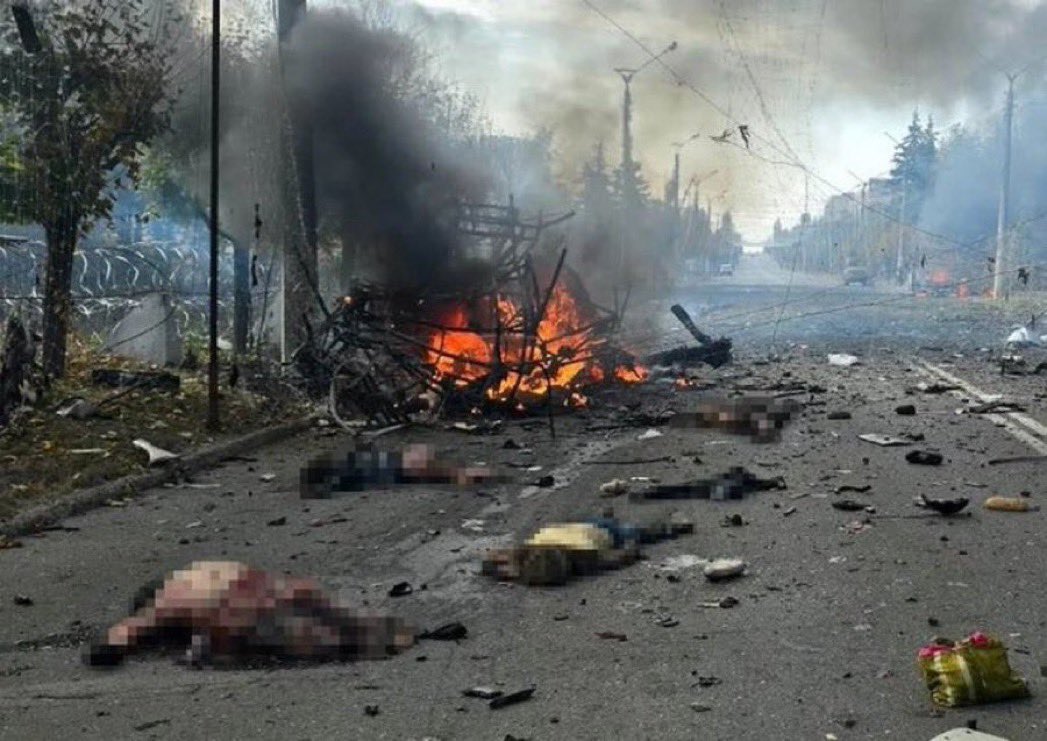
Russia invaded Ukraine in 2014 and launched a full-scale invasion in 2022.
The very Russian aggression that Ukrainian lawmakers feared when debating whether to surrender their nuclear deterrent became a reality.
You can debate whether Ukraine could have successfully maintained an independent nuclear arsenal. That's a legitimate historical and technical question.
But pretending Ukraine had no claim to the weapons on its territory, no relevant nuclear expertise, and no reason to fear future Russian aggression is a distortion of the historical record.