Michael Shanks Is Launching A New Stargate Podcast
https://t.co/JNrEYqZqmN
The man behind Dr. Daniel Jackson is starting a new adventure in podcasting, hosting a retrospective show all about Stargate.
🤔This must be from the unaired Star Trek Hulk crossover episode when the crew finds Dr. David Banner on a deserted planet and Kirk hulks out to capture him. 😑
AMERICA 250
I think it's cool to be an American.
I think it's cool to love your country.
I think it's cool…
…that this country took a kid from England with nothing but a dream and gave him every shot to build a life he never could have imagined back home
…that I get to serve the men and women who wear the cloth of our nation through the Robert Irvine Foundation
...that in the picture above, a guy who came up in the British Royal Navy is becoming an Honorary Chief Petty Officer of the US Navy
…that after 250 years, the American idea is still the boldest bet on human freedom the world has ever seen
…that no matter where you start or what your name is, America still bets on the person willing to outwork everybody else
…that the right to fail, learn, and come back swinging is the greatest gifts this country offers
…that my daughters got to grow up in a place where their only limits are the ones they set for themselves
I think it's cool to love your country.
I think it's cool to be an American.
God bless this great nation of ours.
Happy Fourth to all who celebrate.
To everyone else, grab a plate and pull up a chair. There's so much more I'd love to tell you about this place, which turned out to be everything I dreamed of and so much more. This country belongs to all who are willing to show up and do the work of building it.
That's worth celebrating.
Remembering Don S. Davis - Hammond of Texas
My earliest memory of Don S. Davis is of a charming, bigger-than-life individual who greeted me with a hardy handshake and a boisterous “Hellooo, Jooooe! Welcome to Stargate!” on one of my very first days on set. This was back in season four, sometime between our second script (Window of Opportunity) and our third (Point of No Return). In those early years, Paul and I spent most of our days in our respective offices, writing, spinning or, in one inspired afternoon, creating the lyrics to the Stargate SG-1 theme. We were busy and, most important of all, we wanted to look busy. The last thing we needed was to be seen hanging around set, gawking at the actors when there were scripts to be written, brilliant ideas to be spun. But several weeks in, it became apparent to me that sitting alone in my office (or, occasionally, Paul’s office for a little variety) would inevitably drive me nuts – and the loss of my sanity would no doubt be reflected in the quality of my work. So I decided to start taking little walks. Pitch document or outline in hand, I would pace – up and down the corridors, in and around the building, and through the empty sets.
Except for one afternoon when I inadvertently strolled onto an active set where they were setting up for the next shot. Realizing my error, I immediately turned on my heels, prepared to march right back out when Brad Wright spotted me and called me over. “Joe,”he said, “I’d like you to meet Don Davis. Don, Joe is one of our new writers.” Don, who’d been standing by, waiting for that next shot, threw me his trademark ear to ear grin, gave me a firm handshake and bellowed “Hellooo, Jooooe! Welcome to Stargate!”
“Hellooo, Jooooe!” It was a greeting I’d come to associate with the man, a good-natured, self-deprecating southern gent who always had a story to tell but, more than anything, always wanted to hear how YOU were doing. “Hellooo, Jooooe! How’s that script coming along?”. “Hellooo Jooooe! How was lunch?” “Hellooo, Jooooe! How was your weekend?” Meeting actors for the first time can be a little daunting, especially for a newbie writer on his first big show, but Don’s down-home warmth and cordiality put me instantly at ease. And it was no different when he met the fans. I’ve seen convention-goers approach him with trepidation, perhaps fearful of overstepping their bounds and imposing upon him. But Don was never the type to be stand-offish or put himself on display. When you met Don, you weren’t meeting a t.v. star – you were meeting a regular guy. A regular, modest, kind-hearted guy who genuinely cared for his fans and the people he worked with. And, inevitably, those convention-goers who had, moments before, cautiously approached the man they knew as General Hammond would, moments later, be sitting, chatting and laughing, in conversation with good old Don.
If there’s one thing I’ll always remember about the man, it was his willingness to put others before him. Back when Rick was reducing his workload to spend more time with his young daughter, and the writing department was scrambling to come up with in-story reasons for O’Neill’s off-world absences, Don came up to the offices and offered a solution. “Have Hammond step aside and let O’Neill be General,”he suggested. I was floored. Here was a guy, perfectly willing to walk away from a plum role as a regular on a hit series, just to (in his mind) make it easier on everyone else. Of course we thanked him for his kind offer, but we weren’t willing to let George Hammond go just yet.
Ultimately, the decision was made for us when health issues curtailed Don’s involvement in the show. But even so, he continued to maintain a presence in the Stargate universe, popping up in occasional episodes and then in his final appearance in Stargate: Continuum. And every time he was on set, he would always make it a point to drop by the office to say hello.
As the years wore on, I saw less and less of Don. Still, I’d run into him now and then and whenever I’d inquire about him, he was always upbeat. There was never a trace of bitterness or remorse that he was no longer a regular presence on the show. “I have no regrets,”he’d told me on more than one occasion. And, always: “I’m the luckiest man in the world.” It was a wild, fun-filled ride and, finally, it was time for the southern gent to settle back and enjoy his retirement.
The last time I spoke to Don was when he called me up out of the blue after being tipped off that I’d mentioned him in a blog entry. In answering a fan who wanted to know why I didn’t keep in touch with Richard Dean Anderson, I responded: “We don’t talk a lot for the simple reason that he no longer works on the show. I don’t really talk to Don Davis that much and I love the guy. It’s nothing personal.” Less than twenty-four hours later, I got the call. “Ah luuv yoou tooo,“came that familiar low, Southern drawl. He‘d been tipped off to what I’d written and wanted to touch base. “It’s always great hearing from my fellow gourmand,”I’d written. “Apparently, 2007 was a busy year for him (which is great to hear), and he’s now enjoying some much-needed downtime." I'd expressed the hope that we would soon be able to get together for another culinary excursion. Sadly, that day would never come.
In my many years at Stargate, I’ve worked with actors whose company I have greatly enjoyed, but only a few would I actually be bold enough to call my friends. And among those few was the magnanimous southern gent who used to greet me with that familiar “Hellooo, Joooe!”, the always affable Don S. Davis.
He is truly missed.
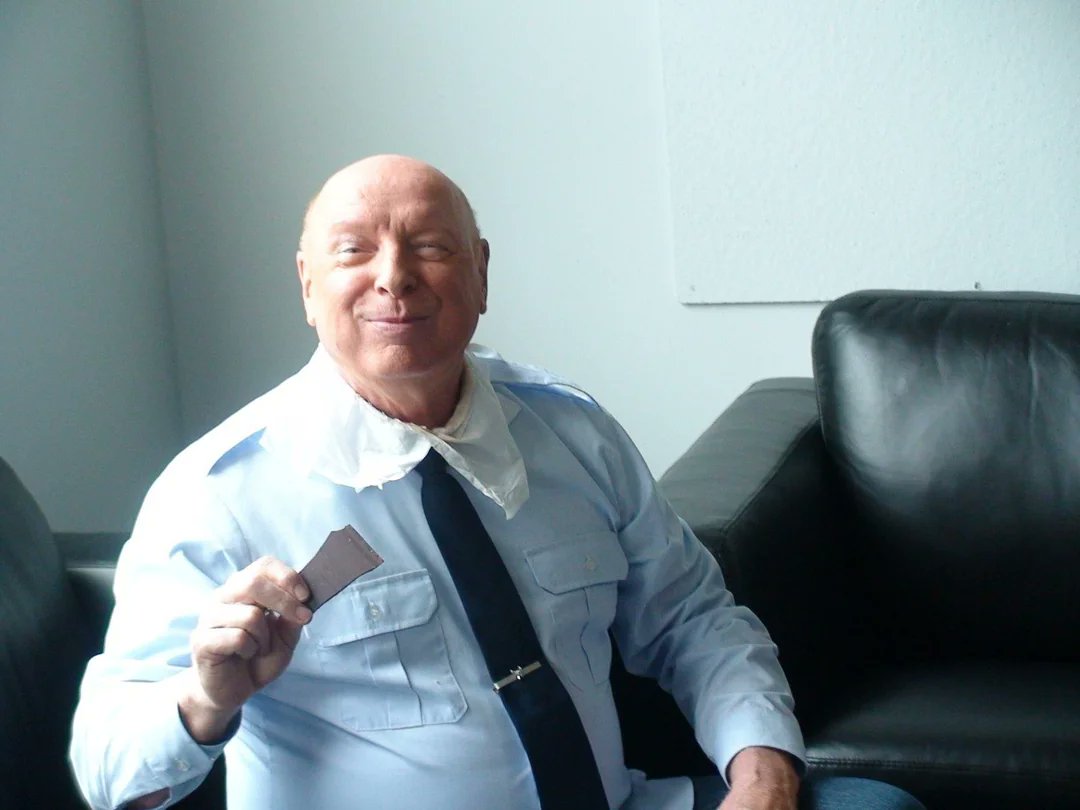
(One of my favorite pictures of Don I snapped of him, happily eating chocolate in my office.)
Stargate: Universe - Beyond Season 2!
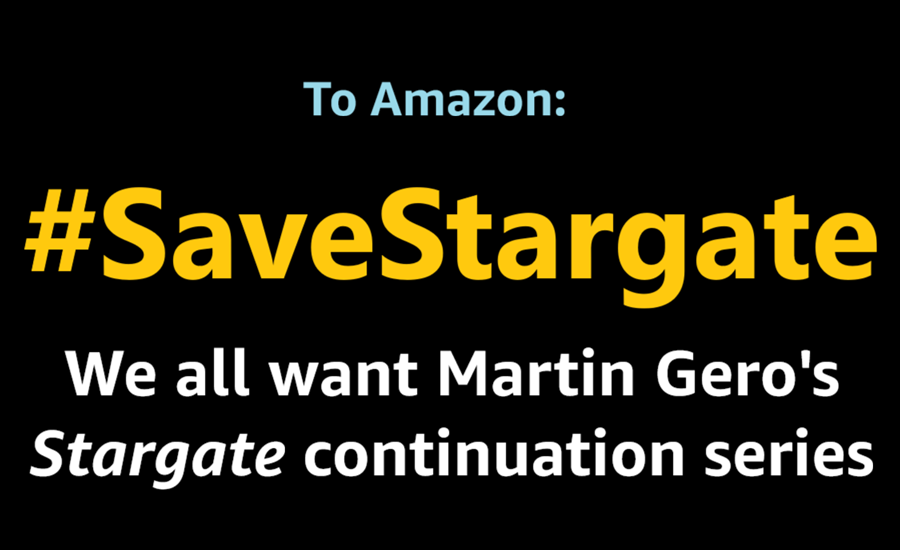
#SaveStargate
The ending to the SGU series finale that aired was different from the one series co-creator Brad Wright originally conceived. Before the script was written, hell, even before the writers sat down to spin the actual story, Brad's original pitch had Young and Rush as the last two men standing. With one, lone serviceable pod remaining, they argue, then make the decision to let fate decide. They flip a coin. Winner makes the sacrifice and stays out; loser goes into stasis. The coin flip is made and, as it descends, we FADE OUT, not knowing the results.
One of the possibilities this particular ending set up was a season 3 opener which finds Rush, three years later, a little loopy from his time alone. As he goes through his daily maintenance of the ship’s systems, he converses with members of the crew who, it turns out, are hallucinations. Suddenly, the gate activates. A bewildered Rush hurries to the gate room in time to see Telford lead a rescue op through. Turns out, after several years, Earth finally acquired a means to dialing Destiny. Of course, the rescue turns out to be shortlived as it ends up being a hallucination when, in the episode’s final turn, we discover Rush in stasis (he was the one who lost the coin toss), evidently dreaming, while Young maintains the solitary existence as Destiny’s caretaker. Classic Brad Wright twist.
After some discussion, however, the decision was made to have Eli be the one who stays awake at episode's end. After all, who better than Eli, the embodiment of our fans and viewers, to make the sacrifice and leave us with that final sense of wonder?
So, that’s the way we wrote it. And now, I’m sure, you’re wondering how we planned to write our way out of it. Does Eli fix the pod or does he somehow manage to access enough power to ensure his survival for the length of the jump? How long does the journey to the next galaxy end up taking? And what was in store for our crew after the jump?
Alas, unlike that imagined season 6 of Atlantis that never came to fruition (all the glorious details here: https://t.co/nPMKsKob29), there were no inklings spun, no stories established, no ideas from the previous season that could be moved into the next. What we had, instead, were a few potential scenarios, vague notions of where we could go...
Eli fixes a pod
This was one scenario. Somehow, someway, Eli manages to fix one of the damaged pods and joins the others in stasis. He awakens with the rest of the crew anywhere from three to one thousand years later.
Eli taps some hitherto unexploited power reserve which allows him to extend life support for three years
Another potential scenario with no firm solution. Again, it would need to be something a little more clever than Eli awakening Rush three years later and informing him: “Yeah, I managed to reroute enough power to life support. How? Oh, I’ll tell you later.”. In my mind, the solution rested with the lone remaining shuttle. Given its independent system, Eli could reroute all of Destiny’s power reserves to maintaining life support within the closed confines of the shuttle and, perhaps, the sealed-off antechamber to the ship where he could store enough food to last him three years.
Eli fails to fix the pods or extend life support, so he survives by sitting in the chair and uploading his consciousness to Destiny
Since this way-out solution would have Eli relinquishing his physical form, it was an option reserved for a potential movie as we couldn’t imagine having our hero exist in this form for an entire season. It would allow him to reunite with Ginn and allow the crew full control of the ship with Eli – who better? – as their eyes to all of Destiny’s systems.
Rescue comes in the form of some outside force
Another way to go but, potentially, not as satisfying as it takes the solution out of our hero’s hands. Maybe –
Over the course of three (+?) years, Earth finally finds a way to dial Destiny and launches a rescue op. The power source used could be something the combined brilliance of both Samantha Carter and Rodney McKay engineer (if the SGU movie had happened, they would have surely guested, boarding Destiny as part of the retrieval team) or, perhaps former leader Jonas Quinn comes out of early retirement and – again with Carter and McKay’s help – finds a safe way to dial Destiny from his planet. As for what other familiar faces from SG-1 and Atlantis would make an appearance – well, aside from the obvious (Daniel Jackson who certainly wouldn’t miss this opportunity), it was up in the air.
When Destiny comes up short and drops out of FTL hundreds of years from the next galaxy, rescue comes in the form of a branch of our descendants, an advanced military society that has mastered space flight and is now in possession of a massive armada. They save us but their motives turn out to be less than honorable as, it turns out, they have designs on Destiny. This was probably my favorite scenario as I loved the idea of a plausible human military force becoming our third season Big Bad.
Rescue comes in the form of some alien race, maybe remnants of the Ursini or, perhaps, the blueberry aliens who – now armed with the information they mined from Chloe in Deliverance – finally seize the opportunity to take Destiny, something they’ve been trying to do for some time. There was also talk of salvation coming in the form of a completely new alien species (Brad’s uber-cool idea), possibly an energy-based race we unwittingly picked up during a refueling stop at a star. Eli starts glimpsing these entities and assumes, after three years by his lonesome, he is going nuts and hallucinating. Eventually, the aliens reach out to him and, being energy based, are able to provide the power needed to ensure Destiny complete its journey.
And how long does the journey take?
Oh, anywhere from three to roughly one thousand years. Smart money was on the minimal three year journey which would have allowed our crew to touch base with a fairly unchanged Earth. A ten year journey would have been more interesting in that it would offer up some great story possibilities as our crew inevitably try to reconnect with loved ones following a decades-long absence. Are they still alive? How have they moved on? What has changed in their lives? There was even talk of returning to an Earth in the midst of a multi-year war with the Lucian Alliance. For my part, I preferred the idea that our characters don’t know how long they’ve been in stasis and, when they contact Earth, are horrified to discover it’s been 100+ years. Their loved ones are long-gone, the lives they led distant memories, and they must adjust to a world very different from the one they left behind.
And what was in store for our crew once the jump had been completed?
Again, a number of potential developments were floated. Initially, when we were thinking in terms of a third season, I very much liked the idea of Colonel Telford leading a resupply mission through the gate. Earth had finally secured a power source that would allow them to dial Destiny. Maybe it was a one-way trip because Destiny would still be hamstrung by the inability to dial Earth without explosive consequences or, on the other hand, Telford and co. bring the portable power source with them and allow some of the civilians to leave, establishing a stronger military presence on board.
Later, when it became clear that a third season wasn’t in the cards, Brad floated the idea of two movies: The first would focus on a rescue op that would see several familiar faces (Carter, McKay, Daniel Jackson among the first few mentioned) coming aboard Destiny and, ultimately, helping our crew fend off the advances of the previously mentioned human military race. The second would have been a solo adventure that would have seen our crew finally completing Destiny’s mission (And Brad had a plan for that as well).
We probably would have found a cure for T.J.’s condition – but only eventually. I liked the idea of one of our main characters having to face her mortality, perhaps even exhibiting early signs of physical deterioration that forces their friends and loved ones to face the sad prospect as well. If we were going to cure her (and, again, that was the most likely scenario) I would have lobbied to play out T.J.’s battle with the disease over the course of a season at least.
In similar fashion, I would have preferred to keep Park blind for an extended stretch as well. It’s something you rarely see on television and something I really wanted to emphasize in Gauntlet (when she comes up with the idea of using the shuttle as a decoy), that despite the loss of her sight, she can continue to be a strong and productive member of the crew.
So who would T.J. have ended up with? Young or Varro? I don’t know. I honestly don’t think this would have ever been resolved. If it was up to me, she would have ended up with Varro. If it was up to Carl and most everyone else, she and Young would have lived happily ever after. In retrospect, it might have been better for the character if, in the end, she elected to say no to both and embrace her independence.
What about Ginn and Perry? Was Hope the last we’d ever see of them? Certainly not. At episode’s end, they were quarantined, not deleted from the database. At some point, Eli would have no doubt found a way to address any potential threat and re-upload them to Destiny. That was one possibility.
Another deliciously diabolical idea Brad came up with would have been a huge game-changer. In this scenario, Eli goes to awaken the crew from stasis and discovers Chloe’s pod has been damaged. She is almost brain dead and fading fast. In a desperate, last ditch effort to save her, Eli downloads Ginn’s consciousness into her body. Would he tell the others what he has done or would Eli attempt to maintain the subterfuge? What effect would this have on the rest of the crew, especially Scott? How would he react to the sight of the body of his former love, now permanently occupied by Ginn, re-establishing a relationship with Eli? This would have been huge and, I think, an awesome opportunity for the immensely talented Elyse Levesque to switch gears and play a completely different character. It would have also allowed us to bring back the amazing Julie McNiven.
The great thing about SGU's ending is that it permits us to pick up the story at any point in time (Who knows how long the journey took?) and explain away any aging on the part of our characters or the failure of some to emerge from stasis with a convenient in-story explanation (Those unpredictable pods!).
In the end, it’s more than likely these ideas won’t see life beyond this post and our collective imaginations. Still, it's always fun to consider the possibilities...
Stargate: Universe - The finale, "Gauntlet"
I assumed that "The Hunt" (Episode 2.16) was going to be my last script for Stargate: Universe’s second season, but when my writing partner, Paul, got busy producing "Common Descent" (Episode 2.17), the task of tackling the first draft of the finale fell to me. When I sat down to write "Gauntlet", I assumed we WERE coming back for a third season. Some may not have shared in my optimism (Paul had always been a “glass half full and its contents are probably undrinkable anyway” kind of guy), but I nevertheless approached the episode as a season finale and not a series finale.
Armed with the story beats we’d spun in the writers’ room (a creative effort spearheaded by series co-creator and longtime Stargate writer and showrunner Brad Wright), I fleshed out the narrative in outline form, received everyone’s notes, and got to work. By the time the first draft of "Gauntlet" was complete, Paul’s schedule had freed up and he was able to jump on the rewrite. After so many years of writing scripts separately, I suppose it was somehow fitting that our last script for the Stargate franchise would be a true collaboration - Paul, myself, and of course Brad the series architect.
Now, as I said, I was under the impression that we would be back for a third season. And I wasn’t the only one. When the ratings for the back half of the second season faltered, it was clear that we were in trouble. However, we did have a few things going for us.
For starters, after months of uncertainty, the studio had finally turned the corner and gained stability in the form of new management. I assumed that given the fact that Stargate was one of their biggest franchises (next to Bond), they would make a concerted effort to keep it alive. That meant not only brighter prospects for SGU, but renewed hope for the SG-1 and Atlantis movies, Stargate: Revolution and Stargate: Extinction.
Despite the show’s ratings, it wasn’t as if any of the network’s other shows were going gangbusters. In fact, the erosion of viewership across the board at the time suggested a definite trend. Fewer people were watching television live. They were DVR’ing and downloading – and, in the case of Stargate: Universe, apparently doing so A LOT. Not surprising given our audience was young and tech-savvy, the demographic most likely to DVR and download. Surely, I presumed, we would not be punished for having smart, forward-looking viewers.
Finally, there were reports from various sources that we WOULD be back for a third and final season. Yes, the series would end, but armed with this knowledge and with plenty of time to prepare and wrap up loose ends, we would be able to go out in grand style. I recall sitting in my office with actor Louis Ferreira (SGU’s Colonel Everett Young), discussing the great opportunity this would afford us to make some really bold creative decisions knowing these final 20 episodes would be our last!
After the episode aired, many fans expressed their satisfaction with series finale. Although there are a number of questions left unanswered, the consensus was that Gauntlet offered a bittersweet conclusion to our crew’s adventures. I don’t know if I totally agree, but I do recognize three scripted elements that certainly lent this episode a sense of closure.
The Goodbyes
One by one, the characters we’ve grown to know and love over the course of SGU’s two seasons bid farewell to one another (and, by extension, of course, the audience at home), until only our core trio remain. Then, it comes time for them to say goodbye as well, first Rush, then Young, leaving Eli (our viewer proxy) alone on the bridge heading into the unknown.
The Final Supper
Which, interestingly enough, wasn’t in my first draft or Paul’s pass. Well, not quite anyway. In the original script, the last supper sequence was a simple beat in a more expansive montage – no dialogue, just a shot of the crew enjoying their last meal together. It was changed at the suggestion of SyFy’s Erika Kennair who requested an actual scene, a moment for our characters to pause and reflect on where they’ve come from and where they were headed. In retrospect, a brilliant request. I wrote the speech, then handed it over to Paul who made a couple of tweaks (one of which was nixing Young’s toast: “To three years!” which, in story terms, referred to the best-case-scenario three year journey they’d be facing but, in my mind, was a reference to the show’s expected three year run).
I am especially fond of this scene because, at the end of the day, it really sums up what, for me, science fiction is all about - family. Whether it's the crew of the Enterprise, team SG-1, the Atlantis expedition, or the crew of the Destiny, they are all found family - and, for viewers at home, an extended family they would visit with every week. It was philosophy I applied to Dark Matter years later, crafting a show that, beyond the space opera, the action-adventure elements, the twists and turns and shocks and surprises, was really about another sci-fi family.
The Bookend Visuals
Paul added this, a call back to the opening moments of the series premiere. Nothing but stars, then – Destiny approaches camera. We CUT INSIDE and bear witness to Destiny’s awakening, PANNING UP the ship’s levels as its various chambers light up. In Gauntlet, it’s the same sequence in reverse. Destiny goes back to sleep as we PAN DOWN the ship’s levels, its various chambers going dark. We CUT OUTSIDE to the ship making the jump to FTL and then – nothing but stars.
Yes, I can see how many would view Gauntlet as an appropriate series ender but, as much as I love the episode, it still leaves me frustrated. More to the point, it leaves me frustrated knowing that, after 11+ years of resolving cliffhangers, this was the one time I wouldn’t be able to come up with the answers. That feeling of dissatisfaction would be revisited years later when my own series, Dark Matter, would be cut short.
Does Destiny make the jump to the other galaxy? How long does the journey take? Does Eli manage to fix the damaged pod(s) or find a way to extend the ship’s life support long enough to ensure his survival? Does T.J. find a cure for her ALS? Who does she get together with in the end, Young or Varro? Does Lisa ever regain her sight?
In the end, the answers are what you choose them to be. In those final moments, we fail to make the jump to FTL with Destiny and, after two years of following its journey, we are left behind to wonder. Maybe they do make the voyage in three years and our crew’s adventures will continue, only we won’t be privy to them. Maybe, sadly, they don’t make it and that final glimpse of Destiny was a true farewell. Or, maybe, Destiny is still out there, still journeying, its crew in stasis, destined to outlive all our questions.
Welcome to my Time-Loop Episode Masterclass
I’ve always been a huge fan of time travel, and especially time loop stories. One of the very first episodes I wrote for Stargate, with my former writing partner Paul Mullie, was Window of Opportunity, a time loop episode that consistently ranks as Stargate fandom’s all-time favorite episode (a huge achievement when you consider the franchise produced close to 350 episodes of television). Almost two decades later, in the final season of Dark Matter, I wrote a time loop episode that now ranks as that fandom’s favorite Dark Matter episode of all time.
I believe that the huge appeal of the time loop story is the notion of cyclical familiarity – and the ways these familiar elements can be altered or reset. In a macro sense, this parallels the successful formula of most procedurals. Take House, for example. Every episode, the team is presented with a mysterious ailment. As the various story and character elements play out over the course of the episode, the medical issue is investigated and various potential treatments proposed. Inevitably, late in the episode, the team has a breakthrough and the actual solution to the problem becomes evident. Except – they’re wrong. And this is something House realizes late in the final act, coming up with the REAL actual solution in the show’s closing minutes, saving the day. A lot of other shit happens over the course of the episode of course, much of it unrelated to that medical issue, but that medical issue forms the foundational structure of the narrative. It’s what everything else hangs off of.
So, for starters, let’s look at structure. What is the issue at the heart of the story that can be explored? In Run Lola Run, one of the greatest time loop movies, the issue is her attempt to reach her boyfriend before he gets himself killed in a robbery. In the X-Files time loop episode, Monday, it’s Mulder’s attempt to thwart a bank robber from setting off a bomb, killing him and Scully in the process. In Star Trek: Next Gen’s Cause and Effect, it’s the crew’s attempts to avoid a deadly encounter that results in a core shutdown and the destruction of the Enterprise. The stakes are BIG and in order to sustain a time loop episode through its 45(ish) minute runtime (to say nothing of a multi-episode season), you’re going to need BIG STAKES.
There’s always a mystery at the heart of the loop. Ultimately, by discovering the reason for or means to the time loop, one is able to send the action spiraling off in a delightfully unexpected direction. In Supernatural’s Mystery Spot, the Winchester brothers are caught in a time loop and, after numerous attempts, eventually discover that a trickster is behind their predicament. This realization, and the ensuing conflict, sends the story off in a totally different direction. In Dark Matter, the crew discovers the device responsible for the loop but, in attempting to end the loop, the Android is propelled through time and experiences glimpses of potential futures. My point is you want to seed a mystery related to the time loop early, spend the bulk of your episode developing that mystery and progressing an investigation, then pay off the eventual revelation in satisfactory time-themed fashion.
The time loop-themed series Day Break focused on a detective who is framed for murder. He exploits the time loop to uncover the identity of the real murderer and find out why someone set him up. More recently, in Russian Doll, our protagonist is caught in a time loop that always ends in her death. She uses the loop to figure out what the hell is going on. I think that, in a perfect world (and episode) you want to exploit both – the BIG STAKES issue as well as the BIG MYSTERY related to the loop. When done right, those two seemingly unconnected tracks will intersect multiple times before ultimately dovetailing at the end of hour story.
One of the reasons time loop episodes are the most popular of most genre shows is their inherent potential for humor. Even amidst the continuous death, there’s that undercurrent of dark humor that permeates the whole (Happy Death Day is a good example in the feature world). While I’m not saying it should be a comedy like Groundhog Day, there should be opportunities for humor.
One of the first BIG episodes of one hour live action television I ever wrote was that Stargate time loop episode. Some 17 years later, when it came time to write the Dark Matter time loop episode, I prepared myself by watching two dozen time loop episodes of various t.v. shows, a half dozen time loop movies, and assorted time loop stories and books. The aim was to distill the formula but, in so doing, come up with a unique spin on what has become a beloved sci-fi chestnut. You have to ask yourself: What makes THIS time loop episode unique?
In distilling the formula of a time loop story, you can readily identify key elements that appear in almost every version, tropes that can – in some instances – be subverted to the delight of most genre-savvy viewers :
In television, the opening tease always concludes with a colossal Holy Shit moment (the Enterprise is destroyed, Mulder and Scully are shot and killed) or the completion of an initial loop, establishing the story conceit from the get-go.
Our protagonist lives the loops long enough to realize what is happening (while establishing a string of repetitive beats for the viewer which can be twisted and turned in future loops).
Our protagonist must attempt to convince others what is happening to them (as they are ALL caught in the loop but, for some reason, only our protagonist is aware). These attempts at an explanation build, as does our protagonist’s frustration with his inability to convince the others until – by some some stroke of unexpected brilliance – the solution presents itself.
Inevitably, multiple characters become cognizant of the fact that they are trapped in the loop.
The means by which the loop is initiated should never feel cumbersome. Ideally, the device (and I don’t necessarily mean a literal device or instrument) that initiates the loop shouldn’t be readily obvious or, if it is, should be hidden in plain sight. Don’t front load exposition. Make the discovery a natural progression of the story, part of the investigative pursuit that sees our characters putting the pieces together with each subsequent loop. It’s always more rewarding for viewers to be on the journey with our characters rather than one or two steps ahead, waiting for them to catch up.
A fairly obvious rule but if your characters loop, they go back to Step 1, Day 1. They may have the memories of their experience, but they wouldn’t carry over any physical consequences of their actions because they are, in essence, rebooting. This is a fundamental law of theoretical time looping. I remember having someone pitch me an idea for a time loop series that involved our protagonist ending one loop by shooting himself in the head. He awakens at the start of yet another loop, but his mind has been damaged by the bullet that killed him in the previous loop. “What bullet?”I asked. “The bullet from before,”I was told. I explained the theoretical impossibility given that time had reset and that when time resets, EVERYTHING resets, including your physical form. There would be no residual damage from a bullet wound that never happened. To which he replied: “I always felt rules were meant to be broken.”
In most time loop stories, time – “in general” – loops. At the end of Groundhog Day, our characters leave and return to the big city where they presumably pick up their lives, uninterrupted, because the rest of the world was caught in the loop as well. But there are rare exceptions where the time loops within a temporal bubble (ie Stargate’s Window of Opportunity is an example).
Progression is made on various levels. In a practical sense, this could be a skill. In Groundhog Day, Bill Murray’s character learns to play the piano. In Dark Matter, THREE learns to speak French (which becomes his means of convincing the others that what he is telling them about the time loop is true). In Stargate, O’Neil and Teal’c learn science in order to solve the loop. In a best case scenario, whatever skill your trapped protagonist learns pays off in some (preferably unexpected) way. In a more emotional sense, this progression could be related to character and relationship. Again, back to Groundhog Day, Bill Murray’s character finds a way to make Andie McDowell’s character fall in love with him, first by exploiting the time loop, but ultimately coming to a personal revelation about himself which culminates in the establishment of a sincere bond between the two characters. This emotional epiphany is at the heart of most any well-executed time loop episode. The beauty of the time loop is that, on the surface, it may seem like endless repetition but, in reality, it offers our characters the means by which to grow, personally and in their relationships.
So concludes my Time Loop Episode Masterclass. Thanks for attending.
Dear Amazon: Cancelling Stargate Is Bad For Business
https://t.co/27FD3Kry81
An open letter to Amazon MGM Studios (OPINION)
@AmazonMGMStudio@PrimeVideo
@BaronDestructo Excellent casting. I think I enjoyed the show more than SG-1, despite being less of it. It was consistent all 5 seasons, and wish the 6th season/wrap up movie could’ve happened
Stargate Trivia: Casting Stargate: Atlantis
While SG-1 was my first love (We were together for seven years!), my time on Atlantis proved equally memorable. The show was possessed of a similar tone in its mix of high adventure and humor, yet proved distinct in its exploration of Ancient mythology and an unfamiliar galaxy as seen through the eyes of a new set of heroes. Atlantis offered a sense of wonder and camaraderie born of isolation and constant danger.
Whereas team SG-1 could always go home at the conclusion of their adventures, the members of the Atlantis expedition (at least for those first few seasons) could only draw comfort from the city of Atlantis itself – and, of course, each other. It was unique and compelling yet, at the same time, comfortingly familiar.
Nowhere is this more evident than in its opening theme, composed by the late Joel Goldsmith, which is, at turns fresh, haunting, stirring and, throughout, discernibly Stargate.
Stargate: Atlantis wasn’t originally planned as a companion to Stargate: SG-1. It was intended to replace the long-running series. The only problem was, with eight seasons under its belt, SG-1 wasn’t quite done yet. And fans (and the network) weren’t done with it either. And so, instead of passing the torch and segueing to a new Stargate series, we ended up producing both. In retrospect, it was quite an achievement: 40 hours of television in a year! Today's productions can barely manage a quarter that output, but Stargates SG-1 and Atlantis delivered two fantastic 40 episode seasons before SG-1 took its final bow. It wasn’t easy, but it was certainly made easier by all of the enormously talented individuals who made it happen, from the office staff and crew to the cast and my fellow writer/producers.
Still, it was not without its challenges. Take casting, for instance. It may surprise you to know that, when it comes to producing a show, not everybody cares about costumes or set design or whether the script’s fifth act denouement is emotionally satisfying - but everybody, and I do mean EVERYBODY, has an opinion on casting. Studio and network execs, producers, hell, even your significant other peering over your shoulder as you screen the auditions on your laptop, will want to weigh in. Of course, the more voices in the mix the more likely there are to be disagreements. So it is with every production and Atlantis was no different. Various individuals envisioned these characters in various ways and, as a result, consensus was only achieved after many auditions, calls-backs, heated discussions, and not-so-gentle reminders that our start date was fast-approaching and we really needed someone to say the lines on camera.
The part of Carson Beckett was one of the first we cast. The other producers were in Rob’s office, screening the first batch of local auditions when Brad called me in and told me to check out the guy onscreen. I hadn’t imagined Beckett with a Scottish accent but, after watching Paul McGillion (@PaulyMcGillion) in the role, I couldn’t imagine him without one. He’d brought something unexpected to the part, something we all responded to.
Elizabeth Weir was not an easy character to pull off. She had to be smart, confident and strong yet needed to exude a certain warmth and empathy we were looking for in the civilian leader of the expedition. When it came time to (re)casting the role, several established names were considered (One had her own hit genre show back in the day while another went on to break out on a hit show soon after), but it was Torri Higginson (@torri_higginson) who managed to strike just the right balance and vault her name to the top of the list.
The role of Teyla Emmagan was a tough one to cast. Like Weir, she needed to be a strong, empathetic leader. But she also required something even more important – quite literally, an other-worldly quality that made her unique. Some equally talented actresses auditioned for the role but, as good as they were, they were never quite able to achieve that gravitas Rachel Luttrell (@rachel_luttrell) pulled off with such grace and seeming ease.
Former VJ Rainbow Sun Francks (@RainbowFrancks) won the role of Lieutenant Ford on the strength of a great audition, preceded by an equally great audition with a funny hat. I recall Brad Wright on the phone with our casting agent, advising him to ensure there would be no hat worn in the callback for fear the network would fixate on it. There wasn't, they didn't, and Rainbow delivered.
The role of John Sheppard was the second to last one cast. It came right down to the wire and there were several candidates in play. The character was originally conceived as a good ole southern boy, so it only made sense that Ben Browder’s name was bandied about early. However, he was too busy shooting Peacekeeper Wars to warrant consideration. A number of other actors were considered (one went on to play the lead in a hugely popular show the following year while another made his mark as a handsome heart throb on another hugely popular medical series) but it was Joe Flanigan (@JoeFlanigan) who won the part based on his ability to pull off the devil-may-care attitude Brad and Robert were looking for.
We come to the final role cast, a character who, in many ways, embodied everything Atlantis was about: exploration, discovery, fun, humor, and seat-of-your-pants-Holy-Sh&%-how-the-hell-am-I-going-to-get-out-of-this-adventure. And he almost didn’t make the trip to Pegasus. Originally, the casting call went out for a completely different character, an earnest young doctor who would lend the team much-needed medical support on their off-world ventures. Unfortunately, no one could agree on an actor to fill that role.
If the casting of Sheppard went down to the wire, then the casting of this final part went a step past it. Finally, days away from production, Robert Cooper had an idea: Forget the doctor character. Why not use an established character from SG-1? How about Rodney McKay played by David Hewlett (@dhewlett)? The writers were on board, but some executives weren't weren’t sold on the idea. They found him annoying! I mean, hell yeah, but he’d be sooo much fun to write for! Rob got on the phone and went to bat for Rodney, pointing out that the character had come a long way since first being introduced way back in SG-1’s 48 Hours. He’d evolved, going from annoying jerk to endearingly irritating. To this day, I’m convinced that they weren’t totally convinced but, with production poised to commence, they relented, I suppose figuring they could just replace the character somewhere down the line. No one, even those who loved the idea of having the endearingly irritating Rodney McKay on board could have predicted how hugely popular the character would become.
How do you think we did?
Hey, @AmazonMGMStudio, do you finally see your mistake, why we were so offended by your leaked statement?
This kind of ORGANIC advertising is what any studio would literally kill for...and you are VOLUNTARILY choosing to give it the middle finger.