The late Pope Francis once received a custom Lamborghini in white and gold to reflect the Vatican flag 🇻🇦
He blessed it, signed it and then sold it at auction for nearly $1m, donating all the proceeds to charity 🙏
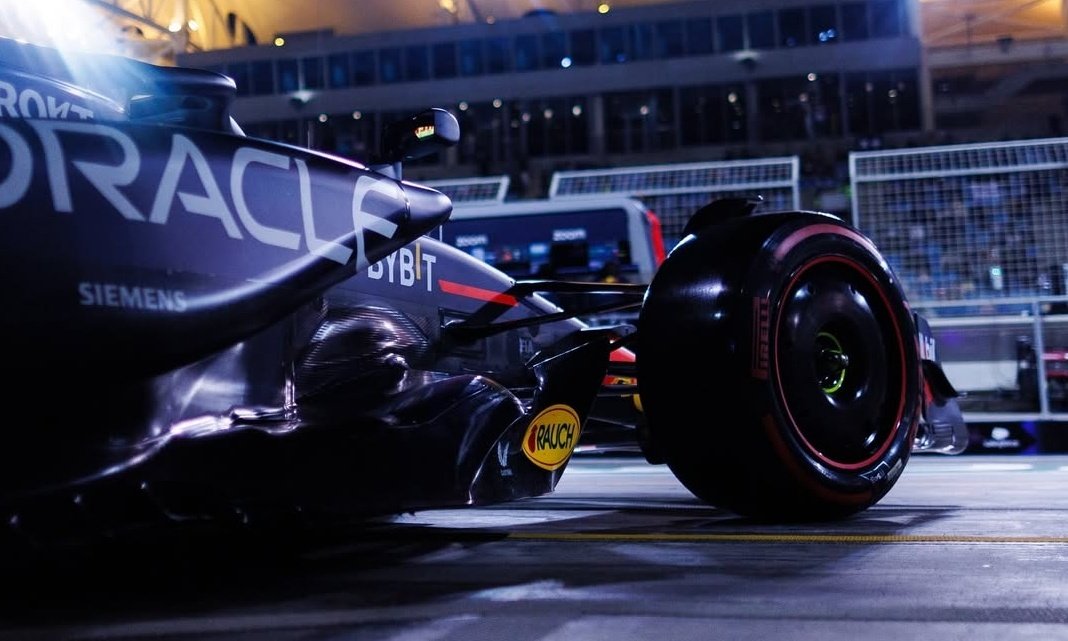
Christian Horner is confident that Max Verstappen will be a Red Bull Formula 1 driver in 2026, claiming that the rumours are just "noise" ⬇️
https://t.co/6TueS2iTo6
We began accumulating shares in @Hertz late last year, and as of today, we have a 19.8% stake in the company comprised of outright share ownership and total return swaps.
Hertz can be thought of as an operating company combined with a highly leveraged portfolio of automobiles. A misstep years ago with respect to the company’s purchase of Teslas created operating issues, some customer demand issues, and exposed the company to an unanticipated reduction in residual values when @Tesla dramatically reduced the price of its cars, leading to large operating losses.
We believe that a combination of: (1) an improving industry structure and more rational competitive behavior, (2) the near resolution of the company’s over exposure to Teslas, (3) a successful operational turnaround plan under a new management team with a track record of success in an adjacent industry, and (4) the company’s leveraged capital structure will enable Hertz shareholders to generate a highly attractive return on investment.
The U.S. car rental industry operates as an oligopoly where @Enterprise, @Avis, and Hertz account for nearly 95% of the market. The industry’s pricing discipline has improved since the pandemic. Enterprise’s high profit margins (we believe +20%) – currently, the best managed industry player – demonstrate that the car rental business can be very profitable.
We believe that the improvements that CEO Gil West and his management team are making by rotating Hertz’s fleet, increasing unit revenues, and reducing operating costs will significantly improve profit margins over the next several years. Hertz has already made meaningful progress in rotating out higher cost vehicles that had temporarily elevated depreciation expense, which should meaningfully lower vehicle depreciation going forward.
While Hertz has a highly leveraged balance sheet today, the substantial majority of the company’s debt does not mature until 2028 and 2029. Hertz has ample liquidity – including cash on hand, available revolver capacity, and
debt capacity within its asset-backed securitization facilities – to support its fleet rotation, and to address maturities and other financial liabilities.
Hertz is uniquely well-positioned in the current tariff environment, where auto tariffs are likely to cause used car prices to rise. Hertz owns a fleet of over 500,000 vehicles valued at approximately $12 billion. A 10% increase in used car prices would equate to a $1.2 billion gain on its auto assets – equivalent to approximately half of the company’s current market capitalization.
The company finalized its 2025 model year purchases with OEMs earlier this year on attractive terms prior to the tariffs being enacted, ensuring a favorable basis in the replacement fleet.
Valuation
Using management’s nearer term targets of $1,500 revenue per unit (RPU), low $30s/day vehicle operating expenses, and ~$300 depreciation per unit (DPU), and assuming modest increases by 2029, including an increase in fleet utilization from 80% to 85%, we estimate that Hertz could generate approximately $2 billion of Adjusted EBITDA (a metric which is net of auto depreciation and interest expense for the company’s fleet and asset-backed financing).
At 7.5 times EBITDA, a valuation that we believe to be conservative in light of improvements in the competitive posture of the industry, we estimate that Hertz will be worth ~$30 per share by 2029.
While the tariff announcements have created a near-term cloud over the travel industry – we have low expectations for Hertz’s Q1 and r first half results – we believe that over the intermediate term, the company will generate sustainably higher profitability.
Now for a fun thought experiment:
What if UBER partnered with Hertz on an AV fleet roll out over time?
Hertz’s large installed fleet of 500k vehicles, its expertise in vehicle maintenance and servicing, and the significant scope and scale of its thousands of locations (11,200 globally) and other difficult to replace at scale physical infrastructure make it an ideal partner for @Uber, a partnership which could greatly improve the utilization and profitability of Hertz’s vehicle fleet.
Come to think of it, I am going to call @dkhos.
Investing is risky. There are no guarantees of a successful outcome. Caveat emptor.