Claude Code just dropped "Getting Started with Loops"
This is their first official document about Loop Engineering.
Spoiler: prompt engineering didn't survive.
Here's the full guide in one post:
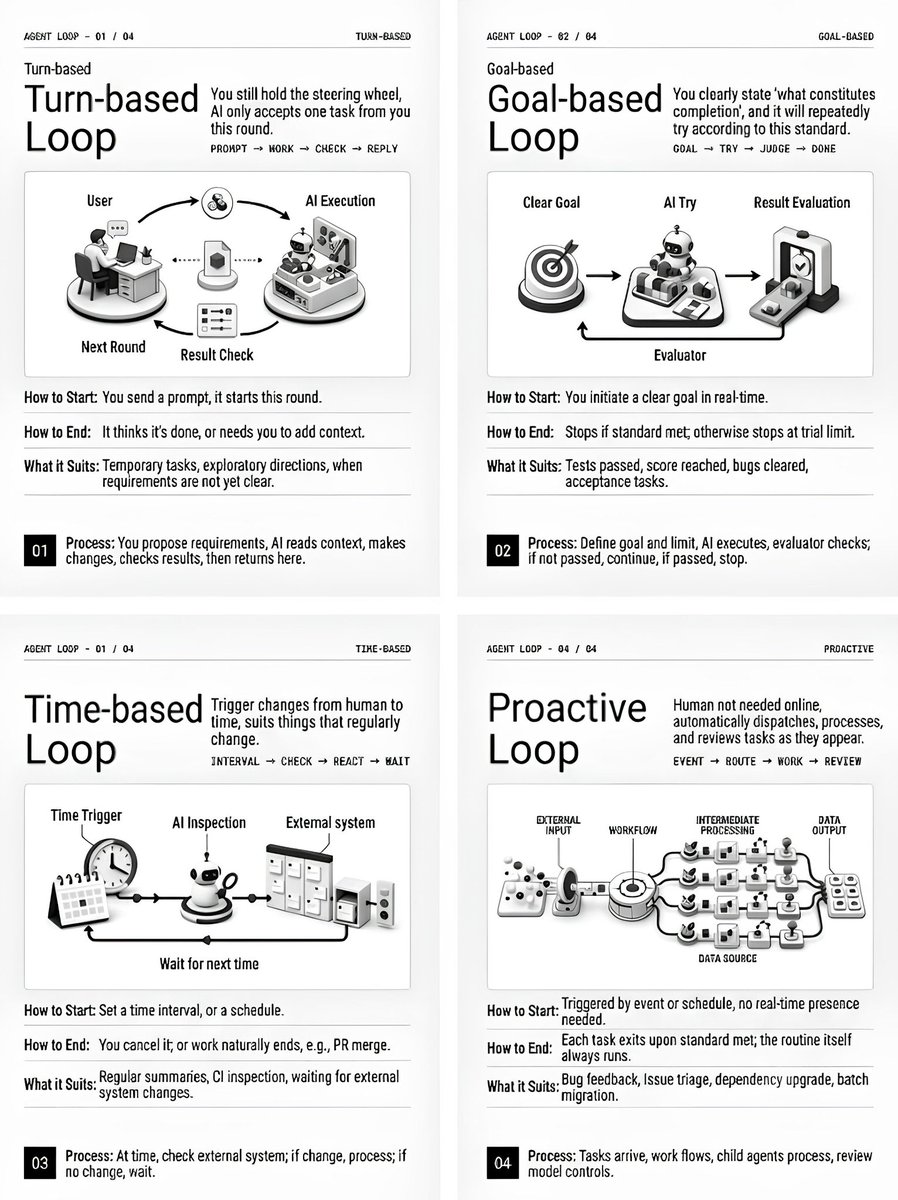
1. Turn-based
Every prompt you send already runs as a loop: Claude gathers context, takes action, checks its own work, and repeats until it decides the task is done or realizes it needs your input.
2. Goal-based
You define what "done" looks like with /goal, and Claude keeps iterating toward it. Every time it tries to stop, a separate evaluator model checks your condition - if it's not met, Claude gets sent back to work until the goal is reached or the turn limit hits.
3. Time-based
This is the /loop command: нou set an interval and a prompt fires on schedule. For example, every 5 minutes Claude checks your PR, addresses review comments, and fixes failing CI.
4. Proactive
Here you set up an event once, and the loop triggers itself whenever that event happens - with zero human input.
Anthropic also shared optimization advice - and this part matters most:
- Loop quality depends on system quality.
- Tokens are the real cost
None of this is magic. It's the same familiar parts - /goal, /loop, Skills, Hooks - composed into systems that run without you.
I built exactly that kind of system in my article:
Loop that wakes up at 6 AM, finds work on its own, reviews itself, and leaves ready PRs for you. Step by step, from SKILL(.)md to cron trigger:
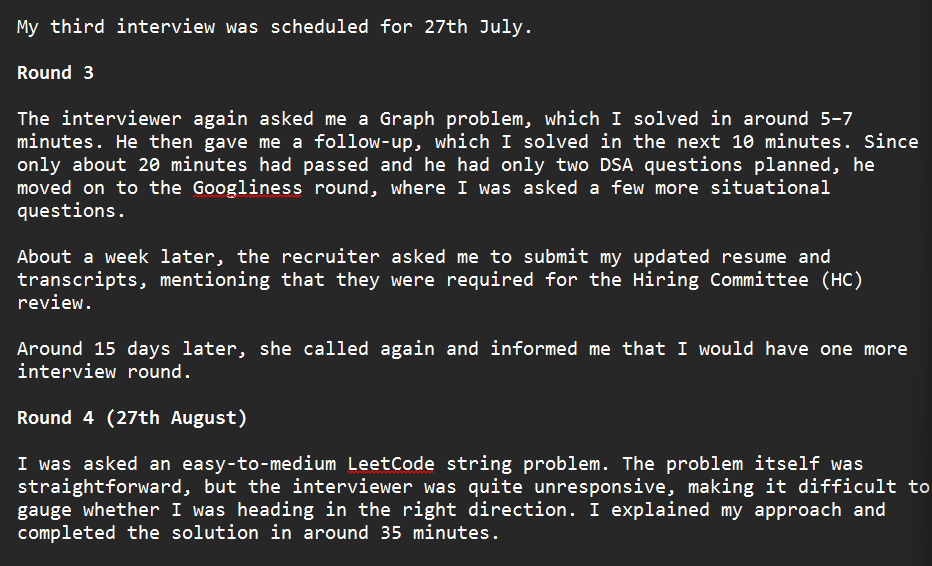
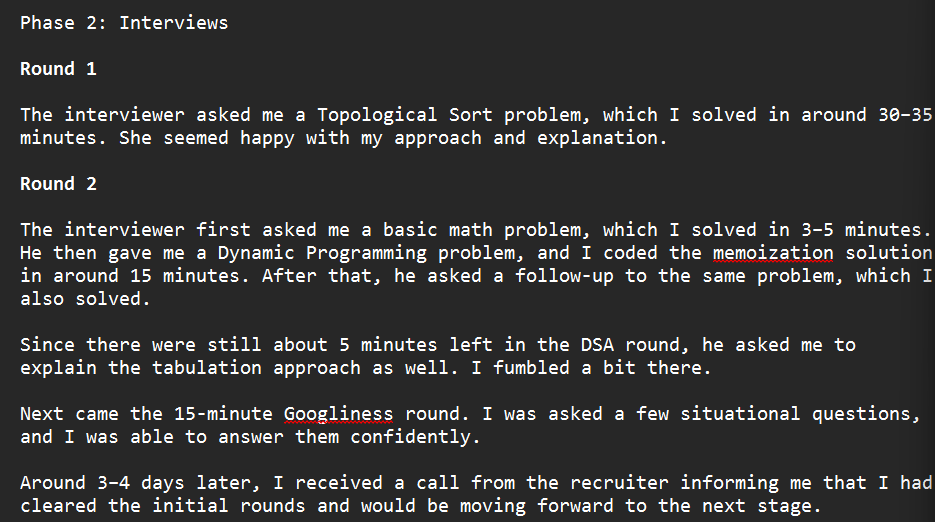
After 6 @Google interviews, one pattern stood out: Graphs appeared in most of them. If you’re targeting Google, make sure graph algorithms are one of your strongest topics.
How you can build a moat with self-learning agents:
If you can build an agent that gets better every time people use it, you will be unstoppable.
Here is what you can do:
1. Learn from two sources, not one. Agent traces show what the agent did and where it broke. In-browser activity shows how users steered and fixed the results. Most products capture the first source and forget the second.
2. You have three options to apply new learnings: fine-tune your model, update the harness, or provide in-context information to the agent. Make sure you take advantage of all three.
3. When deciding what your agent should remember, lean on procedural memory (where you store workflows and rules) and episodic memory (where you store specific things that happened). Don't over-index on semantic memory, as it can go stale and become a liability.
4. Set boundaries around how far learning spreads (per-user, per-team, per-app). Be careful not to leak facts between different users' contexts.
5. You want to own the data your agent learns from. This data is your most valuable asset. Try to keep it in your infrastructure so it doesn't get stolen by Big Cloud.
6. Use open, framework-agnostic standards to capture and apply learnings.
Here is an article with more information:
AI engineers are some of the best paid people in tech right now.
No degree needed. Month by month path in here.
If you're trying to get in, start here 👇
Google, Amazon, Meta, Nvidia, and every major tech company asks DSA.
This website by @xevrion_the1 categorises every single DSA question these companies ask - completely for free.
Forget about leetcode premium.
Check it out: https://t.co/LgIDQ9W5Ls
Andrew Ng just dropped a 3-hour course on how to become an AI Engineer in 2026:
• 00:00 - How to build agentic AI systems
• 04:25 - Future of AI engineering
• 23:38 - AI Prompting full course
• 2:52:17 - Creating an app with AI in 30 minutes
This 3-hour watch could replace 10 AI engineering courses on the internet.
Watch it today, then read how to run a self-improving system in the article below.
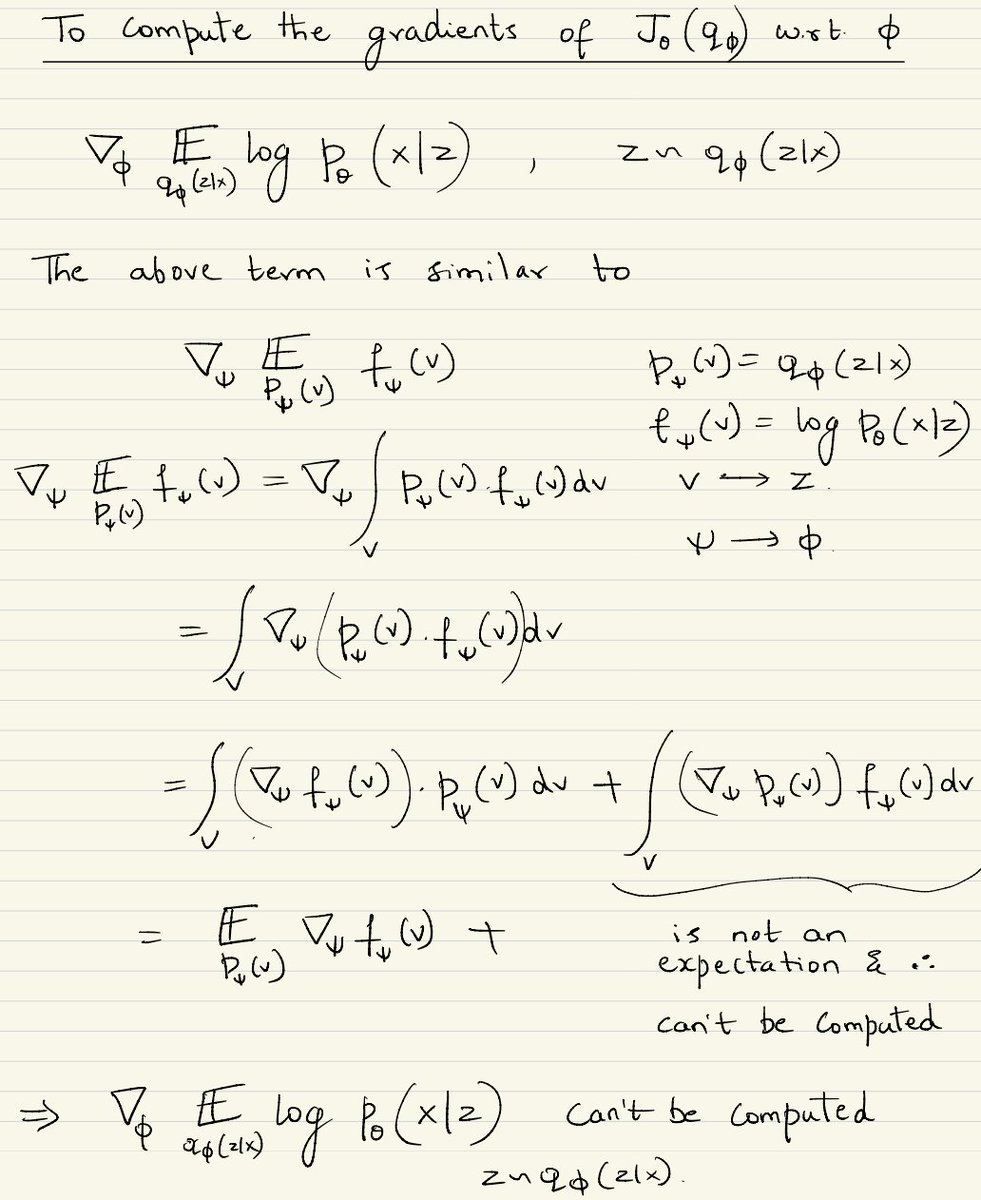
I taught a course on the mathematical nitty-gritty of GenAI, equation by equation (written). This covers all the SoTA algorithms, from VAEs to DDPMs to LLMs and state-space models (SSMs), in detail. The link for the entire playlist is in the next message.
blame it on his mentality, lifestyle or whatever but he got the most brutal ending possible for the caliber of player he was. the amount of talent he had. 1 CL title, no indivdual awards, no international title. it doesnt get worse.
@VibesPatrol Hey, that's great you're sharing the traditional Yogic Breathwork practices, but you should put the original name for it. i.e. Kapal-Bhati by doing so, you are actually respecting the Origin of the Pranayama which is from Bharat(India).
The game environment and ruins of Temple run are inspired from the Angkor Wat, a temple dedicated to lord Vishnu. This particular one looks like Phnon Bakheng temple, which is dedicated to lord Shiva