Most crypto apps need prices: BTC, ETH, XRP, whatever.
Usually they rely on a centralized API that can go down, be manipulated, or just disappear.
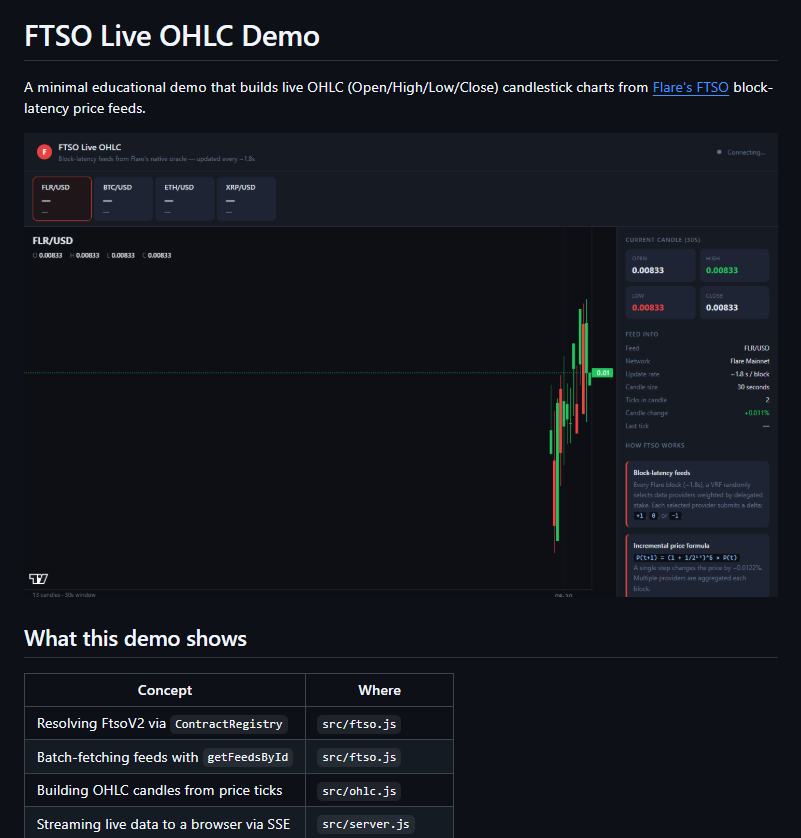
Flare has something built directly into the blockchain called FTSO. It's an oracle, a system that delivers prices onchain, every ~1.8 seconds.
Instead of one entity providing prices, ~100 independent data providers submit updates every block.
Each one pushes a tiny adjustment and the network aggregates them into a final price.
What's more interesting is that you can test this and see it for yourself!
A full demo that reads live prices from FTSO and draws those candles in real time can be found here: https://t.co/GFoKWmejvs
I think it’s great that everyone can now start building on Flare by simply interacting with an agent.
But to make this work properly, I’d strongly recommend using the AI Skills we’ve curated.
They help agents use the right dependencies, artifacts, and context when building on Flare.
You can learn more here:
https://t.co/J3v8LORAuP
Want to buy a truck? DENIED.
Want to buy a gun? DENIED.
Want to protest the government? ACCOUNT FROZEN.
This is the future under a Central Bank Digital Currency (CBDC)—total government control over your money, your spending, and your life.
Ban CBDC. FOREVER!
NEW: Man with a life sentence who was granted clemency by Trump in 2021, has turned his life around and is graduating from SMU.
Chris Young is graduating with degrees in economics and public policy.
Young spent a decade in prison after being arrested for the third time for drugs.
He was handed two life sentences with no possibility of parole under the "three strikes and you’re out" sentencing law.
Just five years after being granted clemency by President Trump, Young is set to graduate college.
🚨 $FLR — one blockchain. Three problems solved. 👀
Problem 1 — Data 📊
Chainlink charges millions for price feeds. 💸
$FLR bakes oracles into the base layer.
Free by design. No middlemen. ⚡
Problem 2 — Bridges ☠️
$2.5 billion stolen from crypto bridges in 2022.
$FLR built FAssets — trustless, native, unhackable. 🔐
Problem 3 — Smart contracts 💀
Ethereum gas fees price out real world use cases.
$FLR runs EVM smart contracts. Fast. Cheap. Scalable. ⚡
Three problems. One chain.
Still -83% from ATH. 👀
The market hasn’t figured this out yet.
But it will. 🔥
$XRP $BTC $ETH
#Flare #FLR #DeFi #RWA #Oracles DYOR NFA
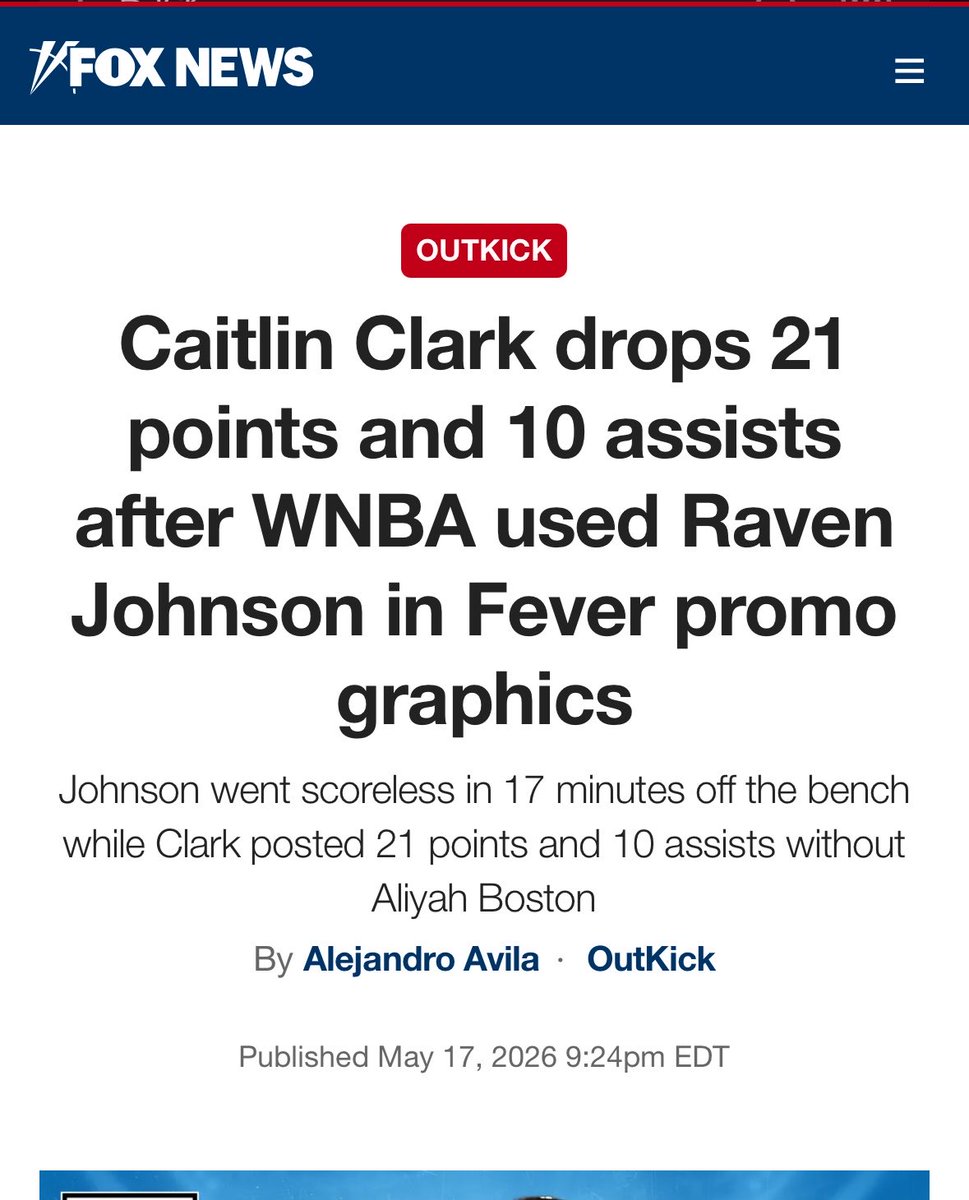
This the foolishness, anybody can score when they shoot 30 shots. If coach give Raven the go ahead she can score but Ms. CC need 50 shots to score 20 points
XRP in cold storage shouldn't sit idle.
Flare Smart Accounts now live in @DCENTwallets.
Two signatures on XRPL → FXRP minted → Monarq XRP Yield Vault. Self-custodied the whole way through.
$55K campaign reward pool for D'CENT users and early depositors.
🚨 JUST IN: CME Group and Nasdaq are officially bringing ripple:native into a broader institutional crypto futures framework.
• ripple:native has officially been included in the new Nasdaq CME Crypto Index futures launching June 8.
• CME Group is giving institutional traders regulated exposure to ripple:native through a single market-cap weighted crypto futures product.
• ripple:native now sits alongside BTC, ETH and SOL inside a benchmark backed by CME Group and Nasdaq.
• The futures will be financially settled using the Nasdaq CME Crypto Settlement Price Index, which currently includes ripple:native.
• CME says demand for regulated crypto futures products is rapidly increasing, with crypto futures volume up 43% year-to-date.
• This marks another major institutional infrastructure milestone for ripple:native inside traditional finance markets.
🚨JPMORGAN AMONG OTHERS TO USE XRP LEDGER FOR TOKENIZED TREASURYS
JPMorgan, Ripple, Mastercard and Ondo completed a cross-border redemption of tokenized US Treasuries on the XRP Ledger.
The tokenized asset moved on public blockchain rails, while the dollar payout still settled through bank infrastructure.
We are at a point where it’s pretty obvious to the Flare community that the FDC is an extremely powerful protocol for attestations.
Yet outside our circles, most people still don’t really understand what it enables.
One of the best ways to change that is simply creating more content around real use cases and what you can actually do with the protocol, including bringing Web2 data onchain in a verifiable way.
In Phase 2 of launch, Firelight unifies staking with onchain coverage. 🔥
Users stake assets to help secure specific DeFi applications, such as Sentora or Lombard vaults, against technical and economic risks while earning usage-based fees.