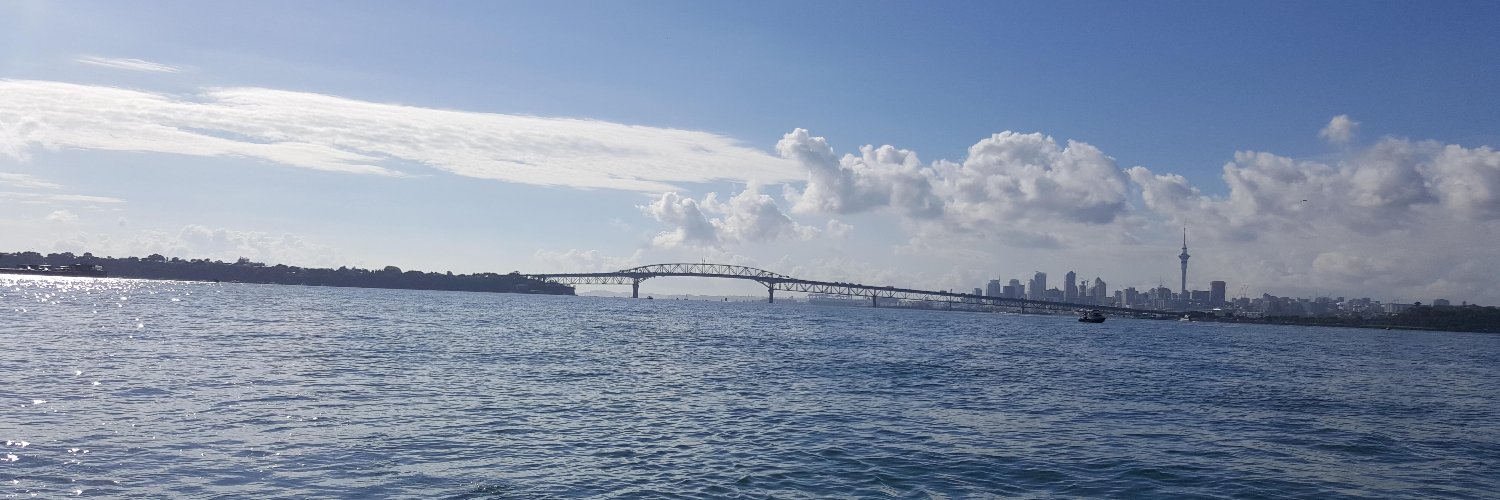
This cannot be taken seriously. #NZ was suspended from a military alliance with the US in 1986 because of NZ’s insistence on being nuclear free. It freeloads off no one. Ramping up defence expenditure to fight others’ wars makes no sense. https://t.co/sM6CZMUGPl
Cuba's President Miguel Díaz-Canel has urged the US to end its blockade on the entry of oil. The UN has warned the humanitarian situation is worsening, as the energy crisis deepens.
Al Jazeera’s Julide Ayger explains.
The breakdown of the Iran negotiations reveals a lot about Trump's thinking. And, what we're seeing does not look good at all.
Since the early days of the Iran war, I've argued that based upon history and Trump's personality, there are two ways Trump could go here.
He could follow his own pragmatic, convention-busting style and stop this war when it became obvious that continuing it was getting too costly and not in the US national interest. This was the course Trump rightly followed last year when he backed down and decided to end the war against the Houthis in Yemen.
The other option is to fall into the "hubris of power" (which I discuss in this piece). This tends to happen to the stronger side in asymmetric wars like the one against Iran today. In short, this occurs when the stronger side gets deluded into thinking that just a little more force here or there will do the trick to get the weaker side to cave. As the logic goes, how could they not cave since we've destroyed this, that or the other and still have more we can destroy and more bombs locked and loaded, ready to go? Leaders caught in the hubris of power tend to obsess then over tactical gains -- ie blowing things up -- and also tend to think they have more leverage than they really do against the weaker side.
After the failed talks yesterday, it's clear Trump is still locked in the hubris of power.
First, he's still fixated on the tactical side and the disparity in power. What did he do after talks failed? Went right back to strong arming by force with a blockade of the strait and threats that any Iranian who fires on US vessels will be "BLOWN TO HELL!" (all caps his, not mine).
By blocking the Strait, Trump will make gas prices spike for Americans and further deteriorate his political position at home. Nonsensical for sure, but the fact he's willing to do that is not reassuring at all. Instead, it illustrates just how far into the hubris of power Trump has fallen -- i.e., just a little more force will do the trick.
Second, the hubris of power is evident -- once again -- in US negotiating tactics. Instead of coming in with some humility recognizing the mess the US is in, it appears Vance et al didn't take Iran's 10 point terms seriously (as promised by Trump on Tuesday), but AGAIN put forward the same old maximalist surrender terms they've been using for the last year. As Vance said afterward, Iran "chose not to accept our terms." That again is the hubris of power talking. Real negotiations involve give and take.
The hubris of power is hard for the strong to escape. It's why the US fought for so long in Vietnam, Iraq and Afghanistan. Trump is not obligated to do the same. He can choose otherwise and stop this war before it's too late. Let's hope for the sake of us all, he wakes up to that reality before it's too late.
@defpriorities
https://t.co/iHJANjZZTc
@horseinaround1 As someone who actually worked on and off at the refinery from 1964 until 2022, I do know a little more than most:
(1) The refinery DID NOT process NZ crude, only imported
(2) When closed it was old, small and obsolete
(3) The owners (not politicians) made the decision to close
Gerard Otto FB daily summary:
Sick of blaming Labour and being screwed by BS rhetoric
Iranian media reported on Tuesday that Israeli-US strikes hit two gas facilities and a pipeline, hours after Trump postponed planned attacks on power infrastructure.
The price of crude immediately fell to $US96 per barrel but the price of Brent crude oil soon rose back above $US100 a barrel, after plunging on Monday, as conflicting accounts of potential talks between US and Iran emerged.
The average price in NZ two days ago of 91 on Monday 23 March was $3.29 but after Trump's 5 day suspension of strikes and so called "talks" fake news, the average price today Wednesday the 25 March is $3.37 per litre of 91.
Reports now circulate in New Zealand media that Trump had said, "me and the Ayotollah" ( cos Trump could not yet pronounce "Mojtaba Khamenei") will run the Strait of Hormuz.
There's nobody in Iran backing up Trump's talk, and at the same time the Phillipines have declared a state of emergency, cutting oil consumption by 25% in fear of a blackout.
Ireland just issued a $575 million NZD Excise cut. Duty on diesel is cut by 20 cents per litre, and petrol is reduced by 15 cents, with more support for the fuel impoverished.
This week, Spain rolled out a €5 billion ($9.9 billion) plan that reduces the value added tax (VAT) on petrol from 21% to 10%.
Yet here in New Zealand we claim Covid taught us lessons about inflation and debt, but we do not demonstrate the actual numbers and domestic spending and inflationary impacts separated from the imported inflation.
The elephant in the room is the omission of these hard numbers as Luxon, Willis and a chorus of political editors weave a narrative devoid of the actual facts.
We fear the hard numbers at RNZ, Stuff, The Post and NZME assets like the NZ Herald and NewsCrap ZB and just blame Labour in a big vague bucket of nonsense while Thomas Coughlan says there's a "new sherriff in town sending a strong message" and Atlas Luke Malpass claims this package is "better designed and worth quite a bit more to people who get it".
It's shocking that there is no hard analysis in our media of what caused how much inflation in the overall stack of contributing factors since 2021.
That's the balls out monkey swinging in a tree.
The uncontested rhetoric about inflation and bending the debt curve that is left soley to the likes of Coughlan to waffle on about, while working for an organisation almost 20% owned by a right wing fossil fuel and property investor Canadian Billionaire is a telling sign how things are crooked.
That deliberately fact poor narrative is why we are all made to suffer now. It's a rude stitch up job. Where's the proper breakdown analysis of inflation over the past years?
There's also no talk about what Willis will cut from us in Budget 26 to fund this "up to $50" support.
New Zealanders who don't get any support now spit on the ground, especially carers for the disabled who already had out of date mileage rates, pensioners who miss out yet again, workers on sod all with no children, people in rural areas left with no help, and the list goes on cos there's about 1.82 million households who get sweet Fark all from this Government right now.
Atlas Luke tried to put words in Barbara Edmond's mouth that there was precious little to spend and of course that's not what she said, but media are in election year and the targeted 143,000 households are voters too.
What have we been watching recently?
The Covid Monetary Inquiry rigged and placed six weeks before the election. Shane Jones and Marsden Point disinformation. Peters bullshitting about 12-17 year old vaccines in contradiction to the findings of the $30 Million Royal Commission.
Dirty politics and the timing of the ex wife and the hiding of who orchestrated that.
The NZ Herald took it upon themselves to run their own poll between 19 -23 March to see if the ex wife had damaged Labour and threw in Luxon's
1/2
French judge Nicolas Gouyou, who issued an arrest warrant for Netanyahu at the ICC:
• Visa and Mastercard have blocked all my cards
• I cannot make any purchases
• I am a judge, yet treated like a criminal
• Judges, lawyers, and politicians are being intimidated
• A colleague told me my name won’t be removed from the blacklist until Trump’s term ends
• Despite intervention by the French president, U.S. authorities have not responded
I was right about one thing that likely led to Judith Collins’ resignation. She and other members within our government including military officials destroyed our independent foreign policy. The final straw of that was when Collins went on a tiki-tour to the United States to finish up the deal. #nzpol
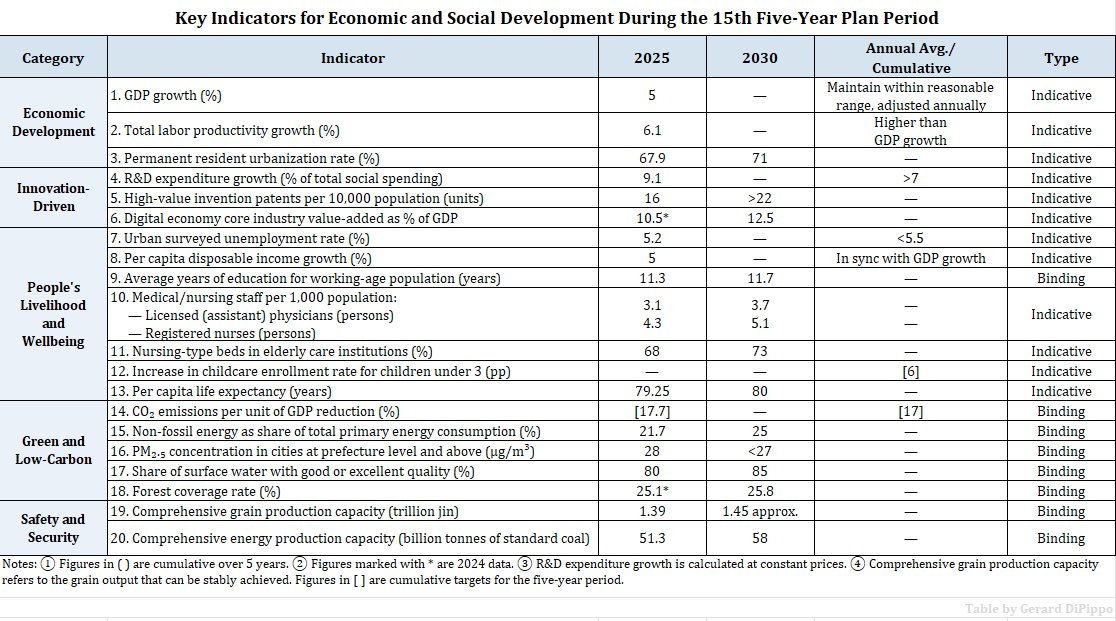
China just dropped its 15th five year and I genuinely think this is the most important document of 2026 & almost nobody in the West is talking about it
what gets me isn’t any single number…it’s the systemic vision, in one document they’re planning GDP growth, highvalue patents, digital economy at 12.5% of GDP, non-fossil energy at 25%, CO2 reduction, surface water quality at 85%, life expectancy at 80, forest coverage rate, grain production capacity…ALL of it in the same table with hard targets & binding indicators through 2030
in the West we treat economy, ecology, education, healthcare & energy security as separate ministries fighting over budgets, China treats them as organs of the same body, every line feeds the others, urbanization fuels productivity, R&D fuels patents, patents fuel the the digital economy, non-fossil energy fuels strategic independence….every variable is designed to accelerate all the others & that reflect china’s deeply HOLISTIC worldview
look at line 5, high-value patent going from 16 to over 22 per 10,000 people by 2030, quietest line in the whole table and probably the most important, a high value patent is the intellectual property of a technology that will structure a market for 20y MINIMUM
China is literally planning who owns the technological future, the licenses & dependencies other countriees will rack up on Chinese tech, this IS the economic and industrial colonization of the 21st century I keep talking about in my threads but with patents instead of cannons
while america bombs & europe debates, China plans, builds & executes and the scariest part is that based on their own audits the previous plans hit ove 90% of their targets
Western leaders rotate every 4 /5 years and make promises they’ll never have to keep, CCP plays on a 50 y horizon…this table isn’t a campaign platform, it’s a national spec sheet & that changes everything about how you read each number in it
Conspiracy theorists are trying to hijack the Covid Inquiry narrative by politicising a bias one-sided view of the pandemic response. The final report from New Zealand’s Royal Commission into the Covid-19 response was meant to do one thing and that was to learn lessons for the future.
A noisy minority is already trying to twist it into something it is not. The inquiry examined the country’s pandemic response in detail and acknowledged the extraordinary uncertainty facing decision-makers in 2020 and the enormous sacrifices made by the public. It also recognised that some decisions, including aspects of the extended Auckland lockdown, had serious economic and social consequences and should be scrutinised.
But that nuance is now being drowned out by conspiracy theorists and professional outrage merchants who are claiming the report somehow “proves” the entire Covid response was illegitimate. The commission’s work opened up the realm of evidence. It found the measures used in New Zealand, including lockdowns and vaccine mandates, helped curb the spread of Covid-19, even while they also strained social cohesion and trust. Both things can be true at the same time. The point of the inquiry was never to validate fringe narratives about global plots, “tyranny”, or fabricated pandemics. It was set out to examine what worked, what didn’t, and how New Zealand should respond when the next pandemic hits.
Auckland’s 2021 lockdown was long and painful and people lost businesses. Students lost classroom time. Families were separated. The report acknowledges those impacts clearly but acknowledging hardship is not the same as rewriting history.
At the time during the pandemic, New Zealand faced a virus the world barely understood. Vaccines were still emerging and hospitals feared being overwhelmed by large influxes of sick people. Decision-makers were operating under extreme uncertainty and intense pressure so when our coalition clowns currently in charge pretend that those choices were easy, it is in hindsight theatre.
The most troubling aspect of the conspiracy movement surrounding the pandemic is that criticism is healthy in a democracy but when they reject evidence, the story turns into an exaggerated make-belief narrative. For years, conspiracy groups the likes of Voices For Freedom insisted the pandemic response was a vast lie, including the hosts of Counterspin Media, they incited people into believing falsehoods. That the virus was harmless. That vaccines were part of a sinister plot to reduce the population. That governments around the world were acting in coordinated tyranny against freedoms. The inquiry does not support those claims. Not even close. Those same voices, including fringe micro-bloggers, now cherry-pick individual criticisms from the report while ignoring everything else in it.
New Zealand’s pandemic response was imperfect and every other country’s was also. But our country recorded one of the lowest excess mortality rates during the pandemic period, which proved how effective early measures limited the spread of the virus. The real lesson from the inquiry is that crisis decision-making is messy, imperfect and often made with incomplete information.
Conspiracy theorists shouting about imaginary plots do not advance that conversation, instead, they derail it. And if we allow them to dominate the narrative now, we risk learning nothing from one of the most extraordinary chapters in New Zealand’s modern history.
#nzpol
📍 Yesterday’s removal of Shadow Leader of the House Kieran McAnulty from the debating chamber brought a volatile and deeply uncomfortable chapter in Parliament to a close—not because order had been restored, but because the question of accountability had been left unresolved.
McAnulty was ejected after persistently challenging Speaker Gerry Brownlee to enforce his own ruling on remarks made by NZ First leader Winston Peters during Question Time on Wednesday. Those remarks, directed at Green MP Teanau Tuiono and widely condemned as racist by the opposition, openly questioned Tuiono’s standing to participate in the House by invoking his Cook Islands heritage. It was a direct challenge to the constitutional principle that all elected members are equal—an attack triggered simply by Tuiono’s use of the term “Aotearoa New Zealand” in questions to National MP Scott Simpson.
Brownlee eventually ruled yesterday that questioning a member’s right to participate on such a basis was “highly disorderly” and a breach of the standards expected of the House. In doing so, he reminded members of his March 2025 ruling establishing that the use of “Aotearoa New Zealand” is not a matter of order. It was a clear statement of principle, but it was not matched by action. Despite acknowledging the seriousness of the breach, the Speaker declined to require Peters to withdraw or apologise, citing the fact that he had not heard the original remark at the time.
That decision immediately shifted attention from the remark itself to the Speaker’s response. McAnulty, acting in his procedural role, pressed the Speaker repeatedly to apply the same corrective measures required of other members in comparable circumstances. His argument went to the heart of the Speaker’s institutional responsibility: that rules must not only exist, but must be enforced—and enforced consistently.
Instead, the House witnessed a troubling inversion of accountability. For continuing to challenge this inconsistency, McAnulty was ordered to leave the House for “trifling with the Chair.” The contrast was impossible to ignore: a member was punished for challenging the Speaker’s ruling, while the member whose conduct had been formally deemed “highly disorderly” faced no immediate sanction.
The gap was made sharper still by Peters’ response beyond the chamber, where he doubled down on social media, making clear he would not apologise. That refusal exposed the practical consequence of the Speaker’s decision. By acknowledging a breach but requiring no remedy, the Chair created the impression that accountability can hinge on timing rather than principle.
At stake here is more than a procedural disagreement. The Speaker’s authority depends on the confidence of the House that standards will be upheld fairly and consistently. McAnulty’s ejection did not resolve the matter; it crystallised it.
In the end, the most decisive act of enforcement this week was not against the conduct that breached the standards of the House—but, perhaps most ironically, against the member who insisted those standards be upheld.
#nzpol
@chrisluxonmp National Party has so far
- Crashed construction (18,000 jobs)
- Caused 40,000 job losses
- Achieved highest unemployment in 10-15 years,
- Achieved highest business failures in 16 years,
- Sees 140,000 Kiwi citizens leaving - records not seen in decade https://t.co/RxhRfbU1lc
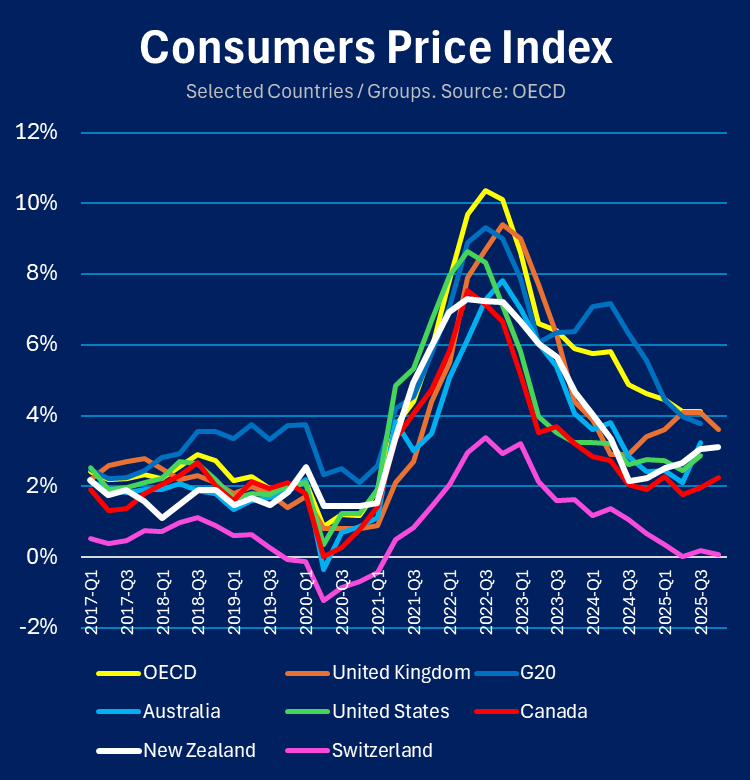
Worth a re-post when we get an update. Amazes me that Govt get away with saying they have done anything notable to 'tame inflation'. Our peak was relatively low (we weren't exposed to global gas prices), and, over the last year, Govt decisions have demonstrably increased CPI.