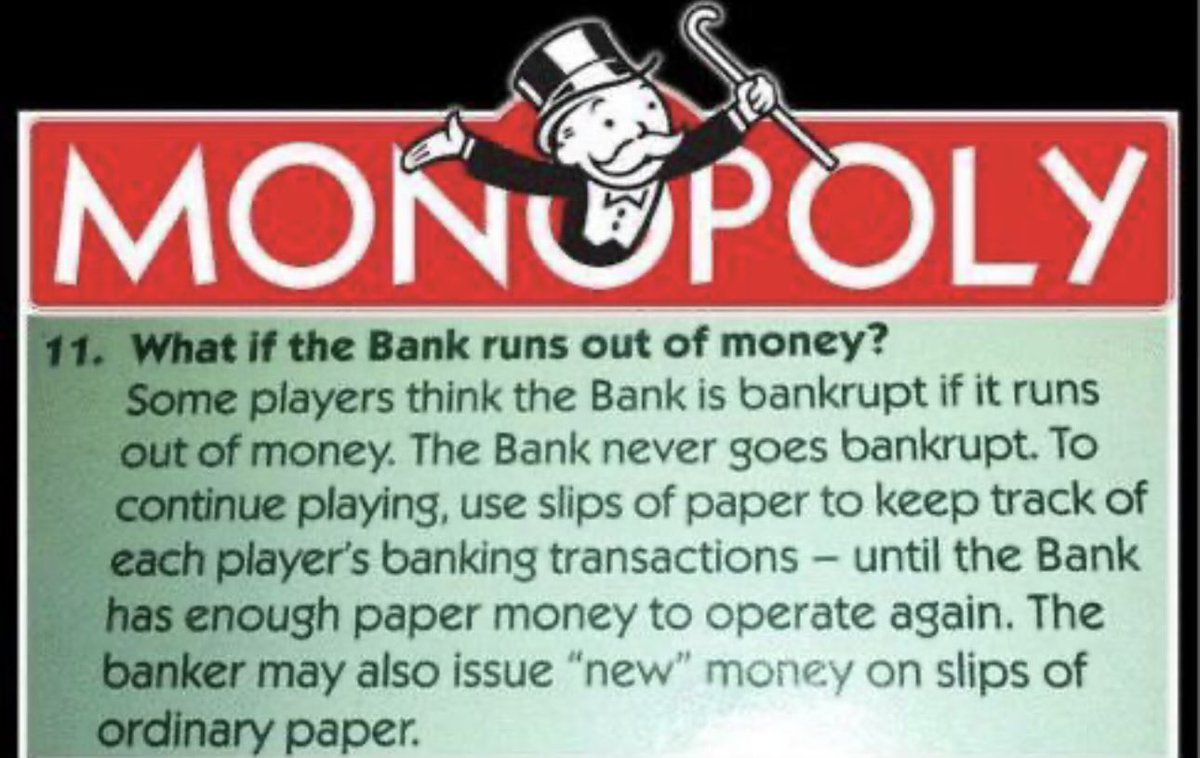
I am going to post this again. My mother contributed to $20 Obama’s campaign back in the day.
I pulled her records two years ago and discovered thousands of dollars in micro donations attributed to her that have no correlation to her own financial records.
I am convinced ActBlue is a MASSIVE money laundering organization and one of the primary reasons why I believe there is systemic fraud in elections.
I am a loss as to what to do about it.
“I support the ban on AR-15s.” - @RebeccaforWI
The Second Amendment is not about deer camps. Wisconsin deserves representation that defends the constitutional rights of all Wisconsinites.
@MattWalshBlog Trump always was Democrat deep down inside-never was conservative. This all makes sense to someone who has gone bankrupt many times over.
The conventional explanation for Rome’s demographic collapse is wealth. People got comfortable. They stopped having children. It happens to every prosperous civilization. Nothing to be done.
This is wrong. Or rather, it is incomplete in the way that matters most.
Rome didn’t stop having children because it got wealthy. It stopped having children because it built a welfare state – and the welfare state did what welfare states always do: it replaced the incentives that make people build families with incentives that make people consume instead.
The grain dole began modestly. Around 40,000 recipients in 73 BC. By Caesar’s time: 320,000. That eightfold expansion in under three decades was not a plan – it was a political mechanism. Each magistrate who wanted votes expanded eligibility. Each expansion normalized the next. The citizen who once considered the dole shameful eventually expected it, then demanded it, then organized politically to protect it.
The dole didn’t just feed people. It changed what people were for. A Roman citizen with guaranteed grain, free entertainment at the arena, and no frontier left to conquer has no pressing need to build anything – including a family. Children are a project. Projects require purpose. The welfare state had quietly removed the purpose while appearing to provide security.
Augustus saw the birth rate collapsing and did what statists always do: he legislated. The Lex Julia, the Lex Papia Poppaea – penalties for the unmarried, rewards for the fertile, the full power of the empire deployed to engineer a baby boom by decree. It didn’t work. It never works. You cannot legislate desire. You cannot fine people into wanting a future.
What Augustus didn’t have was Mises and Hayek. He didn’t understand that the system he was trying to fix with more intervention was being destroyed by the intervention he had already deployed. He saw the symptom — falling birth rates — and reached for the tool he knew: state power. He didn’t see the cause, because no one in his world had yet articulated it: when you replace personal purpose with state provision, you replace the human drive to build with the human tendency to consume. The dole didn’t just feed the hungry. It fed the purposeless.
We have Mises. We have Hayek. We have the complete theoretical account of what the welfare state does to human motivation, to family formation, to the incentive structures that make people want to build something that outlasts them. We know what Augustus didn’t know. We know why the laws failed. We know what produces the behavior he was trying to legislate into existence.
The answer is not more legislation. It is less welfare state. Not because cruelty is a virtue – but because purpose is. The person who must build to survive builds. The person who must form a family to transmit what they have built forms one. The person who receives guaranteed grain, guaranteed entertainment, and guaranteed security from the state has been given everything except the reason to do any of those things.
Scrap the socialism. Restore the purpose. The birth rate will follow – not because anyone ordered it, but because people who have something to build and something to transmit tend, given the choice, to build and transmit.
Rome didn’t know it had a choice. We do.
I was on the bridge of a US Navy fast oiler today with a young woman whose parents were enlisted sailors. She grew up a Navy kid, moving from place to place.
She graduated from college with a journalism degree but couldn’t find a job that paid much.
So she joined the U.S. Merchant Marine at the bottom, as a galley hand, mopping floors and making beds.
She worked for six years, then went back to school at @MaritimeCollege in the Bronx, earning both a master’s degree in logistics and her officer’s license.
Now she’s officer of the watch aboard the U.S. Navy’s newest @MSCSealift ship.
And she did a damn fine job.
From mopping decks to standing a bridge watch on one of America’s newest and most impressive ships.
I love this nation. 🇺🇸
It’s not hypocrisy, it’s hierarchy. Spoiled rich kids become socialists because they hate themselves for not being as successful and worthy as their parents, so they seize the power they couldn’t obtain. It’s all just self-loathing being projected onto society. Scammers.
Property rights and honest money built Singapore. That single fact explains everything the politicians won't.
Look at the numbers today: Singapore's GDP per capita sits around $88,000. Malaysia's hovers near $14,000. Same region, same colonial inheritance, independence granted within years of each other. The divergence isn't accidental.
Lee Kuan Yew made choices Malaysia's political class refused to make. He enforced contracts. He paid civil servants market wages to reduce corruption, rather than moralizing at them. He kept taxes low and tariffs lower. He told foreign capital: your property is safe here. Investors believed him because the courts backed it up.
Malaysia went the other direction. The New Economic Policy (NEP), introduced in 1971, redistributed wealth along ethnic lines rather than generating it. Bumiputera quotas distorted business formation. Petronas revenues (billions of ringgit annually from nationalized oil) subsidized consumption rather than building institutional quality. When you tax productive activity to fund patronage, you get less production and more patronage. The math on that never changes.
Singapore had no oil, no agricultural hinterland, no natural resource cushion. Scarcity forced discipline. Free market thinkers have long argued that resource abundance breeds political laziness, and Malaysia spent fifty years proving them right.
Critics call Singapore authoritarian, and they're not entirely wrong on the civil liberties question. Authoritarianism alone doesn't produce prosperity. Zimbabwe was authoritarian. The variable that moved was economic freedom, not the political iron fist.
What Lee built was closer to a rule-of-law commercial republic than anything else in Southeast Asia. You respect property, you enforce contracts, you keep the currency sound, and capital flows toward you. Malaysia is still learning that lesson.
🚨 California has officially passed AB 2624, aka “The Stop Nick Shirley Act”:
The Senate and Assembly have passed the bill, and now it’s on the governor’s desk.
California would rather protect fraudsters over law-abiding taxpayers.
On August 26 be at the Capitol in Sacramento.
Former SPLC CFO Heidi Beirich: "White supremacy is one of the worst things mankind has come up with"
She was just indicted for allegedly secretly funding white supremacist groups.
Simply Incredible
August 7, 1942. This morning the United States goes on the offensive for the first time in the entire war. Nineteen thousand Marines splash ashore on a jungle island almost nobody had heard of, and the long, bloody road back across the Pacific begins here. The island is Guadalcanal.
For eight months since Pearl Harbor, the Japanese had done nothing but advance, sweeping across the Pacific and Southeast Asia in a run of conquests that seemed unstoppable. The Americans and their allies had been reeling, reacting, losing. Then came word that the Japanese were building an airfield on Guadalcanal, in the Solomon Islands, from which they could threaten the sea lanes to Australia. If it was finished, it would be a dagger pointed at the Allied position in the whole South Pacific. So the Americans decided to hit back, fast, before it was ready.
The operation was called Watchtower, though the men who threw it together on a shoestring, short of everything, called it Operation Shoestring. The 1st Marine Division, about 19,000 men, went in supported by a fleet of American and Australian ships. On the morning of the 7th the first Marines waded ashore on Guadalcanal around nine in the morning, and to their surprise met almost no resistance. The Japanese construction troops there fled into the jungle, and the Marines quickly grabbed the half-finished airfield, which they would name Henderson Field, the prize the whole campaign would revolve around.
Across the water it was very different. On the small islands of Tulagi and Gavutu, the Japanese defenders fought nearly to the last man, and the Marines had a savage fight on their hands from the first hours.
Taking the ground on the 7th turned out to be the easy part. What followed was six months of hell, a grinding campaign on land, sea, and air, as the Japanese poured in reinforcements to retake the island and the Americans fought to hold it. There would be naval battles in the surrounding waters so costly the stretch of sea became known as Ironbottom Sound for all the ships that sank there, and desperate battles ashore around Henderson Field, and starvation and malaria and jungle rot for both sides.
But the tide turned here. Guadalcanal was the first place the Allies took ground back from Japan and held it, the first offensive, the moment the long retreat stopped and the long advance began. It started on this morning, with Marines wading onto a beach nobody had heard of.
Abdul El-Sayed was caught on a hot mic saying he “hates Mackinac so much... every time I’ve ever come here, I’ve hated it."
Mackinac Island is one of the most historical destinations in Michigan.
Año 2007. Anbar, Irak.
El Navy SEAL Mike Day abre la puerta de una habitación de 4x4 metros. Dentro lo esperan cuatro terroristas de Al Qaeda con el dedo en el gatillo.
El infierno se desata en segundos.
Veintisiete balazos atraviesan su cuerpo: piernas destrozadas, brazos perforados, abdomen abierto, glúteos atravesados, escroto alcanzado. Once más impactan en el chaleco. Una granada explota a sus pies y lo lanza al suelo, inconsciente, entre polvo, sangre y silencio.
Cualquiera habría muerto ahí.
Mike Day no.
Abre los ojos. El cuerpo es un campo de batalla. Se levanta.
Uno. Dos. Tres. Cuatro.
Elimina a los cuatro atacantes con su pistola, uno por uno, mientras la sangre le sale por todas partes.
Después camina solo, bajo su propio poder, hasta el helicóptero de evacuación.
27 impactos de bala.
Una granada.
Cuatro enemigos muertos.
Un hombre que se negó a caer.
Eso no es supervivencia.
Eso es leyenda.
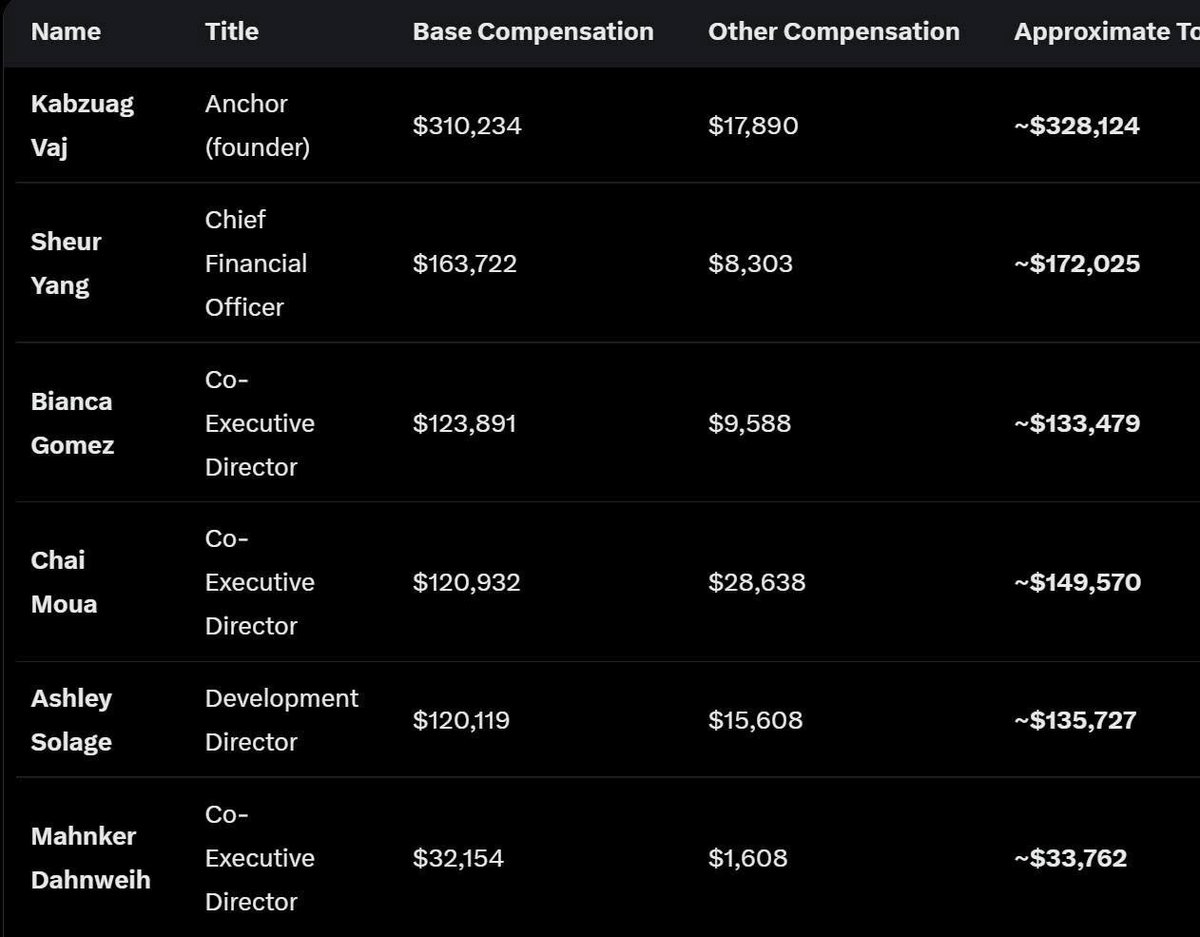
A "non-profit" called Freedom Inc. has bailed out 32 of the occupiers arrested for resisting Madison police as they cleared the Francesca Hong Fan Club's "autonomous zone". Freedom Inc. has received $ 5 MILLION from taxpayers since 2020. It does nothing. It is a taxpayer funded leftwing agitation organization.
The leader of this group pays herself over $320k/year! https://t.co/Irg2CRjaiO @DanLennington@wisconsin_now@BrianSchimming@TomTiffanyWI@libsoftiktok@SheriffClarke@BugTown09@MrAndyNgo
Gordon Roberts was an Ohio kid who enlisted in the Army in May 1968, three days after he graduated high school. A year later, at 19, he was a specialist in Company B, 1st Battalion, 506th Infantry, 101st Airborne, fighting in the A Shau Valley, the same brutal stretch of ground where today's operation was taking place.
On July 11, 1969, his company was trying to take a hill in the valley and got pinned down cold by North Vietnamese troops dug into a line of bunkers, the kind of interlocking fire that chews a company to pieces and stops it dead. What Roberts did next, more or less alone, is almost hard to believe.
He got up and charged the nearest bunker by himself, through the fire, and knocked it out. Enemy gunfire hit his rifle and tore it right out of his hands, so he grabbed another weapon off the ground and kept going, assaulting a second bunker and destroying it. Then a third, which he took out with grenades. Then a fourth. One teenager, moving straight into entrenched machine guns one position at a time, personally ripping a hole in the enemy line that had his whole company pinned. When he was done with the bunkers, he crossed open, fire swept ground to help carry wounded men from another company to safety.
His one man assault broke the position. President Nixon gave him the Medal of Honor in 1971.
And then Gordon Roberts did something almost no one else did. He finished his enlistment, went to college on the GI Bill, got married, raised two kids, and became a social worker, spending years quietly helping people. Then, in 1991, he went back. He rejoined the Army as a commissioned officer and served for two more decades, all over the world, finally retiring as a full colonel in 2012. He was the last Vietnam War Medal of Honor recipient still serving on active duty, a man who wore the uniform across five different decades. A 19 year old who took four bunkers alone, then came back and gave the Army most of his life.