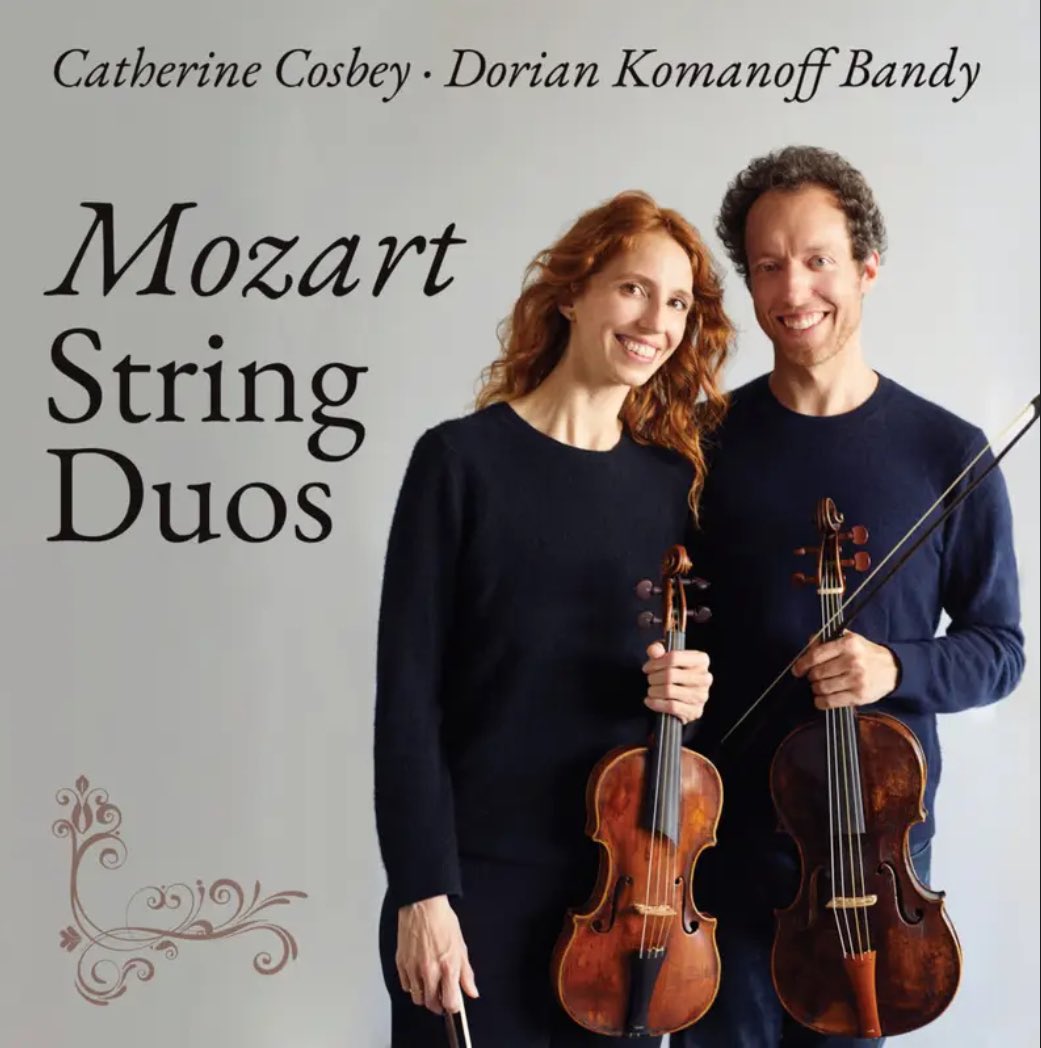
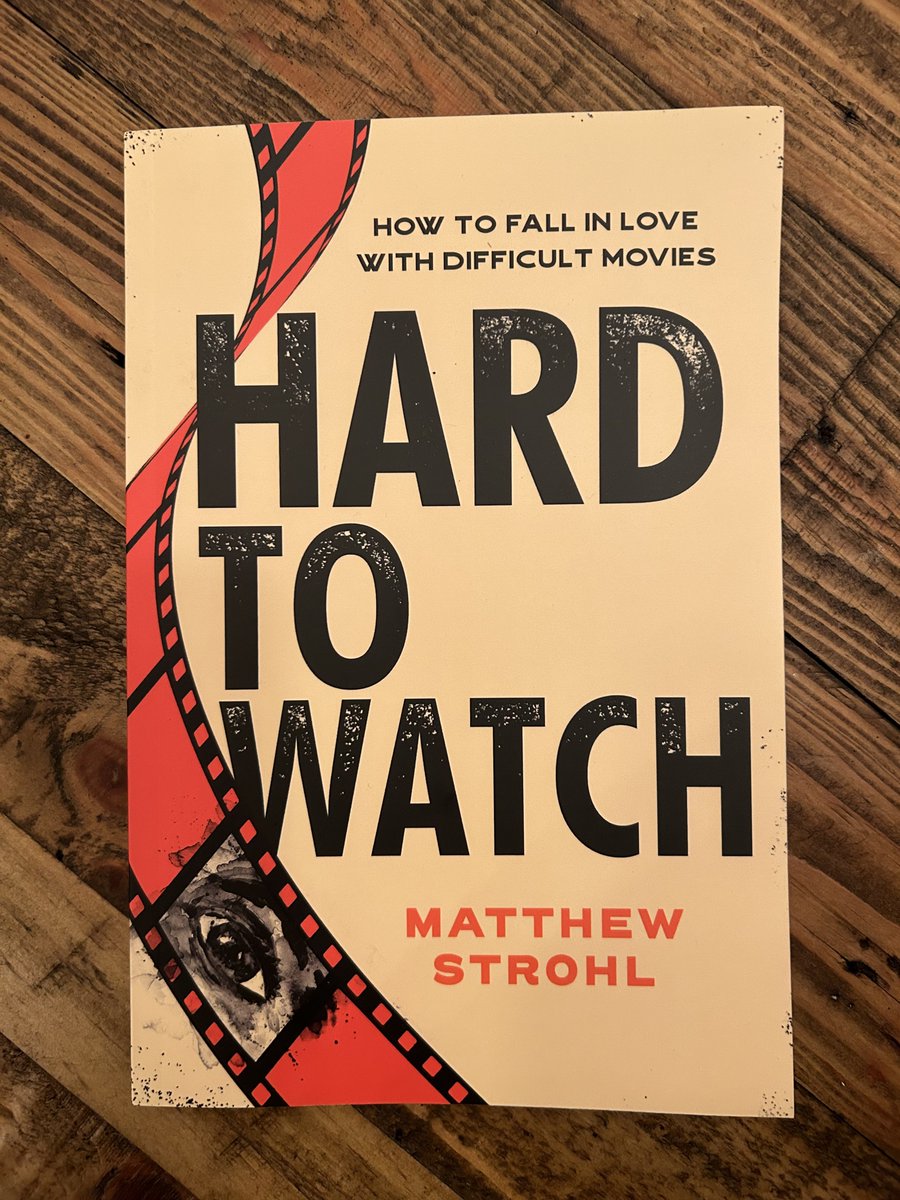
I'm so happy to see this CD out in the world, just in time for Mozart's birthday. An experimental take on his String Duos inspired by my book. Featuring ornaments, historical arrangements, and @catherinecosbey
Link below!
@MozartCircleCN@schulichmusic@UChicagoPress@mcgillu
"The single most important thing for a violinist to keep in mind while playing Beethoven's Violin Sonatas: we are, for much of the time, accompanying the piano." @mcgillu#violin professor Dorian Bandy explores Beethoven's Violin Sonatas.
https://t.co/uJnzrSjAI6
I'm so happy to see this CD out in the world, just in time for Mozart's birthday. An experimental take on his String Duos inspired by my book. Featuring ornaments, historical arrangements, and @catherinecosbey
Link below!
@MozartCircleCN@schulichmusic@UChicagoPress@mcgillu
New release! Mozart String Duos album featuring MSA Board member @DorianKBandy, with liner notes by MSA President Laurel Zeiss. Includes premieres of newly discovered K. 305 arrangements & La clemenza di Tito arias! Available now on all streaming platforms & CD via Leaf Music.
@strohltopia Now that I'm thinking of Eve, I'm starting to free-associate and wondering whether any of the other remarriage comedies do this too... especially Bringing Up Baby (and maybe in some ways also It Happened One Night and Philadelphia Story)?
Mozart's string duos are among his most inventive chamber works, and we try to play them as he might have wanted, with a degree of improvisation and ornamentation rarely heard today in his string music.
I wrote about our interpretations for @violinist :
https://t.co/GFlaw3fzan
I'm happy to announce that my new Mozart recording, with the wonderful @catherinecosbey , can now be pre-saved on Spotify and Apple!
https://t.co/Vsmo5HJjEZ
The disc features the brilliant violin-viola duos as well as two premieres and lots of embellishments. Out in January!
@etiennefd@jasoncrawford I have no answers! But probably because I'm not sure what "progress studies" actually is, or why some of the fields mentioned there count while others don't. Tell me more?
Martin Amis: "Money"
In my early 20s it seemed like pure slapstick and farce; in my mid 30s I discovered that after the first hundred or so pages it becomes one of the most profound, poetic, redemptive artworks I've ever encountered.
@ernsterlanson Yes, that's my guess too. Artworks are presentational patterns rather than arguments, so spotting errors isn't just a matter of finding some flaw in an argument.
It's true in theory that if Beethoven can be wrong, there must be objective aesthetic criteria of some kind. I love @ernsterlanson 's argument.
But in practice it's complicated Finding a 'mistake' in Beethoven could just mean that we misunderstood what he's up to. 1/
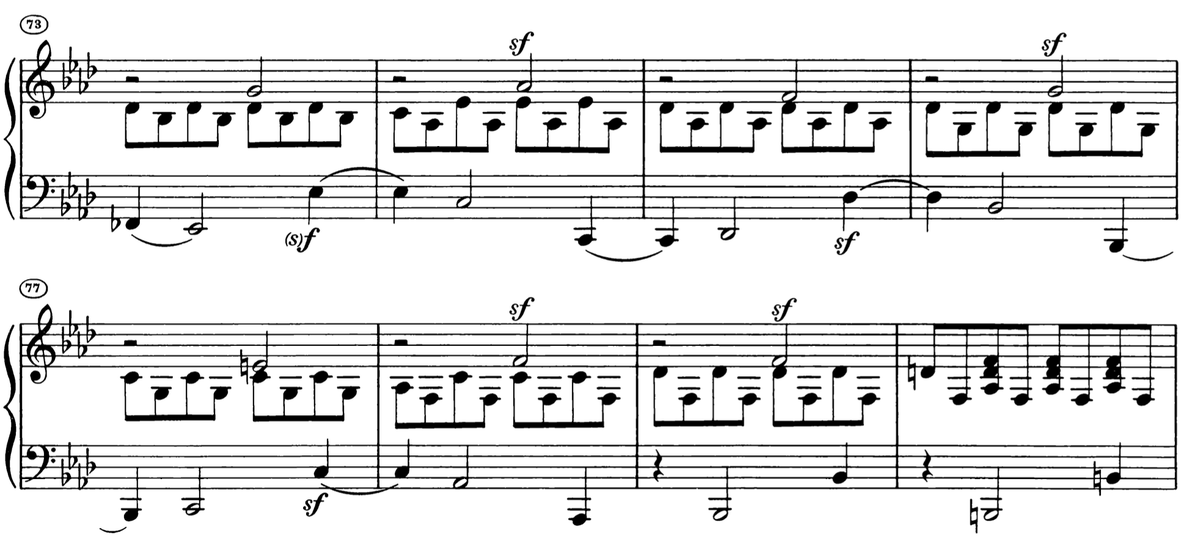
In Beethoven's sonata, opus 2 no. 1, there is a mistake in most editions in bar 76. The first note should be a Bb flat instead of Db flat. Otherwise, it violates the sequence that is set up starting from bar 73.
With the great composers, especially Beethoven, my standing assumption is always that he's so *astronomically* smarter than I am, that things that look to me like possible mistakes are really just cases where I failed to figure out the actual thing he's after.
Yes, if his goal is to do a simple sequence, a deviation is wrong. But what if his goal is to set up a sequence and then deviate? Empiricism is false; the artwork doesn't give an answer itself. 2/
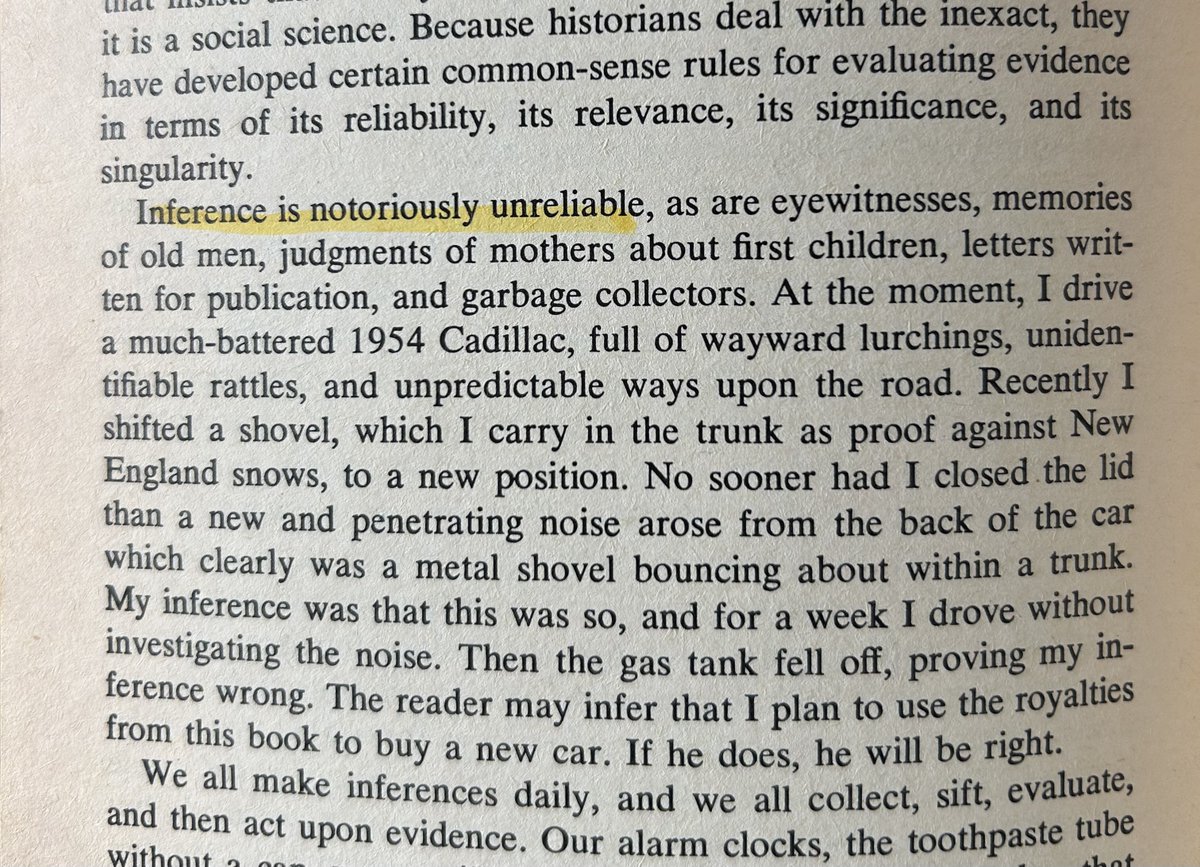
Academic writing was livelier and so much more fun half a century ago. A hilarious (and true) paragraph by Robin Winks, c.1969, on evidence, observation, and the philosophy of history:
How playful, how irreverent, how mercurial do you like your Mozart? Violinist @DorianKBandy explores this question and more in this delightful and engagin analysis (yes!) of Mozart’s Duos for #Violin and #Viola. @schulichmusic
https://t.co/PPxiq9Ybds