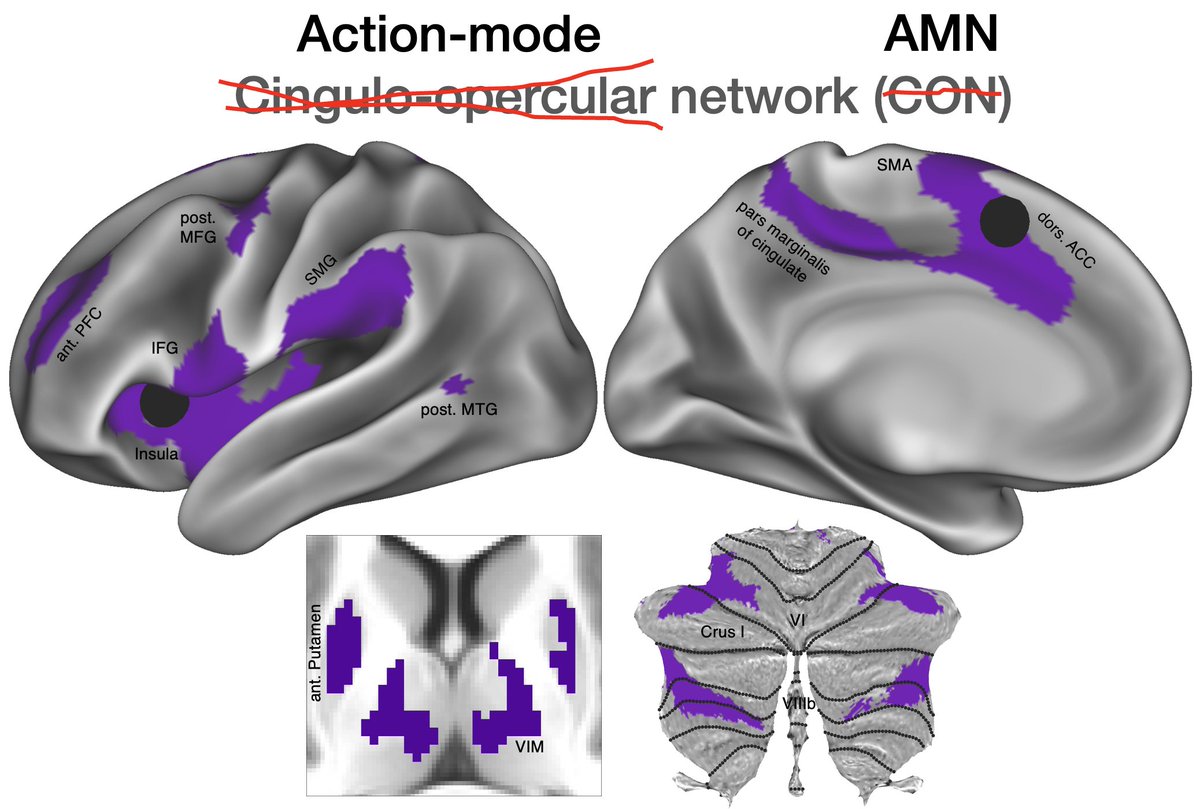
Introducing the Action-Mode Network – AMN. Better late than never! 17 years ago, we clumsily called this the Cingulo-opercular Network (CON) based on its anatomy (we weren’t exactly sure what it does). Now we’ve finally got the evidence to give it the functional name it deserves: the Action-mode Network (AMN). Find our arguments here: https://t.co/z8290fmmVB with the peerless Marc Raichle and the brilliant @gordonneuro. 🧵 ↓
New paper in Imaging Neuroscience by Andrew N. Van, Nico U.F. Dosenbach, et al:
Frame-wise multi-echo distortion correction for superior functional MRI
https://t.co/1VNpk0HTFj
Innovations taking place here are changing the face of Alzheimer’s disease everywhere. Listen to the co-winners of the 2026 American Innovator Award from the Bayh-Dole Coalition talk about their revolutionary and first-to-market diagnostic blood test. https://t.co/DPt0CsSL9Y
🧠 I'm so happy to share our personalized circuit-guided neuromodulation targeting platform UNITE, led by @iamzhangvv, is out in @NatureProtocols!
📄 Protocol: https://t.co/P0GzDl02Pg
🔬 Nature: https://t.co/cg366rj3Ow
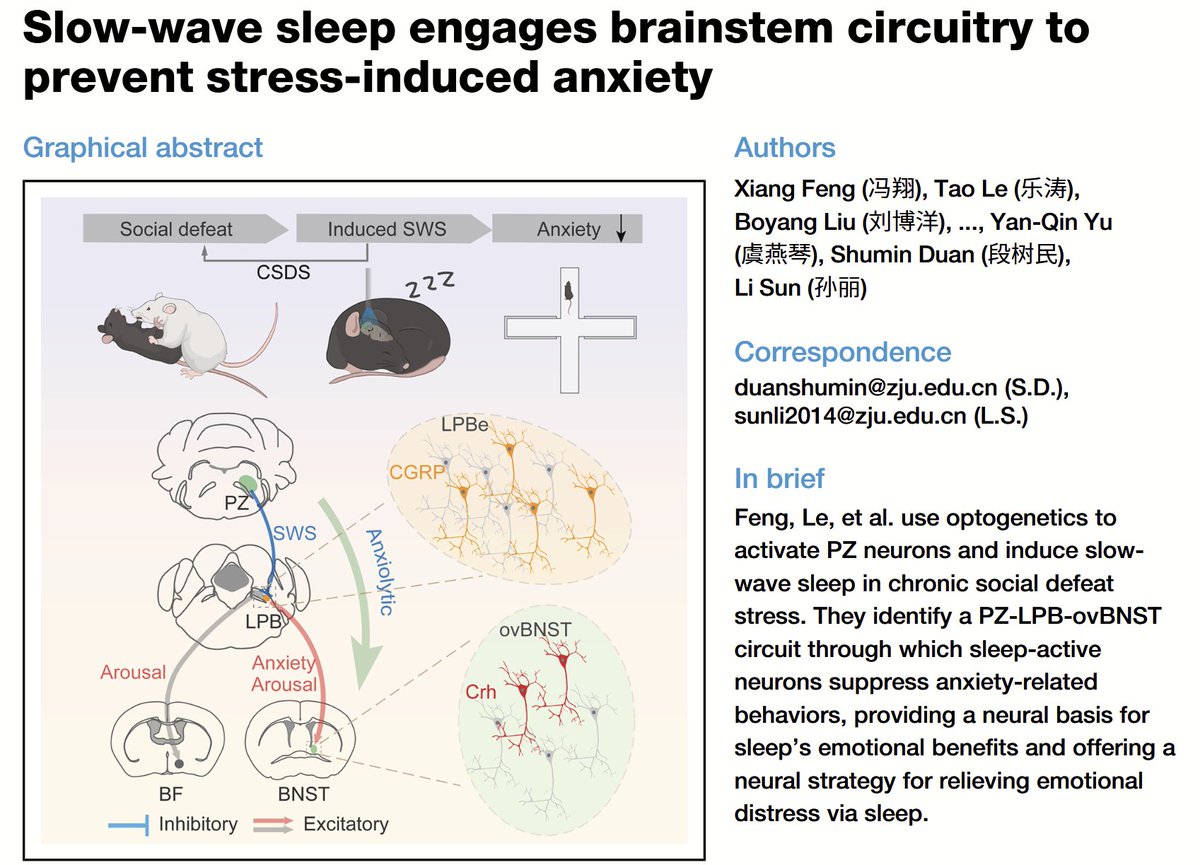
Deep sleep may be one of the brain’s most powerful anti-anxiety tools.
Researchers identified a sleep-active circuit linking the parafacial zone, parabrachial nucleus, and BNST that suppresses stress-related signaling during slow-wave sleep and prevents anxiety-like behavior. #SleepScience #Neuroscience #MentalHealth
https://t.co/0kEEWqKOGG
Nico Dosenbach, MD, PhD, was installed as the inaugural David M. and Tracy S. Holtzman Professor of Neurology at WashU Medicine. He is widely recognized as a pioneer in precision neuroimaging.
https://t.co/1hS7Oae8Kr
For those who are attending @OHBM brainhack, I will be giving a short presentation of this work at the neuroimaging statistics workshop, co-hosted with brainhack: https://t.co/4L7YhsZYGM
The World Parkinson Congress has officially kicked off in Phoenix, and there is a rumor circulating that more than 1,000 free copies of book The Parkinson’s Plan may appear Monday at the Parkinson’s Foundation booth. Ray Dorsey and I will be at the WPC Book Nook from 12–1 PM (on Monday) meeting folks and signing books. I will also be at the Parkinson’s Foundation booth from 11 AM–12 PM and again from 1–2 PM (on Monday). Come by, say hello, and most importantly "Tell your story." You are the secret sauce to creating change.
#WPC2026 #WorldParkinsonCongress #Parkinsons #ParkinsonsDisease #ParkinsonsAwareness @ParkinsonDotOrg
Acute stress makes it difficult to link memories of past events with fresh information, a study1 suggests. The results help to explain why people struggle to show insight under pressure.
https://t.co/X084kcpUTi
All you needed to know about sleep, brain clearance and dementia in this important and beautifully written review by Maiken Nedergaard || The oscillatory biology of sleep: Linkage to dementia | Science https://t.co/xvubhNgLX3
Blood-based biomarkers are transforming the diagnosis of Alzheimer's disease - but which test should be used and in which individuals?
@SuzanneESchind1 shares insights in this interview: https://t.co/svytiAxY95👈
#AANAM#Dementia#AlzheimersDisease
Once again, @ten_photos came to the rescue - we prayed to him for a better statistical test for k-shot learning (since the corrected t-test is overly conservative in that scenario), and he answered our prayers with a new test that also covers classical cross-validation.
Knowing the anatomical connections in the human🧠 has long been a critical missing piece in building accurate theories of brain function. esfMRI is starting to uncover these connections. Go Rui @ruix_mit and team! I could not be more excited to play a small part in this effort.
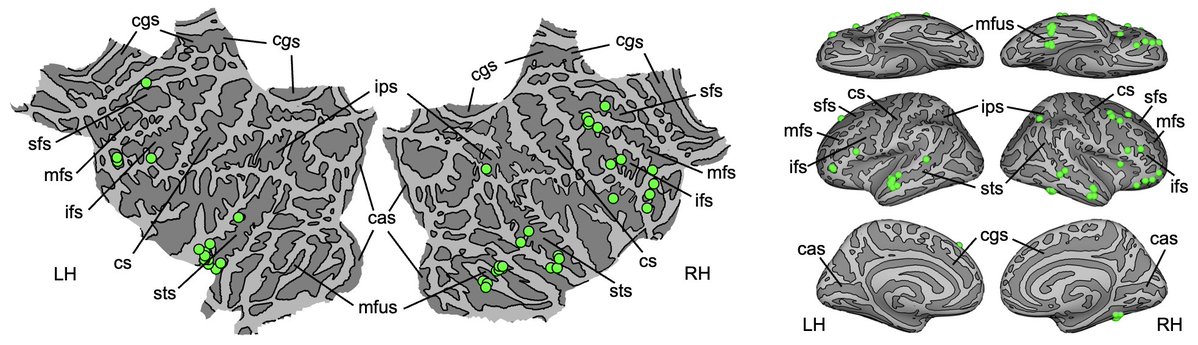
New preprint: "Monosynaptic connections link functionally similar regions in human cortex." We use electrical stimulation + fMRI in epilepsy patients to map whole-brain monosynaptic connectivity at 42 cortical sites. https://t.co/rSSSVsMWCQ 1/n
Here's bonus slides on cross-validation tests, separate from our preprint. Covering:
1. paired (sign-flip) permutation test
2. label-swap permutation test
3. sample-level vs fold-averaged stats
4. a common misapplication of the corrected t-test
5. three bootstrap variants 1/N
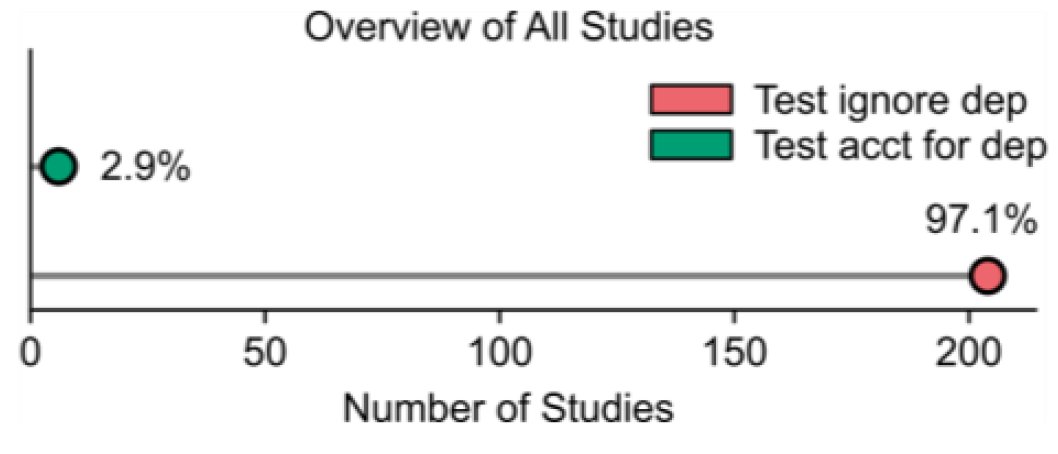
In a meta-analysis of 210 biomedical AI studies that statistically compared models under cross-validation, 97% used invalid statistical tests.
Here's our new preprint https://t.co/OG58Vkeu49 led by @tianchuzeng@kkli20111@ZShaoshi@ten_photos 1/N