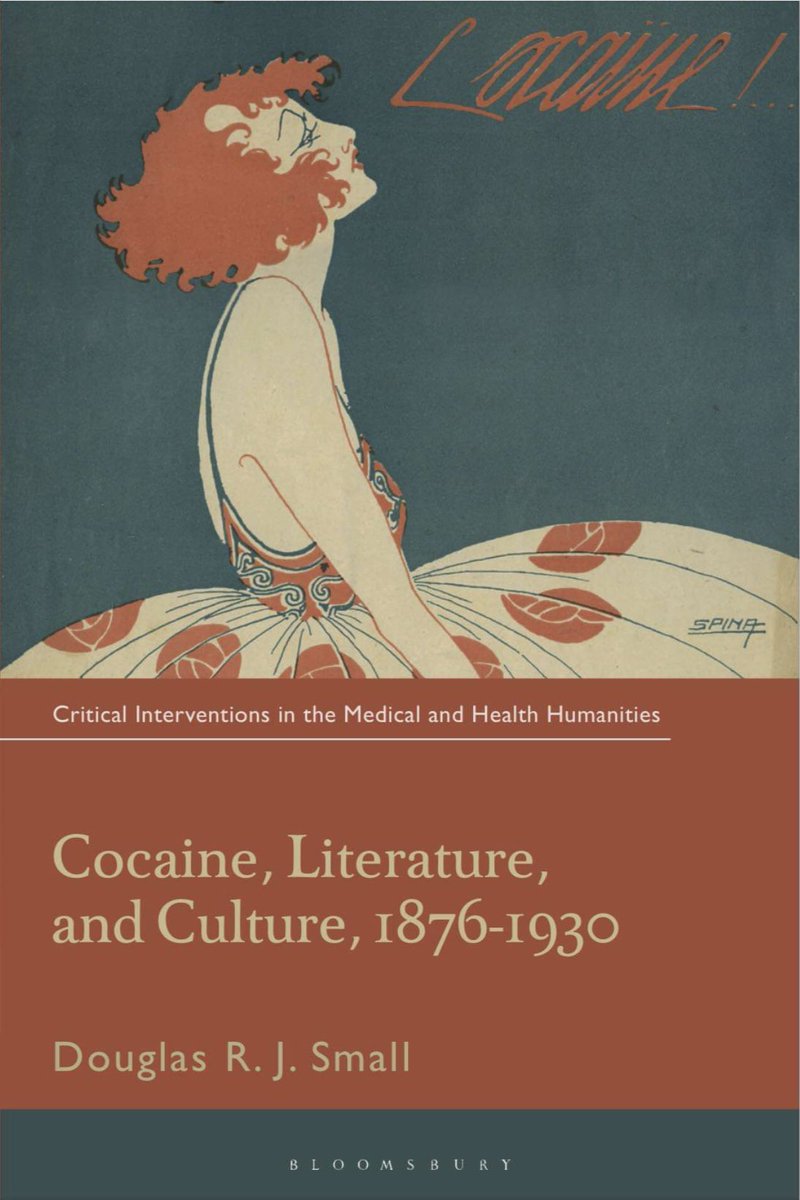
It’s publication day!!! 🧡🩵
‘Cocaine, Literature and Culture 1876-1930’ is available TODAY from @BloomsburyAcad. Academic friends, tell your libraries?
Hardback currently 10% off: https://t.co/1NelbCcb6U
Online version is open access with thanks to @wellcometrust.
So proud that Sir Terry Pratchett's NIGHT WATCH is to become a Penguin Classic. It will publish in April 2025 to coincide with Terry Pratchett Day.
https://t.co/PJiX05Twpo
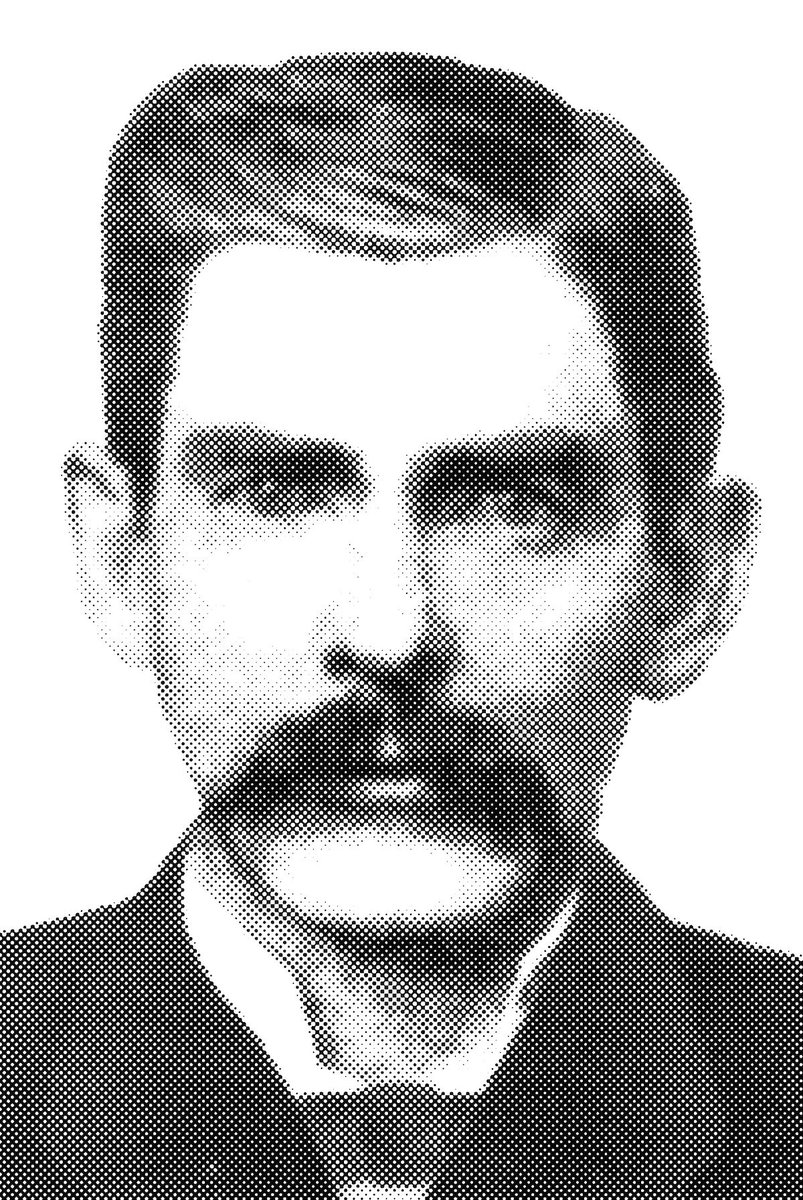
Will the real Doc Holliday please stand up?
Was he a ‘mild-mannered frontier angel’ or a ‘taciturn & much-dreaded’ killer who ‘left a trail of blood’ wherever he went?
My article on the myth-making around Doc Holliday is free for 7 days from @HistoryToday
Misfit, Old West villain or tragic hero of the O.K. Corral: who was the real #DocHolliday?
🔓 @𝐃𝐫𝐃𝐨𝐮𝐠𝐥𝐚𝐬𝐒𝐦𝐚𝐥𝐥’𝐬 𝐧𝐞𝐰 𝐇𝐢𝐬𝐭𝐨𝐫𝐲 𝐌𝐚𝐭𝐭𝐞𝐫𝐬 𝐢𝐬 𝐟𝐫𝐞𝐞 𝐟𝐨𝐫 𝟕 𝐝𝐚𝐲𝐬
https://t.co/A0lLbqiHXF
I’m on the latest episode of @HistoryExtra talking about the history of cocaine, including the first sports doping scandal and how cocaine was criminalised during WW1. 🎙️ 🌱 💉
On the podcast | @DrDouglasSmall reveals how cocaine was widely used in all manner of 19th-century products, and explores why it became a fixture of society, sport, culture and literature: https://t.co/pE0QHljrsW
THIS WHOLE DEEP-SEA THING IS EXHAUSTING...
Professor Alan Jamieson & Dr Todd Bond from the Minderoo-UWA Deep-Sea Research Centre, chat about why animals (and, errrrr, scientists) would choose to go deep when they don't have to.
Listen here:https://t.co/MbJckgFKEC
📸@deepseauwa
1/9 🧵The right wing press, informed originally by its allies in History Reclaimed, is repeating this misinformation again and again in its attempts to prevent a conversation about reparations. Each time it is repeated it needs to be called out because it is being used to suggest that Britons made enormous financial sacrifices to end slavery around the world.
Here is the reality:
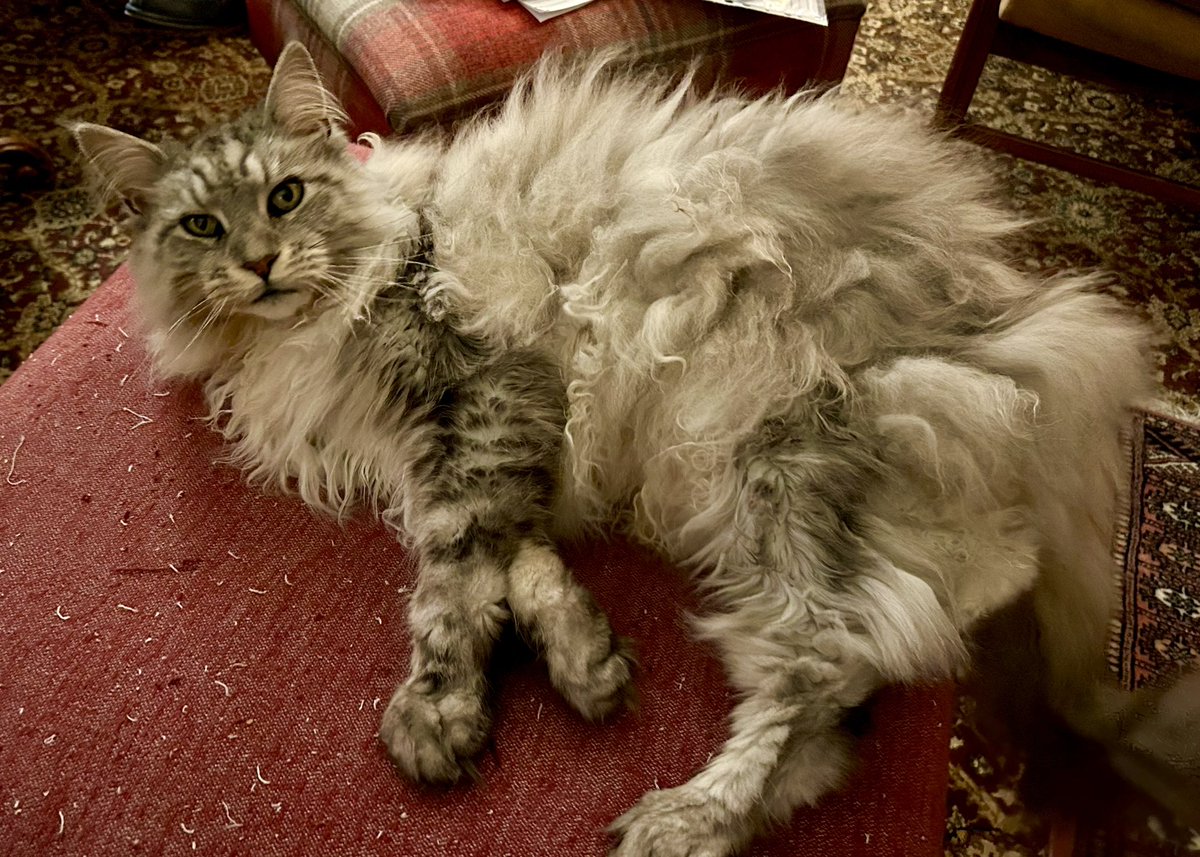
Why does he look so appalled, you ask?
Well, Storm’s floofy days are numbered.
He is booked in for a lion cut!
Brace yourselves for the mighty, chilly, shaven indignity 💀 #caturday
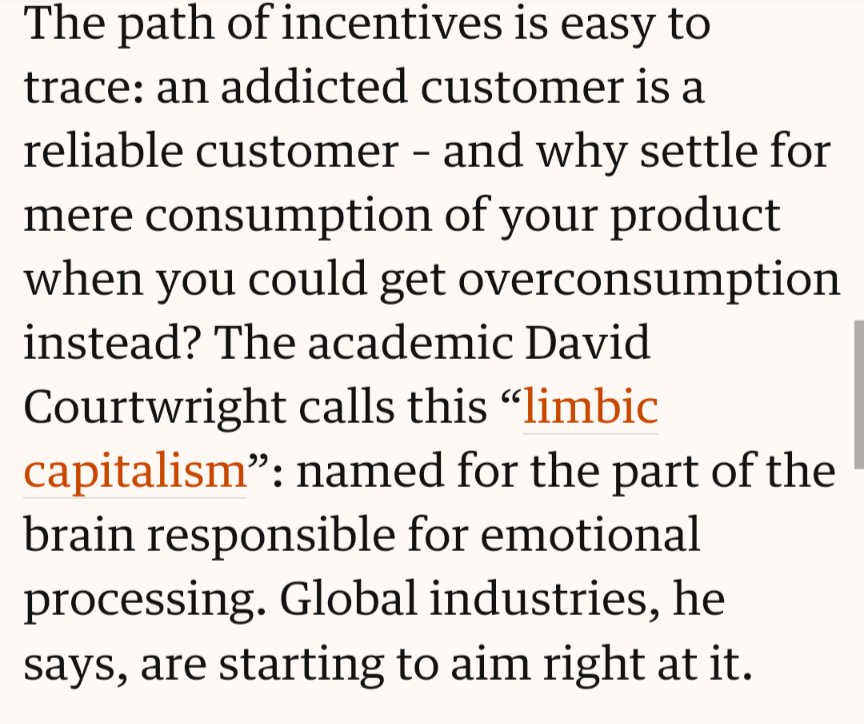
I like Courtright's term 'limbic capitalism' - basically the monetisation of addictive behaviours.
Martha Gill explores the increasing saturation of the phenomena in modern life👇
https://t.co/0iWpbUzSJi
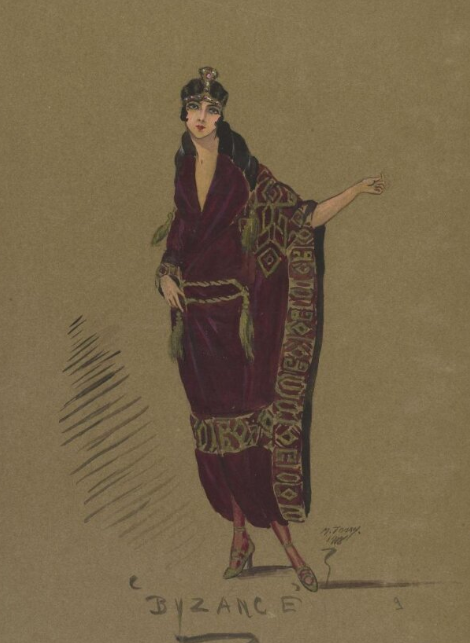
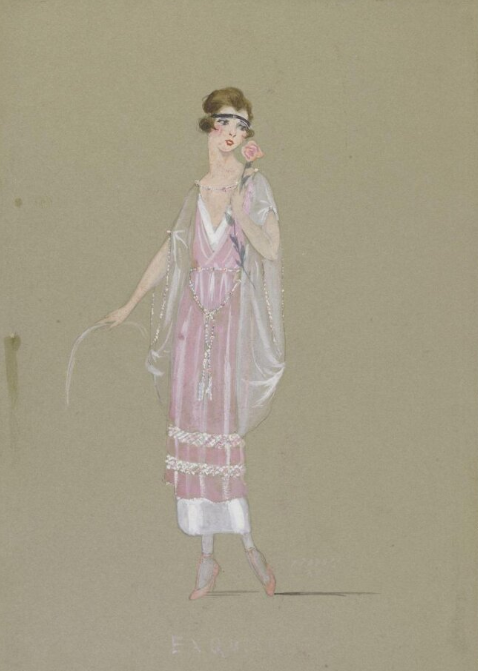
'Enquire' and 'Byzance' (1918). Scrumptious designs for eveningwear by Elizabeth Handley Seymour (1867-1948). Part of the V&A's wonderful collection: Prints and Drawings E.4694-1958 & E.4698-1958.
CFP for the @drinkingstudies@womenandalcoho1 conference, co-organised with the @wellcometrust "Drinking Cultures" project, hosted by @drlucycogan at @ucddublin next June. Our theme this year is 'Dangerous Pleasures?'. Please RT (and submit an abstract) https://t.co/ohxk46yxoo
Actually Elon, a great many people are mistaken in this belief. The trans-Atlantic system of slavery, dominated by Britons for most of the C18, was unprecedented in its scale, its commercial nature, its demographic effects, its effects in instituting racism, and its catalysing role in Britain’s Industrial Revolution.
Upon emancipation it was slave-owners who were compensated rather than the enslaved; new forms of racialised labour exploitation emerged in emancipation’s wake (such as the indenture of a million Indians), and abolition proved quite compatible with entrenched racism and the invasion & occupation of new colonies. Far from ending other, global forms of slavery, British officials often tolerated them in these colonies.
For more, perhaps read some of the work of experts rather than polemicists? https://t.co/Gi1qo7sKZS
Sounds like your average night in a Northamptonshire pub tbh…
In the winter of 1886, a famed American neurologist called William Alexander Hammond began an unusual experiment, says Douglas Small in Aeon: to consume as much cocaine as humanly possible.
He used several methods: fluid extracts of the coca plant; cocaine hydrochloride grains mixed into purified wines; hypodermic injection. He eventually hit his limit when he took just over an entire gram in one go.
He woke up in bed the next day with no recollection of how he got there, and “quickly discovered that he had, at some point in the night, decided to thoroughly wreck his own library”.
After suffering what he described as a “most preposterous” two-day headache, he called a halt to his research.