India is now the world’s most populous nation (1.47B 🇮🇳) and a Green Hydrogen superpower! ⚡️ 2030 goal: 5M tonnes fuel + 125GW renewables. 🔋 Pairing tech with Hemp for the future! 🌿
Watch @UbuntuHempGermany: https://t.co/yEar1Fn8lN
#GreenHydrogen#Hemp#India#Sustainability
Den neuen Terminal 3 erst einmal richtig einweihen..
Euch allen einen wunderschönen Sonntag und einen guten Start in die neue Woche..
Bleibt gesund und stabil.
🤙😎💪
Uganda 🇺🇬 Hemp & Cannabis Industry exposed. Biggest Stakeholders: Germany 🇩🇪 Canada 🇨🇦 Israel 🇮🇱 including an ex Ugandan General https://t.co/lKTljUWBfp
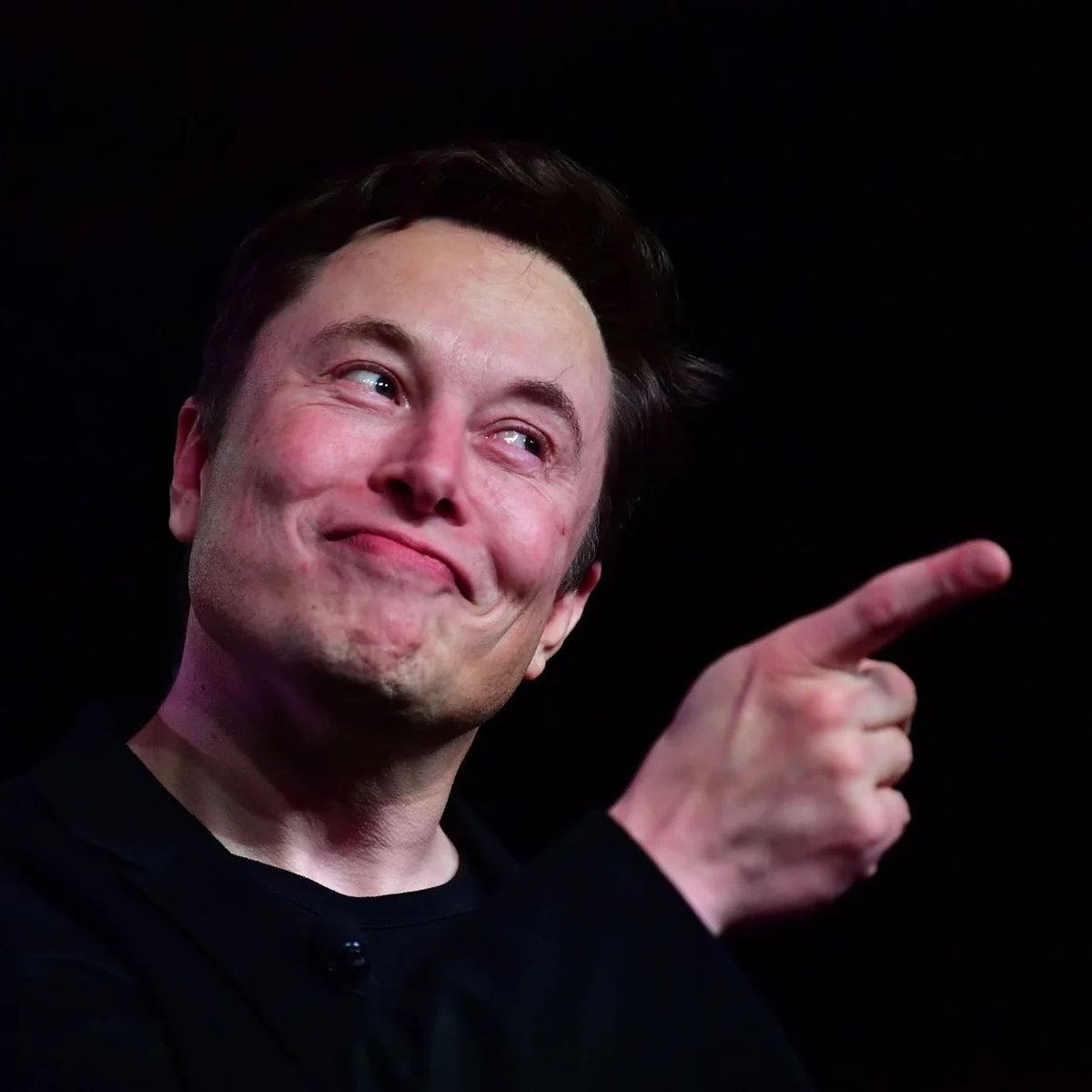
The first trillionaire in human history
- Elon Musk
- Born in South Africa
- Bullied relentlessly as a kid
- Immigrated to North America
- Arrived with a backpack and a dream
- Built Zip2 with his brother
- Sold it 4 years later for $300 million
- Co-founded PayPal with the profits
- Revolutionised digital payments
- Sold PayPal to eBay for $1.5 billion
- Bet everything on Tesla and SpaceX
- Got mocked for electric cars
- Got laughed at for reusable rockets
- Nearly went bankrupt in 2008
- Kept building anyway
- Turned Tesla into the world’s most valuable automaker
- Made EVs mainstream and transformed the automotive industry
- Made reusable rockets a reality
- Reduced the cost of reaching space by 95%
- Sparked the modern commercial space race
- Built Starlink and connected millions around the world to high-speed internet
- Turned SpaceX into the most valuable private company in history
- Bought Twitter for $44 billion
- The world said he overpaid
- He was called reckless, stupid & crazy
- Advertisers fled, media declared it dead
- Critics called it the worst acquisition in tech history
- Renamed it 𝕏
- Rebuilt the platform anyway
- Turned it into one of the most influential platforms on Earth
- Launched xAI and accelerated the global AI race
- Sent astronauts to space
- Is trying to get humans to mars
- Created millions of jobs
- Generated hundreds of billions in value
- Inspired an entire generation of builders
Before:
- Failed repeatedly
- Worked insane hours
- Slept in factories and offices
- Got bullied, laughed at and mocked
- Constantly told “it’s impossible”
- Kept building anyway
- Made it possible
Today:
- Richest person on Earth
- First trillionaire in human history
- Largest IPO in history $1.77 trillion
Most people quit when the world laughs at them.
Elon Musk built the future instead.
Love him or hate him…
Nobody has changed more industries in a single lifetime.
Payments. Cars. Energy. Space. Social Media. Communications. AI.
History won’t remember the people who said it couldn’t be done.
It will remember the people who did it anyway.
Congratulations Elon.
The first trillionaire. 🚀
When Henry Ford arrived in England, he asked for the cheapest room in town.
The clerk at the counter was confused.
Standing in front of him was one of the richest and most famous men in the world the founder of Ford Motor Company.
Yet his coat looked old.
His suitcase was plain.
And instead of luxury, he simply asked:
“Where’s the most economical place to stay?”
The clerk stared at him for a moment before asking carefully:
“Excuse me… are you Henry Ford?”
Ford nodded.
Still shocked, the clerk said:
“Your son stays in the finest hotels and wears expensive suits.
But you’re asking for the cheapest room… wearing an old coat.
Why?”
Ford smiled and replied:
“All I need is a place to sleep.
Wherever I go, I’m still Henry Ford.”
Then he touched his coat and added:
“This belonged to my father. It keeps me warm. That’s enough.”
And then came the line that stayed with people:
“My son still worries too much about what others think.
I learned long ago that you don’t pay for approval.
I didn’t become rich by spending money.
I became rich by understanding what matters and what doesn’t.”
That’s the difference between looking wealthy and understanding wealth.
Real confidence doesn’t need luxury to prove itself.
Because your value isn’t your hotel room.
Or your clothes.
Or the opinions of strangers.
You are who you are wherever you are.
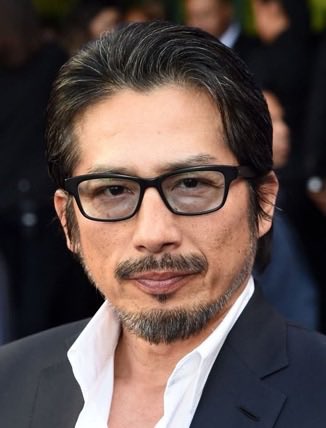
Japanese actor Hiroyuki Sanada spoke about the contradictions of human nature:
“Some people dream of having a swimming pool at home, while those who have one hardly ever use it. Those who have lost a loved one feel a profound sense of loss, while others often complain about their living relatives. Those without a partner long for one, while those who have one often don't appreciate it. The hungry would give anything for a meal, while the satiated complain about the taste of their food. Those without a car dream of owning one, while those who have a car are always looking for a better one.”
The key to happiness is gratitude: truly seeing and appreciating what we already have, and understanding that somewhere, someone would give anything for what we take for granted.
Winston Churchill fought his depression with bricks. He'd lay them for hours at his country home in Kent. He joined the bricklayers' union. And in 1921 he wrote about why it worked. It took psychology another 75 years to catch up.
He called his depression the "Black Dog." It followed him for decades. His method for fighting it back was as basic as it sounds: laying brick after brick, hour after hour.
Churchill spelled out his theory in a long essay for The Strand Magazine. People who think for a living, he wrote, can't fix a tired brain just by resting it. They have to use a different part of themselves. The part that moves the eyes and the hands. Woodworking, chemistry, bookbinding, bricklaying, painting. Anything that drags the body into a problem the mind can't solve by itself.
Modern psychology now calls this behavioral activation. It's one of the most-studied depression treatments out there. Depression sets a behavior trap. You feel bad, so you stop doing things, and doing less means less to feel good about. Feeling worse makes you do even less. The loop tightens until you can't breathe inside it.
Behavioral activation breaks the loop from the action side. You schedule the activity first, even when every part of you doesn't want to. Doing it produces small rewards: a wall gets straighter, a painting fills in, a messy room gets clean. Those small rewards slowly rewire the brain. Action comes first, and the feeling follows.
Researchers at the University of Washington put this to the test in 2006. They studied 241 adults with major depression and compared three treatments: behavioral activation, regular talk therapy, and antidepressants. For the people who were most severely depressed, behavioral activation matched the drugs. It beat the talk therapy. A 2014 review of more than 1,500 patients across 26 trials backed up the result.
Physical work like bricklaying does something extra on top of this. It crowds out rumination, the looping bad thoughts that grind people down during the worst stretches of depression. Bricklaying needs both hands and gives feedback brick by brick: each one is straight or crooked. After an hour you can see exactly how much wall you built. No room left for the mental chewing.
The line George Mack used in his post, "depression hates a moving target," is good poetry. The science behind it is sharper. Depression hates a brain that has somewhere else to be.
🚨 JUST IN: President Trump says the US will be withdrawing "A LOT" more troops from Germany than the 5,000 announced yesterday
FINALLY.
Bring our troops home! We don't need NATO — NATO needs US!
"We're going to cut WAY down and we're cutting a lot further than 5,000" 🇺🇸
The Blue Whale produces milk so rich and thick it has the consistency of soft butter or flowing cream. It’s 50% fat—nearly 15 times more concentrated than human milk.
Why? Because in the vastness of the ocean, a liquid would dissolve into the salt water before it ever reached the calf. Instead, this "liquid gold" stays intact, allowing the baby to gain 200 pounds every single day.
"He who fashioned the depths of the sea left nothing to chance."
From the gargantuan heart the size of a car to the microscopic precision of a mother’s milk, we are witnessing a masterpiece of engineering. This isn't just "survival"—it is divine intentionality.
Every ripple in the ocean and every breath in your lungs is a quiet, powerful reminder: Every detail was crafted. Every need was anticipated.
Nature isn't just magical; it’s a witness.
God is Amazing. 💙
#Creator #BlueWhale #NatureIsArt #GodsDesign #DeepOcean #WondersOfWorld
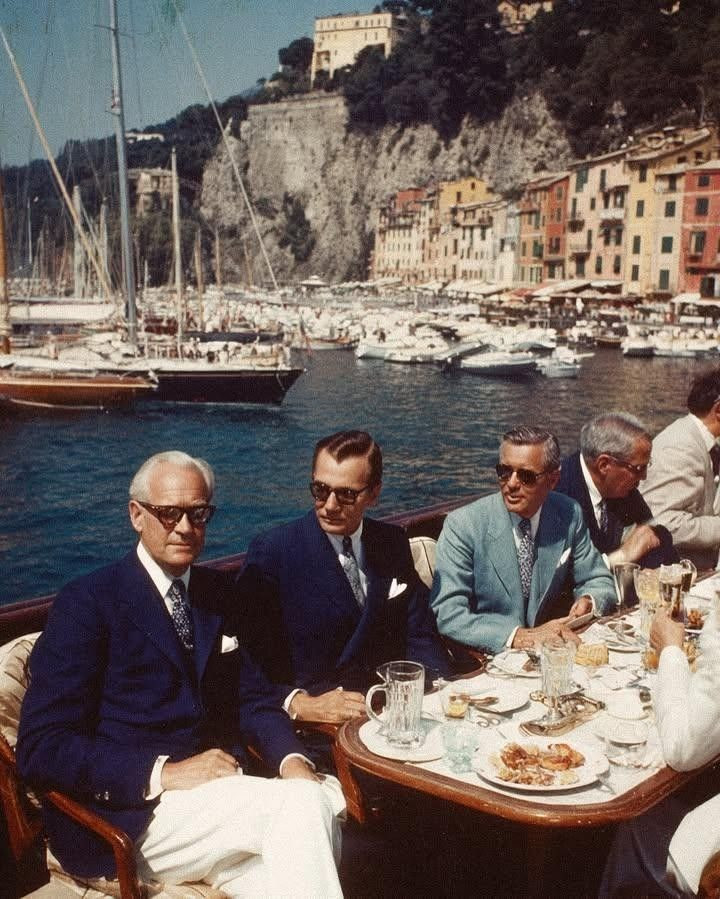
"The richest 0.001% don't wear luxury."
Yes they do. You're just too poor to know what these brands are.
Forget Dior. Forget Louis Vuitton.
Old money wears quiet luxury.
Here are six brands that billionaires, world-leaders, and royalty actually wear:
𝟭) 𝗭𝗘𝗚𝗡𝗔
Clients:
• Lewis Hamilton
• Cillian Murphy
• Tom Cruise
Ermenegildo Zegna founded the company in 1910 in Trivero, starting as a wool mill before evolving into the world's largest men's luxury fashion group. Unlike any other house on this list, ZEGNA controls the entire supply chain.
Best known for suiting fabrics so refined that rival luxury houses source from them.
𝟮) 𝗟𝗼𝗿𝗼 𝗣𝗶𝗮𝗻𝗮
Clients:
• Jeff Bezos
• European aristocracy
• Middle Eastern oil heirs
Founded in 1924 by Pietro Loro Piana as a high-quality wool mill in Italy. His grandson, Franco, revolutionised the brand in the 1960s-70s by pioneering rare fibres like baby cashmere and vicuña.
Today, they're best known for sourcing the world's rarest natural fibres and creating ultra-soft cashmere coats starting.
𝟯) 𝗕𝗿𝘂𝗻𝗲𝗹𝗹𝗼 𝗖𝘂𝗰𝗶𝗻𝗲𝗹𝗹𝗶
Clients:
• Daniel Craig
• Prince William
• Silicon Valley billionaires
Brunello Cucinelli borrowed money in 1978 to launch a small cashmere workshop in Umbria. He restored a 14th-century castle as headquarters in 1985 and built a $3 billion empire through artisan ethics and discretion.
The "King of Cashmere" is best known for Zuckerberg's custom grey T-shirts, which cost between $400-600 each.
𝟰) 𝗕𝗿𝗶𝗼𝗻𝗶
Clients:
• Donald Trump
• Barack Obama
• Pierce Brosnan
Established in 1945 in Rome by master tailor Nazareno Fonticoli and entrepreneur Gaetano Savini. The brand gained international fame dressing Hollywood stars and world leaders throughout the 1950s-60s.
𝟱) 𝗞𝗶𝘁𝗼𝗻
Clients:
• Vladimir Putin
• David Beckham
• George Clooney
Ciro Paone, from generations of Neapolitan fabric makers, started a tailored clothing workshop in 1956. He rebranded to Kiton in 1968 and founded a tailoring school to preserve traditional techniques.
Best known for featherlight suits with up to 25,000 stitches per jacket.
𝟲) 𝗖𝗲𝘀𝗮𝗿𝗲 𝗔𝘁𝘁𝗼𝗹𝗶𝗻𝗶
Clients:
• Al Pacino
• Denzel Washington
• Unnamed UHNW individuals
Vincenzo Attolini pioneered the light, unstructured Neapolitan jacket in 1930s Naples, ditching British padding for shirt-like comfort. His son Cesare opened a workshop in 1987 with his own sons to scale production.
Traditional hand techniques create lightweight, unstructured jackets with extended darts and minimal lining.
—
Thanks for reading! Enjoyed this post?
I built an 8-figure music label from scratch and host luxury events.
Follow me @averyx99 for more content like this.