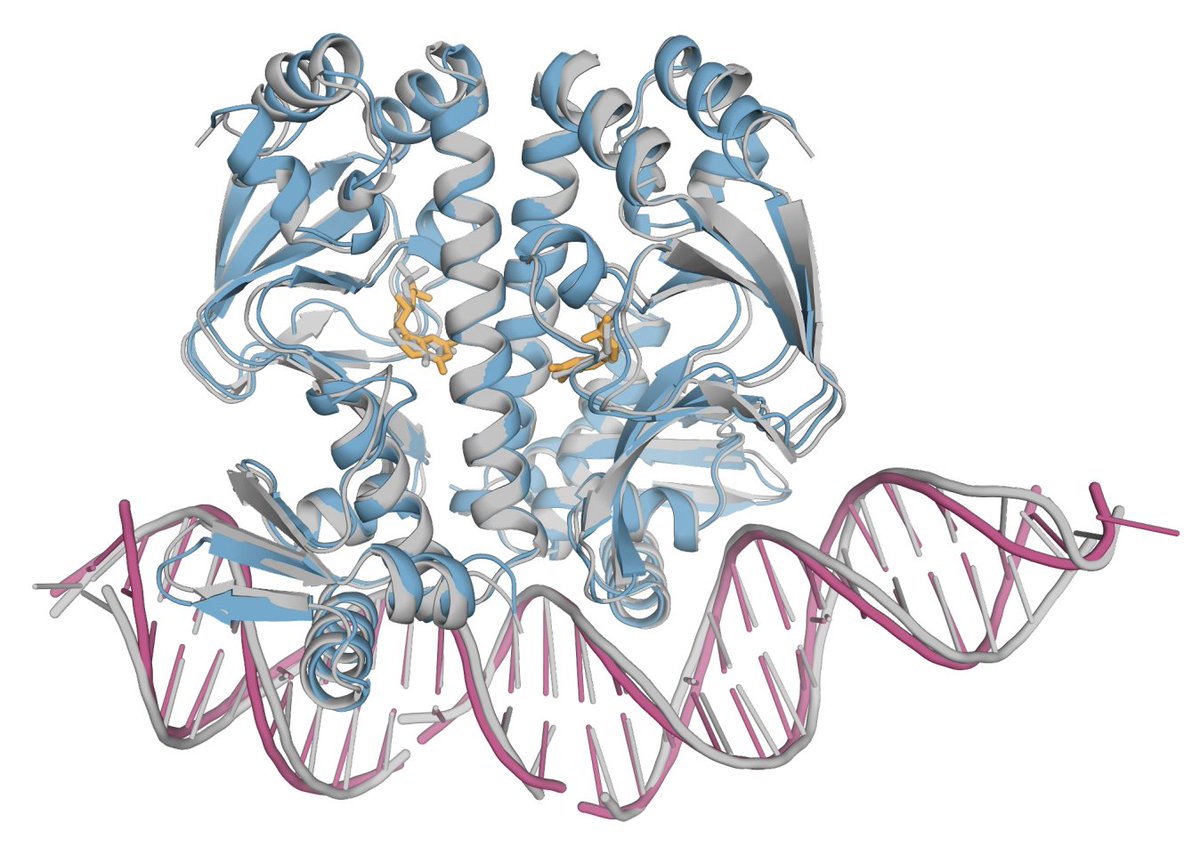
@DdelAlamo Nice. Also effectively in the proteina complexa paper tbf where the alpha carbon coords are denoised at a faster rate than the the latent variables
Structure or sequence – how should we represent proteins? This question has long challenged SOTA protein property prediction. Read our new post to get our take and meet Boltz-2-PPI, a minimal adaptation of Boltz for predicting protein–protein affinity 🧬👇
https://t.co/EdtK8erCL4
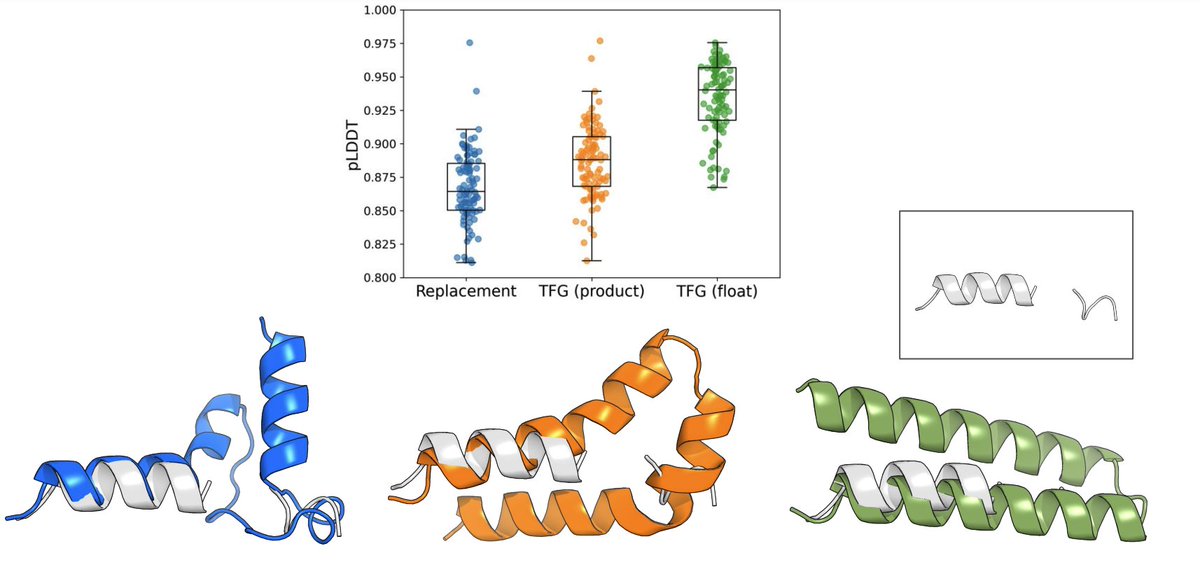
Off to #NeurIPS2024 next week where we are presenting our approach to diffusion sampling for generalised protein inpainting problems such as floating motif scaffolding and sequence editing. Drop by the AIDrugX Workshop or drop me a message if you're interested! @syntenyAI
@WChentong@DdelAlamo Yep true, another difference is that evodiff sort the contigs. i.e. for 1bcf "X,A92-99,X,A123-130,X,A47-54,X,A18- 25,X" becomes "X,A18- 25,X,A47-54,X,A92-99,X,A123-130,X". Which is way more native-like...
Big congrats to @aaron_lou, @chenlin_meng & @StefanoErmon on winning an #ICML2024 Best Paper Award for:
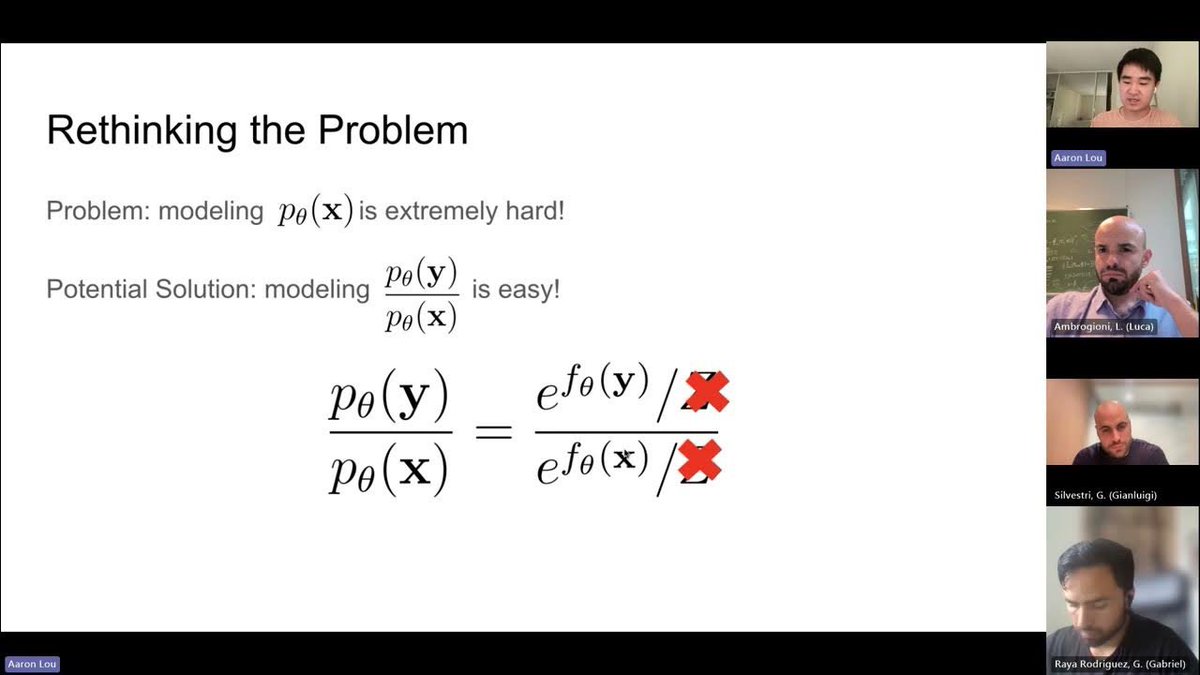
Discrete Diffusion Modeling by Estimating the Ratios of the Data Distribution
Exciting work improving diffusion models for symbolic data like text.
https://t.co/BL1wxYU7JC
How do healthy tissues evolve to become cancerous? Delighted to share our latest research tracking the somatic evolution that occurs in the decades before AML. 👇Implications for early detection and early interception. https://t.co/aJCATXkDKx
Not an ML expert, but want to understand AlphaFold3 (AF3)?
I wrote a simple-to-understand AF3 field guide and sprinkled my opinions in along the way.
The full essay is linked at the END of the thread.
Here's a TL;DR 🧵
New blog post alert! 🚨
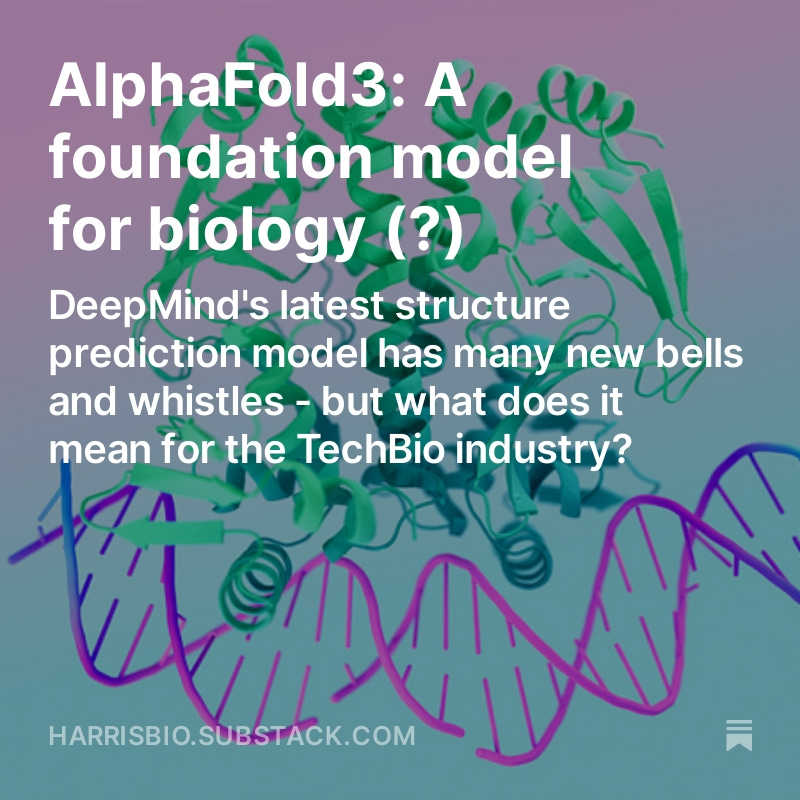
I write about AlphaFold3, how it works, where it works well ✅ (and where we think it might not ❌) and what it means to the TechBio landscape more broadly (if you decide to believe me). 🧬
(1/7) 🧵
https://t.co/wMXmUbtSmy
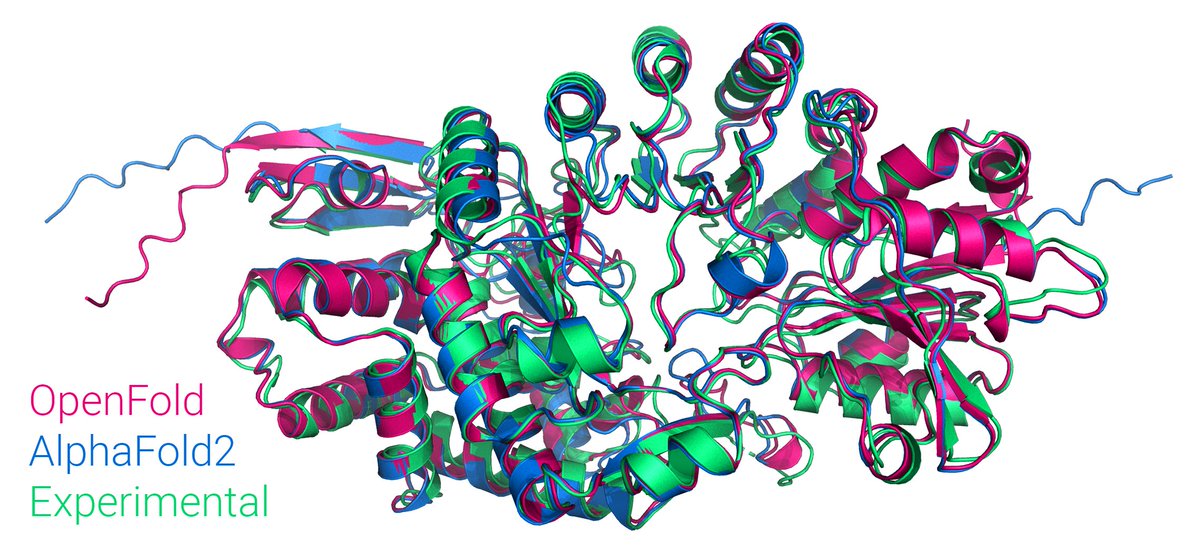
OpenFold paper is now out in @naturemethods. Timely. I’ll say more about AF3 at the end of this thread, but first I wanted to highlight what’s new since our initial release. (1/9)
Our fragment-based molecular generator, FragGT has been published with code. Had a lot of fun with this while on my year out. Thanks to @nathanbroon and @benevolent_ai for supporting open source science #guacamol
https://t.co/5zp4pmf2ad
here is sora, our video generation model:
https://t.co/CDr4DdCrh1
today we are starting red-teaming and offering access to a limited number of creators.
@_tim_brooks@billpeeb@model_mechanic are really incredible; amazing work by them and the team.
remarkable moment.
The first Practical Cheminformatics post of the year is a retrospective of papers published in 2023, “AI in Drug Discovery 2023 - A Highly Opinionated Literature Review”. https://t.co/Tan6Ir5kXg
some NeurIPS highlights:
LDM tutorial was great. the 1st part is a must-watch, the 2nd part is full of references for recent advancements, and you need to check the 3rd part if you're planning to use LDMs for something other than images/videos.
https://t.co/XHyqE2ZXMm
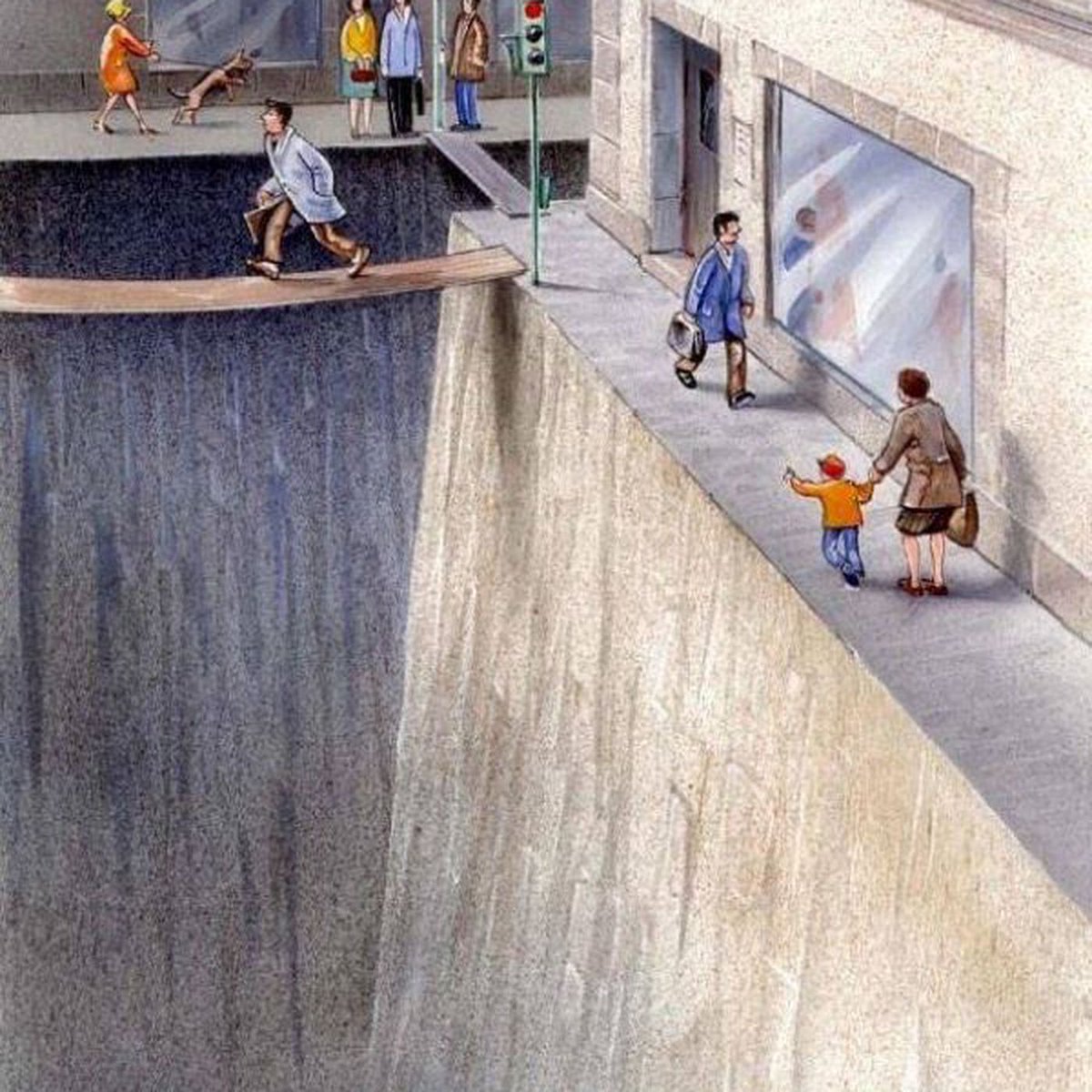
Ever since the invention of the car cities have been changing, and in the 1930s people like Norman Bel Geddes predicted exactly what would come to pass: cities designed for cars rather than people.
A feeling captured rather well by this cartoon...
New! We’ve just put up a note evaluating the latest, in-development version of AlphaFold (“AlphaFold-latest”). This is a preview - development is still in progress - but performance across a wide range of tasks is striking.
https://t.co/28nuVOir9v
Highlights in the thread.
1/7