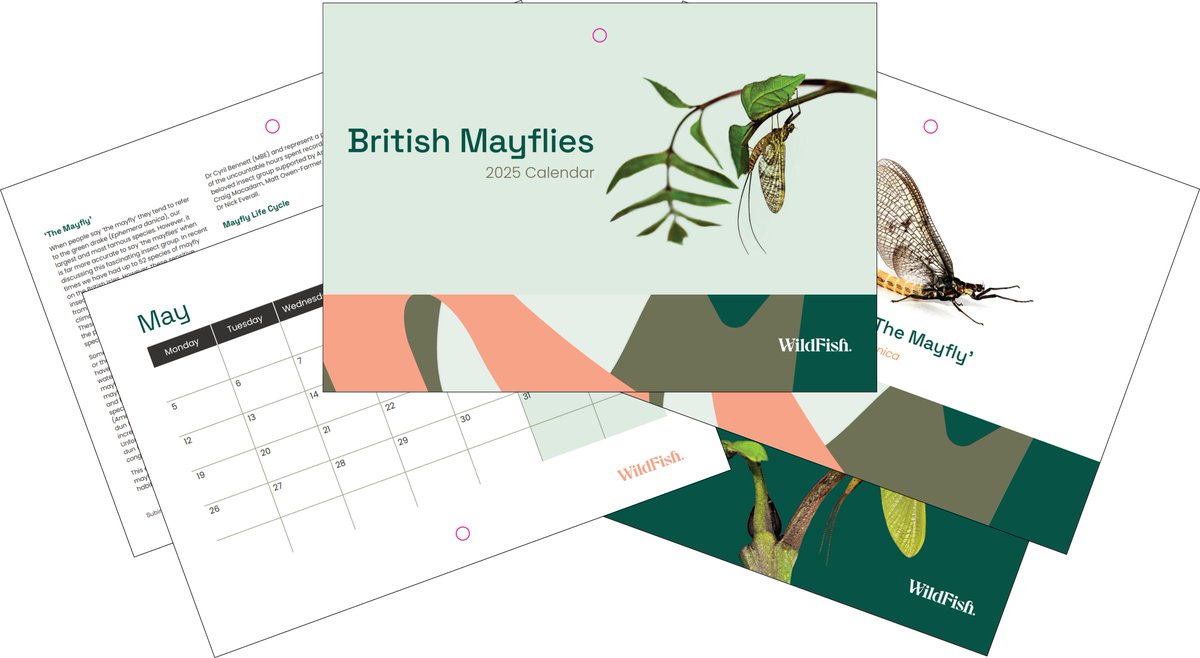
River lovers and bug nerds. Need to know the date in 2025? How about the @WildFishCons British Mayflies calendar? Featuring 12 of our native species photographed by mayfly aficionado Dr Cyril Bennett.
Order here -> https://t.co/LTZRwBMjb8
@bugsymac1@Riverflies @KeironDBrown
Freshwater invertebrates are excellent indicators of water quality in our rivers.
In @WildFishCons SmartRivers project we use macro images as a tool to teach our volunteers how to identify these critters.
These images are now available in an open -access library on our website.
Do you know your Stoneflies from your Mayflies? 🪳
Our new open-access image library is shining the spotlight on invertebrates - vital to our understanding of changes in water quality.
Access the library 👇
https://t.co/hZDb3HfHcS
We stand with @PAN_UK and call for a ban on the use of pesticides ☠️ in urban areas ✊ An Early Day Motion has been tabled in support of this. We need you 🫵 to contact your MP and make sure they sign it.
MP contact form is linked below👇
https://t.co/iq5y9xNXUa
Citizen Scientists, we need you!
Do you regularly spend time on a UK river? Or are you part of a volunteer group? If the answer is yes then SmartRivers could be for you.
Follow the link in our bio to find out how.
https://t.co/hfClSJw9kE
Last year, Save Windermere, in partnership with @MapImpact , embarked on a groundbreaking data collection programme, backed by the @spacegovuk , to study England's largest freshwater lake, Windermere.
Well, now we are incredibly excited to announce that we have the results! And they are incredibly straight forward:
➡️ There is a direct correlation between visitor loading in the area and algal growth in Windermere.
➡️ Algal growth has been shown to worsen when lake temperature increases.
➡️ There is no correlation between agriculture and algal spikes in Windermere.
➡️ In the last 3 years, there have been single days where over 300,000 people were in the catchment.
➡️ Despite owning the vast majority of sewage infrastructure in and around Windermere, United Utilities refused to provide any data for this publicly funded study to help protect our lake.
This work builds on Save Windermere’s growing, rigorous scientific portfolio working closely with organisations like @WindrushWasp and @WildFishCons but this catchment-wide study with @MapImpact , looking at the overall health of Windermere, has now clearly demonstrated that when more people are here, we see more algae in the lake and the climate exacerbates this issue even further.
This underscores the necessity for a long-term infrastructure investment plan, which surpasses the current inadequate proposals, addressing both untreated and treated sewage.
Save Windermere now has even more evidence that justifies our overarching campaign message; stop putting sewage in Windermere. This solution has been implemented in lakes all over the world including the famous Lake Annecy in France. Their lake is now free from sewage and is classified as the cleanest in Europe. Similar action must be taken to protect this nation’s lake forever.
Our full blog can be found here which also links to the full report and analysis produced by Map Impact ⬇️
https://t.co/PpQTWP8Vlo
@BBCNews story here ⬇️
https://t.co/ES2AxRq5eN
@BBCBreakfast@JonahFisherBBC
"Ever get the feeling that you’re being had? Presenting: the great sewage scam."
The wonderful @GeorgeMonbiot doing his best Johnny Rotten impersonation, well, almost.
If you're a govt minister, regulator or work in the water industry look away now.
https://t.co/83QUb55C7Z
It's time to go BIG and donate to our 2024 #GreenMatchFund campaign. For one week only, your donation will be doubled (yes, doubled!!!) to protect wild fish and their waters 👏
If you can, please donate today 👇
https://t.co/14NBzSuQ4a
The tragedy is that the law is not enforced. Ofwat and the EA have the means to force the water companies to fix it at their own expense. But they lack the will. Instead Water UK wants to stuff the customers with the bill.
4m hours of raw sewage discharges in England last year, figures expected to show. All because of 30 years failure by EA and Ofwat to enforce the law to stop water companies cheating our rivers and their customers https://t.co/48hISg3uSA
Unsurprising... but still shocking 💩
If "the heavy rainfall over the autumn and winter is likely to be blamed by the industry for the huge rise" then that bodes well given the expected increases to extreme weather due to climate change...
#stoptheshit
2023 was the worst year for raw sewage pollution yet.
We’re furious 😡 but not surprised. Water companies are using our rivers as sewers and failing to invest.
The solution: regulators must enforce the law and water companies should foot the bill.
https://t.co/3wJX2KXsTk
Chemical pressure (SPEAR) consistently comes up as a key issue in @WildFishCons SmartRivers citizen science data 🪲.
Chemcatcher data from the @EnvAgency and @portsmouthuni on chalk streams - the rivers Avon (SAC/SSSI) and Wylye - showed 78% of compounds were pharmaceutical 💊.
SmartRivers does calculate SPEAR which indicates chemical pressure on a river (it is skewed more to pesticides). To get details of the actual chemical compounds and their concentrations you need more investment, e.g. the chemcatchers I mentioned. Volunteers can begin the process!
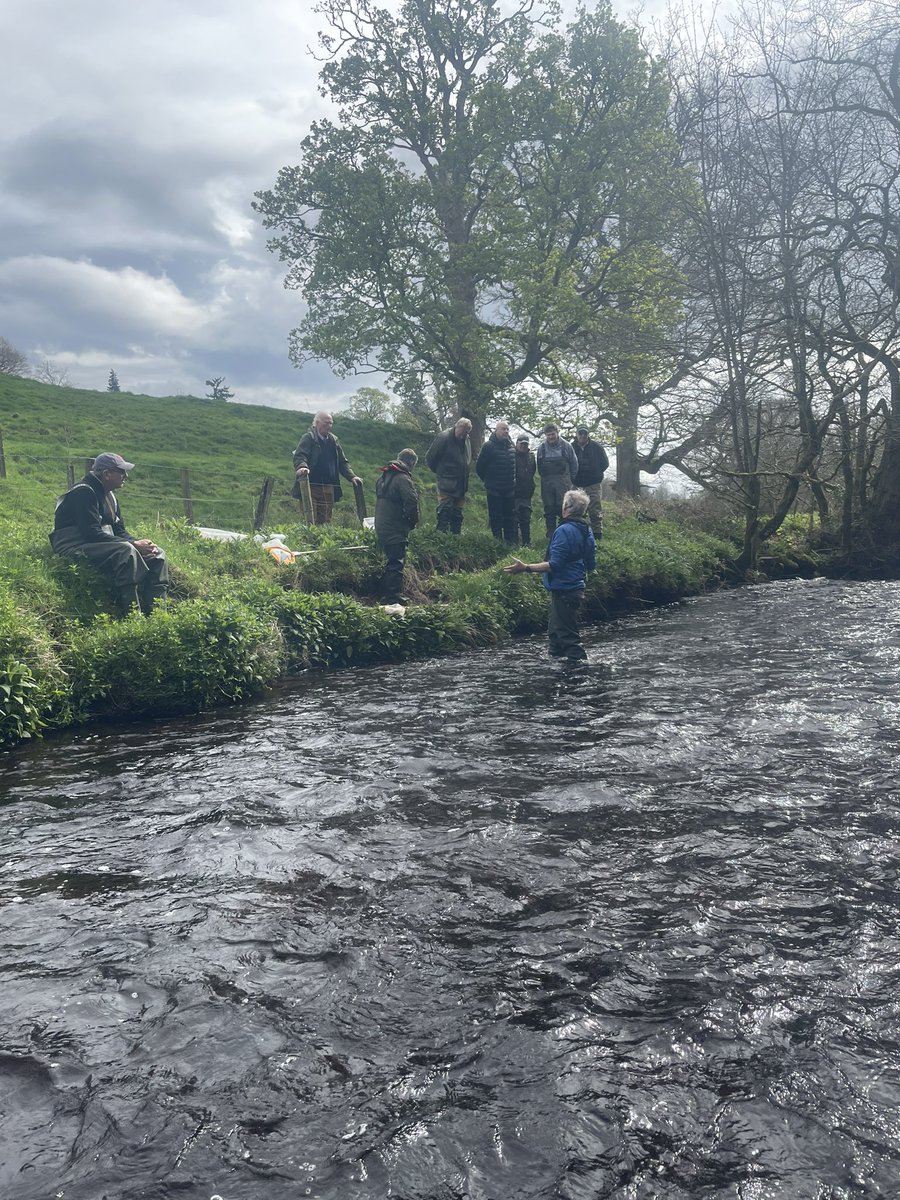
@SecretAngler@WildFishCons@MattStaniek I get your point. However, if we look at how our 3 min samples are subdivided into 12x15s samples. 30s is spent on each bank margin with remaining time split between the various in stream habitats. So arguably a representative sample of the invert community at a site at that time
@SecretAngler@WildFishCons@MattStaniek But we will be sampling the same sites this year as well so it will be interesting to see the populations present at the sites between years. Also worth noting these sites are targeted so we will have sites up/downstream of particular points of interest.
@SecretAngler@WildFishCons@MattStaniek We do take one sample at each site following standard methods as Kerry has highlighted. The idea of the 3-min kick sample is to get a representative sample of the invert community from all the available microhabitats in the survey area.