@Dr_R_Kurzrock Indeed! SWOG has just launched a study (S2511) testing multimodality therapy in the era of modern HER2 directed therapies for pts with oligometastatic HER2+ MBC.
https://t.co/xc1etzYpLE
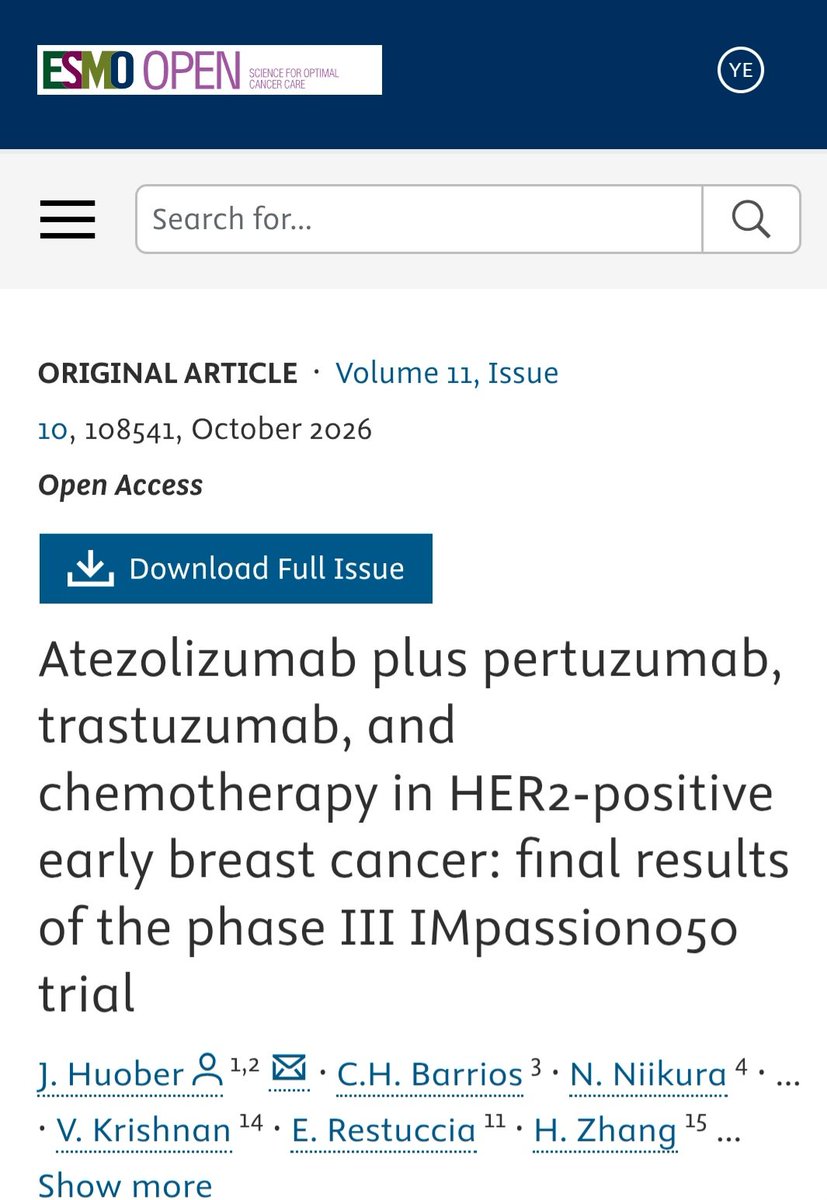
IMpassion050 final analysis:
In HER2+ EBC, adding atezolizumab did not improve pCR; at ~44-mo f/u, there was also no significant EFS (HR 0.90) or DFS benefit (HR 0.71).
The DFS signal in PD-L1− disease (HR 0.44) is intriguing, but with few events and wide CIs.
https://t.co/2HFFEDpdjd
Our immense desire to move every successful therapy in metastatic breast cancer to front line is stifling innovation. Also the “me too” mentality of every company buying the same drug is a challenge.
Hi from the clinic,
We need new targets, new payloads, new 2L and 3L options in TNBC and HeR2+ MBC!
This week in medicine
1. Dana-Farber/23andMe show that a rare inherited EGFR mutation increases lung-cancer risk 25-fold - and 62-fold in never-smokers.
2. City of Hope researchers develop a new blood test that detects early stage (I–II) pancreatic cancers with ~87% sensitivity - by combining a 10-miRNA signature with the existing test, CA19-9. Bigger trials up next.
3. Novo’s CagriSema delivers 19% placebo-adjusted weight loss in a phase 3 obesity trial - and, in a separate phase 3 trial in type 2 diabetes, beats low-dose tirzepatide for weight loss (12.4% vs 9.1%).
4. Mayo Clinic/n-Lorem researchers develop a personalized antisense oligonucleotide for a single patient with CHCHD10-mutant ALS. After a year, markers of neuronal damage dropped, and clinical/lung function stabilized or even improved.
5. GenFleet’s oral KRAS G12D ON/OFF inhibitor produces responses against both pancreatic and lung cancer in a phase 1 trial - and moves straight to phase 3. Its differentiation is that it targets both active and inactive KRAS.
6. Brigham researchers find evidence that Epstein–Barr virus reactivation precedes multiple sclerosis relapses by weeks to months.
7. Stanford researchers build a Virtual Biotech, with >37,000 AI agents - finding that drugs targeting cell-type-specific genes were 48% more likely to get approved, with 32% fewer adverse events.
8. Bayer’s finerenone gets FDA-approved for chronic kidney disease in type 1 diabetes - the first new treatment for this population in more than 30 years.
9. Stanford researchers find that the anti-seizure drug, levetiracetam, may directly inhibit diffuse midline glioma. Children taking it had longer survival (in retrospective cohorts) - prospective trials up next.
10. A European trial finds that, after removal of high-risk colorectal adenomas, waiting 5 years for the first surveillance colonoscopy is just as good as doing one after 3 years - potentially almost halving the number of follow-up colonoscopies needed.
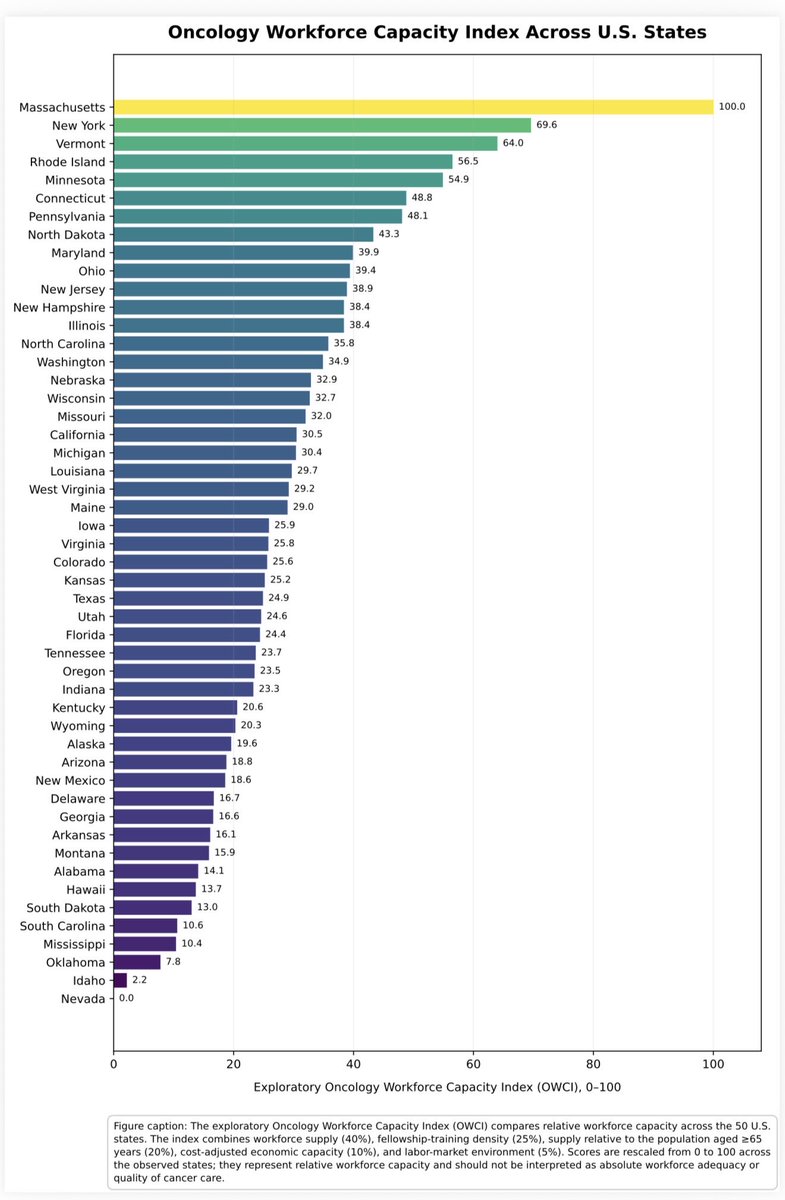
🇺🇸 Where is the strongest oncology workforce capacity in the U.S.?
We developed an exploratory Oncology Workforce Capacity Index (OWCI) integrating Hem/Onc physician supply, fellowship training, demographic need, economic capacity, and labor environment.
The striking finding: oncology workforce capacity varies dramatically across states.
This isn’t a measure of cancer-care quality—it highlights how differently oncology resources and infrastructure are distributed across the country.
Could this help identify where future workforce investment is needed most? 🩸🎗️
#Hematology #Oncology #CancerCare #HealthcareWorkforce #HealthPolicy #MedEd #USMIRC
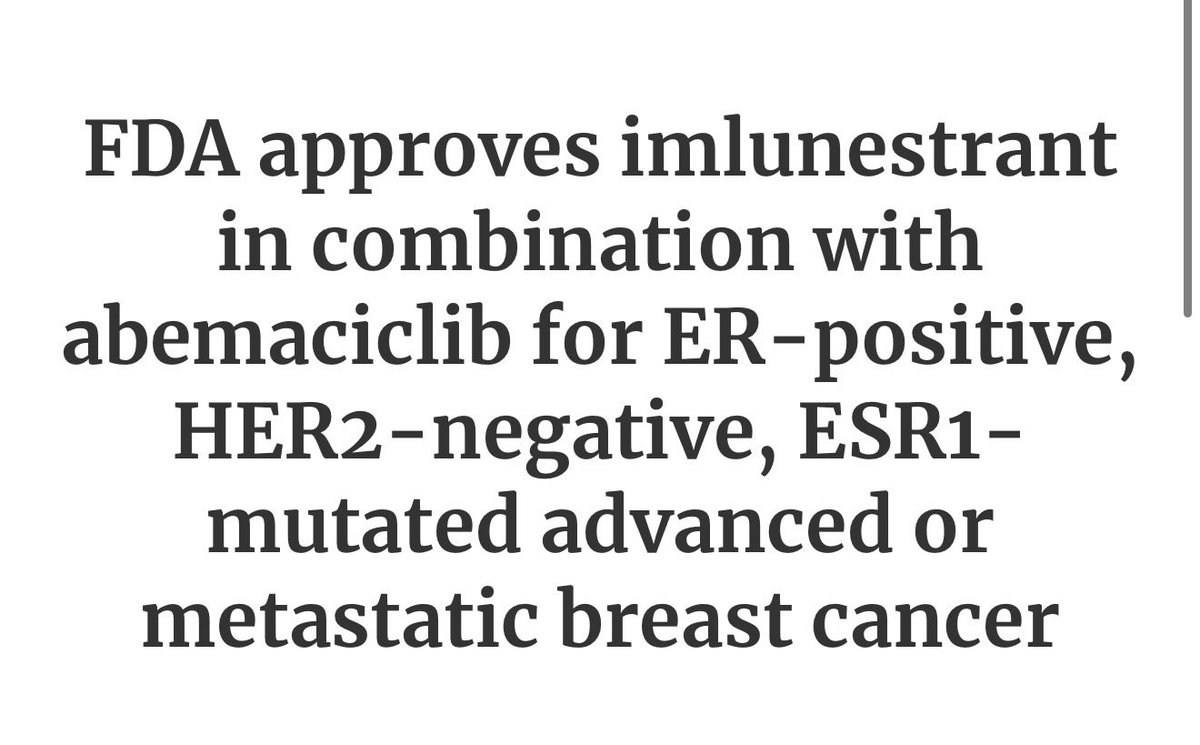
FDA has approved imlunestrant + abemaciclib for adults with ER+/HER2−, ESR1-mutated advanced/metastatic breast cancer.
In the EMBER-3 ESR1-mutant subgroup:
• mPFS: 11.1 vs 5.5 months
• HR 0.53
• ORR: 35% vs 15%
#BreastCancer#ESR1#FDA#BCSM@Larvol@OncoAlert
Really fabulous figure here that summarize, which endocrine therapy combo should be used for each risk category in premenopausal HR+/Her2 negative breast cancer. #breastcancer#bcsm
Ok- now we are up to 4 options in ESR1m 2nd line MBC:
Elacestrant
Imlunestrant
Imlunestrant + abema
Vepdegestrant
Great to have a combo option!
https://t.co/P9JavZNzVd
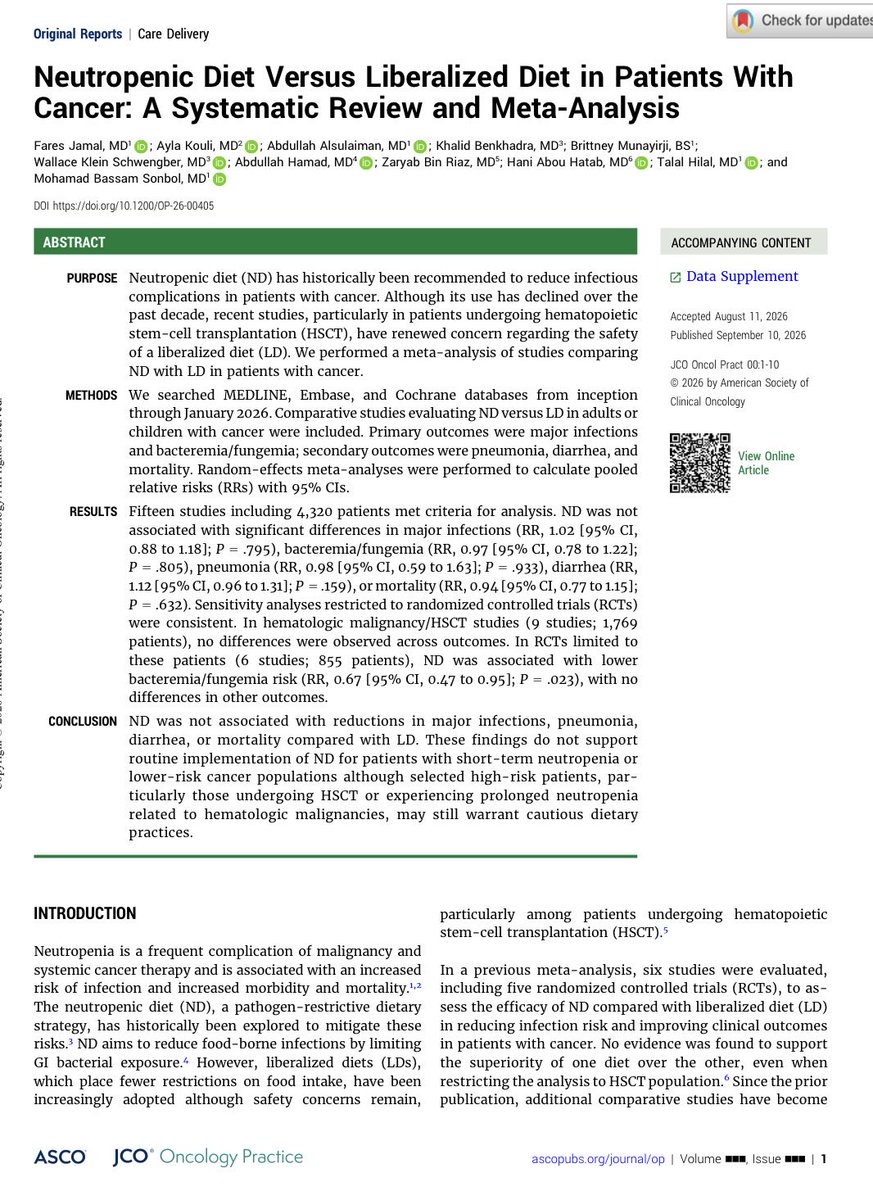
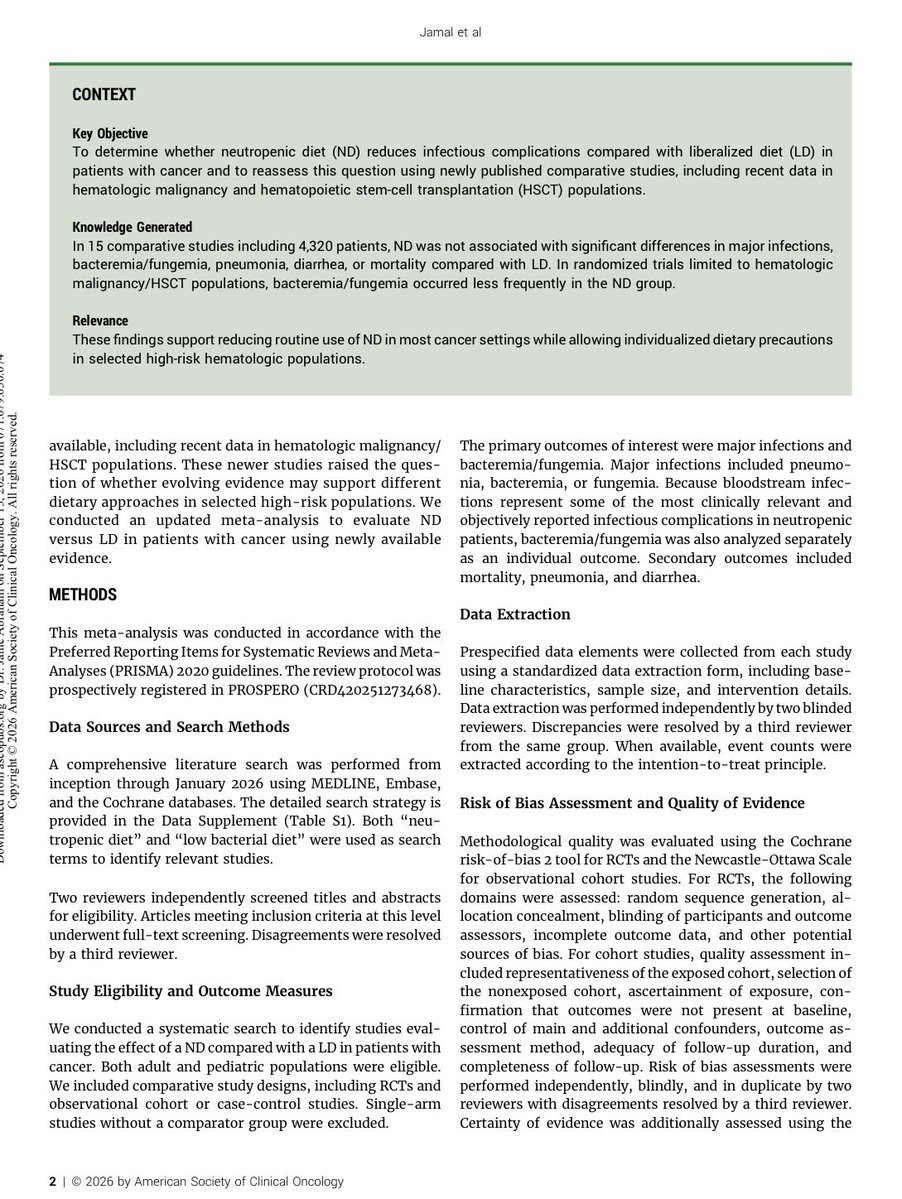
Neutropenic Diet Versus Liberalized Diet in Patients With Cancer: A Systematic Review and Meta-Analysis
New meta-analysis of 15 studies involving 4,320 patients with cancer found that routine neutropenic diets did not reduce major infections, pneumonia, diarrhea, or mortality compared with more liberalized diets.
These findings support moving away from routine dietary restrictions for most patients, while individualizing care for high-risk populations. #Oncology #CancerCare https://t.co/xtCnX9MkuO @JCOOP_ASCO@ASCO@OncoAlert
Miami Breast 2027 is coming! Miami Breast brings together experts to discuss what’s changing in breast cancer care. As co-chair, I am excited about our meeting March 4-7, fabulous faculty and discussions. Register for free using my last name!
🔗 https://t.co/VFBYaLzjvl
Steroid free antiemetic regimen in Phase III trial!
Phase III (DESCEND, n=644): with NEtupitant/palonosetron (NEPA), a fixed-dose oral com-
bination, improves CINV control + olanzapine as the shared backbone, both cutting dexamethasone to a single 6mg dose on day 1 and dropping it entirely were noninferior to standard 4-day DEX for CINV in highly emetogenic chemo.
CR (complete response: no emesis, no rescue meds), 0-120h: 72.4% standard vs 72.2% DEX-sparing vs 70.1% DEX-free. Both met noninferiority, confirmed per-protocol.
Steroid toxicity (insomnia, agitation, hiccups) dropped significantly in both reduced-DEX arms. @KlugmanMaddie
Meng et al, JCO 2026
https://t.co/aEEwICTW1X
#oncology #breastcancer #CINV
🚨⁉️
Following persevERA, SERENA-4 is also negative: the strategy of using an oral SERD from day one in an unselected patient population did not work.
Precision medicine means treating according to tumor biology, not giving the same treatment to everyone.
A note to pharmaceutical companies: In trying to broaden indications, these negative results may also make us question your previous approvals. The place of oral SERDs is in ESR1-mutant disease.
The lidERA study needs to be discussed separately. Since there was no CDK4/6 inhibitor, if endocrine blockade was insufficient, it may have revealed a difference in the ET backbone. However, once blockade is strengthened with a CDK4/6 inhibitor, the added benefit of oral SERDs probably becomes less meaningful. Of course, this is just one of the possible hypotheses.
I look forward to seeing the full datasets.