Actually, @educator4ever36. and the opponents on this thread are actually correct, although they may not know the reason.
It’s easy to think it’s just about aesthetics, but Cognitive Load Theory shows that high visual noise bombards limited working memory. Studies prove over-decorated rooms split attention, lower retention, and hurt focus. Keeping the front wall clear leaves brainpower for actual learning. 🧠🎨
@crystalwizard I don’t see art or music anywhere near lists like this, or on the SAT or ACT exams. It looks like I may the clue you’re looking for Kathleen Kennedy.
A $500 drone can destroy a $3 million dollar tank. Incredible. My son writes about the evolution of warfare since the start of the war between Ukraine and Russia.
https://t.co/s4ZEyrgrL2
@greg_ashman
Here is the paper. Nidhi discusses it in her substack: https://t.co/5ldbKIeAOO
Zhu, J., Liang, J., & Goddard, R. D. (2026). Teacher-centered vs. student-centered instruction: mitigating the socioeconomic achievement gap through differential access and returns. British Journal of Sociology of Education, 1-22. https://t.co/ArSCaiX5HC
@DanaPalubiak@greg_ashman Also, Zhu was not a randomized trial. That means it can show associations between instructional style and SES gaps, but it can’t prove teacher-centered instruction causes the gap to shrink.
Dana, slow down a little and provide more detail details to your references, so people can look at them and have a good discussion.
Zhu et al. (2026) doesn’t prove explicit instruction closes gaps. It’s correlational evidence from classroom data, so the safest claim is that explicit teaching may help as a foundation, not as the whole answer.
I think she’s talking about a Peter Sullivan article. “The Potential of Open-Ended Mathematics Tasks for Overcoming Barriers to Learning”
Sullivan’s point is interesting, but the study design is weak for strong causal claims. It’s a small, school-based intervention with no random assignment, no clear control group, and limited outcome data. At best, it shows open-ended tasks can work with the right supports—not that they reliably improve outcomes for disadvantaged students in general. Which is probably why she’s not sharing a link or reference.
I’m sorry, but I’ve worked in two school districts in 26 years and I have never seen any of that occur. Coaches are paid separately and teachers from any discipline can coach.
As far as art, music or drama, the only after school or weekend work I see is when there’s a performance or art show, which is generally twice a year at most. And they also are given a stipend for that.
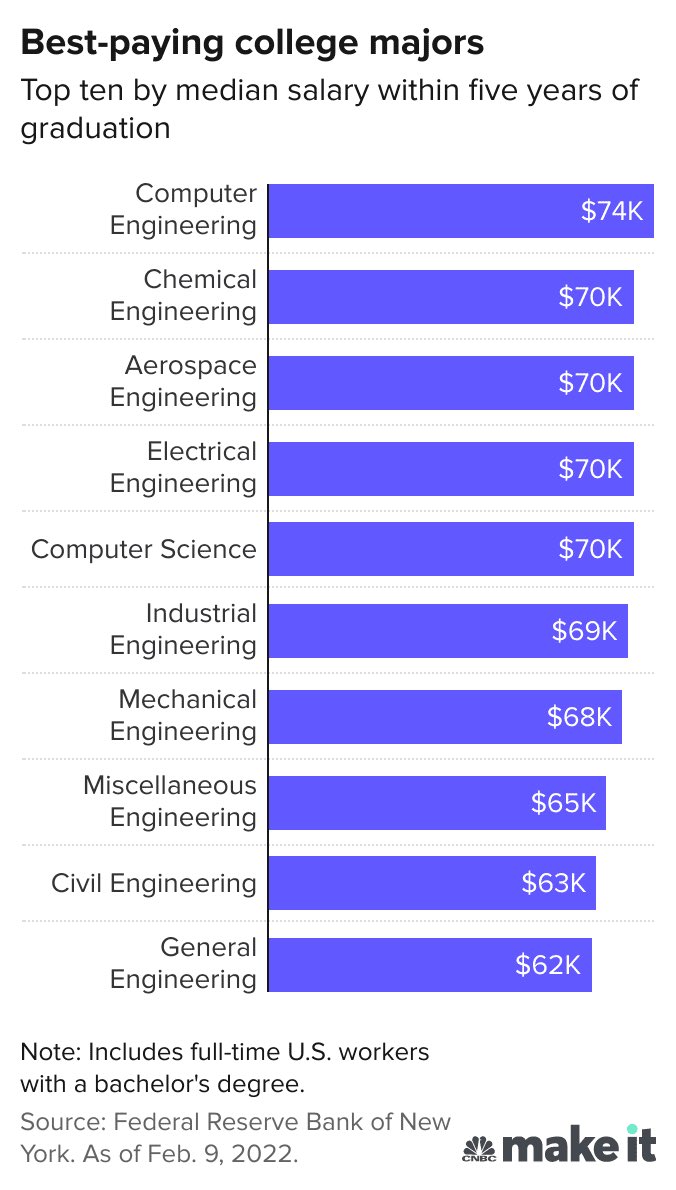
Math and science teachers carry a workload that goes well beyond the classroom: high-stakes state exams, mandatory data tracking, technical grading at volume, and real professional consequences when scores fall short. A physics or math grad can earn nearly double in the private sector — choosing the classroom is already a financial sacrifice. Shortage-field compensation isn’t about ranking teachers — it’s about recognizing that sacrifice and keeping qualified people in front of students.
The editors of Assessment in Education: Principles, Policy and Practice are producing a special issue honoring the work of Paul Black. I was asked to write about our 1998 paper on formative assessment and our follow-up work; you can read it here: https://t.co/UpBLjXyjKn
i’ve been saying for years that kids walk into my math classroom after Spanish 5 and unless they’re native speakers, they couldn’t order a burrito with extra cheese.
If we’re going to teach languages, students should learn to speak the languages. Otherwise it’s a tremendous waste of money and resources.
🚨New episode now live! Thomas Briggs and David Shuck join me to discuss why bad education ideas can persist—even in the face of evidence.
We unpack flawed advanced math placement decisions, San Francisco's detracking experiment, the New York math briefs controversy, discussing what went wrong and why.
Link below 👇