Médico Especialista en Nefrología y Medicina Interna. Mi razón de ser y total compromiso es con mis pacientes, siempre con una base sólida en conocimientos.
🩻Contrast-induced AKI:
one of the biggest myths still shaping clinical decisions
For decades we were taught:
👉 “Contrast damages the kidneys”
👉 “Avoid CT with contrast in CKD”
👉 “Hydrate, protect, delay imaging if needed”
But what if… most of this is wrong?🤔
->The uncomfortable reality
Modern evidence shows:
👉 Low-osmolar contrast rarely causes true nephrotoxicity
👉 Even in CKD, AKI, and ICU patients
👉 The risk is often overestimated—or nonexistent
So where did the fear come from?
📍 1950s high-osmolar contrast (actually toxic)
📍 Poorly controlled observational studies
📍 “Creatinine rise = contrast injury” assumption
👉 Correlation became causation
👉 And the dogma stayed
⚠️What recent data tells us
✔ No difference in AKI rates with vs without contrast
✔ No benefit from bicarbonate, NAC, or aggressive hydration
✔ Even ICU and AKI patients show no worsening outcomes
->Translation to real life
👉 The patient was going to develop AKI anyway...Not because of contrast!!
->The real problem: “Renalism”
👉 Avoiding necessary imaging
👉 Delaying diagnosis
👉 Choosing inferior tests
And that leads to:
❌ Missed PE
❌ Delayed sepsis source control
❌ Worse outcomes
->Clinical mindset shift
Instead of asking:
👉 “Will contrast harm the kidneys?”
We should ask:
👉 “Will NOT doing the scan harm the patient?”
->Who still deserves caution?
✔ eGFR <30
✔ Severe hemodynamic instability
✔ Multiple nephrotoxins
Even then:
👉 Optimize volume
👉 Minimize dose
👉 Don’t delay critical imaging
🤓Bottom line
✔ Contrast nephrotoxicity exists… but is rare
✔ The fear is bigger than the risk
✔ The harm of NOT imaging is often greater
In critical care
👉 We don’t treat creatinine
👉 We treat patients
And sometimes…
👉 The most dangerous thing is NOT the contrast
👉 It’s hesitation.
📃Reference
Florens N, Demiselle J.
Kidney360 7: 445–449, 2026. doi: https://t.co/CWzi7WC9Wx
🔥 Una nueva actualización sobre el tratamiento hipolipemiante. Guidelines 2026 #ACC/#AHA, mucho para leer y discutir.
💡Destacó 10 ideas y alguno de los principales algoritmos del documento para @clinicasac.
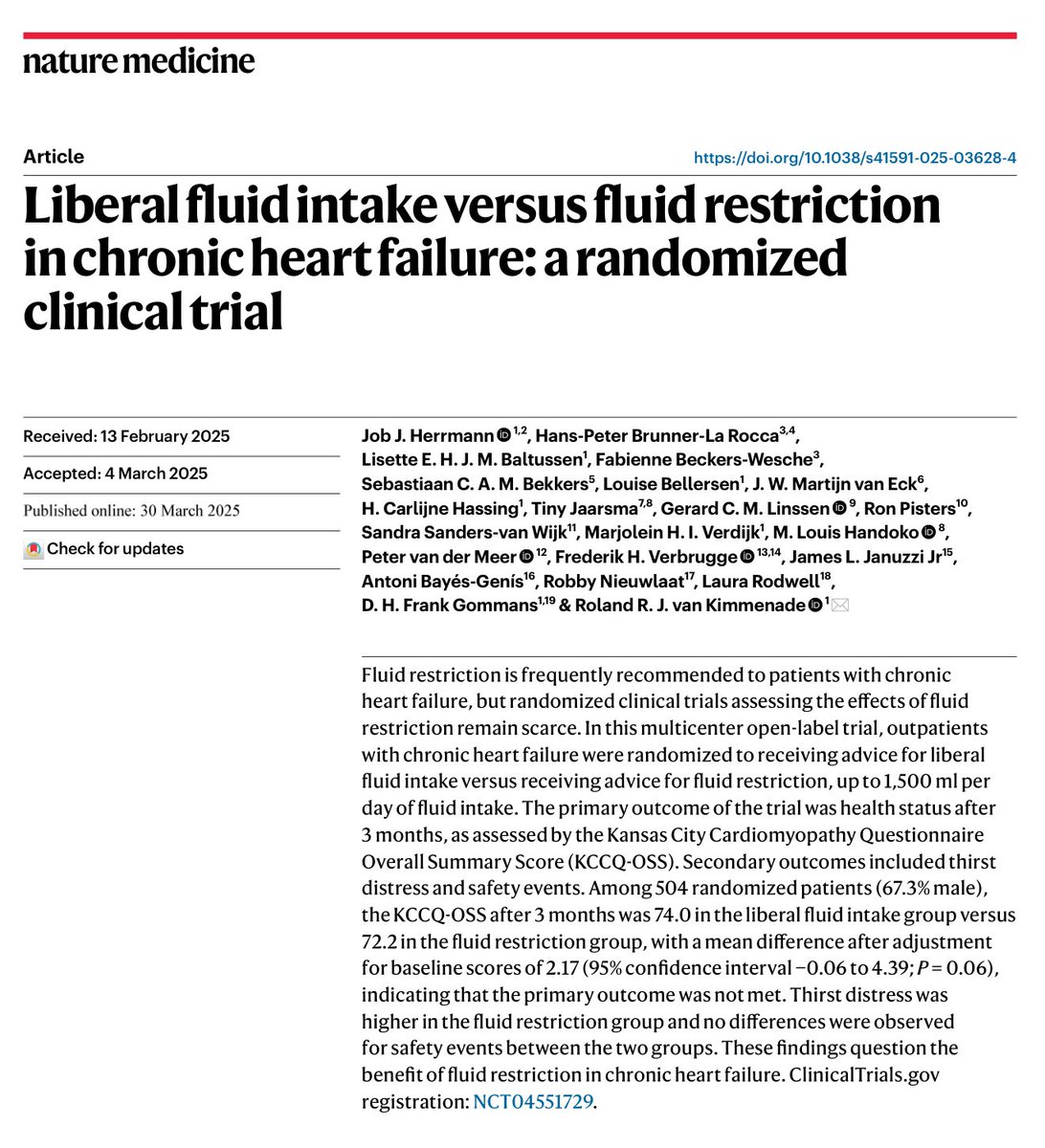
📌Estudio FRESH-UP
Ingesta de líquidos en #InsuficienciaCardiaca: liberal 🆚 restricción
🤭Los mitos se caen
Restringir los líquidos (<1500 ml) no tiene beneficio, disminuye el bienestar a los pacientes
👥504 NYHA II-III
⏱️ Seguimiento por 3 meses
❌No recomendar restricción de líquidos para prevenir la congestión.
🚨La restricción puede incrementar la sensación de sed, hospitalizaciones, AKI
🔔 En #IC avanzada, es lo mismo?
Tampoco restringimos, individualizamos pero se necesitan estudios en esta población
https://t.co/znDzLYPp3V
#HeartFailure #CardioEd #CardioTip #MedTwitter #Medicina #Cardiology #Cardiologia
¿Todavía ajustas el Ca a las proteínas?. En @JAMA_current - https://t.co/1CeAE1HlOu - vuelve a demostrarse que: Es mejor el Ca no ajustado. El ajustado sobreestima las hiperCa e infraestima las hipoCa. Para ajustes finos o dudas: Ca iónico - @SOMANEorg@SENefrologia#Nefro_8_01
Nuestro nuevo Artículo Original está en línea y gratis
El primer metaanálisis de lesión renal aguda en México, reportamos su alta incidencia (35%) y mortalidad (36%), entre otras cosas
Junto con @zaragozagalvan y Armando Vázquez
Renal Failure 2025
https://t.co/PSN5bNpzYU
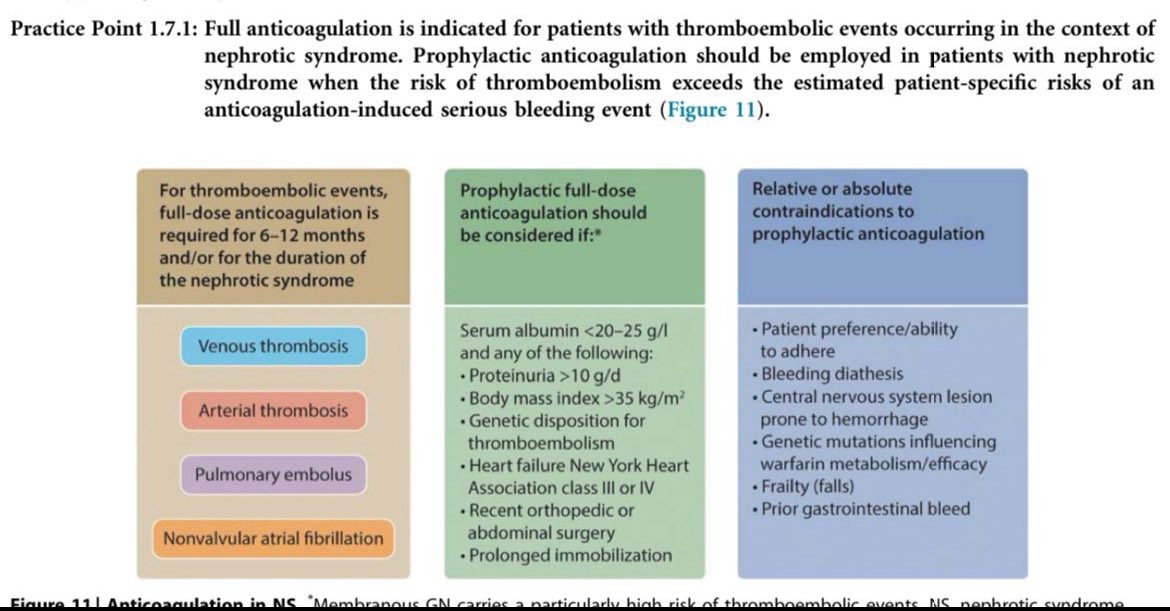
✅Prophylactic anticoagulation in nephrotic syndrome
🅰️Hypoalbuminemia (<2) with one of following
🎯Proteinuria >10gm/day
🎯BMI> 35
🎯Heart 💔 failure
🎯Genetic predisposed for thrombosis
🎯/Recent abdominal surgery
@goKDIGO@ISNkidneycare
Con gota y enfermedad renal crónica G3, utilizar alopurinol para alcanzar meta de ácido úrico (<6 mg/dL), comparado a no hacerlo, no solo mantiene función renal, también ↓11% el riesgo de diálisis
Emulación de ensayo clínico
JAMA Intern Med 2024
10.1001/jamainternmed.2024.6212
Nuevo criterio diagnóstico de prediabetes y diabetes:
Carga de 75 gramos oral con glucosa en suero a la hora.
≥ 155 mg/dL = Prediabetes
≥ 209 mg/dL = Diabetes
Referencia: https://t.co/4B6NlKoexu
🧠¿Cuando puedo iniciar ACOD después de sufrir un 💥ictus isquémico?
➡️Regla de 1-3-6-12 🗓️días
🌏base datos combinada de 2 registros 🇯🇵japoneses, se determinó el momento óptimo para iniciar ACOD
💊 ACOD tienen principal ventaja de menor riesgo hemorragia intracraneal