¿Quieres protegerte contra el estrés?
Haz 30 min de ejercicio intenso (70% de tu máximo).
Un estudio lo demuestra:
🔥 La subida de cortisol ante un estrés fue 50–75% más lenta tras entrenar fuerte.
🔥 El pico de cortisol llegó antes y más bajo
🔥 Recuperación 10 min más rápida al nivel previo al estrés (81 vs 91 min).
Truco práctico:
➡️ Si hoy tienes algo estresante, entrena intenso antes.
➡️ Si puedes, haz tu entrenamiento fuerte por la mañana: te deja “protegido” del estrés todo el día.
La ventana terapéutica temprana importa.
Lograr ≥15% de pérdida de peso en los 2 primeros años tras el diagnóstico de DM2 se asoció a:
🔻14% menos eventos macrovasculares
🔻10% menos microvasculares
✅ mejor control glucémico y de TA… con MENOS fármacos
n=72.480, datos reales (CPRD, UK). Estudio observacional: asociación, no causalidad. @DiabetesCareADA
🔗 https://t.co/O9b3KBscaf
For those who do hospital-based medicine, the ritual of the daily exam discussed here. We're probably going to keep doing at least some of it even though it usually yields nothing. Here's why.
(Link in ⬇️) @NEJM@NEJMClinician
Brief, positionally triggered vertigo with transient nystagmus on the Dix-Hallpike test is characteristic of #BPPV, a common and treatable cause of dizziness.
📊 Learn more in this JAMA Insights. https://t.co/WesWZtEjD2
@ElArteDeLaVidaX En el índice de saciedad de Holt la patata cocida marcó 323 frente a 100 del pan blanco: el alimento más saciante de los 38 que midieron. Lo curioso es que frita pierde más de la mitad de ese efecto. La forma de cocinarla cambia por completo el resultado.
🤓¿Seguimos evaluando la obesidad solo con el IMC?
Las guías 2026 recuerdan que el IMC es útil, pero no suficiente. La circunferencia de cintura y relación cintura/talla pueden detectar mejor el riesgo.
La obesidad requiere composición corporal, historia de peso, sueño, estrés...
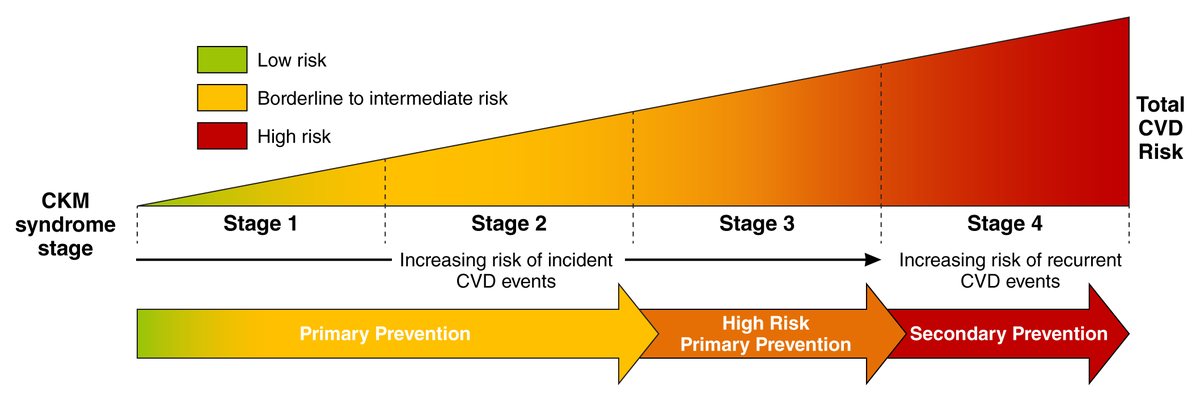
Progression along the spectrum of cardiovascular-kidney-metabolic (CKM) syndrome stages is accompanied by increasing absolute risk of cardiovascular disease. This framework highlights the cumulative and progressive nature of CKM-related risk.
📷 Conceptual crosswalk between absolute risk of cardiovascular disease and cardiovascular-kidney-metabolic syndrome stages
✍🏼 @HeartDocSadiya@RangaswJ@pnatarajanmd@dramitkhera@NicoleBhaveMD@yuan_lu1@rblument1 @JenHoCariology @virani_md@ChiadiNdumele
GLP-1 drugs in people with obesity (no diabetes) and the link to reduction of cancer
Among nearly 230,000 individuals, there was >40% overall reduction in 13 cancers associated with obesity with just 2 years of follow-up. Not proof of cause and effect, but consistent with many recent reports on the link between GLP-1 drugs with less cancer
https://t.co/X1P9xe8z2O
Here’s a MASSIVE summary of Retatrutide - the upcoming triple agonist from Eli Lilly and how it compares to Tirzepatide and Semaglutide.
What about side-by-side side effect comparison by dose?
What do the trials show?
Full detailed article in attached tweet below.
Presented at #ADASciSessions:
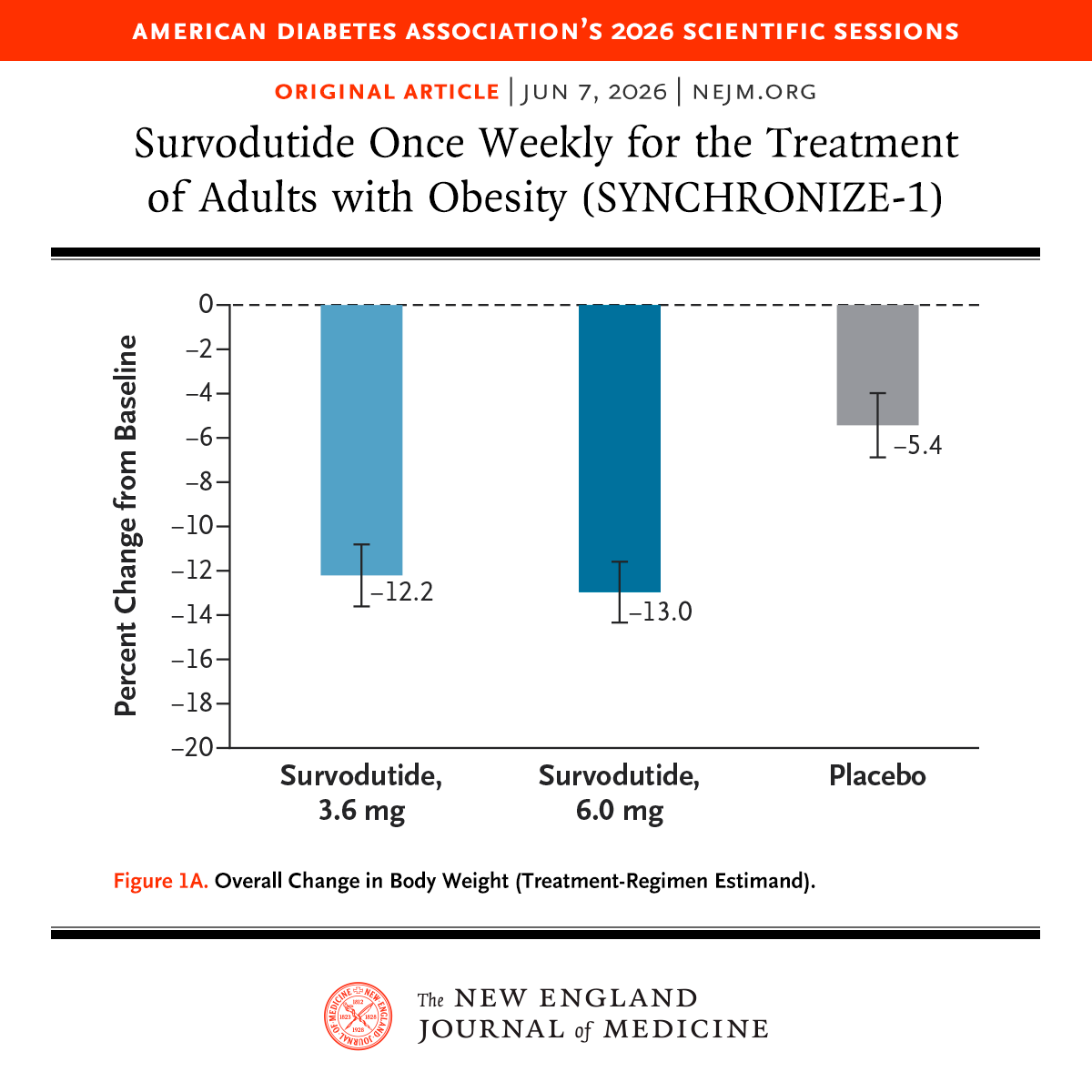
In a phase 3 trial involving adults with obesity but without diabetes, the glucagon receptor–GLP-1 receptor dual agonist survodutide led to significantly greater reductions in body weight than placebo. Full SYNCHRONIZE-1 trial results: https://t.co/N2C5YOBnpn
@ADA_DiabetesPro
LA ACTIVIDAD FÍSICA MEJORA MUCHO MAS QUE EL PESO CORPORAL
El ejercicio puede:
• mejorar sensibilidad a la insulina
• reducir presión arterial
• mejorar perfil lipídico
• preservar masa muscular
• aumentar capacidad cardiorrespiratoria
incluso con pérdidas de peso modestas.
¿Y si el objetivo principal no fuese solo adelgazar?
Nuevo artículo →https://t.co/lcIMXYsXlZ
https://t.co/ghlyA0rsYU
Diez personas de unos 90 años, frágiles y viviendo en una residencia, entrenaron fuerza de piernas 3 días por semana.
En 8 semanas aumentaron su fuerza un 174%.
Casi la triplicaron.
Y ganaron masa muscular en el muslo.
Partían de muy débiles, cierto. Pero el cuerpo respondió. A los 90.
Es un estudio clásico, pero señala que nunca es tarde para empezar.
Fuente. Fiatarone MA, et al. High-intensity strength training in nonagenarians. JAMA. 1990;263(22):3029-3034.
There's no free lunch when it comes to GLP-1's (or anything, for that matter)... 👇
A consistent response of folks who go on a GLP-1 is increased resting heart rate and HRV going through the floor!
This is displayed in the attached data from @JohnGoldman - when he decided to come off Reta for exactly this reason...
You can see the difference in his HRV just from coming off his GLP-1 is night and day!
The reason for this is pretty simple...
The Parasympathetic Nervous System of the body (that HRV represents) is the "rest and digest" or "feed and breed" system. The PNS is activated after significant energy depletion to tell the body - You need to refuel - time to eat! Obviously, folks taking a GLP-1 want to significantly dial down these "time to eat" signals!
In the body, this happens post PNS activation...
1/ Expend a lot of energy.
2/ Get tired and hungry
3/ Eat!
4/ GLP-1 released to say "you've eaten enough"
When you take an artificial GLP-1 agonist, you skip over the PNS-mediated steps 1,2,3 and live perpetually in step 4 (a move back to SNS modulated - "time to expend energy" phase. This is reflected in high resting heart rate and shitty HRV.
IOW, skipping over steps 1,2,3 of nature comes at a cost. It might be a worthwhile cost if you're 300 lbs and have trouble moving enough. But, for most of us, my advice...
Don't mess with nature.
Do what you were built to do...
Move a lot.
Eat a lot.
Sleep a lot.
🧑⚕️Manejo de la hipotensión ortostática.
🟣La hipotensión ortostática es una afección común pero poco reconocida que aumenta con la edad y se asocia con una menor calidad de vida, caídas y mayor mortalidad. La frecuente coexistencia de hipertensión en decúbito supino e hipotensión posprandial con hipotensión ortostática dificulta su manejo.
🟣Se debe realizar una prueba de hipotensión ortostática en pacientes con síntomas ortostáticos (p. ej., cambios en la visión y mareos que ocurren solo en posición vertical y mejoran al sentarse o acostarse), así como en pacientes asintomáticos en grupos de alto riesgo como adultos con fragilidad mayores de 70 años, personas con trastornos neurodegenerativos o autonómicos y pacientes con caídas inexplicables. Los pacientes con hipotensión ortostática deben someterse a una evaluación de hipotensión posprandial e hipertensión en decúbito supino para orientar el enfoque del tratamiento. Las estrategias no farmacológicas, como la revisión de la medicación, el aumento de la ingesta de sal y líquidos, las prendas de compresión y las modificaciones conductuales, sirven como enfoques fundamentales para tratar la hipotensión ortostática. La midodrina y la droxidopa son los únicos medicamentos aprobados por la Administración de Alimentos y Medicamentos de los Estados Unidos (FDA) para la hipotensión ortostática.
🟣Los objetivos del tratamiento de la hipotensión ortostática no se centran en la medición de la presión arterial, sino en el alivio de los síntomas y la prevención de caídas.
👉Moloney D, Youssef A, Okamoto LE. Management of Orthostatic Hypotension: A Review. JAMA Intern Med. 2026;186(6):744–753. doi:10.1001/jamainternmed.2026.0284
https://t.co/8D7x1X8gGp
✍️Vía: Dr. @mrcsgmb84
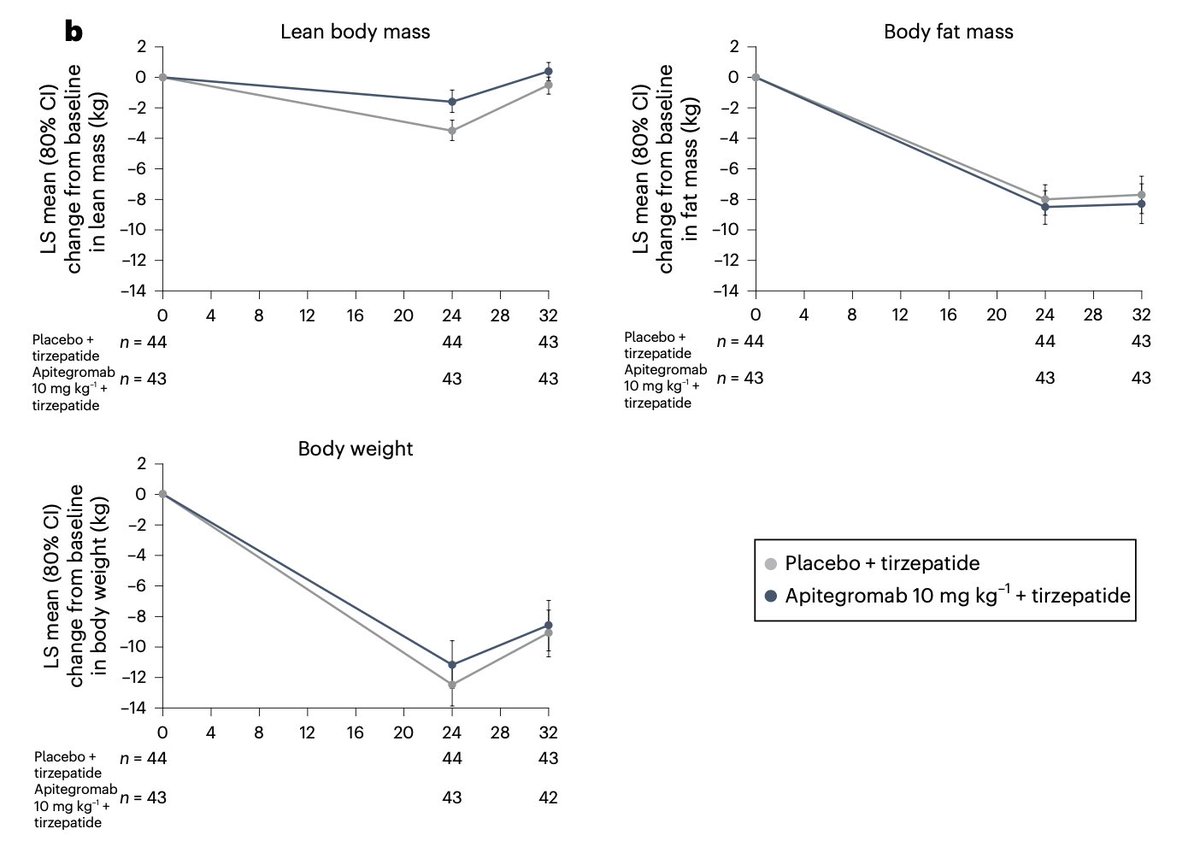
Preserving lean mass during tirzepatide (Zepbound) treatment. A randomized trial of a myostatin inhibitor for muscle mass building shows proof-of-concept.
A 55% retention of lean mass compared with placebo
https://t.co/urw9Gvy11L just published @NatureMedicine
أقوى المصادر المجانية للذكاء الاصطناعي مناسبة للاطباء وطلاب الطب 👌🏻
١) AMBOSS/NEJM (مع وضع الـ AI)📚
يلخص المواضيع بطريقة مرتبة وواضحة، مع جداول، صور، وخرائط تشخيصية، وكله مبني على أحدث التوصيات 💯
مناسب كمصدر يساعد في المذاكرة حق الامتحانات 📖
٢) OpenEvidence
هذا متخصص في الأسئلة العلمية الدقيقة والمحدثة 🧠
مثلاً: تبغى آخر دراسة عن الأسبرين في Primary Prevention، أو أحدث Guideline في أي موضوع؟
يرد بسرعة مع مراجع مباشرة من NEJM وJAMA وCochrane، ويبقى محدث دائماً ⚡
هنا مثال طلبت من AMBOSS/NEJM يلخص في جدول الAntiplatelets 👇🏻
The study cited in the article that I considered a wake-up call found a 13-fold risk of cardiac mortality with 1 inflamed artery, which rose to nearly 30-fold when all 3 arteries were inflamed, as determined by AI of non-invasive CT angio imaging
https://t.co/pLTvkkwlvA