BREAKING NEWS
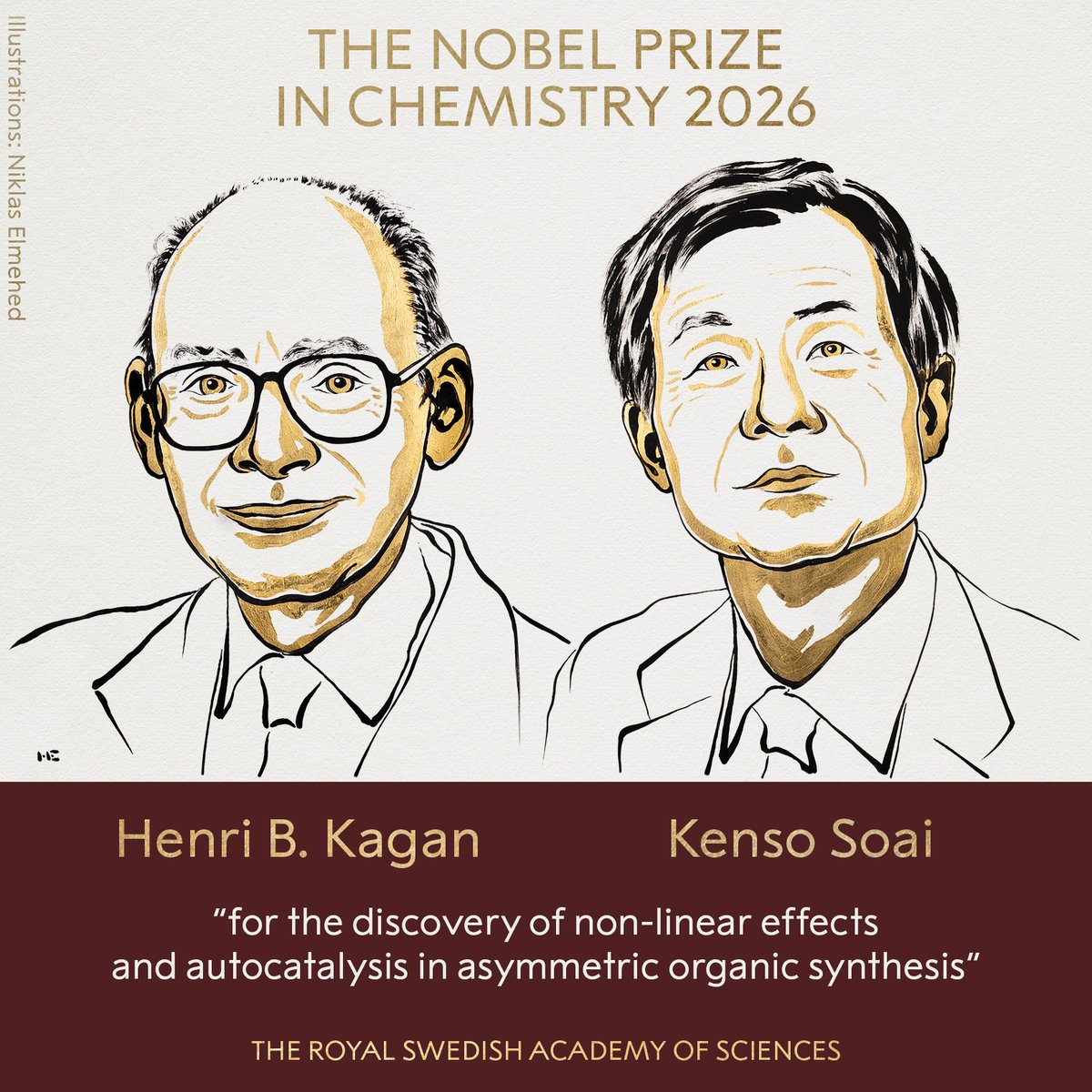
The Royal Swedish Academy of Sciences has decided to award the 2026 #NobelPrize in Chemistry to Henri B. Kagan and Kenso Soai “for the discovery of non-linear effects and autocatalysis in asymmetric organic synthesis.”
Fireflies glow. So does plankton in a breaking wave. Both come from the same small molecule: a square of two carbon and two oxygen atoms that breaks apart and gives off light.
Researchers at Stanford found that if you pull on that square instead of heating it, it breaks in the opposite order from what everyone expected. The carbon bond goes first, then the oxygen. It still emits light, just by a route nobody knew was there. That opens the door to materials that glow to warn you before they crack.
We made the animation for the press release:
This animation shows a pulling force, indicated by arrows, applied to a molecule of bis(adamantly)-1,2-dioxetane. The strain breaks the carbon–carbon bond (in gray) of the core structure. Then, the oxygen - oxygen bond (in red) breaks, causing a remaining piece to become unstable and emit a photon of blue light to return to a more stable state.
If you have a result that needs showing, we'd be glad to help.
Read more: https://t.co/7R1HpcMdyx
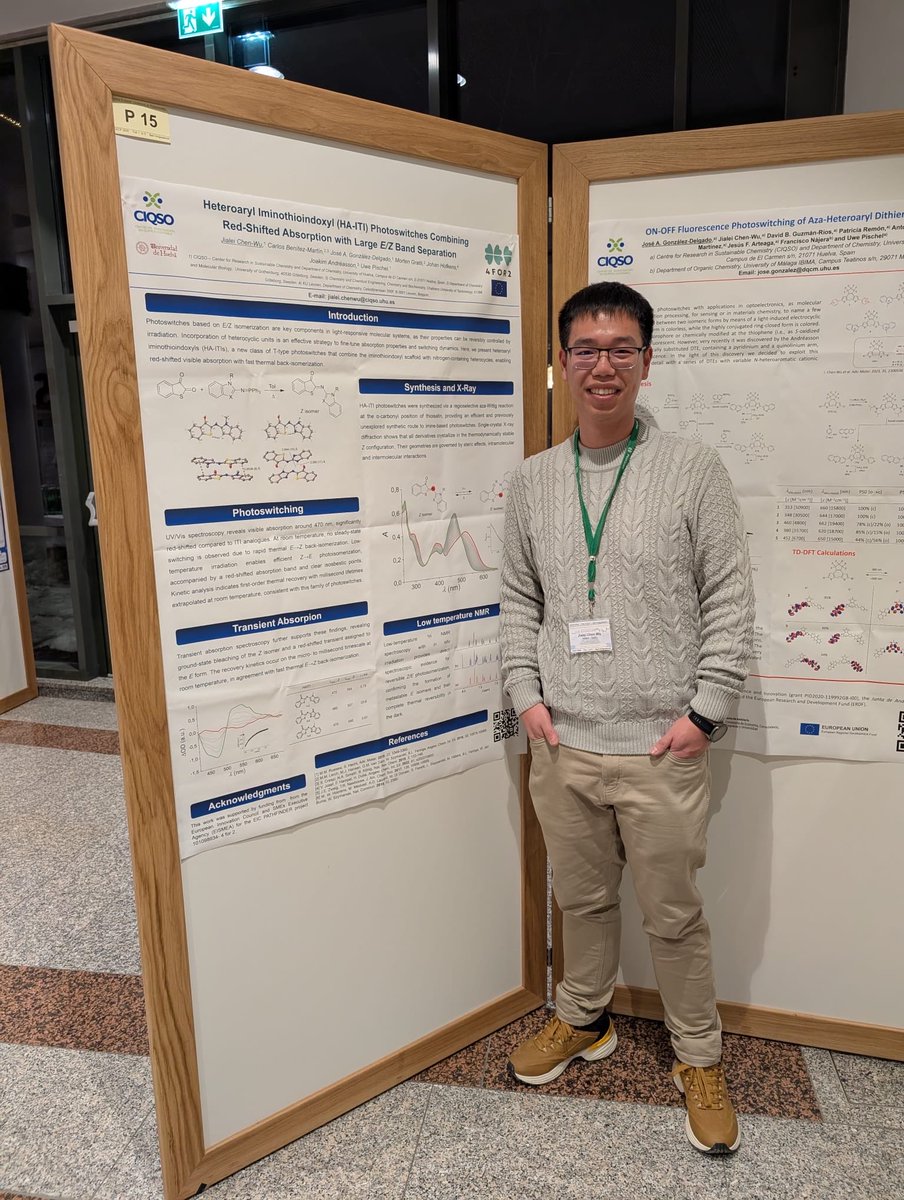
Our last work is out! A co-registered molecular keypad lock for the generation of singlet oxygen - now published in Organic Chemistry Frontiers https://t.co/2RYIlGcdmI @CIQSO_UHU@4for2pathfinder@Jialei_CW@joseg_8
What a week! Third paper out! Photovermellogens: Minimalistic Pyridinium-Based Acylhydrazones with Photoswitchable Basicity for Operation in Aqueous Media | The Journal of Organic Chemistry https://t.co/WZtfIZzDoW @FcoGermanBldn@CIQSO_UHU@patricia_remon@JOC_OL
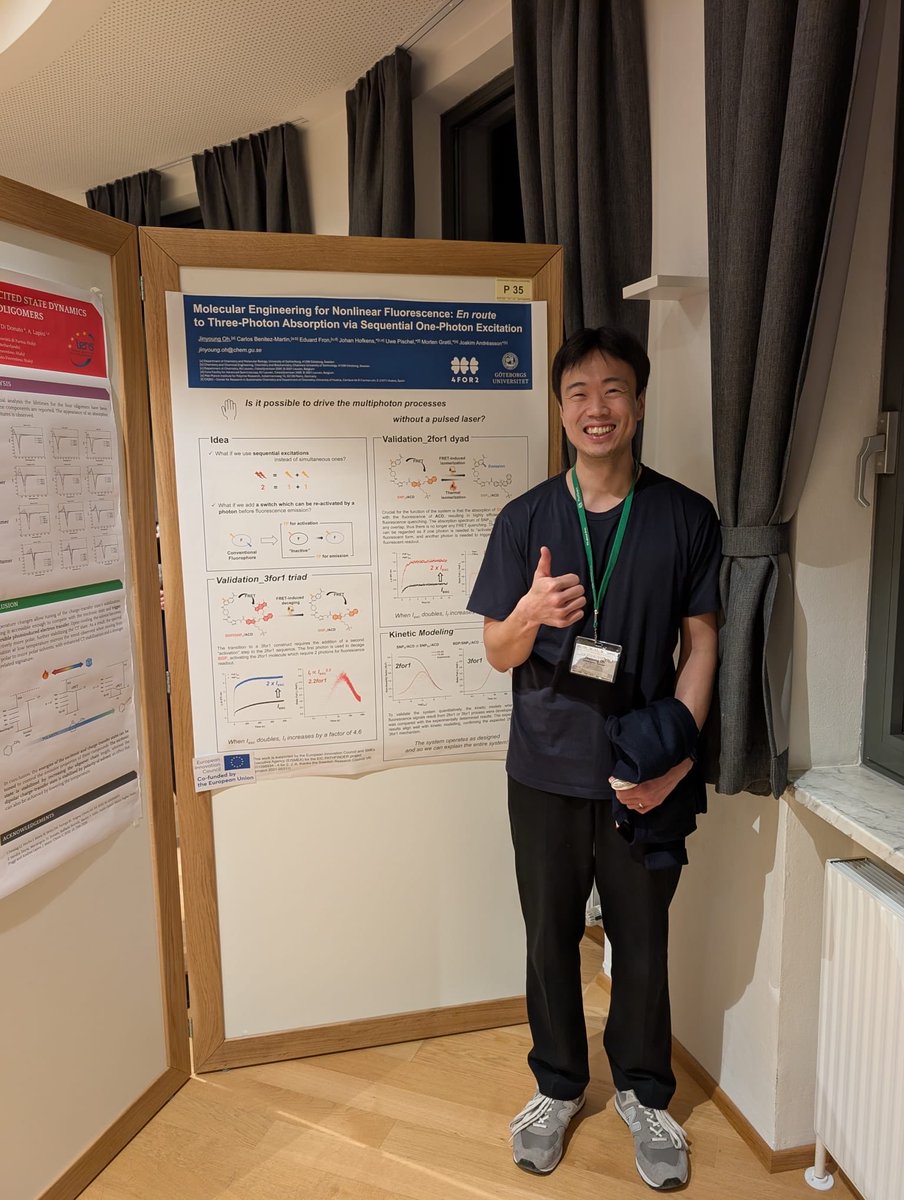
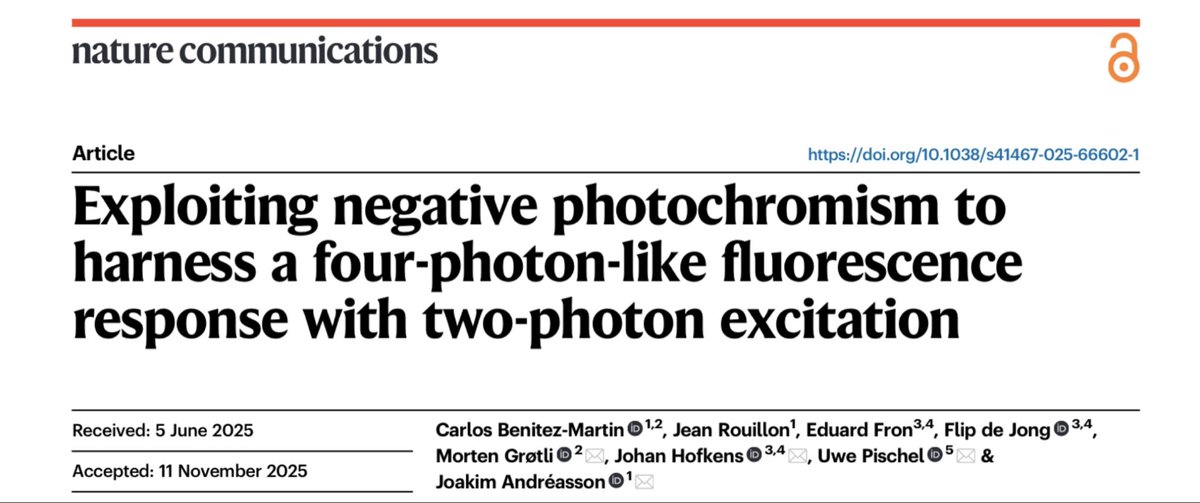
Another paper more...and what paper! Molecular Engineering for Nonlinear Fluorescence: En Route to Three-Photon Absorption via Sequential One-Photon Excitation | Journal of the American Chemical Society https://t.co/Qc0ibXdkVj @CIQSO_UHU@CarlosBM94@4for2pathfinder@J_A_C_S
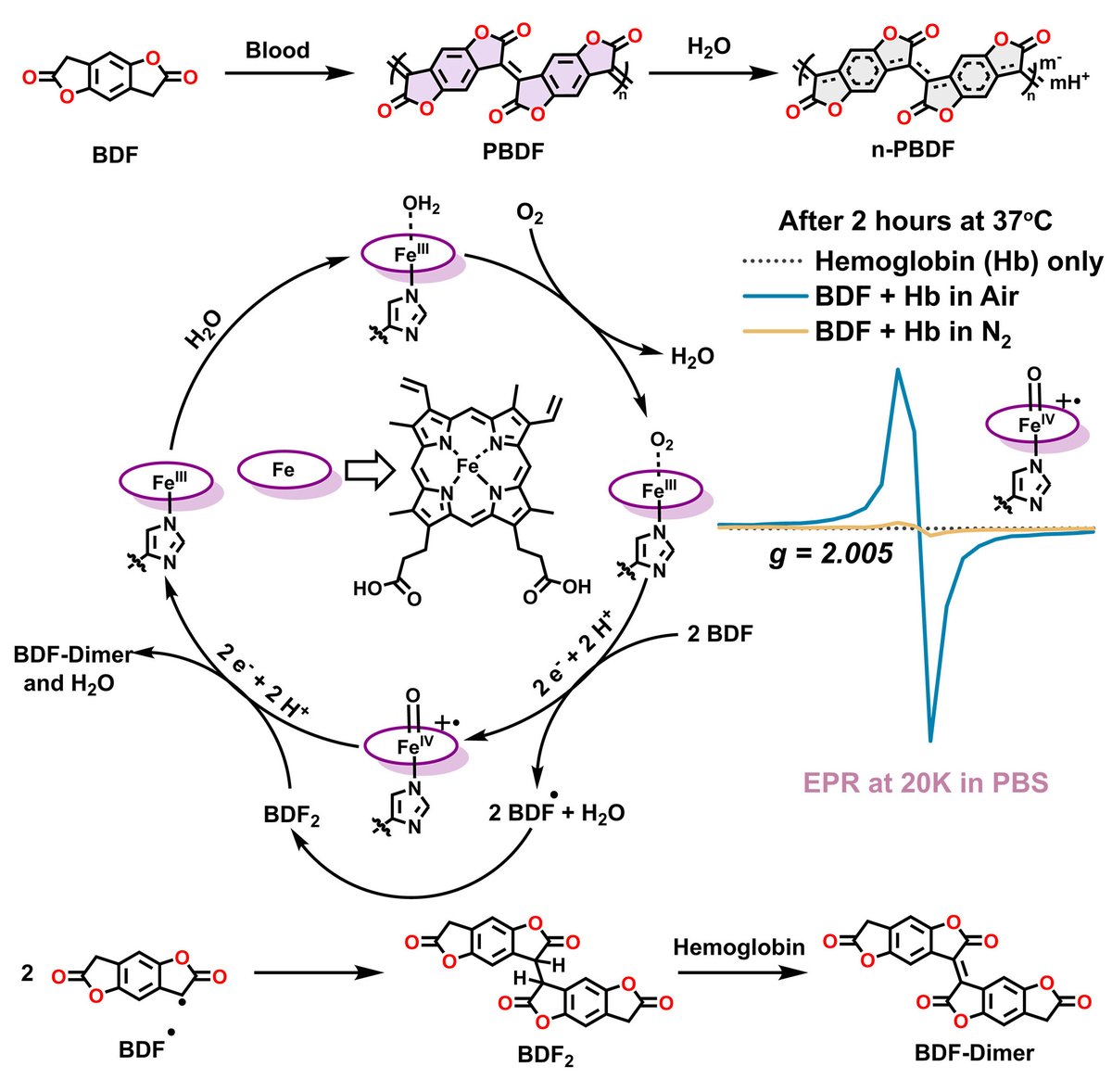
In a new Science study, researchers report a strategy to synthesize biocompatible, semiconductive polymer inside live zebrafish or mice by using naturally available catalysts: blood protein.
This offers seamless integration of synthetic materials in target biological sites for therapy and diagnosis.
📄: https://t.co/YBeagILV2f
#SciencePerspective: https://t.co/X9ZbwTAQrk
#OnTheCover Combined In-Solution and On-Surface Synthesis of a Fully Fused Cross-Shaped Phthalocyanine Pentamer (Diego Peña and co-workers)
https://t.co/uoGaexsUVu
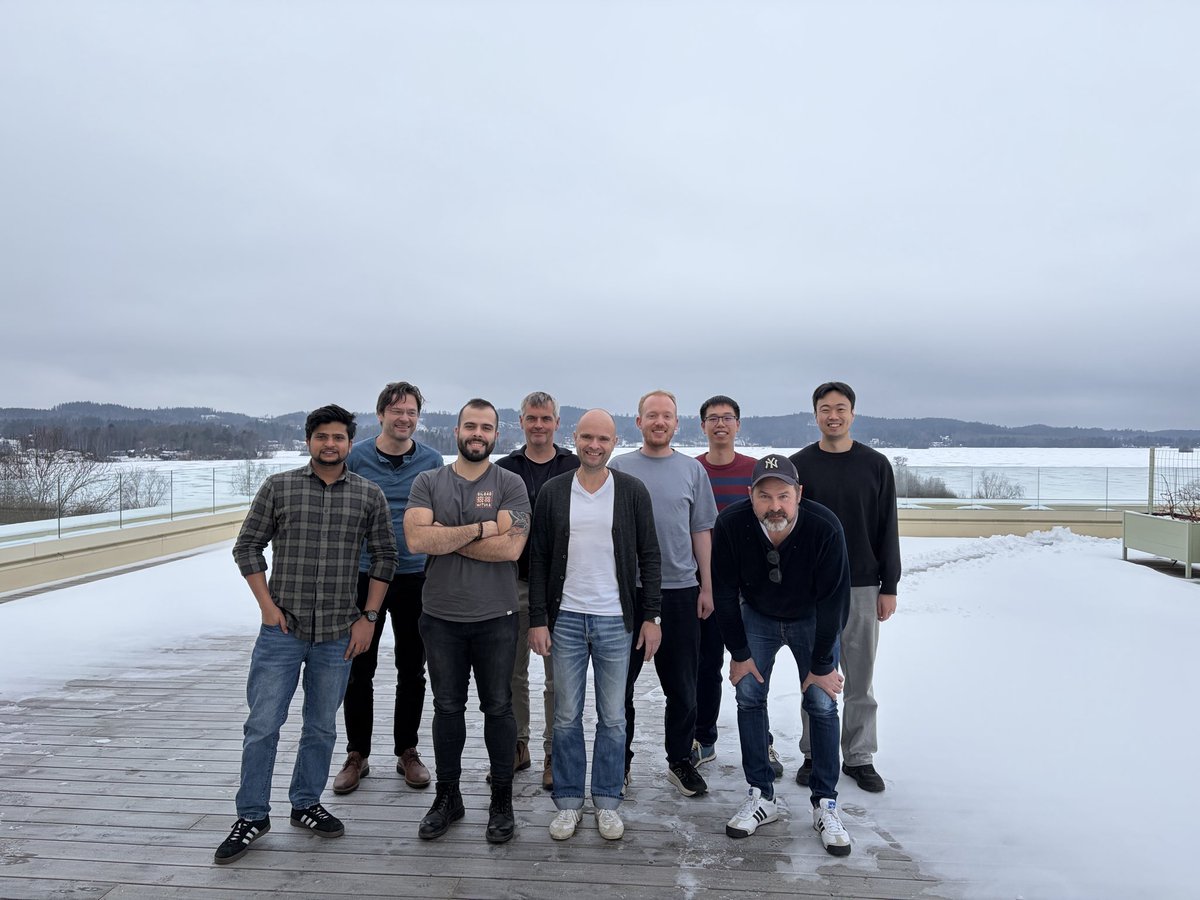
Our representatives from GU, @LabPischel, and Chalmers are these days at CECP2026 in Bad Hofgastein (Austria). Lots of great science going on in such a privileged atmosphere!
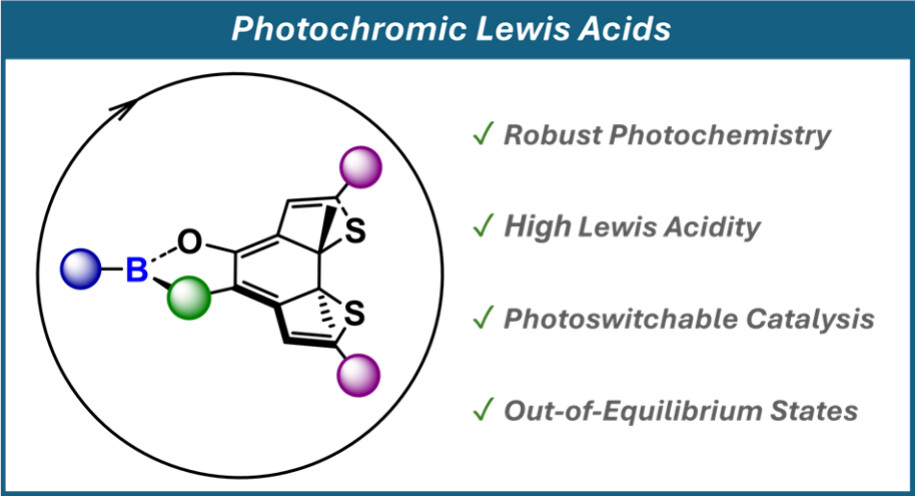
We love photoswitches, and that is a fact 🙃
Our latest work arrived just in time for Christmas and is now out in @ChemicalScience: https://t.co/wu1vj1RuHs. Enjoy the read!
@LabPischel@HofkensLab
After years of work, persistence, and belief in an idea that once felt impossible, we’re excited to share our concept; an approach that we believe can shift the paradigm of multiphoton microscopy.
If you’re curious, here you can read more about: https://t.co/8PxFiTfPXs
BREAKING NEWS
The Royal Swedish Academy of Sciences has decided to award the 2025 #NobelPrize in Chemistry to Susumu Kitagawa, Richard Robson and Omar M. Yaghi “for the development of metal–organic frameworks.”
Photoswitching of the Two-Photon Absorption of Donor-Acceptor Substituted Dithienylethenes by Jordi Hernando, Uwe Pischel, and co-workers (@LabPischel) #OpenAccess 🔓 https://t.co/iRaMamnNyl
🏆 Tomás Torres Cebada, Premio Nacional de Investigación Enrique Moles en Ciencia y Tecnología Químicas.
Por sus contribuciones de alto nivel en el campo de los nuevos materiales moleculares en áreas tecnológicas emergentes, reconocidas a escala internacional.